


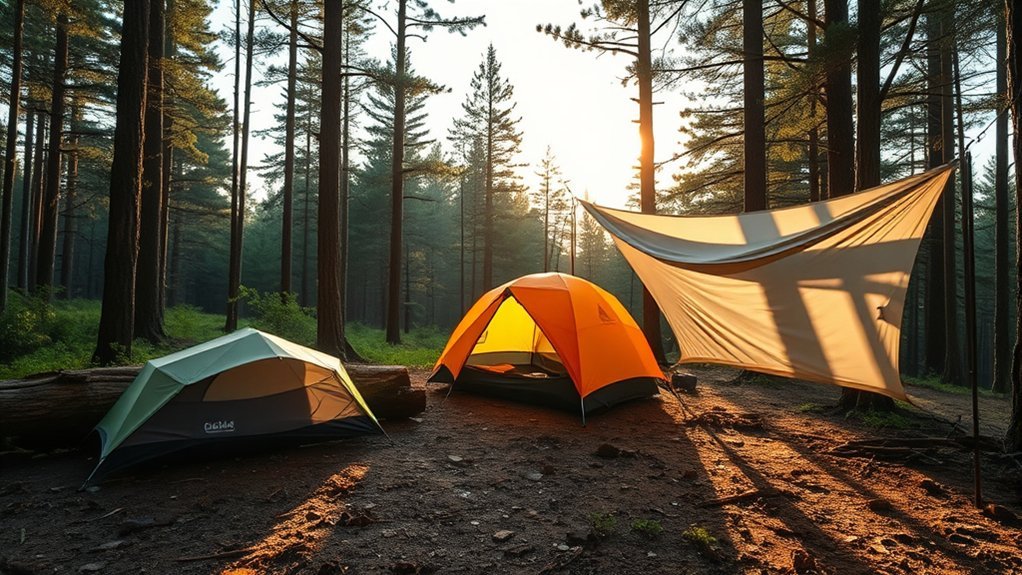
When choosing between bivies, tents, and tarps, consider your adventure style. Bivies are lightweight and compact, ideal for fast trips. Tents offer excellent weather protection, perfect for rainy conditions. Tarps provide versatility and adaptability for various setups, great for warm weather. Assess your needs based on weather conditions, group size, and personal preferences to make the best choice. Stick around to discover more about what each shelter type can bring to your outdoor experiences.
Understanding Bivy Shelters

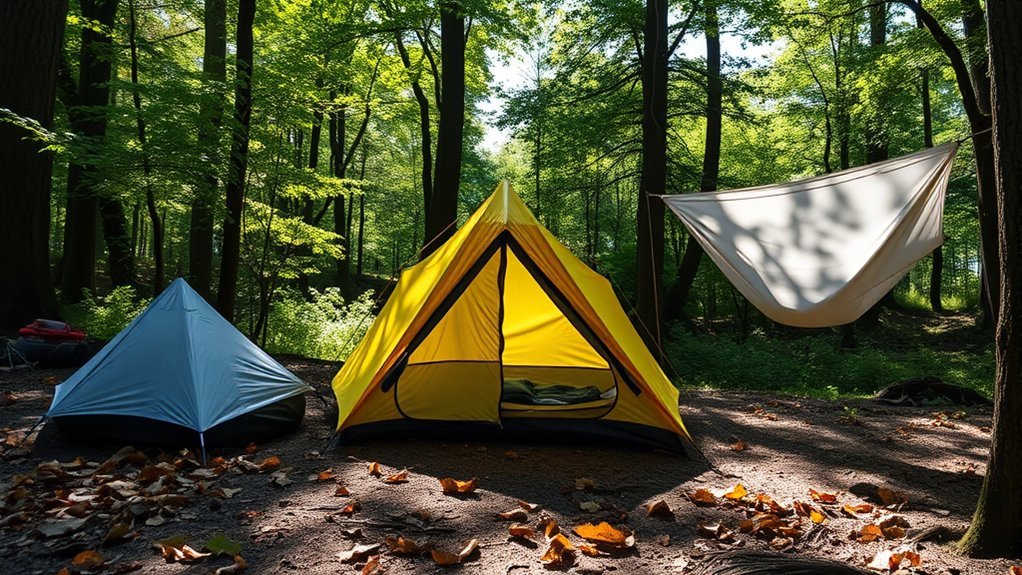
When you’re looking for a lightweight and compact sleeping solution, bivy shelters can be a game changer. Take the Big Agnes three-wire hooped bivvy, for instance; it weighs just 1 lb 6 oz and features a hoop that keeps the material off your face. This design enhances ventilation and minimizes condensation, making your nights more comfortable.
Bivies are incredibly compact, packing down to about 4 in x 14 in, so they fit easily in your bike or backpack, perfect for those who crave liberation from heavy gear. Their minimalistic nature offers basic protection from the elements, ideal for light and fast adventures. While you might miss the extensive weather protection of a full tent, bivy benefits include portability and efficiency. User experiences often highlight satisfaction with their effectiveness, even if space and bug protection might be limited compared to larger options.
Exploring Tent Options
Exploring tent options reveals a world of versatility and comfort for outdoor enthusiasts. The Big Agnes Tiger Wall tent is a prime example, designed for bike packing. With dual access doors, it adapts to various conditions, serving as a mesh bug tent or a waterproof shelter. Its lightweight design makes it perfect for those who prioritize gear efficiency while cycling.
When it comes to packing strategies, the compact tent poles fit easily on bikes, but their larger size can pose challenges for balance. Here’s a quick breakdown of key tent features to take into account:
| Tent Features | Considerations |
|---|---|
| Size | May require strategic packing |
| Weight | Lightweight for easy transport |
| Access | Dual access for convenience |
| Versatility | Functions as bug tent or shelter |
| Pole Design | Short poles for bike compatibility |
The Versatility of Tarps
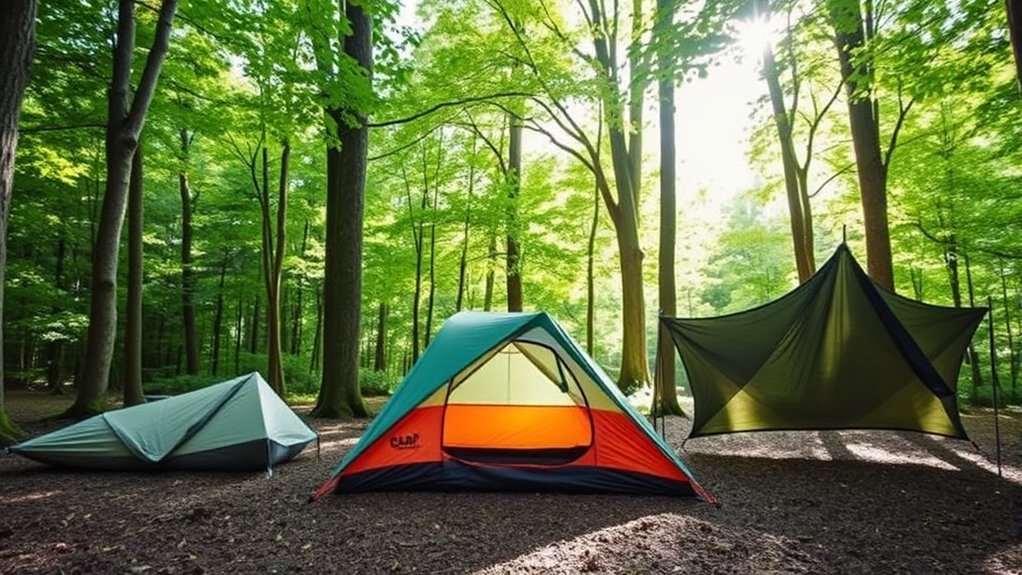
When it comes to versatility, tarps shine with their creative setup configurations that adapt to any weather. You can easily adjust your tarp to shield against rain or wind while keeping things lightweight, making it a portable option for your adventures. Plus, with excellent ventilation, you’ll stay comfortable even in warm weather, proving that tarps are a smart choice for any camping situation.
Creative Setup Configurations
Tarps offer unmatched versatility in outdoor shelter configurations, allowing you to adapt to varying weather conditions and terrain. With a little shelter creativity, you can pitch your tarp in countless ways, whether you need an A-frame for rain protection or a lean-to for windbreaks. Using trekking poles or sticks, you can quickly set up these tarp configurations, making them ideal when time is tight. Plus, combining a tarp with a bivy sack gives you bug protection while keeping your pack light. The GG Spinnshelter exemplifies this flexibility, functioning as both a traditional tarp and an enclosed tent. Embrace the freedom of tarps, and explore the endless possibilities they offer for your outdoor adventures!
Weather Adaptability and Protection
The adaptability of tarps shines brightly when considering their role in weather protection. Their versatility allows you to configure them based on specific weather conditions, ensuring you stay dry during rain, shielded from wind, and bug-free. Unlike tents, tarps can be quickly adjusted, making them perfect for unpredictable environments. You can elevate them with trekking poles to enhance airflow during warmer seasons, maximizing comfort. Additionally, combining tarps with bivies offers a unique solution for sleeping under the stars while staying protected from insects. In winter, you can create a low-profile shelter that minimizes wind exposure while maintaining excellent weather resilience. With these tarp benefits, you’re empowered to embrace the elements and explore freely.
Weight Efficiency and Portability
If you’re seeking a lightweight and portable shelter for your outdoor adventures, tarps stand out as an excellent choice. Weighing around 1 kg, they’re a favorite among backpackers who prioritize efficiency. With the right setup, you can enjoy tarp benefits that traditional tents can’t match.
- Embrace the freedom of a minimalist pack.
- Experience unmatched versatility in diverse terrains.
- Set up quickly and adapt to changing weather.
Weight Considerations for Each Shelter
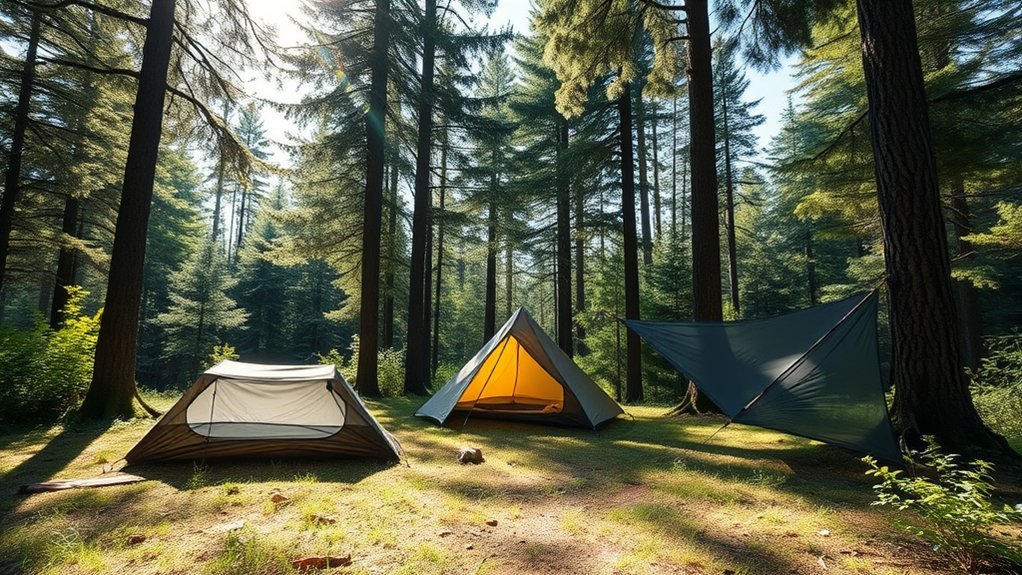
When considering weight, bivy setups often emerge as a top choice for minimalist adventurers, weighing around 1 lb 6 oz. Bivies, crafted from lightweight materials, offer a compact option that enhances weight distribution, especially for bike packing. In contrast, even the lightest tents, like the GG model at 17 oz, still tip the scales heavier than a combination of a tarp and bivy, which can weigh as little as 10 oz. You can save around 1.6 kg (approximately 3.5 lbs) by opting for these lighter setups.
| Shelter Type | Weight (Approx.) |
|---|---|
| Bivy | 1 lb 6 oz |
| Tent (GG) | 17 oz |
| Tarp + Bivy | 10 oz |
Tarp maintenance is minimal compared to tent durability, making these lightweight options appealing. Ultimately, shifting to bivy or tarp setups not only lightens your load but also liberates your adventures.
Setup and Flexibility in Different Conditions
While choosing a shelter for your adventures, understanding setup and flexibility is essential. Each option—tarp, bivy, or tent—offers unique setup techniques that cater to various conditions.
- Embrace the freedom of quick, creative tarp configurations, especially in bad weather.
- Experience the simplicity of a bivy system, providing bug protection while keeping your load light.
- Enjoy the warmth and security of a full-enclosed tent in winter, yet switch to a tarp or bivy for summer’s breathability.
The GG Spinnshelter stands out with its dual functionality, adapting to diverse environmental challenges. You can enhance tarp setups using trekking poles, increasing your adaptability to any terrain. By considering these setup techniques, you’ll find a shelter that not only meets your needs but also liberates your spirit for adventure. Choose wisely, and let your journey unfold!
Weather Protection and Performance
When it comes to weather protection, your choice between a bivy, tent, or tarp can make a big difference. Tents excel in rain and snow, offering a fully enclosed shelter, while tarps provide adaptable setups that balance ventilation with storm readiness. Bivys are lightweight but may leave you exposed in severe weather, so understanding seasonal performance is key to keeping you comfortable and safe outdoors.
Rain and Wind Resistance
Choosing the right shelter for your outdoor adventures hinges on understanding how each option performs against rain and wind. Tents excel in rain resistance, offering superior protection in heavy downpours and snow with their fully enclosed designs. Bivy sacks, while lightweight, struggle with wind durability and are best for light conditions. Tarps shine in versatility, allowing you to adjust configurations for varying protection levels against the elements.
- Feel the adrenaline of freedom, knowing you’re prepared for anything.
- Embrace the comfort of staying dry and warm in unexpected weather.
- Experience the thrill of adapting your shelter to nature’s whims.
Bug Protection Options
As you venture into the great outdoors, protecting yourself from pesky insects becomes essential, especially in warmer months. Bivies often come with integrated bug netting techniques, keeping you safe while remaining ultralight. If you prefer tarps, you can easily adapt them with bug nets, striking a balance between ventilation and protection. However, full-enclosed tents provide the best defense against bugs, thanks to their solid structure and mesh screens, making them ideal for high-insect areas. Ultimately, your choice depends on your camping style—bivies are perfect for minimalists, while tents offer extensive coverage. Pairing a tarp with bug netting strategies can also give you the versatility you need to enjoy nature without the nuisance of bugs.
Seasonal Performance Differences
In the great outdoors, your shelter choice greatly impacts your experience, especially regarding seasonal performance and weather protection.
- Embrace freedom with lightweight setups.
- Find comfort in the harshest conditions.
- Adapt to ever-changing weather challenges.
Bivies offer benefits in mild conditions but lack extensive protection during storms. Tents, while great for winter insulation, come with drawbacks like weight and bulk. Tarp setups shine in versatility, allowing you to tailor your shelter to various camping conditions. In warmer months, combining tarps and bivies enhances ventilation while reducing pack weight. For all-season adaptability, consider the GG Spinnshelter, which provides waterproof protection as both a tarp and a tent. Ultimately, your shelter preferences should align with your user needs and seasonal suitability to create unforgettable outdoor adventures.
User Experiences and Preferences
Have you ever wondered why some backpackers swear by bivy setups while others cling to their tents? User experiences reveal that preferences often hinge on weight, weather, and personal camping styles.
Here’s a quick comparison of the three shelter types:
| Shelter Type | Key Benefits |
|---|---|
| Bivy | Lightweight (e.g., Big Agnes 1 lb 6 oz) for fast adventures. |
| Tent | Great weather protection; fully enclosed (e.g., Big Agnes Tiger Wall). |
| Tarp | Flexible and well-ventilated, allowing for creative campsite setups. |
Many backpackers love the compactness of bivies for quick trips, while tents shine in rainy conditions, providing comfort for two. Tarp users appreciate the freedom to adapt their setup based on environmental factors. Ultimately, shelter recommendations vary widely, reflecting individual needs and regional conditions. Finding your perfect shelter can elevate your outdoor experience.
Making the Right Choice for Your Adventure
What’s the best shelter for your next adventure? Your choice hinges on various factors during your adventure planning, including weather, group size, and personal preferences. Whether you opt for a bivy, tent, or tarp, each has unique benefits that cater to different needs.
- Experience the freedom of lightweight gear on your back.
- Find joy in flexible configurations that adapt to nature’s whims.
- Feel secure knowing you’re protected from the elements.
If you’re biking or hiking solo, a bivy might be your best bet for its compactness. For winter trips, a small tent can offer warmth and comfort. Tarp setups shine in versatility, allowing you to get creative while shielding yourself from the rain. Assess your adventure needs and embrace the liberation that comes with making the right shelter selection!
Frequently Asked Questions
How Do Bivies Perform in Wet Conditions Compared to Tents?
Bivies often excel in wet conditions due to advanced waterproofing techniques, keeping you drier than tents, which can suffer from condensation issues. Choose wisely based on your adventure needs and weather expectations.
Can I Use a Tarp in Winter Camping Scenarios?
Yes, you can use a tarp for winter camping. Employ tarp insulation techniques like using an insulated ground layer and creating winter tarp setups that block wind, ensuring you stay warm and comfortable during your adventures.
What Is the Average Lifespan of Each Shelter Type?
Bivies typically last around 5-10 years, depending on usage. Tents can offer 10-20 years of durability with proper care. Choose wisely based on your adventures, and guarantee your shelter meets your needs for liberation in the wild.
Are There Specific Bivy Designs for Different Climates?
Different bivy designs cater to various climates, featuring specialized bivy insulation for cold weather and enhanced bivy ventilation for warmer conditions. Choosing wisely can elevate your outdoor experience and keep you comfortable throughout your adventure.
How Do Costs Compare Between Bivies, Tents, and Tarps?
Bivies typically cost less than tents, offering budget-friendly options for minimalists. Tents vary widely in pricing, while tarps are usually the most affordable. Consider your shelter budget to find the best fit for your adventures.
Conclusion
Choosing between a bivy, tent, or tarp really depends on your adventure’s demands. For instance, if you’re planning a solo backpacking trip in unpredictable weather, a bivy offers lightweight protection while still allowing for quick setup. However, if you’re camping with family, a tent might provide the comfort and space needed. Ultimately, consider your priorities—weight, ease of setup, and weather conditions—to find the shelter that best suits your needs and enhances your outdoor experience.