


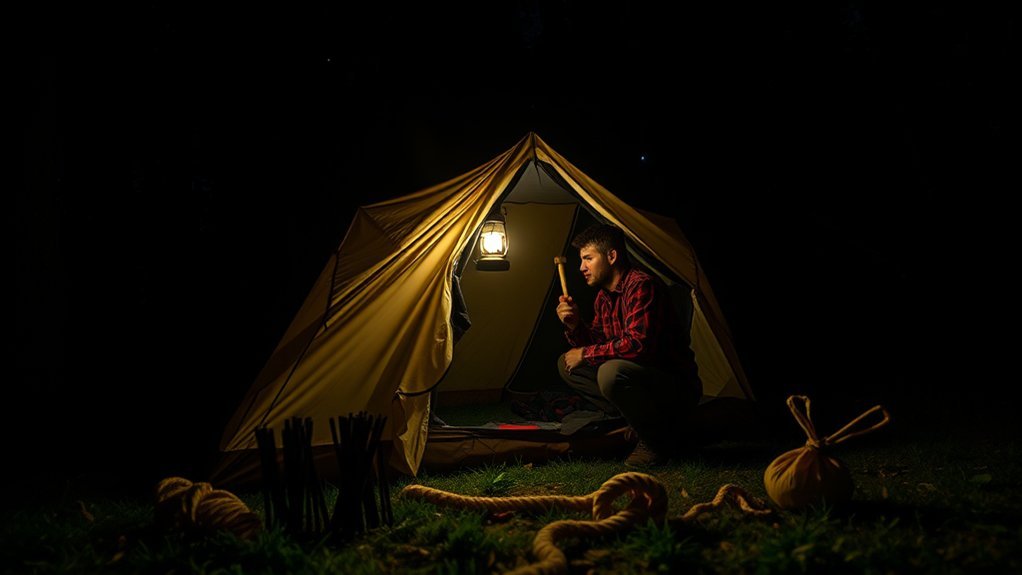
If your tent stakes are loose at night, start by checking their stability; tug gently to assess firmness. You can use heavy rocks or logs to weigh them down and provide extra anchoring. Tighten guylines, especially on the upwind side, to improve support. Adjust stakes to a 45-degree angle for better resistance. Don’t forget to utilize natural materials nearby for added stability. There’s more effective techniques to guarantee a secure setup without re-pitching.
Assessing Stake Stability

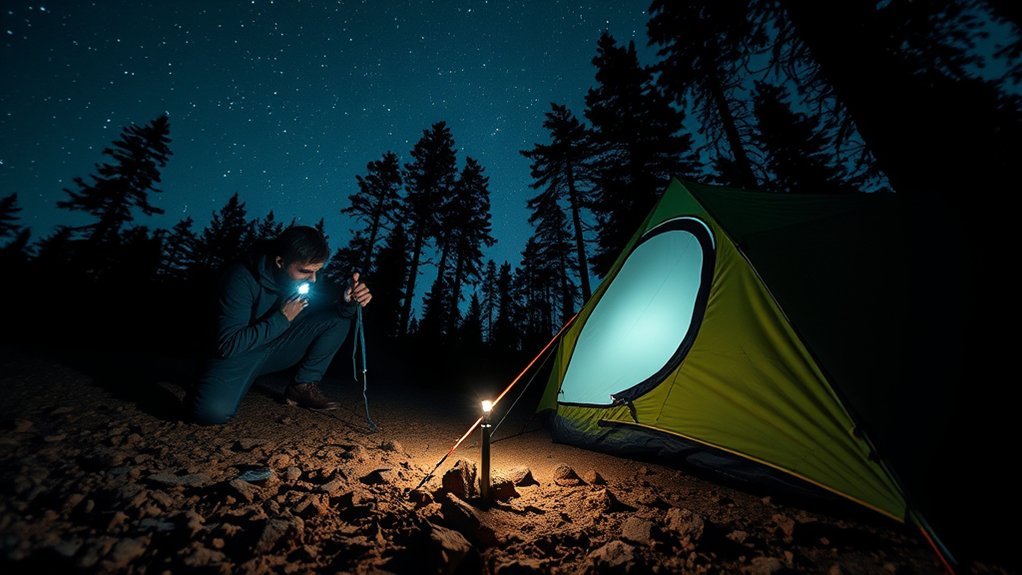
When you’re camping at night, evaluating stake stability is crucial to keep your tent secure. Start with a thorough stake inspection. Check each stake to confirm it’s firmly anchored; if it shifts easily or pulls out, it needs reinforcement. Tugging gently on each stake can help you measure their firmness. Next, observe the tension on your guy lines. Sagging lines may indicate that the stakes aren’t holding properly, so address those areas first.
Also, consider environmental factors like loose gravel or sandy soil, which can affect stability. If the ground is shifting, you might need heavier objects to stabilize your stakes. Pay attention to your tent’s overall shape and its position relative to the wind direction. This can help you identify areas that need immediate attention. By regularly evaluating stake stability, you can enjoy a more secure and liberating camping experience.
Weighing Down Loose Stakes
To stabilize loose tent stakes at night, weigh them down with heavy rocks or other available materials. This simple action helps prevent stakes from pulling out due to wind pressure. Here are some weight options to take into account for effective rock placement:
- Heavy Rocks: Look for flat, sturdy stones that sit securely on top of stakes.
- Natural Materials: Use logs or large stones nearby to create dead man anchors, especially in loose soil.
- Boulders or Packed Dirt: If you can, pile earth or smaller rocks against the stakes for added weight and stability.
Tightening Guylines for Support
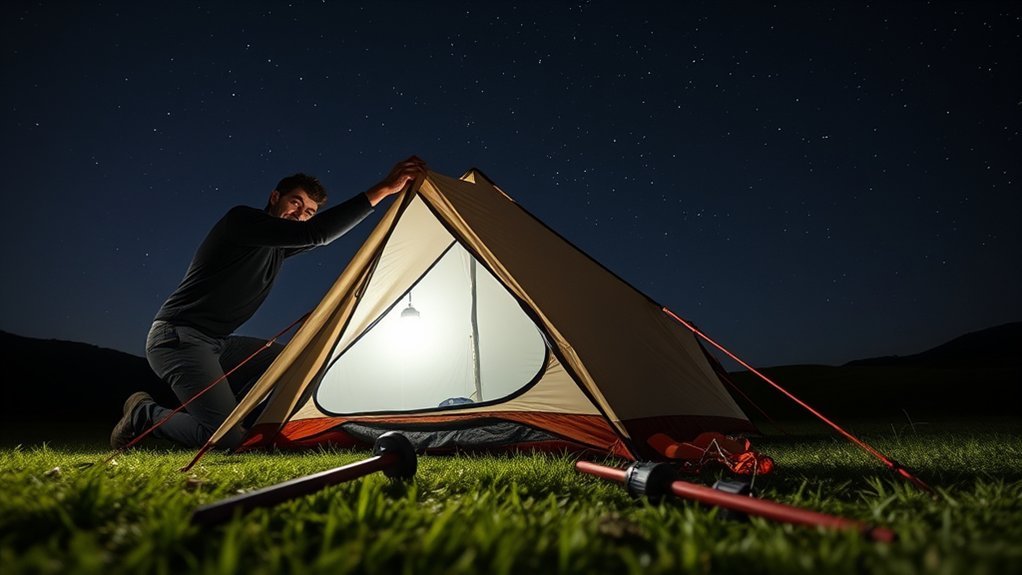
Tightening guylines is vital for maintaining your tent’s stability, especially during windy nights. Proper guylines tension is critical for redistributing force and reducing flapping, guaranteeing your shelter stands strong against the elements.
| Action | Description |
|---|---|
| Check Guylines | Verify all lines are taut. |
| Focus on Upwind Side | Prioritize tension here for stability. |
| Use D-ring Anchor | Attach additional lines for support. |
| Weigh Down Guylines | Use rocks for increased wind resistance. |
Regularly adjust your guylines; they can loosen as stakes shift or fabric stretches. By maintaining proper tension, you enhance your tent’s overall structure and combat wind pressure effectively. Remember, a well-secured tent allows you the freedom to enjoy your night under the stars, worry-free.
Adjusting Stake Angles
Adjusting the angle of your tent stakes can make a significant difference in keeping your shelter secure during windy nights. By implementing effective adjustment techniques, you can enhance the grip of your stakes. Here’s how to find ideal angles for your tent stakes:
- Set stakes at a 45-degree angle: This position offers the best resistance against lateral wind forces.
- Drive stakes deeper into the ground: A deeper placement at the adjusted angle maximizes stability, especially in loose or gravelly soil.
- Use the dead man technique: If conditions are tough, bury a sturdy object near the stake to create added resistance against pulling.
Regularly check and adjust the stakes throughout the night if winds pick up. This proactive approach helps maintain your tent’s stability without the hassle of re-pitching. Stay secure and enjoy your outdoor experience!
Utilizing Natural Materials
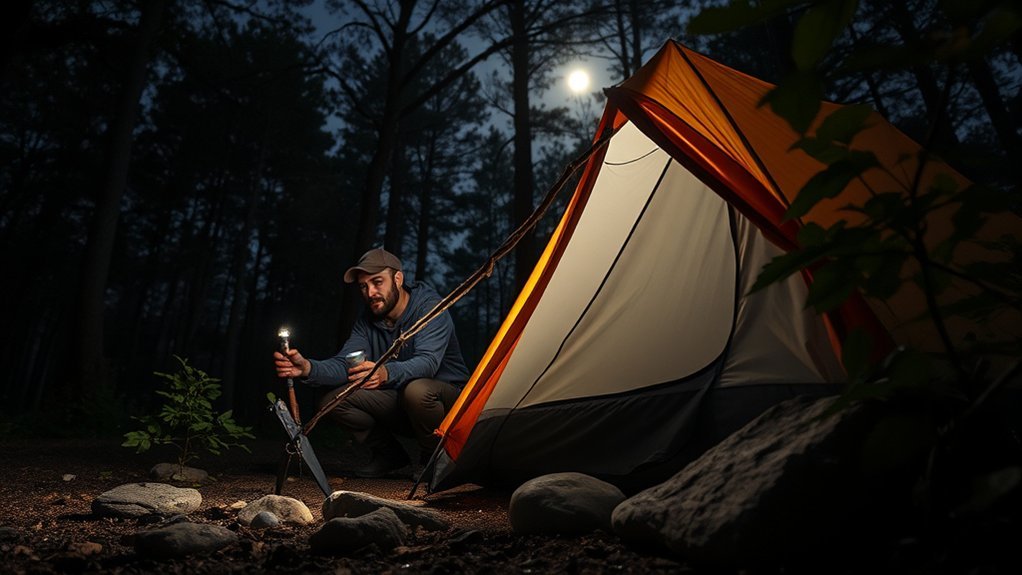
When your tent stakes feel loose, look around for suitable natural materials to help anchor them. Heavy rocks or sturdy branches can provide the weight needed for stability, while you can create improvised dead men by burying sticks horizontally and attaching guy lines. Utilizing these resources not only secures your stakes but also makes use of the environment around you.
Finding Suitable Objects
To shore up your loose tent stakes at night, keep an eye out for strong, heavy natural objects nearby. These natural anchors enhance your tent’s stability and promote environmental adaptability. Here are some effective options:
- Large Rocks: Look for sturdy boulders to place on top of stakes for added weight.
- Fallen Branches: Use thick branches that can provide extra support against shifting.
- Dense Vegetation: Search for sturdy roots to secure stakes in loose gravel or sandy soil.
Improvised Dead Man Techniques
Improvised dead man techniques can be a lifesaver when traditional tent stakes aren’t holding up in loose soil or gravel. To create a secure anchor, bury heavy objects like rocks or logs in the ground. You can also utilize natural materials such as caribou antlers or sturdy branches for added weight. For maximum effectiveness, position the dead man at a 45-degree angle and attach your tent’s guy line to it. This setup boosts resistance against wind forces. Consider using sandbags or packed snow if available. Don’t hesitate to experiment with different configurations and materials based on your campsite’s unique conditions. These anchor techniques will help keep your tent stable throughout the night.
Creative Solutions for Nighttime Fixes
When you’re faced with loose tent stakes at night, think creatively to secure them. You can use natural materials like branches or rocks to create improvised dead men, anchoring your stakes more effectively. Additionally, tightening guy lines and utilizing nearby gear can enhance your tent’s stability without needing to re-pitch.
Improvised Dead Man Techniques
While traditional methods may falter under the weight of loose soil or shifting terrain, improvised dead man techniques offer creative solutions to stabilize your tent stakes at night. Here are three effective strategies for improvised anchoring:
- Bury heavy objects: Use rocks or logs horizontally in the ground to provide extra support for loose stakes.
- Utilize natural materials: Find sturdy branches or roots around you to create additional stability for your tent stakes.
- Incorporate unique items: Use caribou antlers or similar objects as dead men, which can anchor effectively in loose gravel or sand.
Utilizing Natural Materials
To keep your tent secure during the night, leveraging natural materials can be a game-changer. In the absence of traditional stakes, look for heavy rocks or stones nearby to weigh down loose tent stakes effectively. Buried logs or branches can serve as improvised dead men, enhancing stability in loose gravel. Sturdy roots or underground structures can anchor your stakes more firmly. If you spot caribou antlers or similar materials, bury them at an angle to create tension on your guy lines. Employing creative configurations using surrounding natural elements not only provides added support but also reduces the risk of your tent collapsing under nighttime winds. Embrace outdoor improvisation to guarantee a restful night under the stars.
Frequently Asked Questions
What Tools Do I Need to Fix Loose Tent Stakes at Night?
You’ll need a hammer, a small mallet, or even a rock for nighttime adjustments. Familiarize yourself with your tent stake types, as some may require more force or specific techniques to secure effectively.
Can I Use My Backpack to Secure Stakes?
Yes, you can use your backpack to secure stakes. Just place it over the stakes to add weight, enhancing tent stability. This method’s practical, especially when you need quick fixes during the night.
How Do I Prevent Stakes From Loosening Again?
Imagine a stormy night, your tent flapping wildly. To prevent stakes from loosening, analyze ground conditions first. Use stake maintenance tips: choose the right stakes, angle them properly, and check tension periodically. Your shelter deserves it!
Is It Safe to Adjust Stakes in the Dark?
It’s generally safe to adjust stakes in the dark, but make certain you have adequate night visibility. Prioritize tent safety by using a flashlight or headlamp to avoid tripping and maintain stability while securing your tent.
What if I Can’t Find Natural Materials Nearby?
If you can’t find natural materials nearby, look for alternative materials like rocks or heavy objects. You can also create makeshift solutions using your gear, like tying stakes to bags filled with sand or water.
Conclusion
Just like a sailor adjusting their sails to harness the wind, you can stabilize your tent stakes without re-pitching. By evaluating their stability, weighing them down, tightening guylines, and making clever adjustments, you create a secure haven amidst the night’s uncertainties. Use the resources around you, whether it’s natural materials or creative solutions, to anchor your shelter firmly. With these strategies, you’ll rest easy, knowing your tent stands strong against the evening breeze.