


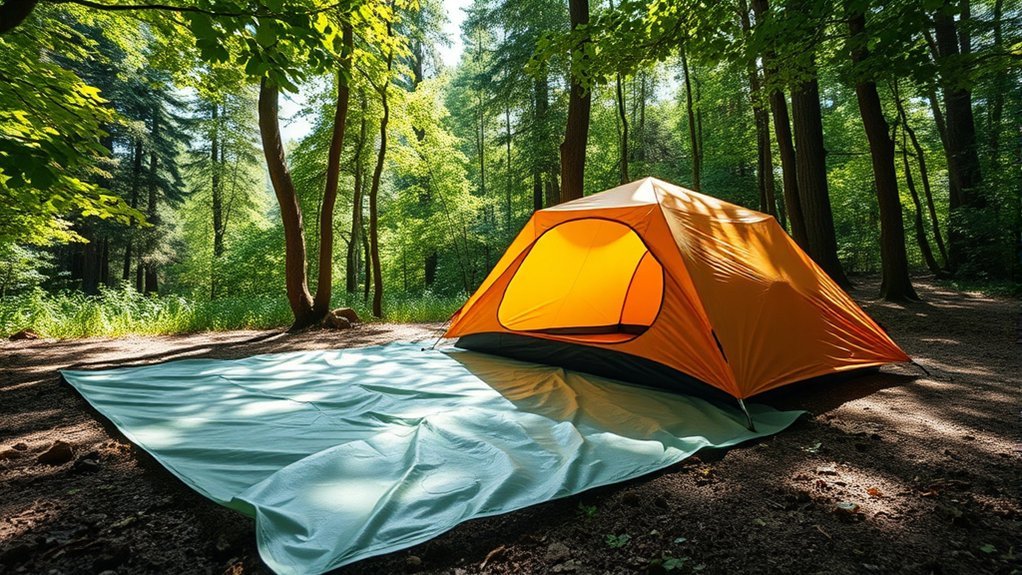
Yes, you can use polycro as a tent groundsheet. It’s lightweight, weighing only 1-2 ounces, making it perfect for backpackers. Polycro packs down easily, is cost-effective, and protects your tent floor from dirt and moisture while insulating you from the cold ground. Keep in mind, it’s best for softer terrain and can tear in rocky areas. If you’re curious about the best sizing and maintenance tips, you’ll find more valuable insights below.
Benefits of Using Polycro as a Groundsheet

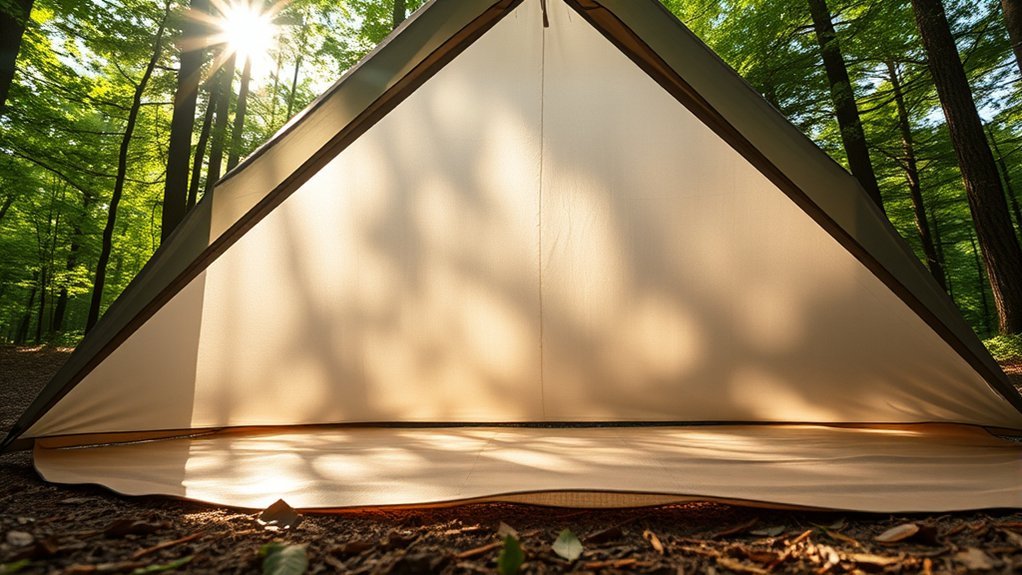
When you’re gearing up for a camping trip, choosing the right groundsheet can make a significant difference in your overall experience. Polycro stands out as a lightweight option, weighing between 1 to 2 ounces, making it perfect for backpackers who prioritize minimizing pack weight. Its impressive packability means you can fold it down to a very small size, allowing easy storage in your hiking gear.
Beyond convenience, polycro offers cost effectiveness, typically priced between $12.99 and $14.99, which is much cheaper than traditional tent footprints. This budget-friendly choice doesn’t compromise on functionality; it effectively insulates you from the cold ground, helping maintain warmth during sleep. While it’s less durable than some alternatives, polycro protects your tent floor from dirt and moisture in soft ground conditions, extending your tent’s lifespan. Embracing polycro means enjoying a more liberated, hassle-free camping experience without breaking the bank.
Polycro vs. Tyvek: A Comparison
Choosing between polycro and Tyvek for your tent groundsheet boils down to a few key factors. Polycro advantages include its lightweight nature, weighing only 1-2 oz, which makes it ideal for minimalists who prioritize packability. In contrast, Tyvek typically weighs 4-7 oz, which can be cumbersome for those seeking a liberated experience. However, Tyvek’s durability is significant; it offers better puncture resistance and can withstand rocky terrains, making it suitable for harsher environments. The trade-off is that Tyvek’s sturdiness comes with a higher price tag, ranging from $17.99 to $19.99, compared to polycro’s economical $12.99 to $14.99. While polycro is less durable and may tear in tough conditions, it’s a great option for softer ground. Ultimately, your choice should align with your specific needs during your outdoor adventures, balancing weight against durability and cost.
Tips for Choosing the Right Size

Choosing the right size for your polycro groundsheet is essential to guaranteeing effective water drainage and ideal tent performance. Here are some key size considerations to keep in mind:
- Size Reduction: Select a polycro sheet that’s about 6 inches shorter in both length and width than your tent’s base dimensions to prevent water pooling.
- Typical Measurements: For a tent with a floor size of 84 x 48 inches, aim for a polycro footprint around 78 x 42 inches for best fit.
- Measurement Accuracy: Use graph paper to sketch your tent’s footprint before cutting the polycro. This helps guarantee you get precise measurements.
Always check the fit of your cut polycro sheet under your tent. Confirm it’s the right size and doesn’t extend beyond the tent’s edges. This attention to detail will enhance your tent’s performance and keep you dry during your adventures.
Maintenance and Care for Polycro
Although polycro ground sheets are lightweight and effective, they require careful maintenance to guarantee longevity and performance. Handle your polycro with care to avoid punctures, especially in rocky terrains where durability is a concern. After each use, employ gentle cleaning methods; a soft cloth or sponge with mild soap works well. Make sure it dries completely to prevent mold growth.
When it comes to storage techniques, lay the polycro flat or roll it loosely to avoid creasing, which can affect its packing efficiency. Regularly inspect your groundsheet for signs of wear or damage, and replace it as needed to make certain of reliable ground protection during your camping adventures. Additionally, steer clear of extreme heat, as it can cause shrinkage and compromise your sheet’s protective qualities. By following these maintenance tips, you’ll keep your polycro in top shape for many trips to come.
User Experiences and Recommendations

Many users find polycro ground sheets to be a game-changer for their camping experiences. The lightweight design and affordability make it a top choice for backpackers. Here are some user experiences and recommendations:
- Weight Efficiency: Many backpackers love that polycro weighs as little as 1.3 ounces, allowing for a lighter pack.
- Cost-Effectiveness: Users appreciate the price point, often around $12.99 to $14.99, which is a steal compared to traditional footprints.
- Wind Precautions: Some users advise securing polycro with weights or stakes during windy conditions to prevent it from blowing away.
While users rave about its portability and ease of transport, they also caution to handle it carefully in rocky areas to avoid punctures. Overall, polycro has garnered positive feedback, making it a solid option for those seeking to enhance their outdoor adventures.
Frequently Asked Questions
Is Polycryo Waterproof for Tent Use?
Polycro offers good water resistance, acting as an effective moisture barrier for your tent. However, it’s not completely waterproof, so consider additional protection if you anticipate heavy rain during your camping adventure.
Can Polycryo Be Reused Multiple Times?
You can reuse polycryo multiple times, with some users reporting up to ten uses. However, consider reusability factors like wear and tear, as durability concerns may affect its performance after repeated use.
How Does Polycryo Perform in Wet Conditions?
Polycro effectively serves as a moisture barrier in wet conditions, reducing tent condensation. However, while it protects against ground moisture, prolonged exposure to heavy rain may compromise its integrity, so check it regularly for wear.
What Weight Can Polycryo Support Without Tearing?
Polycro’s tensile strength supports around 300 pounds, but its performance depends on weight distribution. By spreading the load evenly, you maximize its potential, allowing you to explore the outdoors with confidence and liberation.
Can Polycryo Be Cut to Fit Custom Tent Shapes?
Yes, you can cut polycryo to fit custom shapes. Utilize precise cutting techniques to guarantee clean edges, allowing for a tailored fit that maximizes your tent’s functionality while maintaining the material’s lightweight and durable properties.
Conclusion
So, if you think using polycro as a groundsheet is just a lightweight alternative, think again—it might just turn your camping experience into a dance with moisture. While it offers many benefits, like being easy to pack and waterproof, it can tear like your dreams of a perfect night’s sleep under the stars. Ultimately, when you lay your head down, remember that the ground beneath you is as vital as the tent above you. Choose wisely!