


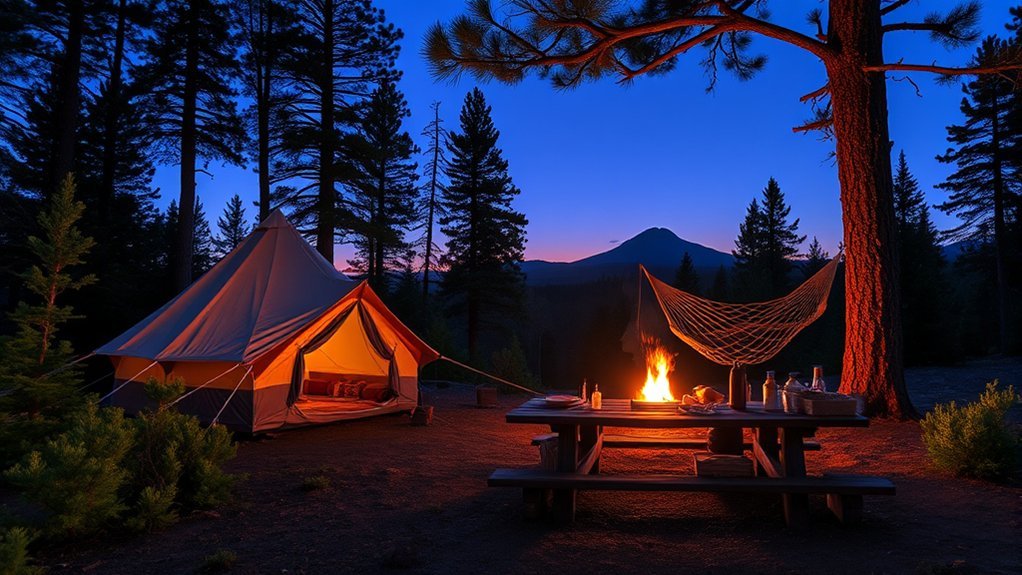
When tent camping in a national forest, choose a campsite at least 200 feet from water sources and on level ground. Pack essential gear like a durable tent, sleeping bag, and a first aid kit. Keep food secured to avoid wildlife encounters and always follow proper waste management practices to protect the environment. Dress in layers for changing weather and wear sturdy shoes. For more insightful tips on cooking and respecting nature, keep exploring!
Choosing the Right Campsite

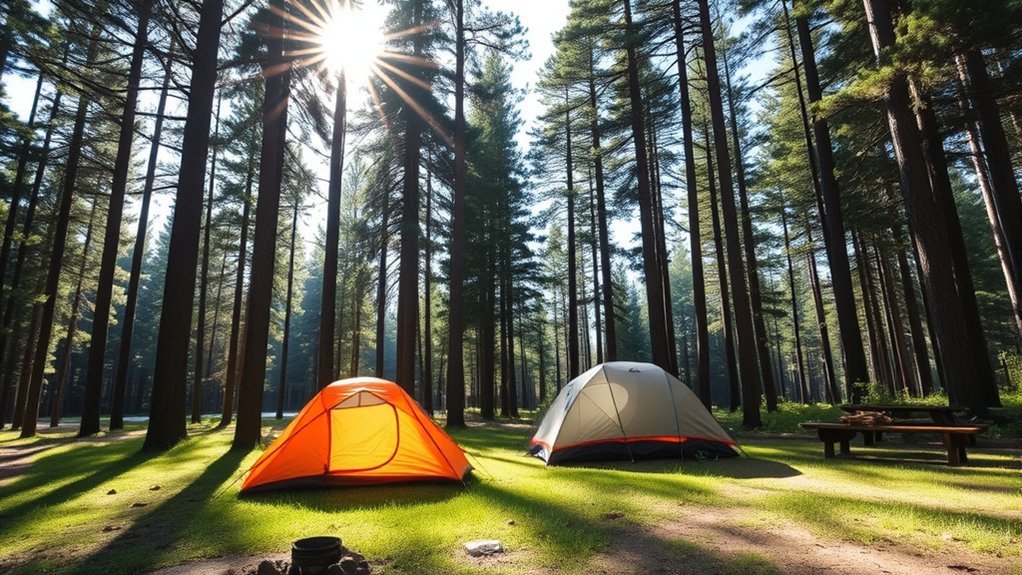
When you’re out in nature and ready to set up camp, choosing the right campsite can make all the difference. Start with campsite selection that respects the environment; opt for established sites to minimize your environmental impact. Position yourself at least 200 feet from lakes and streams to protect these essential water sources from contamination. Look for level ground, free of sharp objects, and steer clear of hazards like dead trees that could pose a threat.
When pitching your tent, verify it’s a safe distance from campfires for both ventilation and fire safety. Pay attention to the wind direction and surrounding vegetation; they can provide natural windbreaks and help keep smoke exposure to a minimum. By being mindful of these factors, you’ll create a comfortable and eco-friendly camping experience that lets you connect with nature while preserving it for future adventurers.
Essential Camping Gear
When you’re gearing up for a camping trip, packing the right essentials is key to your comfort and safety. You’ll want to make sure you have proper clothing, sturdy footwear, and a solid first aid kit on hand. Let’s explore the must-have items that will enhance your outdoor experience.
Must-Have Camping Essentials
To make your camping experience enjoyable and safe, packing the right essentials is key. Start with a durable tent and a sleeping bag suited for the season, along with a sleeping pad for added comfort. Don’t forget a well-stocked first aid kit—include your personal medications, bandages, antiseptic wipes, and pain relievers. For meal prep, gear recommendations include a portable camp stove, cooking utensils, and biodegradable soap to maintain cleanliness. Sturdy, closed-toe shoes are vital for hiking, offering support against rough terrain. Finally, verify you have enough water or a reliable purification method, as potable water can be scarce in national forests. Refer to your camping checklist to make sure you’ve packed everything you need for a liberating adventure!
Clothing and Footwear Choices
Packing the right clothing and footwear is just as important as ensuring you have all your gear. Choose moisture-wicking base layers and insulating mid-layers that utilize advanced fabric technology to help maintain comfort and warmth during those unpredictable national forest temperatures. A waterproof and breathable outer layer is essential for protecting against rain and wind while allowing ventilation.
Don’t forget sturdy, closed-toe hiking shoes or boots with good traction for traversing rugged terrain. Bring extra socks made from merino wool or synthetic materials to keep your feet dry on long hikes. Finally, use layering techniques to adapt to changing weather, and include a wide-brimmed hat and sunglasses for daytime sun protection. Enjoy your camping adventure!
Safety and First Aid
While enjoying the great outdoors, it is vital to prioritize safety and be prepared for any emergencies that may arise. A well-stocked first aid kit and knowledge of first aid basics are important for your camping experience.
Here’s what you should include for effective emergency preparedness:
- Antiseptics, bandages, and pain relievers
- Insect repellent and personal medications
- A map, compass, and flashlight
- Waterproof fire starter, whistle, and high-energy food
Tailor your kit to your group’s specific needs, considering allergies and medical conditions. Regularly check your supplies for expiration dates to verify everything’s effective. By being prepared, you can fully embrace the freedom of camping while staying safe!
Safety Precautions for Wildlife Encounters
When camping in the great outdoors, understanding safety precautions for wildlife encounters is crucial for your protection. First, always store food securely at least 100 feet away from your tent and cooking area to avoid attracting wildlife, especially bears. Familiarize yourself with local wildlife behavior and habitats; knowing what to expect helps with encounter prevention. Keep a safe distance from any wildlife you spot, observing them from afar—never attempt to feed or approach them. At night, use a flashlight to illuminate your surroundings and deter animals that might come too close. Staying alert and aware is key. If you experience any dangerous wildlife interactions, report them to park authorities immediately. This not only guarantees your safety but also protects future campers. By following these precautions, you can enjoy your outdoor adventure while minimizing risks associated with wildlife encounters.
Proper Waste Management Practices
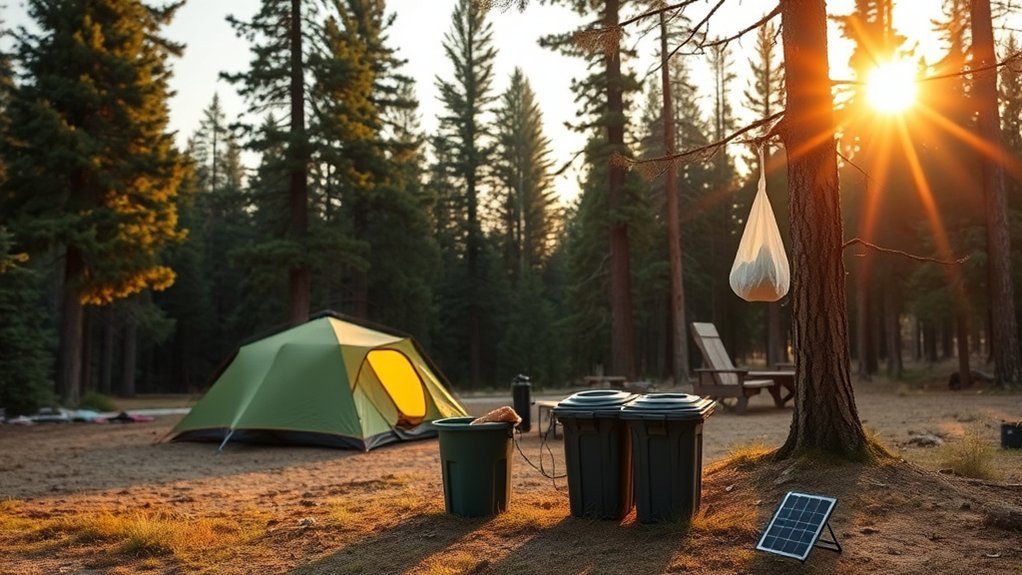
To enjoy a sustainable camping experience, it’s essential to practice proper waste management. By keeping your campsite clean, you not only protect the environment but also enhance your own outdoor experience. Here are some important hygiene practices for effective waste disposal:
Practicing proper waste management is key to a sustainable camping experience, ensuring a clean environment and enhanced enjoyment.
- Always pack out all trash, including food remnants, to keep the area pristine.
- Use biodegradable soap for washing dishes, and never dump wastewater in natural water sources.
- Bury human waste at least 6-8 inches deep and 200 feet away from water sources and trails.
- Pack out toilet paper in a sealed bag, as it doesn’t decompose quickly in the wild.
Consider using a portable camping toilet or wag bags for a more convenient and sanitary solution. By following these guidelines, you’ll help preserve nature and guarantee a more enjoyable camping trip for everyone.
Cooking and Meal Preparation in the Wilderness
Cooking in the wilderness can be a rewarding experience that connects you to nature while satisfying your hunger. With thoughtful meal planning, you can elevate your outdoor cooking beyond dehydrated meals. Consider options like breakfast burritos or Hobo Stew to enjoy robust flavors in the wild.
Here’s a handy table for your meal prep:
| Cooking Techniques | Suggested Meals |
|---|---|
| Pre-cooked items | Bacon, sausages |
| Quick assembly | Sandwiches, wraps |
| One-pot meals | Hobo Stew, chili |
| Snacks for energy | Trail mix, protein bars |
Pack essential cooking gear, including a camp stove, cooler, and utensils. Remember to store food securely and clean up thoroughly to deter wildlife. By planning diverse meals and using efficient cooking techniques, you’ll savor every moment spent in the great outdoors.
Respecting the Environment and Leaving No Trace
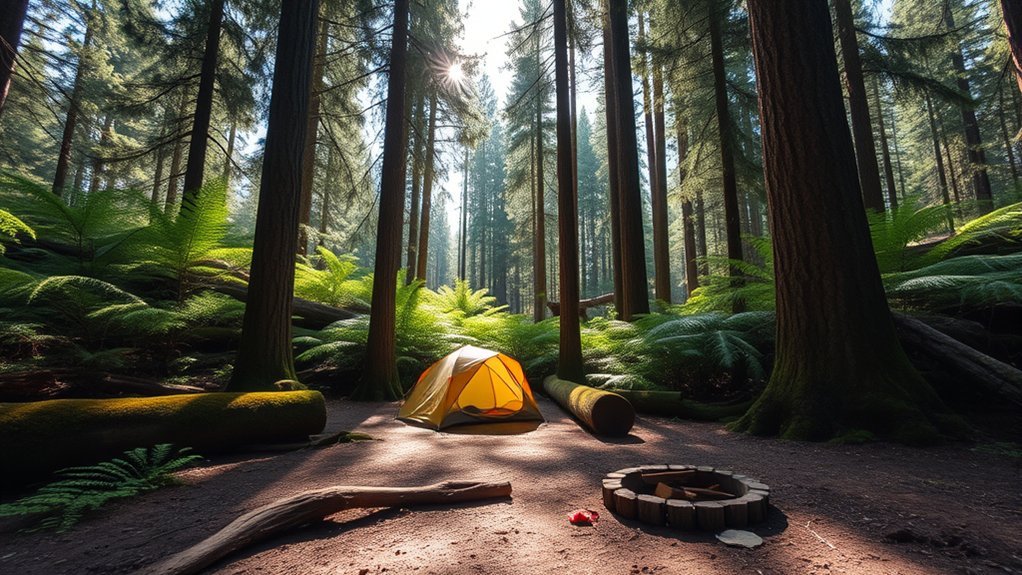
Respecting the environment while camping not only enhances your experience but also guarantees that natural spaces remain pristine for future adventurers. By incorporating eco-friendly practices, you contribute to nature conservation and assure these beautiful sites endure. Here are some tips to keep in mind:
- Always camp on durable surfaces to minimize soil erosion and protect vegetation.
- Pack out all trash and dispose of waste properly, using established restroom facilities or digging a hole for human waste at least 200 feet from water sources.
- Leave what you find, including natural artifacts, to maintain the environment’s integrity.
- Observe wildlife from a distance, store food securely, and never feed animals.
Frequently Asked Questions
What Are the Best Months for Tent Camping in National Forests?
The best camping months are typically late spring through early fall. During this time, you’ll enjoy pleasant temperatures and stable weather, making your outdoor experience liberating and enjoyable. Just check seasonal weather for your specific area!
How Do I Find Campground Amenities and Facilities?
To find campground amenities and facilities, check official websites or apps. You’ll discover campground services and facility availability, ensuring you know what’s offered before arriving, so you can enjoy your adventure without surprises!
Can I Bring My Pet to National Forest Campgrounds?
Yes, you can bring your pet to national forest campgrounds, but check the pet camping rules first. Many sites are dog-friendly, allowing you to enjoy nature together while ensuring everyone’s safety and comfort.
Are Campfires Allowed in All National Forest Campgrounds?
Campfires aren’t allowed in all national forest campgrounds. You should check local campfire regulations, prioritize fire safety, and respect nature. Enjoy warmth and ambiance, but always follow rules to protect your surroundings.
What Should I Do in Case of Severe Weather While Camping?
If severe weather hits, seek shelter immediately. Prioritize weather preparedness by checking forecasts. During storms, stay low in a sturdy tent or find a nearby building. Always prioritize storm safety to keep yourself safe and secure.
Conclusion
In your quest for a memorable camping experience, remember to respect nature and embrace eco-friendly practices. By choosing the right campsite, packing essential gear, and preparing properly, you’ll guarantee safety and satisfaction. Don’t forget to manage waste wisely and be cautious of wildlife. With these tips in mind, you can create cherished camping memories while preserving the beauty of our national forests. So gear up, get outside, and enjoy the great outdoors responsibly!