


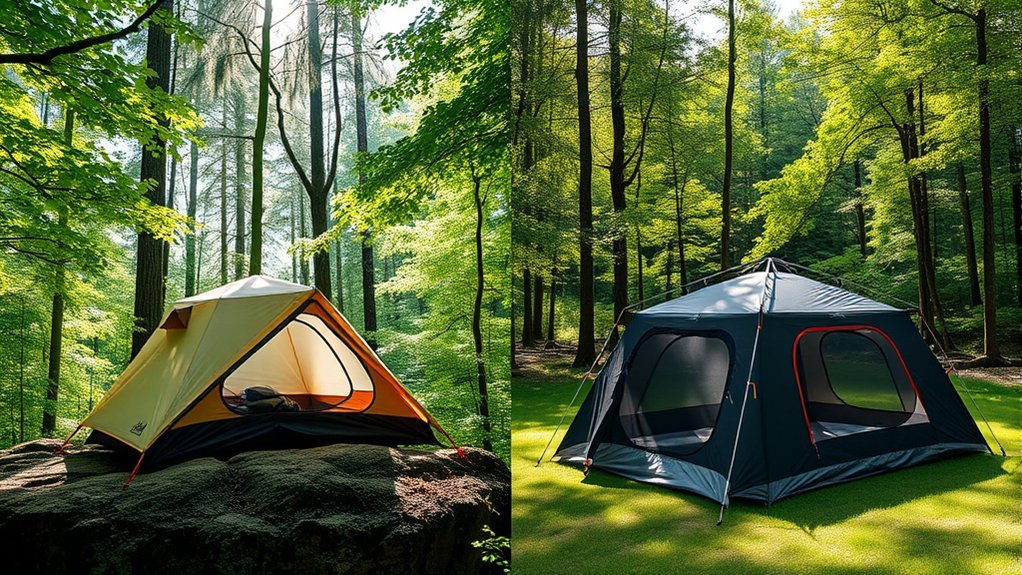
When choosing between a backpacking tent and a camping tent, it’s essential to evaluate your needs. Backpacking tents are lightweight and portable, making them perfect for hikes, while camping tents offer more space and comfort for families or larger groups. Backpacking tents typically weigh 1-5 pounds and cater to 1-3 people. In contrast, camping tents are more robust and spacious. Understanding these key differences can greatly impact your outdoor experience, and there’s more to uncover about each type.
Differences Between Backpacking and Camping


When you compare backpacking to traditional camping, you’ll notice key differences that can greatly impact your outdoor experience. Backpacking involves hiking to your campsite with all your gear strapped to your back, while traditional camping lets you set up close to your vehicle, eliminating the need for long treks. This fundamental difference influences your choice of gear, especially tents.
Backpacking tents are designed for portability, weighing between 1-5 pounds and accommodating 1-3 people, which makes them easier to carry but limits space and comfort. In contrast, camping tents prioritize comfort, often providing more room and extra features for larger groups.
Understanding these differences in camping techniques will help you maintain your tent better, ensuring its longevity. Lightweight materials in backpacking tents require careful handling, while camping tents, built for rugged use, can withstand more wear and tear. Choose wisely to enhance your outdoor liberation!
Differences Between Backpacking Tents and Camping Tents
Choosing the right tent can make or break your outdoor experience, and understanding the differences between backpacking tents and camping tents is key. Backpacking tents are designed for portability, weighing between 1-5 pounds, allowing you to enjoy the backpacking benefits of lightweight gear on your hiking trips. They typically offer limited space, focusing on efficiency and ease of setup with simplified pole designs.
On the other hand, camping tents prioritize comfort and space, making them heavier and better suited for car camping. With thicker, sturdier poles, they provide stability and can accommodate more people, enhancing your camping advantages. While backpacking tents are often three-season tents, many camping options can handle winter conditions due to their robust construction. Ultimately, your choice hinges on whether you value portability or spaciousness for your outdoor adventures.
Factors to Consider When Deciding Between a Backpacking or Camping Tent

When you’re choosing between a backpacking tent and a camping tent, consider how you’ll use it. Weight and portability are essential for hiking trips, while space and comfort take precedence for car camping. By evaluating these factors, you can find the right tent to suit your outdoor adventures.
Tent Usage Scenarios
Deciding between a backpacking tent and a camping tent often hinges on your specific outdoor scenario and personal preferences. If you’re planning long hikes, backpacking tents shine with their lightweight design, typically weighing 1-5 pounds. These tents offer essential tent features for 1-3 people, ensuring portability without compromising your hiking experience. On the other hand, if your outdoor activities involve car camping or family trips, camping tents provide ample space and comfort, accommodating larger groups effortlessly. With thicker materials for durability, they’re built to withstand rough handling. Consider your intended use: backpacking tents excel in mobility, while camping tents enhance leisure and comfort for more relaxed stays in nature. Choose wisely to match your adventure style!
Weight and Portability
Weight and portability are critical factors in your tent choice, especially if you’re planning to hike long distances. Backpacking tents typically weigh between 1-5 pounds, making them perfect for those who prioritize ease of transport. In contrast, camping tents often exceed 5 pounds, focusing more on space and comfort.
Consider these factors when choosing:
- Weight distribution: Backpacking tents minimize bulk for better balance.
- Portability features: Look for compact designs that fit in your backpack.
- Minimum trail weight: Includes only essential setup items for lighter loads.
- Optimal weight: Aim for 1-4 pounds to enhance your hiking experience.
Choosing wisely guarantees you enjoy both your hike and your downtime.
Space and Comfort
Choosing the right tent for your outdoor adventure hinges considerably on space and comfort. Backpacking tents focus on space efficiency, typically accommodating 1-3 people while prioritizing lightweight portability. This minimalist approach often sacrifices comfort levels, leaving little room for gear or movement. In contrast, camping tents excel in spaciousness, providing ample headroom and livable area, perfect for families or larger groups. For maximum comfort during car camping, consider a tent with double the capacity rating to guarantee plenty of space for both sleeping arrangements and gear. While backpacking tents are ideal for short hikes, camping tents shine during longer stays where comfort and space become essential for a fulfilling experience in nature. Choose wisely to enhance your outdoor liberation.
Usage

When it comes to outdoor adventures, understanding the differences in usage between backpacking tents and camping tents is essential for a successful trip. Each type serves distinct purposes that can greatly impact your tent activities and overall camping experiences.
- Backpacking Tents: Designed for mobility, weigh between 1-5 pounds, and suit 1-3 persons.
- Camping Tents: Built for comfort and space, ideal for car camping, and often accommodate larger groups.
- Seasonality: Backpacking tents fit for three-season use, while camping tents can handle winter conditions.
- Versatility: Though backpacking tents can be used for camping, camping tents offer superior comfort for extended stays.
Price
When it comes to pricing, understanding your budget is essential for choosing between a backpacking tent and a camping tent. Backpacking tents can range from $100 to over $1000, reflecting their lightweight materials and advanced design, while camping tents are typically more budget-friendly, costing between $50 and $300. Evaluating how often you’ll use your tent can help you determine the long-term investment value and find the right price range for your needs.
Budget Considerations for Tents
While budget considerations are essential when selecting a tent, understanding the differences between backpacking and camping models can help you make an informed choice. Here are some key points to keep in mind:
- Price Range: Backpacking tents typically cost $100 to $500, while camping tents can range from $100 to over $1000.
- Material Quality: Lightweight fabrics in backpacking tents may drive up prices compared to thicker camping materials.
- Tent Maintenance: Investing in a quality tent often reduces long-term costs associated with replacements.
- Seasonal Considerations: Frequent campers should invest in mid-range or higher tents for better durability and weather protection.
Long-term Investment Value
Choosing the right tent is not just about the initial price; it’s also about the long-term investment value it brings to your outdoor experiences. When you conduct a durability assessment, a high-quality backpacking tent often proves cost-effective in the long run, thanks to its resilience against diverse conditions. Conversely, camping tents may have higher upfront costs due to robust materials, but this investment pays off regarding longevity, especially for family outings. For avid backpackers, the weight-saving features of premium tents enhance hiking efficiency, making them a smart choice. Ultimately, whether you opt for a backpacking or camping tent, consider how each option’s performance evaluation aligns with your specific outdoor goals and frequency of use.
Price Range Comparison
Understanding the price range of tents can greatly influence your outdoor gear decisions. When comparing prices between backpacking and camping tents, you’ll notice distinct budget ranges:
- Backpacking tents: $100 – $600, reflecting lightweight materials and specialized designs.
- Camping tents: $100 – $1,000+, offering more features and larger capacities.
- High-quality backpacking tents often demand higher costs due to advanced materials prioritizing durability.
- Camping tents provide better value for families, justifying higher prices with added comfort and space.
Capacity
Capacity is an essential factor when selecting a tent, as it directly impacts your comfort and overall camping experience. Backpacking tents typically accommodate 1-3 people, making them perfect for solo adventurers or small groups on the move. These tents feature capacity ratings that reflect the maximum number of occupants, but for ideal comfort levels, consider choosing one with double the capacity rating—this allows space for gear and personal comfort.
On the other hand, camping tents are designed for larger groups, comfortably fitting 4 or more people. They often boast spacious designs and higher ceilings, enhancing your overall experience. While a backpacking tent is lightweight, ranging from 1-4 pounds, camping tents are bulkier, focusing on ample space and features like multiple rooms. Ultimately, your choice will depend on your group size and desired comfort level, ensuring your outdoor adventures are both liberating and enjoyable.
Materials
When it comes to tent materials, the differences between backpacking and camping tents are essential to your outdoor experience. Backpacking tents utilize lightweight, high-performance material types like nylon or polyester, designed to minimize weight while ensuring fabric durability. They often feature water-repellent coatings for enhanced waterproofing. In contrast, camping tents are made from thicker, more durable fabrics, which can withstand rough handling and provide better protection against the elements, albeit at the cost of increased weight.
Understanding the differences in tent materials is crucial for enhancing your outdoor adventures, especially between backpacking and camping tents.
Here are some key points regarding tent materials:
- Backpacking tents: Lightweight, high-performance fabrics for easy transport.
- Waterproofing: Treated fabrics in backpacking tents vs. thicker materials in camping tents.
- Durability: Backpacking tents require careful handling; camping tents endure rugged use.
- Cost: Backpacking tents often use advanced technologies, making them pricier.
Understanding these differences will help you make informed choices for your adventures.
Weight
While choosing a tent for your outdoor adventures, the weight can greatly impact your experience, especially if you’re backpacking. Backpacking tents typically weigh between 1 to 5 pounds, engineered for effortless transport during your hikes. When evaluating a tent’s weight, consider its minimum trail weight, which includes only essential setup items, versus the packaged weight that accounts for all components like stakes and stuff sacks.
For ideal backpacking, aim for a one-person tent between 1-3 pounds and a two-person tent around 1-4 pounds. In contrast, camping tents usually exceed 5 pounds due to added space and durability features, making them more suitable for car camping. A lighter tent enhances your hiking convenience and improves weight distribution, reducing your overall carrying burden. By selecting the right tent materials and weight, you’ll enjoy a more liberating outdoor experience without being weighed down.
Frequently Asked Questions
Can I Use a Backpacking Tent for Car Camping?
Yes, you can use a backpacking tent for car camping. Its lightweight design offers backpacking benefits, making it easy to transport. Just guarantee it meets your space and comfort needs for a great camping experience!
What Are the Best Brands for Backpacking Tents?
When considering the best backpacking brands, look for Big Agnes, REI, and MSR. Their tents excel in quality, balancing lightweight designs with durability. Tent quality comparisons reveal these brands consistently outperform others in outdoor adventures.
How Do I Maintain My Camping Tent?
To maintain your camping tent, clean it after every trip using mild soap and water. Make certain it’s completely dry before storage to prevent mold. Store it loosely in a cool, dry place to keep its shape.
Are There Weather-Resistant Options for Backpacking Tents?
Absolutely, weather-resistant backpacking tents exist! Look for high weather ratings and durable material types like ripstop nylon or polyester. These tents shield you from nature’s wrath, keeping your adventures liberating and enjoyable, regardless of the elements.
Can Children Sleep in a Camping Tent Comfortably?
Yes, children can sleep comfortably in a camping tent, provided it’s the right tent size. Guarantee there’s enough space for their sleeping bags and gear, promoting a cozy environment for restful nights under the stars.
Conclusion
In choosing between a backpacking tent and a camping tent, it’s essential to weigh your specific needs. Did you know that nearly 70% of outdoor enthusiasts prefer lightweight gear for their adventures? This statistic highlights the growing trend toward efficiency in outdoor gear. By considering factors like usage, price, capacity, materials, and weight, you can select the perfect tent to enhance your camping experience, whether you’re trekking through the backcountry or enjoying a family outing at a campsite.