


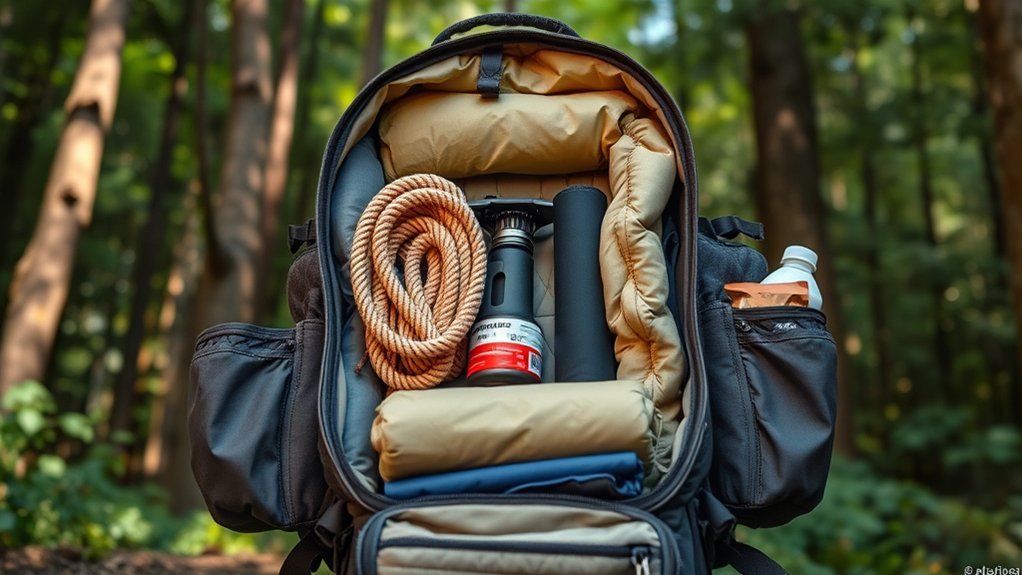
To minimize strain while hiking, pack heavy items in the back middle zone of your backpack, close to your spine. This placement improves balance and reduces discomfort. Store the hydration bladder in the middle for easy access and stability. Frequently used items should be in the inner top pocket for quick retrieval. Keeping primarily heavier gear in the back and lighter gear towards the top enhances comfort. Discover more packing strategies to optimize your hiking experience.
Understanding Backpack Zones


When you understand the different zones of your backpack, you can pack more efficiently and hike more comfortably. Your backpack has eight zones, each with a specific purpose: outer top, inner top, side pockets, front, middle front, back middle, bottom, and compression straps. Start by placing your hydration bladder in the middle of your pack; it maintains balance and keeps heavier weight close to your spine. Next, put your heaviest items in the back middle zone to reduce discomfort. For quick access, store lightweight items in the inner top pocket. Your sleeping system and rain gear should go in the bottom compartment. By effectively utilizing these zones, you enhance your comfort and balance, allowing for a more liberated hiking experience. Knowing where to put your gear not only simplifies your packing but also elevates your overall adventure.
Importance of Weight Distribution
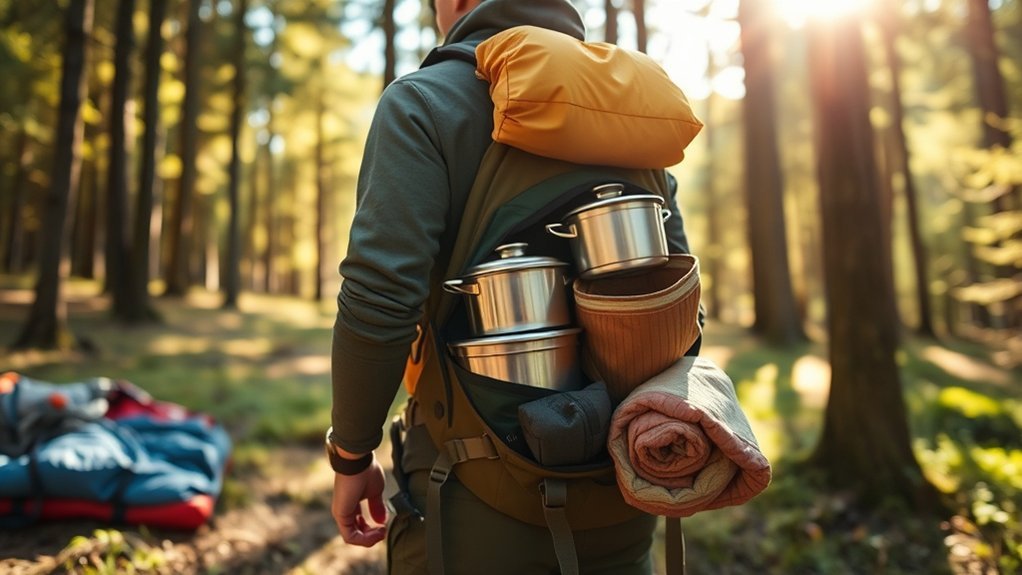
Packing your backpack with an understanding of weight distribution can greatly enhance your hiking experience. Properly distributing weight helps maintain balance and reduces strain on your back. By placing heavy items close to your spine, you lower your center of gravity, improving stability and comfort.
Here’s a quick overview of how to think about weight distribution:
| Backpack Zone | Weight Placement |
|---|---|
| Top | Light items (clothes) |
| Middle | Heavier gear (tent, food) |
| Bottom | Heaviest items (sleeping bag) |
Evenly distributing weight prevents excessive pressure on specific body areas, reducing discomfort and potential injury. A well-packed backpack not only enhances maneuverability but also lessens the perceived weight, allowing you to focus on enjoying the journey. Prioritize weight distribution to empower your adventure!
Ideal Placement for Hydration Bladder

Placing your hydration bladder in the middle of your backpack is essential for ideal weight distribution and comfort. This central position keeps the weight close to your spine, reducing discomfort during hikes. It also supports better balance and stability, minimizing the shifting of weight as you move. To make sure you can easily access your water, store the bladder in a designated compartment or sleeve specifically designed for hydration systems.
Keeping the hydration bladder in the middle section allows for efficient weight distribution, vital for maintaining your energy levels over long distances. Regularly check its placement and secure it properly to prevent it from bouncing around, which can lead to instability. By ensuring your hydration bladder is correctly positioned, you’ll enjoy a more liberating experience on the trail, allowing you to focus on the journey rather than discomfort. Stay hydrated and keep moving with ease!
Arranging Heavy Gear Near Your Spine
To maximize comfort and stability, arrange your heavy gear close to your spine. This ideal weight placement keeps your center of gravity aligned, reducing strain on your back during hikes. Plus, it allows you to access your essentials without disrupting your balance.
Optimal Weight Placement
When you arrange your backpack, positioning the heaviest items closest to your spine is essential for comfort and balance. This placement minimizes discomfort and maintains stability during your hike. Place your heaviest gear in the middle of the pack to evenly distribute weight, which reduces strain on your shoulders and back. Start by inserting your hydration bladder first, keeping it centralized for added stability. Store frequently accessed items in the middle for easy reach, while lighter gear can fit into the top inner pocket for quick retrieval. Avoid external attachments for heavy items, as they can destabilize your load, leading to discomfort. Prioritize ideal weight placement to enhance your hiking experience and liberate your journey.
Accessibility and Comfort
Arranging heavy gear near your spine not only enhances comfort but also improves your overall hiking experience. By keeping the weight centered in the middle of your backpack, you reduce strain on your body and maintain balance, essential for traversing uneven terrain. Start by placing your hydration bladder in this central spot; it allows easy access and supports better weight distribution. Store frequently accessed items nearby, while heavier gear that you don’t need often can go lower but should still be close to your back. This proper weight distribution can greatly decrease fatigue and discomfort, letting you focus on enjoying the journey. Remember, the right arrangement is key to a liberating hiking experience.
Accessing Frequently Used Items
To make your hiking experience smoother, store frequently used items in the inner top pocket for quick access. Keep essential gear, like your first aid kit, in the middle section to avoid disruption while reaching for them. This organization not only enhances accessibility but also helps maintain balance in your pack.
Top Inner Pocket
The top inner pocket of your backpack is the perfect spot for items you need to access frequently, like snacks, a first aid kit, or a power bank. Keeping lightweight items here helps maintain balance and reduces the perceived weight of your bag. This pocket should be easily reachable, allowing you to grab essentials quickly during breaks or emergencies. By organizing frequently used items in this pocket, you streamline your hiking experience, minimizing downtime and maximizing enjoyment. You’ll find that having important gear within reach enhances your efficiency and comfort on the trail. So, make the most of your top inner pocket for a more liberated and enjoyable adventure.
Middle Pack Access
When hiking, having quick access to essential items can make all the difference. Storing frequently used items like snacks, maps, or a first aid kit in the middle of your pack allows for effortless retrieval. Place these essentials in the inner top or middle front zones to avoid rummaging through your gear. By organizing these items in designated pockets, you enhance your hiking efficiency, letting you grab what you need without disruption. Properly positioning these items not only saves time and energy but also helps maintain an even weight distribution, keeping your center of gravity low. This balance improves comfort and stability on the trail, allowing you to focus on enjoying your adventure.
Storing Lightweight Gear for Quick Access
Many hikers find that storing lightweight gear in their backpack’s top inner pocket makes it easy to access essential items like snacks or a headlamp. Organizing these items at the top allows you to grab what you need without digging through heavier gear, enhancing your efficiency on the trail.
Additionally, use the outer top area of your backpack to secure a lightweight jacket or trekking poles with straps and loops. This setup guarantees you can quickly reach these items when conditions change.
Don’t forget about side pockets for hydration bottles or other lightweight gear; keeping these essentials within reach helps maintain balance and stability in your pack.
Proper placement not only improves access but also contributes to better weight distribution, reducing fatigue during long hikes. By maximizing your backpack’s organization, you can enjoy a more liberated and enjoyable outdoor experience.
Utilizing the Bottom Compartment
Utilizing the bottom compartment of your backpack effectively can greatly enhance your stability on the trail. This space is perfect for bulky and heavy items like sleeping bags, sleeping pads, and pillows. By placing these heavier items at the bottom, you maintain a low center of gravity, which improves balance and reduces strain on your back.
Packing the bottom compartment first with these essentials lets you organize lighter gear in the middle and top sections, making it easier to access frequently used items. Make sure that you pack tightly to prevent shifting, which can lead to discomfort on your hike.
Avoiding External Attachments
To guarantee a comfortable hiking experience, avoid attaching heavy items externally to your backpack. Doing so can lead to discomfort and instability as you navigate rugged terrain. Instead, pack heavy gear close to your back and center. This reduces strain on your body and improves weight distribution, allowing for a smoother hike.
External attachments can also hinder your movement and balance, making it challenging to tackle tricky spots. If you must attach something, reserve it for lightweight, bulky items like foam sleeping mats or jackets. These won’t compromise your stability and will keep your load manageable.
Enhancing Comfort Through Proper Packing
When you pack your backpack with comfort in mind, you’ll find that a few strategic choices can make a significant difference during your hike. Start by placing heavy items close to your back and near your spine. This minimizes discomfort and maintains balance as you move. Load your hydration bladder first in the middle of the pack, as it’s both heavy and frequently accessed, helping to distribute weight effectively.
Keep frequently used items like snacks or tools in the middle for easy access, while lighter items can go in the top inner pocket. Use the bottom compartment for bulkier items like sleeping bags and pads to stabilize your pack and enhance overall comfort. Finally, avoid external attachments for heavy gear; make certain your backpack is adequately sized to hold all your essentials internally. These simple packing techniques will help you feel liberated on your journey.
Frequently Asked Questions
Can I Pack Heavy Items in External Pockets?
You shouldn’t pack heavy items in external pockets. They can throw off your balance and make carrying uncomfortable. Instead, keep heavy gear inside your backpack, closer to your back for better stability and support.
How Does Weather Affect Heavy Item Placement?
Weather’s a game-changer for heavy item placement! Rain can soak your pack, shifting weight and affecting balance. In snow, keeping heavier items low helps maintain stability. Always adjust based on conditions for ideal comfort and safety.
What Are the Consequences of Poor Weight Distribution?
Poor weight distribution can lead to discomfort, fatigue, and instability. You’ll struggle to maintain balance, risking injury or dropping your gear. Properly distributing weight enhances your mobility and keeps you energized during your adventures.
Should I Consider My Body Type When Packing?
Absolutely, you should consider your body type when packing. It affects your comfort and balance. By optimizing weight distribution, you’ll enhance your experience, ensuring you carry your gear effortlessly, ready for any adventure ahead.
Can I Use Compression Bags for Heavy Items?
Yes, you can use compression bags for heavy items. They help save space and keep your gear organized. Just make sure the bags are durable enough to handle the weight, ensuring your comfort while packing.
Conclusion
To sum up, packing your backpack isn’t just about fitting everything in; it’s a science that can make or break your adventure. By strategically placing heavy items close to your spine and keeping frequently used gear accessible, you’ll enhance comfort and stability on the trail. So, next time you pack up, remember: how you arrange your load can influence your experience. Test these tips out, and see how a little organization can lead to a more enjoyable journey!