


A rucksack and a backpack differ primarily in purpose and design. Backpacks cater to everyday needs with lightweight materials and moderate capacity, ideal for school or commuting. Rucksacks, however, are built for heavy-duty use, featuring rugged construction and higher weight capacities for outdoor adventures. They offer better load-bearing capabilities and comfort for extended wear. Knowing their key features helps you choose the right one for your activities. Continue exploring to discover more insightful details.
What Is a Backpack?

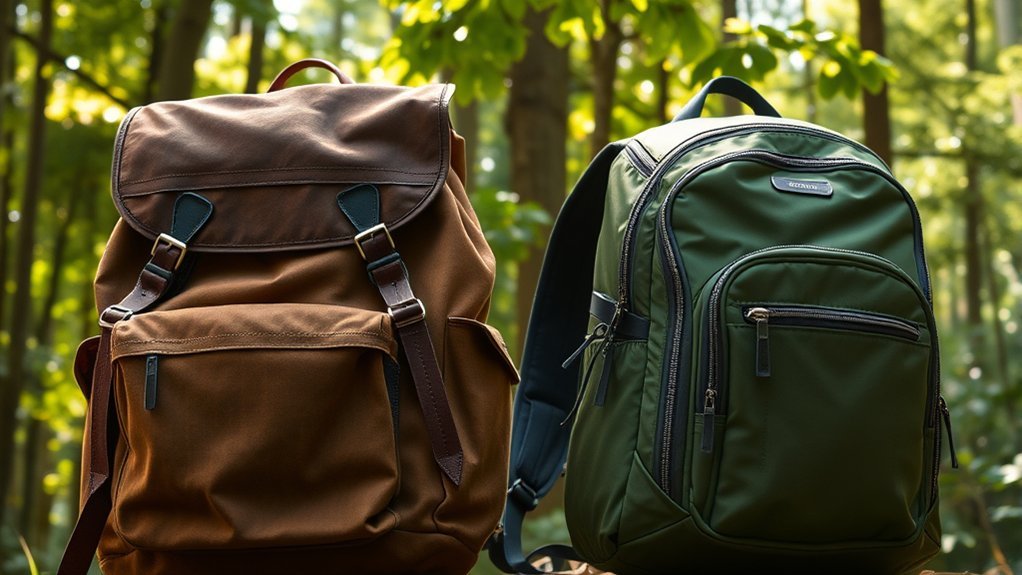
A backpack is a practical solution for carrying your essentials hands-free, designed to rest comfortably on your back with two adjustable shoulder straps. These bags come in various styles, including school bags, laptop carriers, and hiking packs, catering to diverse needs. Typically made from lightweight materials, backpacks emphasize comfort and accessibility, incorporating padded straps and ergonomic designs.
They usually feature zippered compartments and internal pockets that allow you to organize items like books, gadgets, and daily essentials efficiently. Ideal for everyday use, backpacks suit activities such as commuting, attending school, or setting off on short outdoor trips. They accommodate light-to-moderate loads, typically ranging from 5 to 20 pounds, making them versatile for anyone seeking freedom and mobility. Whether you’re heading to class or exploring nature, a backpack empowers you to carry what you need without being weighed down, enhancing your daily experience.
What Is a Rucksack?

A rucksack is designed for durability and spaciousness, making it perfect for outdoor activities. Its load-bearing capabilities and features like adjustable straps and reinforced support help you carry heavy gear comfortably. Whether you’re hiking, camping, or on a military mission, understanding its design and ideal usage can enhance your outdoor experience.
Rucksack Design Features
Rucksacks are known for their rugged design, making them ideal for outdoor enthusiasts. Unlike traditional backpacks, rucksacks often feature a flap closure secured with buckles or drawstrings, enhancing durability in harsh conditions. Their larger main compartments allow you to store bulkier items and essential gear for your adventures. Constructed from heavy-duty, abrasion-resistant materials, rucksacks can withstand rough terrains and long-distance treks. Many models include external pockets, providing easy access to frequently used items, further boosting practicality. Comfort is a priority, with adjustable waist and chest straps, plus padded panels that support heavy loads during extended wear. This design not only facilitates mobility but guarantees you can carry your essentials without sacrificing comfort.
Ideal Usage Scenarios
When planning your next outdoor adventure, consider a rucksack for its superior capacity to carry heavy loads over long distances. If you’re starting on a multi-day hike or camping trip, a rucksack’s larger main compartment allows you to pack bulky gear efficiently. The padded hip belts and adjustable straps enhance comfort and weight distribution, making it easier to traverse rugged terrains. Rucksacks, constructed from durable, abrasion-resistant materials, withstand harsh weather conditions, ensuring your gear stays protected. Originally designed for military use, they prioritize functionality, catering to outdoor enthusiasts seeking reliability. Whether you’re hiking, camping, or tackling any adventure, a rucksack offers the support and capacity you need for a liberating experience in nature.
Load-Bearing Capabilities
Designed for heavy loads, rucksacks excel in load-bearing capabilities, making them ideal for extended outdoor excursions. Rucksacks can carry 20 to 60+ pounds comfortably, thanks to their supportive frames and padded hip belts. This guarantees better weight distribution, especially on rugged terrain. Their design often includes multiple attachment points and pockets, letting you secure bulky gear efficiently. Crafted from heavy-duty materials, these packs withstand harsh conditions, perfect for hikers, campers, and military personnel.
| Feature | Rucksack | Backpack |
|---|---|---|
| Load Capacity | 20 to 60+ pounds | Up to 20-30 pounds |
| Weight Distribution | Excellent | Moderate |
| Durability | Heavy-duty materials | Standard materials |
Choose wisely; your adventures await!
Design and Structure Differences
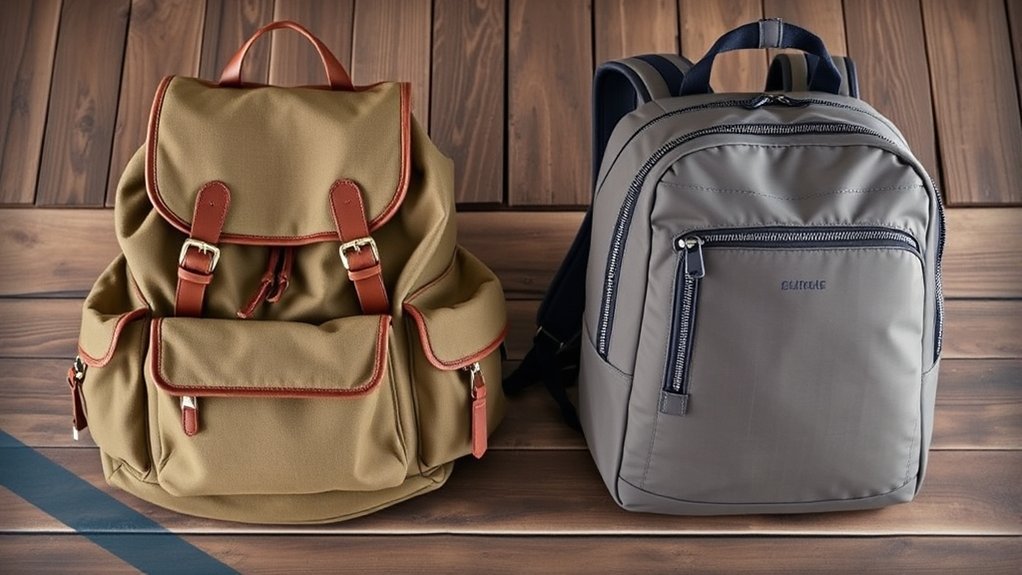
When comparing rucksacks and backpacks, you’ll notice distinct differences in construction materials and closure mechanisms. Rucksacks are typically made from heavy-duty materials for rugged durability, while backpacks favor lightweight fabrics for everyday use. Closure mechanisms also vary, with rucksacks often featuring flap-top designs secured by buckles or drawstrings, in contrast to the zippered compartments found in backpacks.
Construction Materials Comparison
While both rucksacks and backpacks serve the purpose of carrying gear, their construction materials and design greatly differ to cater to varying needs. Rucksacks are typically made from heavy-duty, abrasion-resistant materials, ensuring durability in rugged environments. In contrast, backpacks often utilize lightweight synthetics, prioritizing ease of handling for daily use. Rucksacks feature reinforced stitching and high-quality zippers for longevity, while backpacks may include standard zippers that focus on comfort. Many rucksacks have internal frames for ideal weight distribution, whereas most backpacks are frameless, maintaining a lighter profile. Additionally, rucksacks generally offer larger main compartments for bulkier items, while backpacks provide multiple smaller compartments for organizing everyday essentials efficiently. Choose wisely based on your specific requirements.
Closure Mechanisms Explained
Understanding the closure mechanisms of rucksacks and backpacks reveals key differences in their design and function. Rucksacks typically feature flap-top closures with buckles or drawstrings, offering easy access to larger compartments and a classic look. In contrast, backpacks often use zippered compartments, enhancing security and organization for smaller items.
| Feature | Rucksack | Backpack |
|---|---|---|
| Closure Type | Flap-top with buckles | Zippered |
| Access | Larger compartments easily | Quick access to internal |
| External Pockets | Yes, for gear attachment | Limited |
| Ideal Use | Outdoor and rugged durability | Everyday urban environments |
| Organization | Less structured | Highly organized |
These structural differences reflect their intended uses, with rucksacks focusing on durability and backpacks prioritizing convenience.
Capacity and Storage Comparison
Capacity is a key differentiator between rucksacks and backpacks. Rucksacks typically feature larger main compartments, ranging from 40 to 100 liters, designed for bulky gear during extended outdoor adventures. In contrast, backpacks generally hold 15 to 50 liters, making them ideal for daily essentials like books and gadgets.
While rucksacks prioritize space for larger items, they often come with fewer internal pockets, allowing for more room. Conversely, backpacks are equipped with multiple compartments for better organization of smaller belongings.
Many rucksacks also provide external storage options, including pockets and straps for attaching additional gear, enhancing their versatility. Military-grade rucksacks may include MOLLE webbing, enabling users to customize their carrying capacity further. Meanwhile, backpacks focus on internal organization for easy access and security. Understanding these differences helps you choose the right bag for your needs.
Usage Scenarios: Which One to Choose?
When deciding between a rucksack and a backpack, consider the specific activities you’ll be engaging in. If you’re commuting, attending school, or going on casual outings, a backpack is your best bet. It offers organized compartments for essentials like laptops and books, making daily life easier. For short trips or urban activities, its lightweight and compact design provides comfort and convenience.
On the other hand, if you’re planning outdoor adventures like camping, hiking, or traveling with heavy gear, opt for a rucksack. Its rugged design and larger capacity are tailored for carrying bulky items over extended periods. For multi-day treks, the rucksack’s durability and load-bearing capability will serve you well.
Ultimately, assess your planned activities and trip duration. Choose a backpack for everyday use and a rucksack for rugged outdoor scenarios to guarantee you’re well-equipped for your adventures.
Material and Durability
While both rucksacks and backpacks serve distinct purposes, their materials greatly impact their durability and performance. Rucksacks typically use heavy-duty, abrasion-resistant materials, making them ideal for rugged outdoor conditions. This construction, often reinforced with stitching and waterproof coatings, enhances their longevity during demanding adventures. On the other hand, backpacks frequently employ lightweight synthetic materials, like nylon and polyester, prioritizing comfort and portability. However, these materials may not withstand harsh environments as effectively, leading to quicker wear under heavy loads or extreme conditions. The choice of material in rucksacks reflects their capacity to handle significant weight, while backpacks focus on ease of use and organization with lighter fabrics. When selecting between the two, consider your intended use; if durability and ruggedness are key, a rucksack might be your best bet, while a backpack suits everyday needs.
Comfort and Ergonomics
Comfort and ergonomics play an essential role in choosing between a rucksack and a backpack. Backpacks typically feature padded shoulder straps and a comfortable back panel, ensuring even weight distribution for everyday use and moderate loads. They’re perfect for lighter gear, ranging from 5 to 20 lbs, ideal for daily commutes or short trips.
On the other hand, rucksacks are built for stability and heavy-duty carrying, accommodating loads of 20 to 60+ lbs. They come with thicker, sturdier straps and added padding on hip belts, making them suitable for extended outdoor adventures. Rucksacks often incorporate a frame and reinforced back support, enhancing comfort during long treks. Proper adjustment is vital to maximize comfort when carrying heavy loads, especially on rugged terrains. Ultimately, your choice depends on your specific needs and the weight of your gear.
Frequently Asked Questions
Can I Use a Rucksack for Everyday Commuting?
Yes, you can use a rucksack for everyday commuting. Its spacious design and ergonomic features make it ideal for carrying essentials comfortably, while its durability guarantees it withstands daily wear and tear effectively.
Are There Specific Brands Known for High-Quality Backpacks?
Absolutely, brands like Patagonia, The North Face, and Osprey are renowned for high-quality backpacks. They combine durability and functionality, ensuring you’re well-equipped for both daily adventures and spontaneous journeys, much like a modern-day explorer.
How Do I Clean and Maintain My Rucksack?
To clean your rucksack, empty it completely, brush off dirt, and wipe with a damp cloth. For deeper cleaning, use mild soap and cold water, then air dry away from direct sunlight to maintain fabric integrity.
Which Is More Suitable for Hiking: Rucksack or Backpack?
For hiking, a rucksack’s robust design carries your gear like a trusted steed. Its comfort and stability during long treks make it more suitable, while backpacks often fall short under nature’s demanding embrace. Choose wisely.
Can Backpacks Be Used for Travel Purposes?
Yes, backpacks can definitely be used for travel. They’re versatile, lightweight, and often designed with compartments for organization, making them ideal for both short trips and longer journeys, ensuring you stay mobile and efficient.
Conclusion
In the journey of choosing between a rucksack and a backpack, think of it as selecting your steed for an adventure. A rucksack, sturdy and spacious, is like a strong horse ready for long treks, while a backpack, sleek and nimble, is akin to a swift pony for quick trips. By understanding their unique features and intended uses, you can saddle up with the right companion for your quest, ensuring comfort and efficiency every step of the way.