


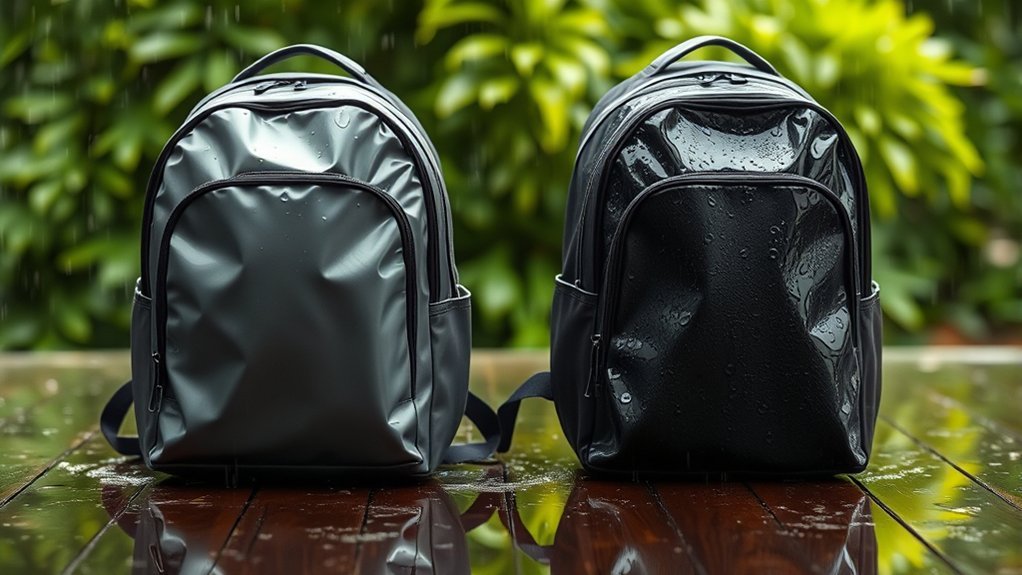
When choosing between waterproof and water-resistant backpacks, it’s crucial to know the key differences. Waterproof backpacks completely block water, making them ideal for heavy rain or submersion, while water-resistant backpacks repel light moisture and are better suited for casual outings. The materials used also vary; waterproof options typically feature high-performance materials like PVC, whereas water-resistant bags often use treated fabrics like nylon or polyester. Understanding these distinctions will help you select the best gear for your needs, and there’s more to explore on this topic.
Understanding the Key Differences

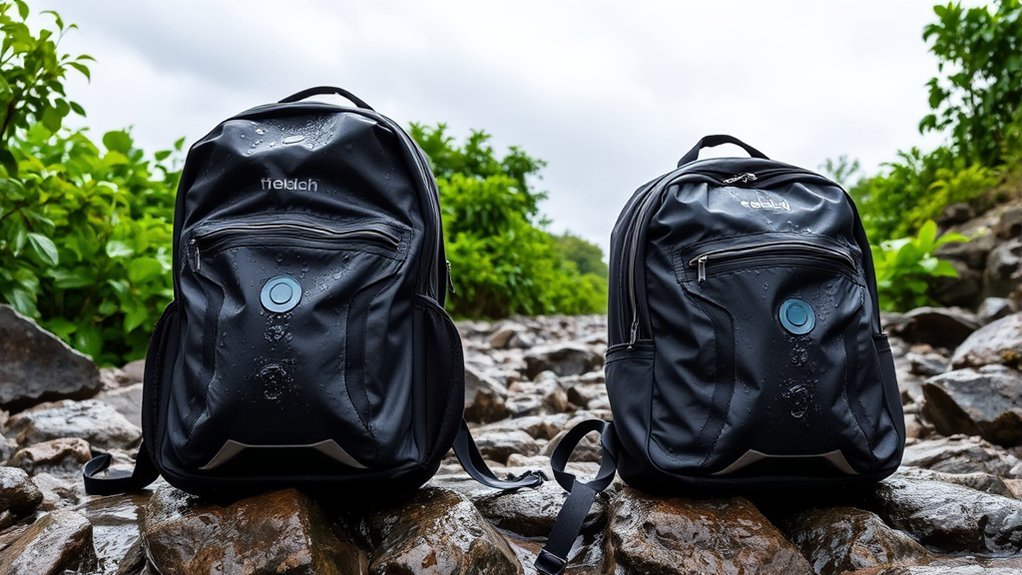
When you’re choosing between a waterproof and a water-resistant backpack, it’s essential to understand their fundamental differences. Waterproof backpacks are crafted to keep water out entirely, making them ideal for extreme conditions like heavy rain or submersion. These bags often use advanced materials like PVC or TPU and feature sealed seams and waterproof zippers, ensuring no water gets in. In contrast, water-resistant backpacks can repel some moisture but aren’t completely impermeable. Typically made from nylon or cotton with water-repellent coatings, they’re suitable for light rain or spills, though these coatings can wear off over time. Additionally, waterproof backpacks generally come at a higher price point due to their specialized materials and construction, while water-resistant options are more budget-friendly, perfect for everyday use. Ultimately, your choice should align with your intended activities; serious outdoor adventures call for waterproof solutions, while casual outings may only require water-resistant functionality.
Characteristics of Water-Resistant Backpacks
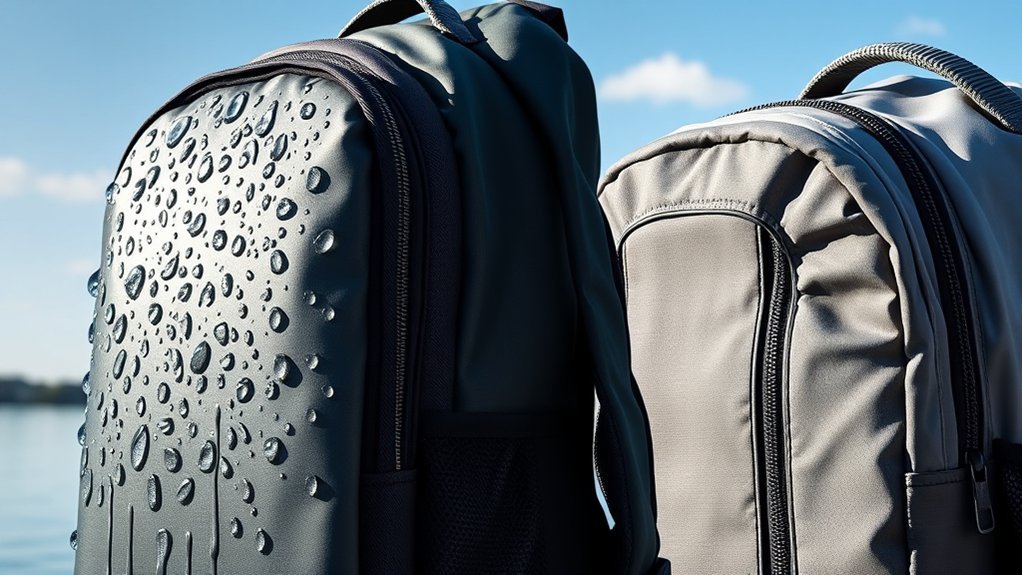
When considering the characteristics of water-resistant backpacks, it’s essential to examine their material composition and durability. Typically made from tightly woven fabrics like nylon or polyester, these backpacks are designed for light rain and everyday scenarios. However, their effectiveness can wane over time, making them less suitable for heavy outdoor conditions.
Material Composition and Durability
While you might expect all backpacks to provide the same level of protection against moisture, the material composition and durability of water-resistant backpacks vary considerably. Common materials include nylon, polyester, and canvas, often treated with durable water repellent (DWR) coatings. However, these coatings can wear off, reducing effectiveness over time. Fabrics like ballistic nylon are favored for their durability and abrasion resistance, making them suitable for everyday use. Tightly woven fabrics and sealed seams can withstand light rain but may falter in heavy downpours. Choosing high-quality materials enhances longevity and performance.
| Material | Durability | Water Resistance |
|---|---|---|
| Nylon | Moderate to High | Moderate |
| Polyester | Moderate | Moderate |
| Ballistic Nylon | High | Moderate |
| Canvas | Moderate | Low |
| DWR Coating | Varies | Enhances Protection |
Ideal Usage Scenarios
Water-resistant backpacks excel in everyday scenarios where light rain or splashes are a concern, making them perfect for commuters and casual outings. Here are some ideal usage situations:
- Daily Commutes: They’re lightweight and breathable, ideal for getting to work or school without feeling weighed down.
- Casual Day Trips: If you’re exploring a city or hiking mild trails, these packs handle unexpected drizzles while keeping your essentials safe.
- Budget-Friendly Options: Generally more affordable than waterproof backpacks, they provide good quality for those mindful of spending.
However, remember that while they resist moisture, they’re not designed for heavy rain. Additional protection for electronics and valuables is advisable during downpours.
Features of Waterproof Backpacks
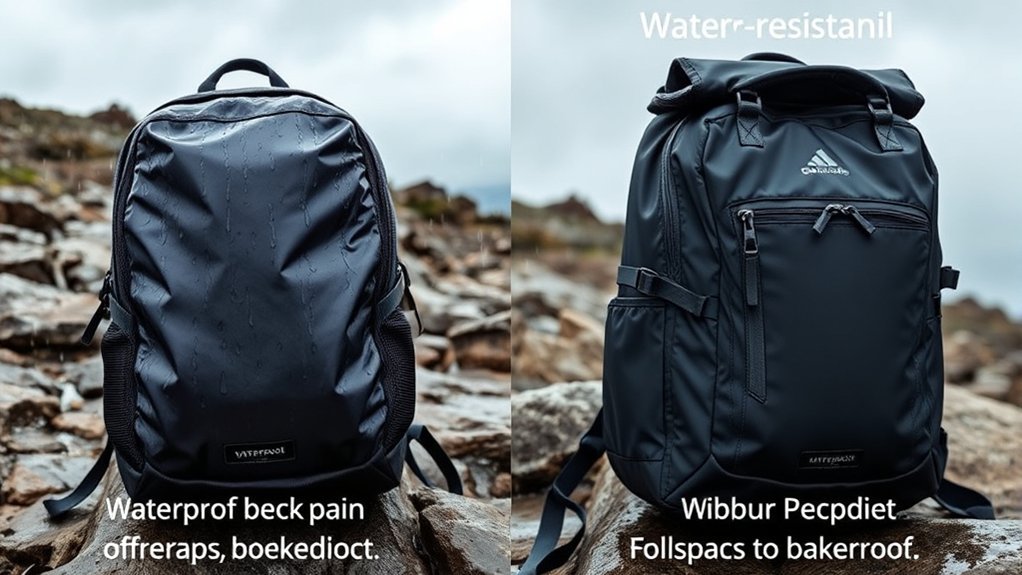
Waterproof backpacks offer complete protection against water, making them essential for activities like kayaking or hiking in heavy rain. They’re made from specialized materials such as PVC or TPU, which are designed to keep moisture out, and often feature sealed seams and waterproof zippers. While these design elements enhance their water resistance, they can also lead to increased weight and cost compared to water-resistant options.
Complete Water Protection
When you’re venturing into extreme conditions, having gear that can withstand the elements is essential, and waterproof backpacks excel in this area. They’re specifically designed to be completely impervious to water, ensuring your gear stays dry even in severe weather. Here are three key features that contribute to their effectiveness:
- High-Performance Materials: Crafted from materials like PVC or TPU, these backpacks resist both water and wear.
- Welded Seams: This construction technique eliminates potential water entry points, enhancing durability.
- Specialized Closures: Waterproof zippers and roll-top closures further protect against moisture intrusion.
With these features, waterproof backpacks provide peace of mind for outdoor enthusiasts, ensuring reliable protection for your essentials during activities like kayaking or hiking in heavy rain.
Specialized Material Use
Choosing the right materials is essential for ensuring a backpack’s effectiveness in keeping your gear dry. Waterproof backpacks utilize specialized materials like PVC and TPU, providing robust water barriers. Advanced construction techniques, including ultrasonic welding, eliminate seams that could allow water to seep in. High-quality waterproof zippers and roll-top closures enhance protection against moisture. Additionally, materials like VX21 sailcloth offer exceptional durability and waterproof capabilities suitable for extreme conditions. The hydrostatic head test measures these materials’ waterproofness, often exceeding 10,000 mm, indicating resilience under significant water pressure.
| Material Type | Key Features | Waterproof Rating |
|---|---|---|
| PVC | Affordable, durable | 5,000 mm |
| TPU | Flexible, high performance | 10,000 mm |
| VX21 Sailcloth | Exceptional durability | 20,000 mm |
| Ultrasonic Weld | Seamless construction | 15,000 mm |
| Waterproof Zipper | Enhanced sealing | N/A |
When to Choose a Water-Resistant Backpack
While selecting the right backpack for your needs, a water-resistant option can be ideal for daily activities that don’t involve heavy exposure to rain. These backpacks offer a balance of protection and practicality, making them suitable for various scenarios. Here are three situations where a water-resistant backpack shines:
- Urban Commuting: If you navigate city streets, a water-resistant bag protects against light rain and spills without the added weight of waterproof versions.
- Casual Outings: For day trips or casual hikes, these backpacks handle brief moisture exposure, ensuring your belongings stay dry during unexpected weather changes.
- Budget-Friendly Travel: If you’re looking to save money, water-resistant backpacks are typically more affordable, serving well for trips where heavy rain isn’t a concern.
When to Opt for a Waterproof Backpack
How do you decide if a waterproof backpack is right for your adventure? If you’re planning activities like kayaking, rafting, or hiking in heavy rain, a waterproof backpack is vital. These packs feature welded seams and waterproof zippers, ensuring your belongings stay dry even in extreme conditions. For multi-day trips in wet environments, a waterproof option is significant; water-resistant backpacks may not withstand heavy rainfall.
If your adventure might involve splashes or even submersion, a waterproof backpack offers peace of mind, protecting your electronics and clothing from water damage. Investing in a waterproof backpack is wise for serious outdoor enthusiasts. The durable construction and high-quality materials, such as VX21 sailcloth, justify the higher price point, providing long-term protection for your gear. Ultimately, when facing unpredictable weather or water exposure, choosing a waterproof backpack empowers you to adventure with confidence.
Popular Materials Used in Water-Resistant and Waterproof Backpacks
When it comes to selecting a backpack for outdoor activities, understanding the materials used in construction is essential. The choice between water-resistant and waterproof backpacks hinges on the materials that define their protective capabilities. Here are some popular materials to evaluate:
- Nylon and Polyester: Commonly used in water-resistant backpacks, these fabrics can be treated with coatings like PU or DWR to enhance water repellency.
- PVC and TPU: These advanced materials are staples in waterproof backpacks, providing a strong barrier against moisture and ensuring durability during heavy rain.
- Ballistic Nylon and VX21 Sailcloth: Known for their strength, ballistic nylon is often found in water-resistant gear, while VX21 offers exceptional protection in waterproof models.
Understanding these materials helps you make an informed choice, ensuring your backpack meets your adventure needs while maintaining peak water protection.
Tips for Maintaining Your Backpack’s Water Protection
Choosing the right materials for your backpack greatly affects its water protection capabilities, but maintenance is equally important to confirm longevity. Regularly clean your backpack following the manufacturer’s instructions; dirt and grime can wear down water-repellent coatings over time. To maintain fabric water resistance, reapply Durable Water Repellent (DWR) treatments every few months or after several washes.
Inspect seams for wear and seal any damaged areas with waterproof tape to prevent leaks, especially in high-stress zones. Store your backpack in a cool, dry place to deter mold and mildew, which can weaken both the material and its water protection. Finally, when facing heavy rain, use a rain cover for added protection; it preserves the backpack’s water-resistance while providing an extra layer of defense. By committing to these maintenance tips, you confirm your backpack remains a reliable companion in various weather conditions.
Frequently Asked Questions
Can I Use a Waterproof Backpack for Daily Commuting?
Yes, you can use a waterproof backpack for daily commuting. Its durable design protects your belongings from rain and spills, ensuring your essentials stay dry and secure while you navigate through varied weather conditions.
How Do I Clean My Water-Resistant Backpack?
To clean your water-resistant backpack, use a damp cloth with mild soap. Gently scrub any stains, then rinse with water. Let it air dry completely before storing it, ensuring it maintains its protective qualities.
Are Waterproof Backpacks Heavier Than Regular Ones?
Yes, waterproof backpacks often weigh more than regular ones due to additional materials and sealing techniques. However, the difference isn’t always significant, so consider your needs and preferences when choosing the right backpack for your activities.
Can I Repair a Damaged Waterproof Backpack?
Yes, you can repair a damaged waterproof backpack. With specialized patches, sealants, or sewing techniques, you can restore its functionality, allowing you to continue your adventures without fear of losing gear to the elements.
Do Water-Resistant Backpacks Come With Warranties?
Yes, many water-resistant backpacks come with warranties, but the terms vary by manufacturer. Always check the warranty details to understand coverage, as it may differ considerably depending on the brand and specific model you choose.
Conclusion
In summary, choosing between a water-resistant and waterproof backpack is like selecting the right umbrella; one shields you from light drizzle, while the other braces against torrential downpours. If you often encounter light rain or splashes, a water-resistant backpack may suffice. However, for those who face heavy downpours or adventurous excursions, investing in a waterproof option is essential. By understanding these distinctions, you can select the right backpack to protect your gear and enhance your outdoor experiences.