



To choose a packable daypack, start by evaluating your activity needs—hiking, shopping, or day trips. Focus on size; an 18-20 liter volume is ideal for daily use while ensuring it can carry at least 15 pounds. Look for lightweight, durable materials like nylon ripstop, and consider comfort features like padded and adjustable straps. Waterproof options are essential for unpredictable weather. If you want to explore features that enhance durability and usability, there’s more to discover.
Assessing Your Activity Needs

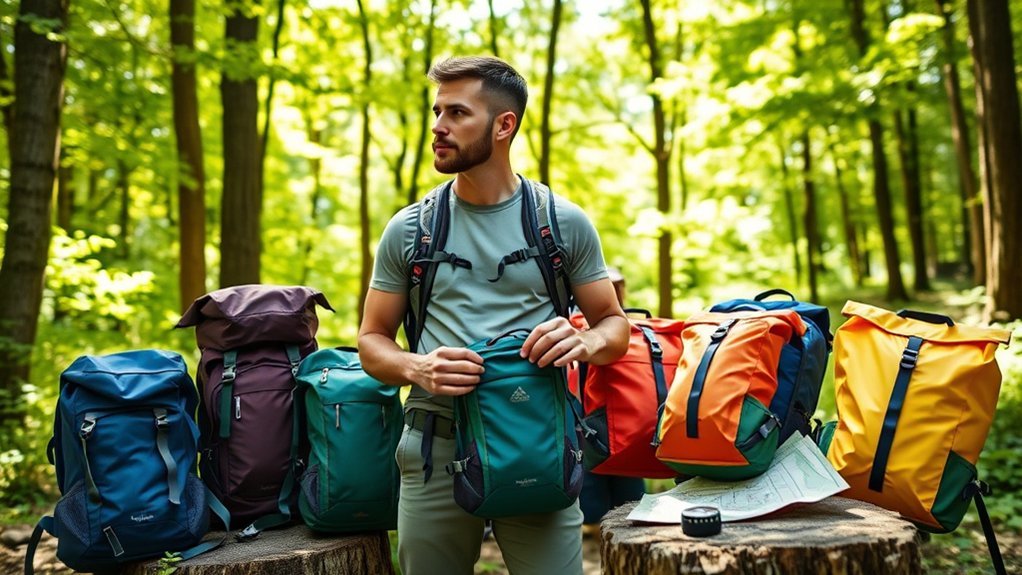
When you’re choosing a packable daypack, what activities will you be using it for? Identifying your primary needs—be it hiking, grocery shopping, or day trips—guarantees you pick the right pack. Consider the weight capacity; smaller models typically carry between 15 lb and 18 lb, which might influence your choice depending on what you plan to carry.
Next, think about weather conditions. If rain’s on the horizon, a waterproof option like the Osprey ultralight dry stuff pack can keep your gear safe. Also, look for organizational features that suit your activities, like internal pockets or key clips, to keep essentials within reach.
Finally, assess comfort features. Padded straps and adjustable chest straps make a world of difference during prolonged wear, especially if you plan to use your pack for various activities. Prioritize these elements to guarantee your pack empowers your adventures.
Understanding Size and Capacity
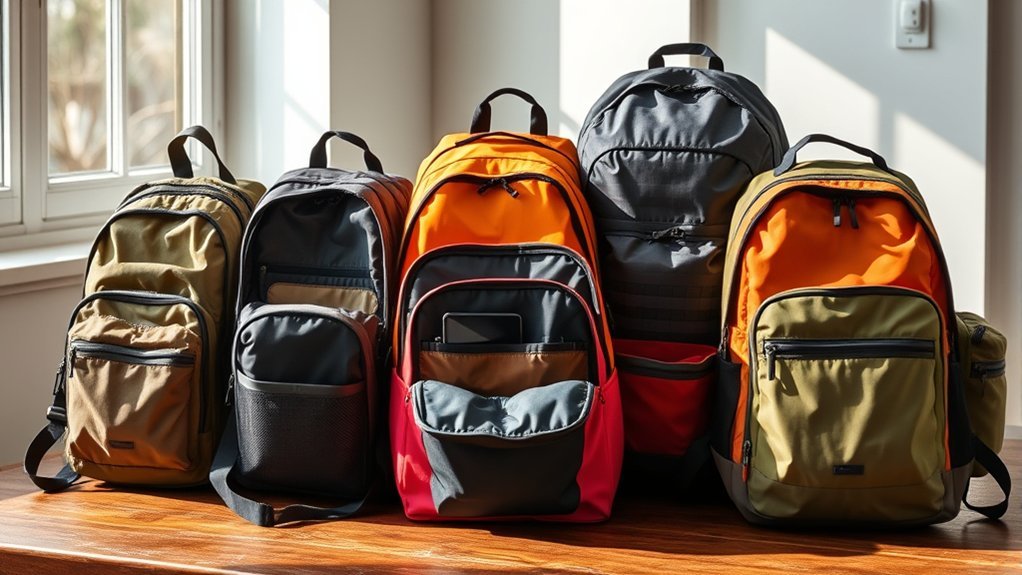
Size and capacity play an essential role in selecting the right packable daypack for your adventures. You’ll want a pack that balances compactness with usability, typically ranging from 18 to 20 liters. Here are some key considerations:
Choosing the right packable daypack involves balancing size and usability, ideally between 18 to 20 liters for optimal performance.
- Weight Capacity: Verify the pack can handle your load. Some models carry up to 15 pounds, so match this with your needs.
- Volume: For daily use, aim for around 18-19 liters like the Osprey ultralight stuff pack, offering ample room without added weight.
- Packability: Smaller packs, such as the Sea to Summit Ultra seal day pack, compress to palm size, perfect for ultralight travel. Larger options, like the Tortuga, provide more space but may bulk up when packed.
Always weigh the trade-off between weight and durability, as higher denier materials can enhance sturdiness but might also add extra weight.
Exploring Material Options
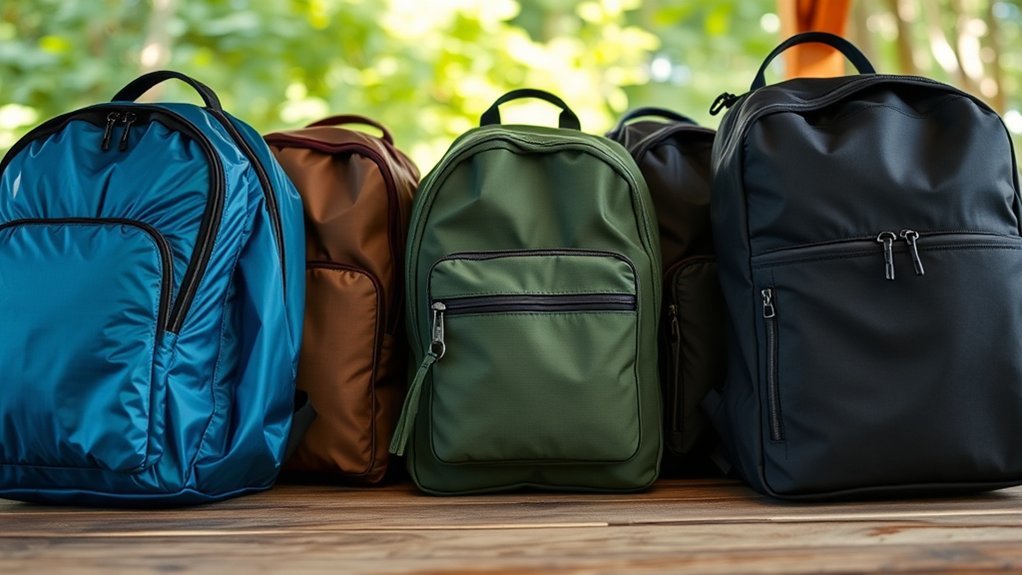
Choosing the right material for your packable daypack can make a significant difference in performance and usability. Consider the denier (d) rating; higher values indicate more durability but can add weight and reduce breathability. For a balance of lightweight and water resistance, siliconized Cordura is a popular choice, ideal for various outdoor activities. If you’re looking for abrasion resistance and tear prevention, nylon ripstop offers excellent longevity in rugged conditions.
Evaluating Comfort Features
To guarantee a comfortable experience with your packable daypack, pay close attention to features that enhance fit and support. Focusing on comfort assures you can explore freely without distraction. Here are three key features to take into account:
- Padded Straps: Look for backpacks with padded straps to reduce shoulder strain, especially during long outings.
- Adjustable Chest Straps: These straps help distribute weight evenly, adding extra support and enhancing your overall carrying experience.
- Back Padding: A well-padded back panel improves comfort, particularly when carrying heavier loads.
Don’t overlook lightweight designs; opt for materials that balance comfort and durability. Always test the fit before you buy. The pack should sit comfortably on your back, avoiding pressure points on your shoulders or lower back. With these comfort features in mind, you can choose a packable daypack that truly liberates your adventures.
Considering Waterproofing and Durability
After ensuring comfort, it’s important to contemplate how well your packable daypack can withstand the elements and daily wear. Look for waterproof materials, like 40D high tenacity nylon, to keep your belongings dry in wet conditions. Pay attention to the denier (d) rating; higher denier fabrics, while more durable, can add weight. For a balance of strength and lightness, consider 30D siliconized Cordura.
Durability is further enhanced by abrasion-resistant nylon ripstop, which helps prevent tears. Reinforced areas, especially at the bottom of the pack, are essential, as they endure the most wear during outdoor adventures. Finally, evaluate weight capacity; packs like the Sea to Summit Ultra can carry up to 15 lb, so make sure your choice meets your needs without sacrificing durability. A well-chosen daypack empowers you to embrace freedom on your journeys.
Frequently Asked Questions
Can I Use a Packable Daypack for Hiking and Travel?
Absolutely, you can use a packable daypack for both hiking and travel. It’s lightweight, easy to carry, and versatile, making it perfect for day trips or exploring new places without the bulk of traditional backpacks.
How Do I Clean and Maintain My Packable Daypack?
You can clean your packable daypack by hand washing it with mild soap, rinsing thoroughly, and air drying it. Maintain it by storing it in a cool, dry place and avoiding excessive weight during use.
Are There Eco-Friendly Options Available for Packable Daypacks?
Yes, there are eco-friendly options for packable daypacks. Look for materials like recycled polyester or organic cotton, and check for brands committed to sustainable practices. These choices help reduce your environmental impact while you explore.
What Is the Weight Limit for a Packable Daypack?
Most packable daypacks support a weight limit between 20 to 30 pounds. You’ll want to check the specific model, though, as exceeding this can lead to discomfort and compromise the pack’s durability during your adventures.
How Do I Properly Fold and Store a Packable Daypack?
To properly fold and store your packable daypack, lay it flat, tuck in the straps, fold it in thirds lengthwise, then roll it tightly from the bottom. Secure it with the built-in pouch or strap.
Conclusion
Choosing the right packable daypack doesn’t have to be overwhelming. By evaluating your activity needs, understanding size, exploring materials, evaluating comfort, and considering waterproofing, you can find the perfect fit for your adventures. Remember, the right pack isn’t just a bag; it’s your trusted companion on the trails. So, why settle for anything less than the best? Equip yourself with the knowledge to make an informed choice and enjoy every moment of your journey!