


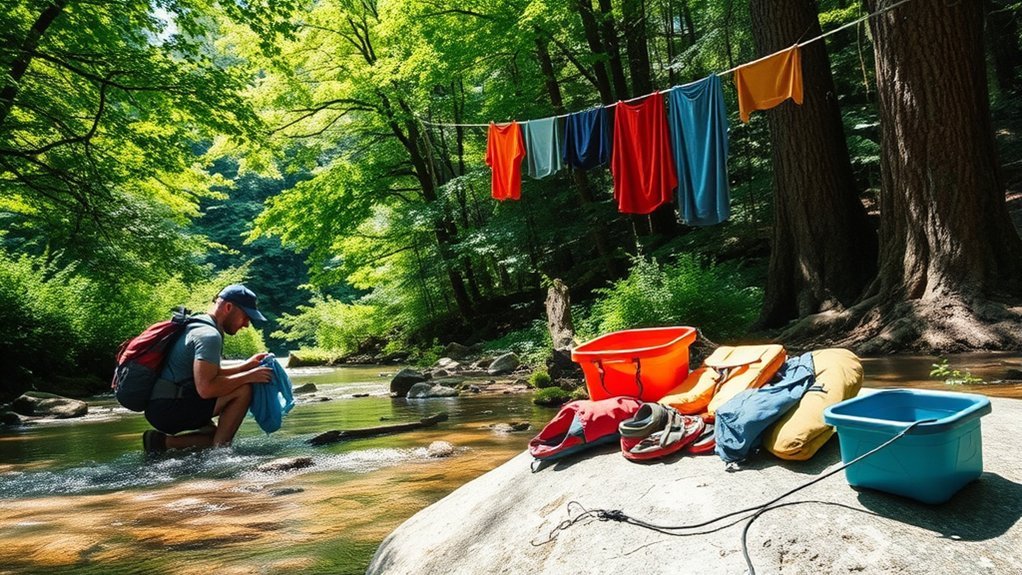
To do laundry while backpacking, use natural water sources, staying 200 feet away from delicate ecosystems. Rinse your clothes by shaking and kneading them in warm water—soap isn’t always needed. Opt for quick-drying fabrics like merino wool for odor resistance and rapid drying. Once rinsed, hang your garments in the sun or breezy spots for maximum airflow. If you want tips on responsible soap usage and drying techniques, there’s more valuable info ahead!
The Magic of Merino Wool

When you hit the trail, the last thing you want is to be weighed down by heavy, smelly gear. That’s where merino wool comes to the rescue. This magical fabric’s naturally odor-resistant properties mean you can wear it multiple times without worrying about unpleasant smells—ideal for those long backpacking trips. You’ll love how breathable it is, regulating your body temperature effortlessly in both warm and cool conditions. Plus, if you need to wash it on the go, merino wool dries quickly, cutting down on your downtime.
Lightweight and compressible, it packs easily into your backpack, freeing up space for other essentials. Unlike traditional wool, merino feels softer against your skin, so you can hike comfortably all day long. Embrace the freedom of the trail with gear that performs beautifully, allowing you to focus on the adventure ahead instead of your laundry routine.
Rinsing and Swimming
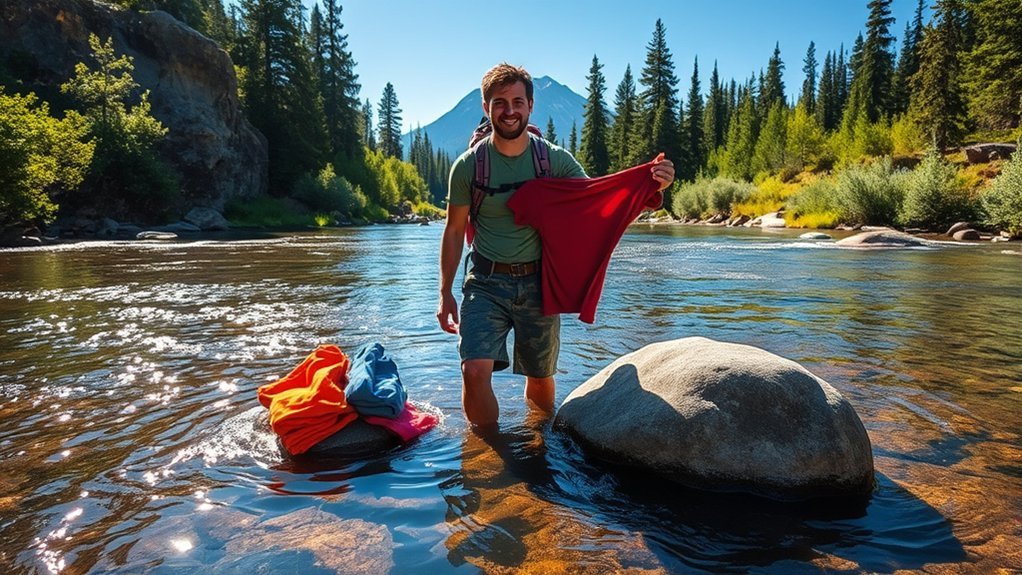
When you find a pristine river or lake, it’s the perfect opportunity to rinse your clothes using nature’s own water source. Just swish your garments around, but remember to keep it 200 feet away from the shore to protect the ecosystem. With warm water, you’ll see dirt and grime lift away effortlessly, making laundry a revitalizing part of your adventure.
Water Source Considerations
While enjoying the great outdoors, you might find yourself needing to rinse out your clothes, and natural water sources can be tempting for this purpose. However, it’s vital to take into account the environment. Always keep a distance of at least 200 feet from water sources to protect their quality and ecosystem. Avoid washing in sensitive areas like alpine lakes or scarce desert waters. Swimming in a river can refresh you while helping rinse lightweight clothing. Just remember to swish or shake your clothes to remove dirt without soap, which can harm wildlife. Following Leave No Trace principles guarantees you minimize your impact.
| Water Source Type | Recommended Distance | Environmental Impact |
|---|---|---|
| Rivers | 200 feet | Moderate |
| Lakes | 200 feet | High |
| Streams | 200 feet | Moderate |
| Desert Ponds | 200 feet | Very High |
Rinsing Techniques Explained
After guaranteeing you’re at a safe distance from sensitive water sources, rinsing your clothes can be a rejuvenating and effective way to keep your gear clean. Swimming in a river or lake is not just invigorating; it’s eco-friendly, too! Here are some rinsing techniques you can try:
- Swishing: Just dip and swish your clothes in the water for a quick refresh without soap.
- Ziploc Method: Add a small amount of water and biodegradable soap to a Ziploc bag. Seal it and shake to lift dirt.
- Minimal Water Usage: Always use minimal water to protect local wildlife and guarantee cleanliness.
With these methods, you’ll feel liberated and your gear will stay fresh. Happy rinsing!
How to Wash Clothes While Backpacking
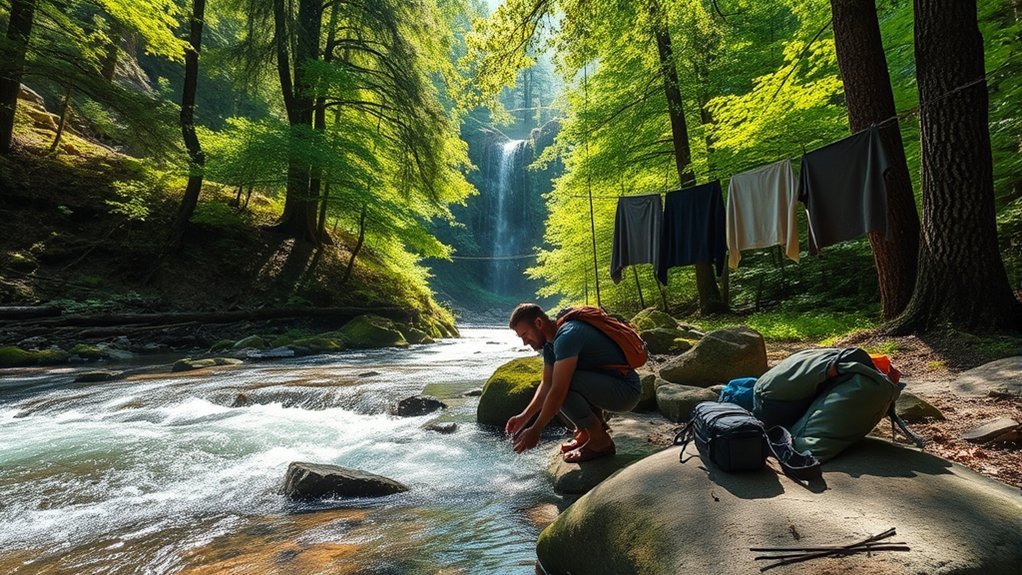
Washing clothes while backpacking doesn’t have to be a challenging task; it can actually be quite simple with the right approach. First, find a water source or use a portable container, like a dry bag, filled with water. Rinse your clothes by shaking and kneading them to remove grime—soap isn’t always necessary. If you’re looking for low-maintenance options, wear quick-drying fabrics like merino wool that resist odors and dry quickly. Remember to carry your wash water at least 200 feet away from any water source to protect the environment and follow Leave No Trace principles. If soap’s needed, use a minimal amount of biodegradable detergent. Trust that water alone can do wonders in lifting dirt. Enjoy the freedom of clean clothes without complicating your adventure! With these steps, you’ll keep your pack light and your spirits high as you roam the wilderness.
Drying Your Clothes
Once you’ve washed your clothes, it’s essential to maximize drying time, especially by taking advantage of direct sunlight as soon as you reach camp. Hang your garments in a breezy spot using trees or a travel clothesline to guarantee they get plenty of airflow and warmth. In cooler temperatures, consider tucking damp clothes into your sleeping bag overnight, using your body heat to help them dry while you rest.
Optimal Drying Techniques
As you settle into camp, maximizing your drying time is crucial for keeping your clothes fresh and ready for the next leg of your journey. Start washing as soon as you arrive to take full advantage of daylight. Lay your clothes out in direct sunlight and a well-ventilated area for quicker drying, especially if they’re made of synthetic fabrics.
- Use a travel clothesline or reflective cord to hang multiple items efficiently.
- In colder weather, tuck damp clothes inside your sleeping bag for warmth while being mindful of comfort.
- Change rinse water frequently during washing to keep it clean, aiding in faster drying.
These techniques will guarantee your gear stays dry and ready for adventure!
Environmental Considerations
When you’re out backpacking, drying your clothes isn’t just about convenience; it’s also about protecting the environment. Hang your clothes in direct sunlight and a gentle breeze to maximize evaporation and prevent mildew. Be mindful to lay them out at least 200 feet from water sources, as soap residues can contaminate drinking water. In colder conditions, you can place damp clothes inside your sleeping bag to utilize your body heat for drying, but be cautious of the discomfort wet fabric can cause. Ventilating your tent while drying is essential to reduce condensation, keeping your space comfortable. Finally, remember to change your rinse water regularly to maintain freshness and effectively remove grime, ensuring your gear stays in top shape throughout your adventure.
What About Soap?
While you might think soap is essential for freshening up your clothes during a backpacking trip, you can actually get away with just water in many cases. If you do choose to use soap, opt for biodegradable options like Camp Suds, and remember to use only a drop or two. Here are a few tips for using soap responsibly:
Soap isn’t always necessary for backpacking; just water often suffices. If you do use soap, choose biodegradable and minimize usage.
- Stay away from sensitive water sources: Keep a distance of at least 200 feet to minimize environmental impact.
- Avoid scents: Skip scented soaps to deter wildlife and maintain the natural balance of the ecosystem.
- Dispose of gray water properly: Use designated sumps or pour it far from water sources to protect local habitats.
More Backpacking Resources
Backpacking can be an exhilarating experience, but having the right resources at your fingertips makes all the difference. Immerse yourself in guides like “Pooping in the Woods: Guide for the Shy and Squeamish” to master essential outdoor hygiene. If you’re curious about gear, “Do Trekking Poles Actually Help?” provides insights into how these poles can elevate your hiking experience. When it comes to meals, check out “Easy No-Cook Backpacking Breakfast Ideas” for quick, nutritious options that keep you fueled without the hassle. For beginners, the Backpacking Trip Planner Workbook is a game-changer, helping you streamline your packing and planning process. Don’t forget to explore the backpacking section for additional tips, skills, and laundry management strategies on the trail. With these resources, you’ll feel confident and liberated, ready to tackle any adventure that comes your way!
Frequently Asked Questions
How Often Should I Wash My Clothes While Backpacking?
You should wash your clothes every few days, or when they start to smell or feel dirty. Staying fresh keeps you comfortable and confident, allowing you to fully enjoy your adventure without the burden of grime.
What Should I Do With Heavily Soiled Items?
For heavily soiled items, pre-treat stains with soap or detergent, then soak them in water for a while. Rinse thoroughly before washing. This’ll help restore freshness, making your backpacking experience more enjoyable and liberating!
Can I Use Regular Soap for Laundry?
You can use regular soap for laundry, but it’s best to avoid harsh detergents. Opt for biodegradable options that clean effectively without harming the environment. Your clothes—and the planet—will thank you for it!
Is It Safe to Wash Clothes in Natural Water Sources?
It’s not safe to wash clothes in natural water sources. Chemicals can harm ecosystems, and your detergent might contaminate drinking water. Seek designated laundry facilities or portable solutions instead, ensuring you protect nature while keeping your gear clean.
How Can I Prevent Clothes From Smelling Bad?
To keep your clothes fresh, air them out daily and use natural fabrics. A few drops of essential oils work wonders too. Remember, a little care prevents odors from creeping in like an unwelcome guest.
Conclusion
With these laundry tips, you can keep your gear fresh on any adventure. Imagine reaching a stunning mountain lake after a long hike, stripping off your sweaty clothes, and washing them in the cool water. As you wring out the fabric, the sun warms your back, and the scent of pine fills the air. You’re not just cleaning clothes; you’re creating memories. So, embrace the journey, and don’t let laundry hold you back from exploring the great outdoors!