


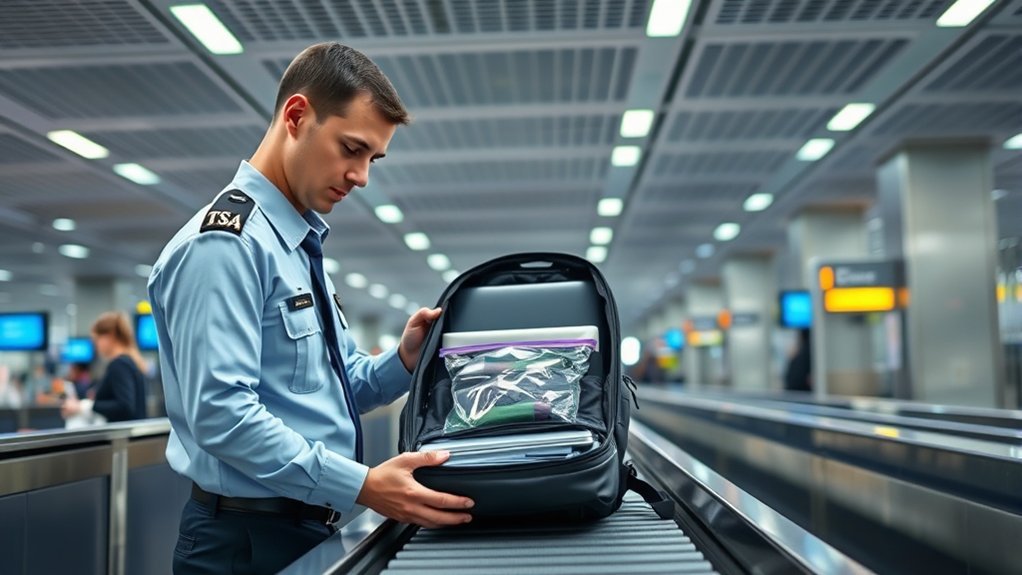
When flying, make sure your backpack fits the 22 x 14 x 9 inches size limit for carry-ons. Pack liquids in containers of 3.4 ounces or less, stored in a clear quart-sized bag. Keep important items like travel documents handy and remove larger electronics during security checks. Always check TSA guidelines for prohibited items to avoid issues. Want to discover more about efficient packing and airline carry-on policies? Let’s explore those next!
Understanding TSA Rules for Backpacks

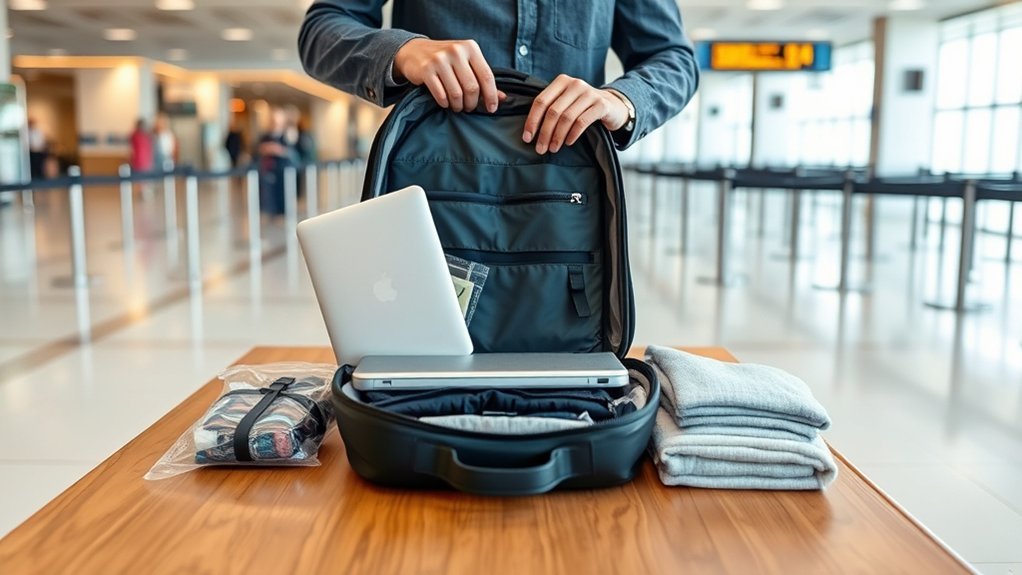
When you’re planning to travel with a backpack, it’s essential to understand the TSA rules that apply. First off, your backpack can be a carry-on, but it shouldn’t exceed the typical size limit of 22 x 14 x 9 inches. Next, keep in mind that liquids must be in bottles of 3.4 ounces or less, all fitting into a clear, quart-sized plastic bag for screening. Also, remember to remove any electronics larger than a cell phone during the X-ray process; they’ll need their own bin.
Avoid packing prohibited items like sharp objects or firearms, and always check the TSA website for the latest updates. Finally, keep essential items like travel documents and medications easily accessible in your backpack to streamline your journey. Understanding these rules will empower you to navigate security with confidence, making your travel experience smoother and more liberating.
Packing Essentials for Air Travel
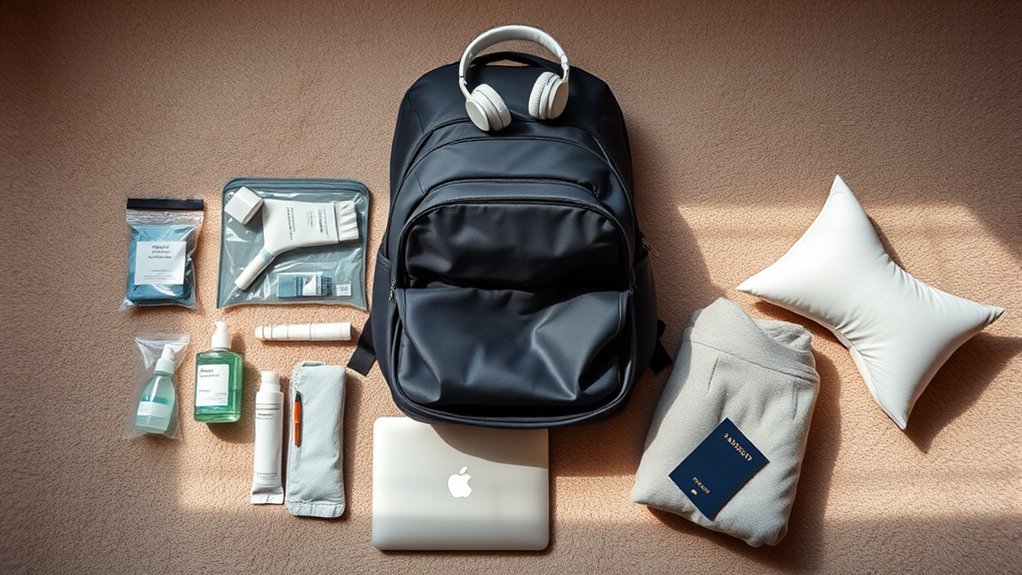
Packing a backpack for air travel requires careful consideration to confirm you’ve got everything you need while complying with airline regulations. Start by making sure that all liquids and gels are in containers of 3.4 ounces (100 milliliters) or less, neatly stored in a clear, quart-sized plastic bag for security screening. Keep essential items like travel documents, medications, and valuables easily accessible to avoid delays at security checkpoints.
Using packing cubes can help you organize items by category, allowing you to find what you need without unpacking your entire backpack. Stay mindful of the weight and size restrictions set by airlines, usually allowing carry-ons up to 22 x 14 x 9 inches (56 x 36 x 23 cm). Finally, always check airline and TSA guidelines for prohibited items before you pack to confirm a smooth journey and maintain your freedom to travel.
Airline Carry-On Policies for Backpacks
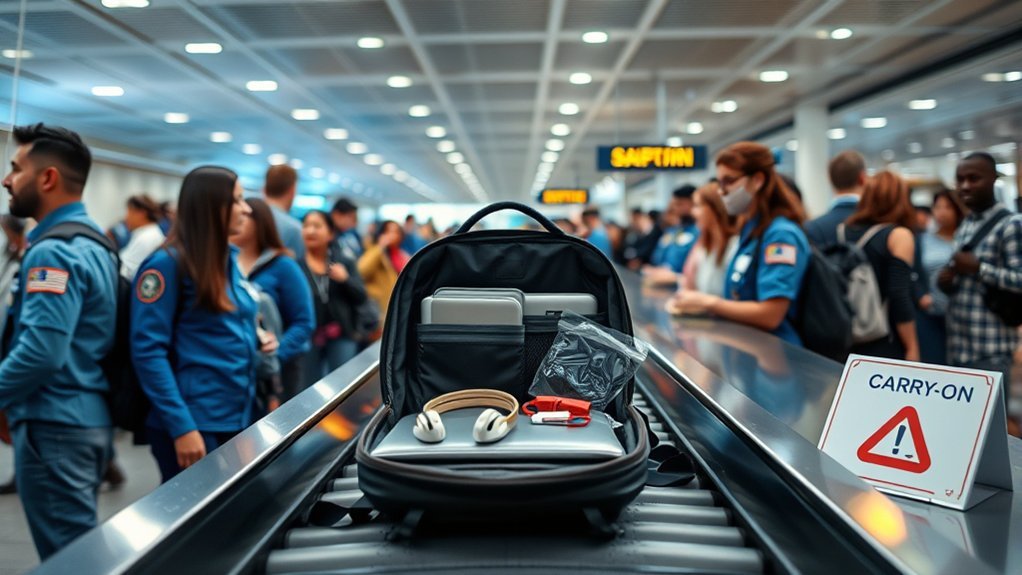
How can you guarantee your backpack meets airline carry-on policies? Start by checking the dimensions; most U.S. airlines allow backpacks up to 22 x 14 x 9 inches. While weight limits aren’t strictly enforced, be mindful—if it looks heavy, it might get weighed. Each airline has its own unique rules, so review specific guidelines to avoid surprise fees or needing to check your bag.
When packing, remember that liquids must be in containers of 3.4 ounces or less, placed in a clear, quart-sized plastic bag for security. Also, steer clear of sharp objects, firearms, and explosives, as these are prohibited by TSA regulations.
Tips for Choosing the Right Backpack
Choosing the right backpack can greatly enhance your travel experience, making it easier to navigate airports and carry your essentials comfortably. Here are some tips to help you choose wisely:
- Capacity Matters: Aim for a backpack between 30-45 liters. This size accommodates everything from short trips to extended travels without being cumbersome.
- Functional Features: Look for padded laptop sleeves, multiple compartments, and water resistance. These elements keep your belongings organized and protected during your journey.
- Comfort is Key: Opt for a backpack with padded straps and a hip belt. These features improve weight distribution and reduce strain, making your travels more enjoyable.
Pros and Cons of Using a Backpack as a Carry-On
Using a backpack as a carry-on can be a game changer for your travel experience, especially when maneuvering through busy airports. You’ll enjoy hands-free mobility, making it easier to navigate crowds. Plus, backpacks typically offer more storage and flexible packing options.
Here’s a quick look at the pros and cons:
| Pros | Cons |
|---|---|
| Hands-free mobility | Can cause shoulder strain |
| More storage capacity | May not fit all airline size limits |
| Versatile for activities | Can be difficult to organize |
If you pack wisely, you can avoid discomfort from shoulder and back strain, thanks to padded straps and hip belts. Ultimately, a backpack’s adaptability makes it an excellent choice for both short and long trips, giving you the freedom to explore without being weighed down.
Frequently Asked Questions
Can I Bring Food in My Backpack Through TSA Security?
Yes, you can bring food in your backpack through TSA security. Just make sure it adheres to liquid restrictions, and pack it neatly to avoid delays. Enjoy your snacks while traveling freely!
Are There Restrictions on Electronic Devices in My Backpack?
Yes, there’re restrictions on electronic devices in your backpack. You’ll need to remove larger electronics, like laptops or tablets, during screening. Keep smaller devices, like phones, in your bag; they usually don’t require removal.
How Should I Pack My Backpack for International Flights?
Pack your backpack by placing heavier items at the bottom, keeping essentials easily accessible. Use packing cubes for organization, and make certain liquids are in compliance. Don’t forget to leave space for souvenirs and personal items!
What Happens if I Forget Prohibited Items in My Backpack?
If you forget prohibited items in your backpack, security will find them during screening. They’ll confiscate the items, and you might face delays or even fines. Always double-check before heading to the airport.
Can I Lock My Backpack When Traveling by Air?
You can lock your backpack when traveling by air, but remember, TSA agents may need to inspect it. Using a TSA-approved lock guarantees they can access it without damaging your bag. Enjoy your travels!
Conclusion
In summary, steering through TSA rules for backpacks doesn’t have to be intimidating. With the right preparation and knowledge, you can breeze through security and enjoy a hassle-free travel experience. Think of your backpack as your trusty travel companion, ready to hold all your essentials while keeping you organized. So, whether you’re a seasoned traveler or a first-timer, embrace the journey and pack smart—your adventure awaits!