


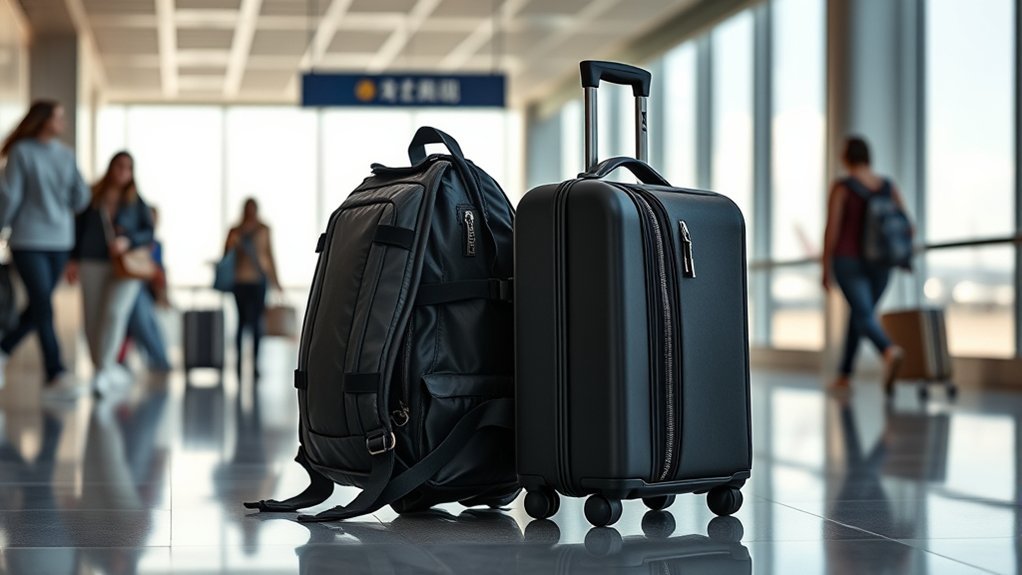
When deciding between a carry-on backpack and a cabin bag, consider your travel style. Backpacks are lighter and maneuverable, perfect for crowded areas, but might be harder to organize. Cabin bags, with wheels and handles, offer stability and structured storage but can be bulkier. Both usually meet airline size limits, but your packing preferences will influence your choice. If you want to know more about how to pack efficiently and choose the right luggage, keep going!
Understanding Carry-On Backpacks

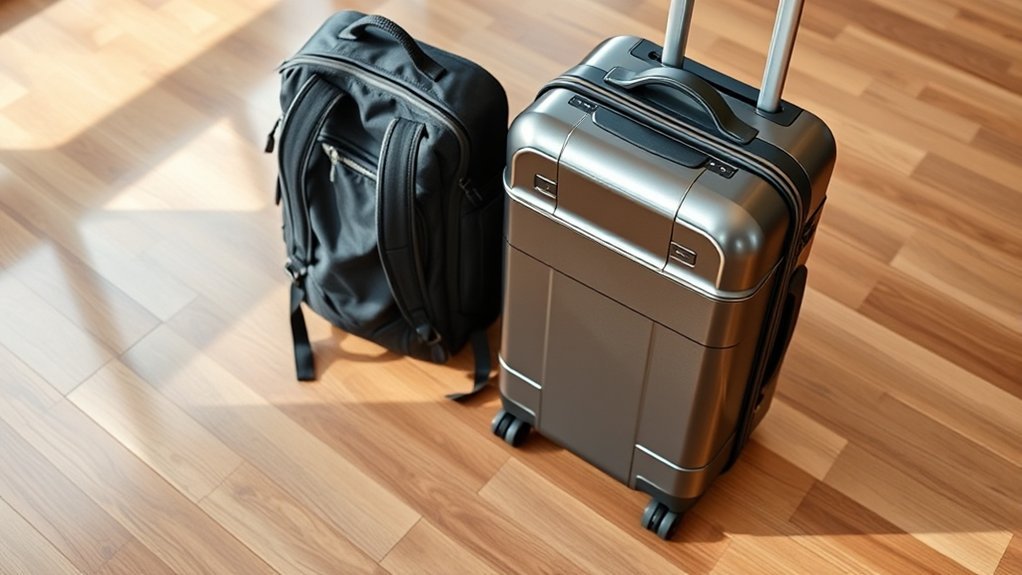
When you think about travel convenience, carry-on backpacks often come to mind as a versatile option for modern explorers. These backpacks are lightweight and compact, fitting snugly within airline size restrictions, typically around 22 x 14 x 9 inches. With multiple compartments, including designated sections for laptops and tech accessories, you can stay organized and access your essentials with ease.
The flexibility of carry-on backpacks allows for effortless maneuvering in crowded spaces and on uneven terrain, making them a dream for adventurous souls. Although they offer ample packing space, their lack of structure may challenge quick access to items. However, they shine in storage convenience, easily folding and tucking away when you’re not on the move. With a carry-on backpack, you embrace freedom, travel light, and navigate the world with confidence, making every journey that much more exhilarating.
Exploring Cabin Bags
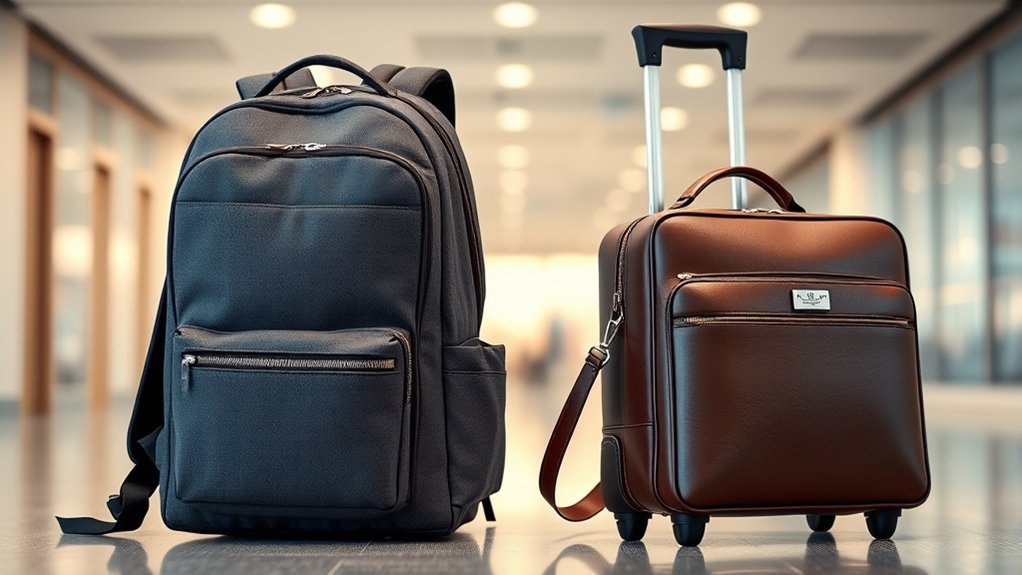
When choosing a cabin bag, size and dimensions play an essential role in ensuring it fits within airline regulations. You’ll appreciate the organizational features, like expandable sections and pockets, that help keep your belongings neat and accessible. Plus, mastering effective packing strategies can make all the difference in maximizing space and convenience during your travels.
Size and Dimensions
Although choosing the right cabin bag can feel overwhelming, understanding size and dimensions is crucial for hassle-free travel. Typically, cabin bags must fit within a maximum size limit of 22 x 14 x 9 inches (56 x 36 x 23 cm) to comfortably slide into overhead compartments. Weight limits range from 15 to 22 pounds (7 to 10 kg), so you’ll want to pack wisely. With options like hard shell and soft shell designs, you can select the style that suits your needs best. Remember, airlines often include wheels and handles in their size restrictions, so accurate measurements are critical. Checking your airline’s specific baggage policy guarantees you avoid surprises and travel freely with your perfect cabin bag.
Organizational Features
Finding the right cabin bag isn’t just about size; it’s also about how well you can organize your belongings. Soft shell suitcases often come equipped with expandable sections and extra pockets, giving you the freedom to pack efficiently. A rigid frame helps keep your items compact and organized, minimizing chaos during travel. While cabin bags generally comply with airline restrictions—around 22 x 14 x 9 inches—you’ll want to choose lightweight options to maximize your packing capacity. Plus, those wheels and handles that make maneuvering easier can sometimes take up precious internal space. With the right cabin bag, you’ll feel liberated, ready to embrace the journey without the stress of disorganization.
Packing Strategies
While packing strategies can vary widely, cabin bags offer a unique advantage with their structured organization and designated compartments. You’ll find it easier to pack efficiently, thanks to pockets designed for quick access to essentials. Many cabin bags even feature expandable sections, giving you extra room for those last-minute items. Just make sure you’re mindful of the weight, as the rigid frame can limit your packing capacity, typically ranging from 15 to 22 lbs. To maximize your space, consider using packing cubes. They not only enhance organization but also help you quickly locate what you need, liberating you from the chaos of rummaging through your bag. With the right strategies, you’ll travel lighter and smarter.
Size and Weight Considerations
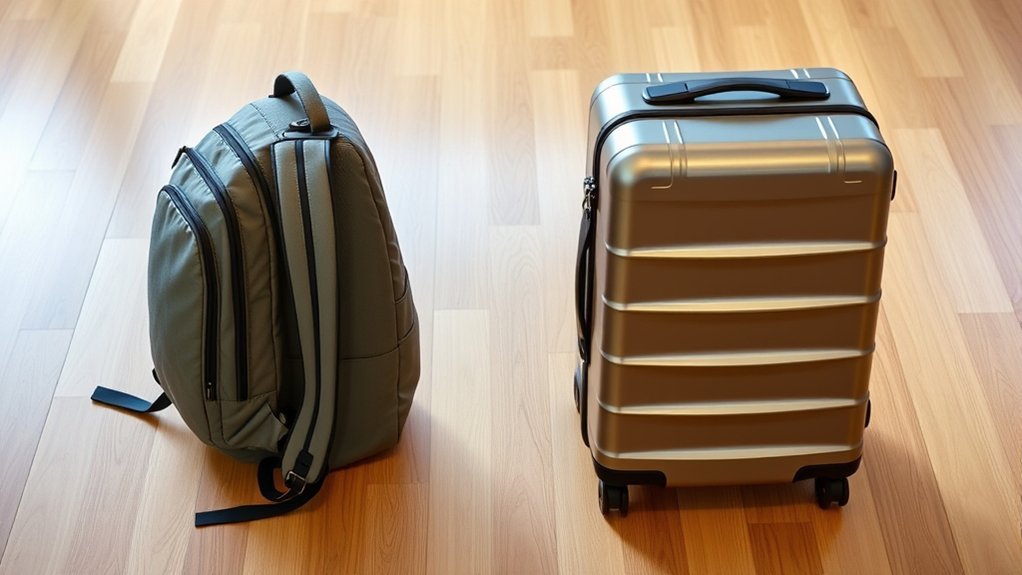
When choosing between a carry-on backpack and a cabin bag, size and weight considerations play an essential role in your travel experience. You’ll want to think about how much you can pack while staying within airline regulations. Here are three key points to keep in mind:
- Dimensions: Carry-on backpacks typically measure around 22 x 14 x 9 inches, mirroring cabin bag sizes for overhead storage.
- Weight Limits: Most airlines allow between 15-22 lbs for carry-on bags. A lighter backpack can help you maximize your packing capacity.
- Design Differences: Backpacks are often lighter than cabin bags, which can have added weight from wheels and handles, limiting your packing potential.
Always check your airline’s specific policies, as size and weight restrictions can vary considerably. Choosing the right option can make your travels more liberating and enjoyable!
Packing Strategies for Backpacks
Packing efficiently for your backpack can transform your travel experience, making it easier to navigate airports and enjoy your journey. Start by utilizing packing cubes; they maximize organization and save space, letting you access your essentials with ease. Instead of folding clothes, roll them up to minimize wrinkles and create more room—this simple trick makes a world of difference.
Prioritize lightweight, versatile clothing that can be mixed and matched to adhere to weight limits while expanding your outfit options. Place heavier items, like shoes or toiletries, at the bottom of your backpack to maintain balance and reduce strain on your back.
Finally, keep crucial items—travel documents, snacks, and electronics—in easily accessible pockets. This way, you streamline your access during the flight, allowing you to focus on enjoying your adventure rather than fumbling with your gear. Happy travels!
Packing Strategies for Cabin Bags
When you’re packing a cabin bag, using compression packing cubes can help you maximize space and keep everything organized. Focus on essential items, selecting versatile clothing that can be mixed and matched for various outfits. Remember to weigh your bag and keep it within airline limits to avoid surprises at the airport!
Optimize Space Efficiently
To make the most of your cabin bag, employing smart packing strategies is essential. Here are three effective ways to optimize space efficiently:
- Use Packing Cubes: These handy compartments help you organize your clothing, allowing for quick access to essentials while maximizing space.
- Roll Your Clothes: Instead of folding, roll your garments to save space and reduce wrinkles. This method frees up valuable area in your bag.
- Choose Lightweight, Multipurpose Items: Opt for mix-and-match clothing to minimize bulk and enhance versatility.
Additionally, limit footwear to one or two pairs, wearing the bulkiest during travel. Utilize external pockets for easy access to documents and snacks, keeping your main compartment organized and clutter-free. Embrace these strategies for a liberating travel experience!
Prioritize Essential Items
Maximizing space in your cabin bag is just the beginning; knowing what to prioritize can make a significant difference in your travel experience. Start by keeping essentials like travel documents, medications, and electronics in easily accessible compartments. This not only streamlines security checks but also guarantees you have what you need during the flight. Choose versatile clothing that can be layered or mixed and matched, reducing bulk and maximizing outfit options. Limit shoes and bulky items, opting instead for lightweight alternatives that save precious space. Always check your airline’s size and weight restrictions to avoid unexpected fees. By prioritizing smartly, you can travel lighter, freeing yourself to fully embrace the adventure ahead.
Use Packing Cubes
Using packing cubes can transform your cabin bag into a model of organization and efficiency. These handy tools let you categorize clothing and accessories, so you can easily find what you need without unpacking everything. Here’s how packing cubes can elevate your travel experience:
- Maximize Space: Compression cubes reduce bulk, helping you fit more into your cabin bag.
- Streamline Packing: Easily move cubes in and out, making packing and unpacking a breeze.
- Separate Clean and Dirty Clothes: Keep your journey organized by designating cubes for fresh and worn items.
With various sizes available, you can optimize space and weight distribution while adhering to airline restrictions. Embrace the liberation of streamlined travel with packing cubes!
Pros and Cons of Carry-On Backpacks
While carry-on backpacks offer a great blend of convenience and versatility for travelers, they come with their own set of advantages and disadvantages. On the plus side, these backpacks are typically lighter than cabin suitcases, helping you maximize your weight allowance. Their flexibility allows easy movement through crowded airports and uneven terrains, which is perfect for adventurous souls. With multiple compartments, you can keep your tech accessories and travel documents organized. However, the lack of wheels can make them cumbersome to carry over long distances, especially when heavily packed. Additionally, while they provide decent organization, they may not match the structured storage of rolling suitcases. On the bright side, they’re easier to store when not in use, folding down neatly for those with limited space. Ultimately, weigh these pros and cons to find what best suits your travel style and needs.
Pros and Cons of Cabin Bags
Cabin bags, particularly rolling suitcases, are a popular choice among travelers for their ease of packing and organizational features. They provide a structured way to keep your belongings tidy, making it easier to find what you need on the go. Here are some pros and cons to evaluate:
- Ease of Maneuverability: With wheels and handles, cabin bags glide effortlessly over flat surfaces, reducing physical strain.
- Variety of Sizes: Many cabin bags come in different sizes and may have expandable sections, perfect for trips of varying lengths.
- Protection for Fragile Items: Hard shell options offer better protection compared to soft shell, which often have added external pockets for convenience.
However, cabin bags can occupy more space in overhead compartments, potentially limiting space for other passengers. Balancing these pros and cons will help you decide if a cabin bag suits your travel style.
Choosing the Right Luggage for Your Trip
How do you choose the right luggage for your trip? Start by checking your airline’s size and weight restrictions for carry-ons—typically 22 x 14 x 9 inches and 15-22 lbs. If you’re moving through crowded spaces or uneven terrain, a carry-on backpack is your best bet for flexibility. Its design allows you to navigate quickly, perfect for active adventures. On the other hand, if you’re packing fragile items or heavier loads, a cabin suitcase with wheels and handles offers stability and ease on flat surfaces. Consider how you like to organize your belongings, too; backpacks might need packing cubes for efficiency, while suitcases often have built-in compartments for structured packing. Ultimately, assess the nature of your trip—backpacks shine on active journeys, whereas cabin suitcases excel in leisurely travel where packing and access are key. Choose wisely, and let your luggage enhance your travel experience!
Frequently Asked Questions
Are Carry-On Backpacks Suitable for Business Travel?
Absolutely, carry-on backpacks are perfect for business travel! They’re versatile, allowing you to move easily through airports. With compartments for laptops and documents, you’ll stay organized while maintaining a professional appearance on the go.
Can Cabin Bags Fit Under Airplane Seats?
Cabin bags often fit snugly under airplane seats, providing a convenient option for easy access during your flight. Just make certain to check the airline’s size restrictions to guarantee you don’t run into surprises!
What Materials Are Best for Carry-On Backpacks?
For carry-on backpacks, lightweight yet durable materials like nylon or polyester work best. Waterproof options keep your belongings safe, while breathable fabrics enhance comfort. Choose high-quality zippers and seams for added resilience during your travels.
How Do I Clean and Maintain My Cabin Bag?
Imagine your cabin bag covered in travel stickers. To clean it, wipe with a damp cloth and mild soap. Regularly check for wear, using a fabric protector to maintain its pristine condition and guarantee longevity.
Are There Specific Airline Restrictions for Backpacks?
Yes, most airlines have specific size and weight restrictions for backpacks. You’ll want to check each airline’s guidelines before packing to guarantee your backpack meets their criteria, allowing you to travel freely and confidently.
Conclusion
When it comes to choosing between a carry-on backpack and a cabin bag, consider your travel style and needs. Did you know that over 40% of travelers prefer backpacks for their versatility and ease of movement? Imagine maneuvering through crowded terminals with a lightweight pack snug against your back, leaving your hands free. Ultimately, whether you opt for the sleek design of a cabin bag or the functional appeal of a backpack, the right choice can enhance your journey.