


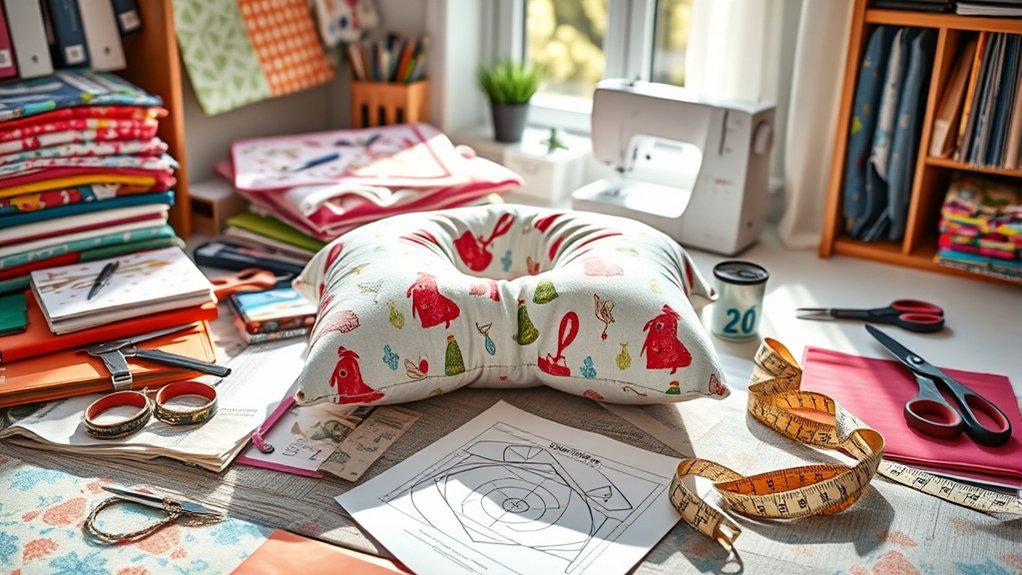
If you’re looking for a travel pillow sewing pattern for beginners, you’ve come to the right place! Start by downloading a simple travel neck pillow pattern and gather ½ yard of soft cotton or fleece. Cut your fabric, leaving a 1 ½ inch gap for turning and stuffing. Sewing is easy with a machine, and you can customize your pillow with fun fabrics or embroidery. Keep going, and you’ll discover tips for stuffing and personalizing your perfect travel companion!
How to Make a Comfortable Travel Pillow

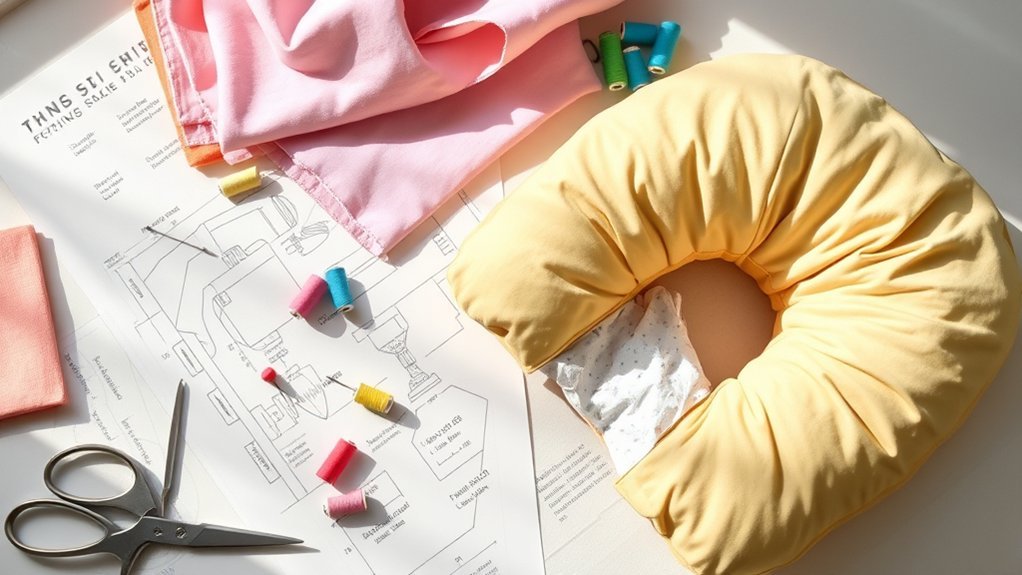
Making a comfortable travel pillow is a simple way to enhance your travel experience. Start by downloading a travel neck pillow pattern, ensuring the test square measures exactly 1 inch for precise sizing. You’ll want to use ½ yard of soft cotton or fleece fabric, cutting out two pieces from the fold. When sewing, remember to leave a 1 ½ inch gap to turn the pillow right side out and fill it to your desired firmness with polyester filling. Clip the curves for a flat shape and hand stitch the opening closed with an invisible ladder stitch. Customizing your pillow with different fabrics not only provides travel pillow benefits but also makes for a personal travel comfort tip that you can share as a DIY gift.
Materials You’ll Need for Your Travel Pillow
To create your perfect travel pillow, you’ll need a few essential materials and tools. Start with ½ yard of soft cotton fabric and quality polyester stuffing for that cozy feel. Don’t forget your sewing machine, clips, and a rotary cutter to guarantee everything comes together smoothly!
Essential Materials Overview
Creating a comfortable travel pillow requires a few essential materials to guarantee your sewing project is both enjoyable and successful. Start with ½ yard of soft cotton fabric, which offers breathability and comfort, enhancing your travel benefits. For the filling, polyester stuffing is recommended, delivering a soft yet supportive feel that elevates the pillow advantages during your journeys. You’ll need a sewing machine to stitch the fabric pieces efficiently, ensuring accuracy. For those final touches, a hand needle and thread are essential for closing any openings after stuffing. Ultimately, don’t forget to download a free travel pillow pattern that will guide you step-by-step through this rewarding sewing process, ensuring a pillow that’s perfect for your next adventure!
Recommended Tools And Supplies
When you commence your travel pillow project, having the right tools and supplies at your fingertips can make all the difference. Start with ½ yard of soft cotton fabric for breathability and comfort—an ideal choice among fabric types. You’ll also need polyester stuffing to achieve the perfect firmness, ensuring your pillow supports you well. Essential tools include a sewing machine for efficient stitching, along with a hand needle and thread for finishing touches. Don’t overlook sewing clips for easy fabric handling. For precise cutting, a self-healing cutting mat and rotary cutter are indispensable. Finally, download and print the free travel pillow pattern, making sure the test square measures exactly 1 inch to guarantee accuracy in your sewing techniques.
Easy Fabric Cutting Steps
When you’re ready to cut your fabric, gather essential tools like a rotary cutter, ruler, and pins for the best results. Place your pattern accurately on the fabric, ensuring it’s layered correctly to maintain symmetry as you cut through both layers. This approach not only enhances precision but also saves time, helping you create that perfect travel pillow efficiently.
Essential Cutting Tools Needed
To achieve clean, precise cuts for your travel pillow project, having the right tools is essential. A self-healing cutting mat (24 x 36 inches) offers a durable surface, protecting both your fabric and tools during the cutting process. Pair this with a rotary cutter for efficient cutting of multiple fabric layers, especially when maneuvering curves and intricate shapes. For cutting patterns and fabric, Fiskars fashion scissors are perfect, providing sharp blades for clean edges. Before you cut, always pin your pattern securely to the fabric to prevent slipping and guarantee accuracy. After cutting, remember to clip curves and corners to reduce bulk, allowing for a smoother finish when turning your fabric right side out. Enjoy your sewing journey!
Accurate Pattern Placement Tips
Achieving accurate pattern placement is essential for creating a well-proportioned travel pillow, as it guarantees that both sides of your design are symmetrical. Start by folding your fabric in half, aligning the horizontal stretch direction for perfect pattern alignment. Securely pin the pattern to both layers to prevent movement while cutting, ensuring cutting accuracy. Use a rotary cutter for clean, precise cuts along the edges, keeping the U-shape dimensions of 18 inches wide and 14 inches high intact. Before cutting, double-check the test square on the pattern measures exactly 1 inch to confirm correct scaling. Finally, clip curves and seams carefully, avoiding the stitches to allow for smooth turning once you’re ready to sew.
Layering Fabric for Precision
Layering fabric correctly is essential for cutting precision, especially when crafting your travel pillow. Start by placing two fabric pieces right sides facing each other, ensuring perfect fabric alignment for symmetry in your design. Use a rotary cutter for clean edges and accurate cuts, particularly around curves and angles. Securely pin the pattern to both layers to prevent shifting during cutting, which enhances your accuracy. Always cut through both layers simultaneously to guarantee that the pieces match perfectly when sewn together. Before you start cutting, double-check your pattern alignment and layers. This careful approach helps you avoid fabric waste and misalignment, empowering you to create a stunning travel pillow with confidence.
Simple Sewing Instructions for Beginners
While sewing may seem intimidating for beginners, creating a travel neck pillow can be a fun and rewarding project. Start by downloading and printing the free travel neck pillow pattern, ensuring the test square measures exactly 1 inch for accuracy. Cut two fabric pieces on the fold to form the U-shape. Use basic sewing techniques to stitch the pieces together, right sides facing, leaving a 1 ½ inch gap for turning. Clip the curves for a better shape, then turn the pillow right side out through the gap. Finally, stuff it to your desired firmness and close the gap with an invisible ladder stitch, achieving a neat finish. Enjoy the travel pillow benefits of comfort and support on your journeys!
Stuff Your Pillow for Maximum Comfort
The key to a comfortable travel pillow lies in how you stuff it. To achieve the perfect balance between softness and support, consider these pillow filling techniques:
Achieving the ideal travel pillow requires the right stuffing techniques for optimal softness and support.
- Use Poly-Fil Original Premium Polyester for a soft yet supportive feel.
- Aim to fill your pillow 75-90% full to guarantee ideal comfort.
- Incorporate soft clothing or fabric scraps for a dual-purpose design that saves space.
- Evenly distribute the filling to avoid lumps and create a smooth resting surface.
Once you’ve stuffed your pillow, hand-stitch the opening closed with an invisible ladder stitch. This will maintain its shape and keep your filling secure. With these travel comfort tips, you’ll be well on your way to a cozy journey!
Personalizing Your Travel Pillow Design Tips
Now that you’ve crafted a comfy travel pillow, it’s time to make it truly yours. Your fabric choices can reflect your unique style—consider vibrant fleece or playful flannel prints. For added flair, think about incorporating embroidery or appliqué, showcasing your initials or favorite travel quotes.
| Design Element | Personal Touch |
|---|---|
| Fabric Choices | Vibrant fleece, flannel prints |
| Embroidery | Initials, travel quotes |
| Functional Features | Pockets for earplugs, sleep mask |
| Stuffing Options | Scented sachets, memory foam |
Experiment with contrasting thread colors for a decorative edge, and don’t shy away from unique stuffing materials. Personalizing your travel pillow elevates your travel experience, making it a comforting companion on every journey.
Avoiding Common Sewing Mistakes
To create a beautiful and functional travel pillow, it’s essential to steer clear of common sewing mistakes that can derail your project. Mastering these sewing essentials will elevate your crafting game:
- Always double-check your pattern pieces against the printed dimensions before cutting.
- Use a rotary cutter for clean, precise cuts, especially around curves.
- Maintain a consistent seam allowance of 3/8 to 1/2 inch for proper fit and shape retention.
- Clip curves and corners before turning the pillow right side out for a smooth finish.
What to Do With Leftover Fabric After Sewing
After perfecting your travel pillow and avoiding common sewing mistakes, you might find yourself with leftover fabric scraps. Don’t let them go to waste! Explore fabric recycling ideas by transforming your scraps into coasters, fabric bookmarks, or keychains. These small items not only minimize waste but also make great gifts. You can also create patchwork designs for bags, quilts, or decorative pillows, adding a unique flair to your home decor. For practice, use smaller pieces to refine your sewing skills or make sample swatches for future projects. Feeling crafty? Try DIY fabric-covered notebooks or greeting cards. Finally, consider donating your leftover fabric to local schools or community centers, supporting creative initiatives and sharing the joy of crafting with others.
Share Your Finished Travel Pillow Project
Completing your travel pillow project is a rewarding achievement that deserves to be celebrated! Sharing your finished creation not only showcases your hard work but also provides travel pillow inspiration to others. Here are some ways to share your project:
Completing your travel pillow is a fantastic achievement worth sharing, inspiring others and showcasing your creativity!
- Post photos on social media platforms like Pinterest to inspire creativity.
- Engage in sewing community feedback by discussing your experience in blog comments.
- Document your sewing process through photos or videos to help others learn.
- Join online sewing groups for support and motivation as you share your journey.
Frequently Asked Questions
What Types of Fabric Are Best for Travel Pillows?
For travel pillows, you’ll want soft, breathable cotton blends for comfort and durability. Pair them with memory foam for added support, creating a cozy experience that helps you relax and rejuvenate during your journeys.
How Do I Choose the Right Pillow Size for My Needs?
Choosing the right pillow size is like finding the perfect pair of shoes; it hinges on your personal comfort. Measure your preferred dimensions, considering your travel habits, to guarantee a cozy, supportive experience wherever you go.
Can I Machine Wash My Travel Pillow After Sewing?
Yes, you can machine wash your travel pillow! Just follow the washing instructions carefully, using gentle cycles and mild detergent. Proper travel pillow care guarantees it stays clean and comfortable for your adventures.
What Are Some Tips for Sewing With Organic Fabrics?
When you sew with organic fabrics, think of a gentle breeze guiding your hands. Use proper sewing techniques, like adjusting tension, and remember to prioritize fabric care by washing in cold water to maintain their integrity.
How Do I Ensure My Travel Pillow Is Durable for Multiple Trips?
To guarantee your travel pillow’s durability, choose high-quality travel pillow materials like canvas or denim, and use reinforced stitching techniques. This way, you’ll create a sturdy companion for all your adventures, ready for multiple trips!
Conclusion
Now that you’ve crafted your travel pillow, imagine the comfort waiting for you on your next journey. But before you pack it away, think about how you can elevate its design or even experiment with different fabrics. What if your creation could turn heads? As you set out on your travels, your personalized pillow might just become a conversation starter. So, don’t wait—grab that leftover fabric and let your creativity soar. Your next adventure is just around the corner!