


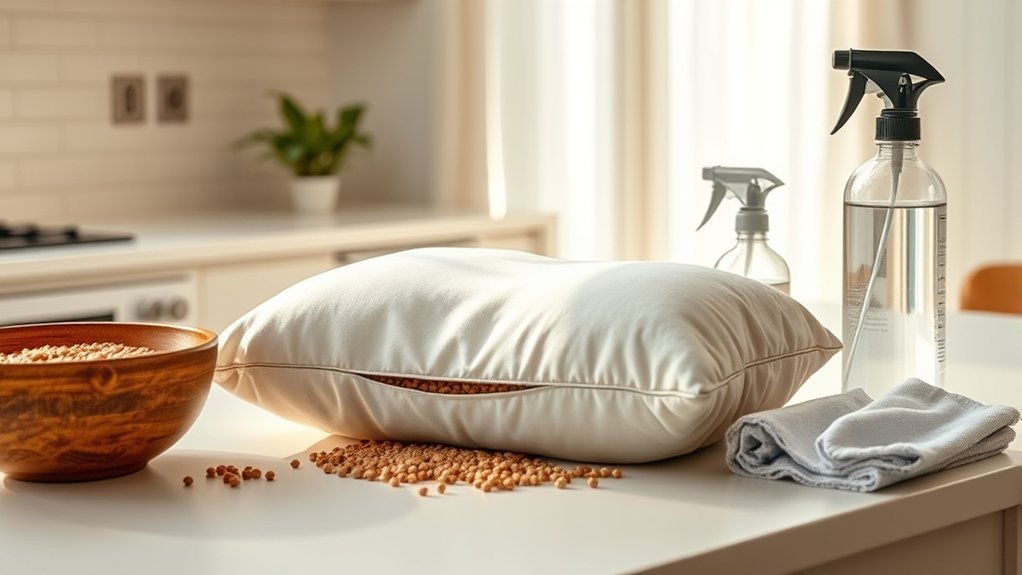
To clean your buckwheat travel pillow, first, remove the buckwheat hulls by unzipping the cover—make sure to do this over a container to catch any loose hulls. Avoid machine washing as it can damage the pillow. Wash the pillowcase separately in cold water and let it air dry to prevent shrinking. Store the hulls in an airtight container, ensuring they stay dry and clean. Want to know more tips for maintaining your pillow’s longevity?
Benefits of Buckwheat Travel Pillows


When it comes to comfort during travel, the firm yet adjustable support of buckwheat travel pillows stands out. These pillows promote proper head and neck alignment, helping you reduce discomfort and fatigue on long journeys. The natural air circulation of buckwheat hulls keeps your pillow cool and dry, enhancing your travel comfort. Plus, if you have allergies or sensitivities, you’ll appreciate the allergy benefits of these pillows. They’re hypoallergenic and pest-resistant, providing a healthier sleep option wherever you go. Their compact and lightweight design makes them easy to pack, ensuring you won’t compromise on comfort while traveling. With proper care, your buckwheat travel pillow can last for years, consistently offering support and comfort on countless adventures.
Why You Shouldn’t Machine Wash Your Buckwheat Pillow
You shouldn’t machine wash your buckwheat pillow because it can damage its structure and lead to mold growth. The hulls may break down, compromising your pillow’s support and comfort. Instead, focus on keeping the pillowcase clean and rejuvenating the hulls by airing them out in the sunlight.
Risk Of Mold Growth
While the comfort of a buckwheat travel pillow can be enticing, machine washing it poses a significant risk of mold growth. When you submerge the pillow, the hulls absorb water, creating a damp environment that encourages mold. To keep your pillow safe, employ mold prevention strategies by avoiding machine washing altogether. Instead, focus on washing only the pillow cover and ensuring the hulls stay dry. Implement humidity control methods in your storage space, like using dehumidifiers or moisture-absorbing bags, to prevent excess moisture. By taking these precautions, you’ll maintain the integrity of your buckwheat pillow, keeping it comfortable and mold-free for your travels. Remember, a little care goes a long way in ensuring a healthy sleep environment.
Damage To Pillow Structure
Although machine washing may seem like a convenient way to clean your buckwheat pillow, it can seriously damage its structure. Here are three reasons to avoid this practice:
- Hull Integrity: Submerging the hulls in water can cause them to lose their supportive shape, leading to decreased loft and comfort.
- Pillow Durability: The weight of the pillow can strain washing machine drums, risking damage to both your pillow and the machine.
- Mold Risk: Saturated hulls create a perfect environment for mold, compromising your health and your pillow’s lifespan.
Instead, air dry your buckwheat hulls in sunlight. This preserves their integrity and prolongs your pillow’s durability, ensuring restful nights for years to come.
Step-by-Step Guide to Removing Buckwheat Hulls
Before you start removing the buckwheat hulls, gather your tools and prepare a sturdy container to catch them. You’ll want to guarantee that you have a plan for properly disposing of the hulls afterward, as they can be composted or used in other creative ways. Let’s get into the steps that will make this process smooth and efficient.
Prepare For Hull Removal
To effectively prepare for hull removal, start by placing your buckwheat travel pillow on a flat, stable surface where you can easily access the zipper. Guaranteeing you’re organized sets the tone for smooth pillow maintenance. Here’s how to proceed:
- Carefully unzip the pillow cover, avoiding spills, since hull types can be messy.
- Use a sturdy container to catch the hulls as you gently scoop or pour them out.
- If hulls stick to the inside, shake or tap the pillow gently to dislodge them completely.
After removing the hulls, inspect them for any moisture or damage. This step not only promotes effective cleaning but also guarantees your pillow remains in great shape for your next adventure.
Proper Hull Disposal Methods
Proper disposal of buckwheat hulls is crucial to maintaining your travel pillow’s quality and hygiene. To start, unzip the pillow and gently pour the hulls into a clean, sturdy container, avoiding spills. Shake the pillow to guarantee all hulls are removed, checking for any that may cling to the fabric. If you encounter damaged or excessively wet hulls, dispose of them immediately as they can mold and compromise your pillow’s integrity. For eco-friendly options, consider hull recycling options or composting buckwheat hulls in your garden. They’re a great natural mulch! By following these steps, you’ll not only keep your pillow fresh but also contribute to a sustainable lifestyle.
How to Properly Wash Your Pillowcase
When you’re ready to clean your buckwheat travel pillowcase, the first step is removing the buckwheat hulls to avoid any damage during washing. Follow these simple steps for a thorough clean:
- Use cold water (75 to 85 degrees Fahrenheit) and select a normal cycle in your washing machine to prevent shrinkage.
- Wash separately to avoid color bleeding; keep light and dark fabrics apart, especially during those initial washes.
- Maintain washing frequency—regular cleaning is essential to keep your pillowcase fresh, as buckwheat hulls can create fine dust over time.
How to Dry Your Pillowcase Without Shrinking
How can you guarantee that your buckwheat travel pillowcase dries without shrinking? Start by washing it in cold water, around 75 to 85 degrees Fahrenheit, using a gentle cycle. Once you’ve washed it, turn the pillowcase inside out to protect the fabric. Instead of tossing it in the dryer, which can cause shrinkage, use effective pillowcase drying techniques. Hang it up or lay it flat to air dry—these methods are your best air drying tips for preserving the shape and fit. Be mindful of colors during the initial washes; avoid mixing light and dark fabrics to prevent bleeding. Regular maintenance and proper drying will prolong your pillowcase’s life, keeping it fresh for your travels.
Handling Wet Buckwheat Hulls
Wet buckwheat hulls can lead to serious issues like mold growth and loss of support, so it’s crucial to act quickly. Here are some effective drying techniques to handle the situation:
- Remove the hulls: Take the damp hulls out of your pillow immediately to prevent damage.
- Lay them out: Spread the hulls evenly in a sunny spot for ideal air circulation.
- Fluff periodically: Regularly fluff the hulls while they dry to maintain their structure and guarantee even drying.
After inspecting the hulls, if they’re completely soaked, it’s best to replace them. Regular maintenance, including drying out damp hulls, can greatly prolong your buckwheat travel pillow’s life. Don’t compromise your comfort—act swiftly!
Best Practices for Storing Buckwheat Hulls
To guarantee your buckwheat hulls stay fresh and effective, it’s essential to store them properly. Use airtight containers to protect them from pests and environmental factors, ensuring maximum hull freshness. Keep your storage area cool and dry, as moisture can lead to mold and degradation. Avoid exposing the hulls to direct sunlight for prolonged periods; excessive heat can make them brittle. Regularly check for any signs of dampness or odor, and if they feel slightly damp, dry them in the sun. Maintaining a clean storage space, free of dust and contaminants, will also support the longevity of your buckwheat hulls. By following these storage methods, you’ll enjoy your pillow’s benefits for longer.
Maintaining Your Buckwheat Travel Pillow for Longevity
Maintaining your buckwheat travel pillow is key to enjoying its benefits for years to come. By following these simple steps, you can guarantee maximum comfort and hull freshness:
Proper maintenance of your buckwheat travel pillow ensures lasting comfort and freshness for all your future adventures.
- Use Pillowcase Protection: Always cover your pillow with a protective pillowcase to shield it from spills and minimize cleaning needs.
- Air It Out: Periodically place your pillow in a sunny spot for a few hours to refresh the hulls and prevent odors.
- Inspect and Replace: Regularly check for flattened hulls; replace them if necessary to maintain support and comfort.
Avoid moisture at all costs. If the hulls get wet, dry them thoroughly in the sun to prevent mold. With these practices, you can keep your pillow in great shape for your journeys ahead!
Frequently Asked Questions
Can I Use Bleach on My Buckwheat Pillowcase?
No, you shouldn’t use bleach on your buckwheat pillowcase. Instead, try bleach alternatives like vinegar or baking soda, which are safer for delicate pillowcase materials and can effectively clean without damaging your pillow.
How Often Should I Clean My Buckwheat Travel Pillow?
You should clean your buckwheat travel pillow every few months for ideal pillow maintenance. Regular cleaning frequency helps eliminate dust mites and allergens, ensuring a fresh and comfortable sleep experience whenever you travel.
Are Buckwheat Hulls Hypoallergenic?
Yes, buckwheat hulls are hypoallergenic, offering allergy relief to many. With about 20% of the population affected by allergies, the buckwheat benefits extend to a more comfortable sleep experience, liberating you from irritation at night.
What Should I Do if Hulls Smell Bad?
To tackle hull odor, first air out your pillow in a well-ventilated space. You can also sprinkle baking soda for effective odor removal, letting it sit before vacuuming. This should help eliminate any unpleasant smells!
Can I Replace Hulls if They Become Damaged?
Absolutely, you can replace damaged hulls! Regular hull replacement is essential for pillow maintenance. Don’t worry about the cost; investing in fresh hulls revitalizes your comfort and keeps your travel pillow in top shape.
Conclusion
Maintaining your buckwheat travel pillow is essential for comfort and longevity. Did you know that buckwheat hulls are naturally hypoallergenic and can last up to 10 years with proper care? By following the steps we’ve outlined, you’ll keep your pillow fresh and supportive for all your travels. Remember, regular cleaning and careful storage can make all the difference. Enjoy the benefits of a well-maintained pillow, and you’ll sleep soundly wherever you go!