


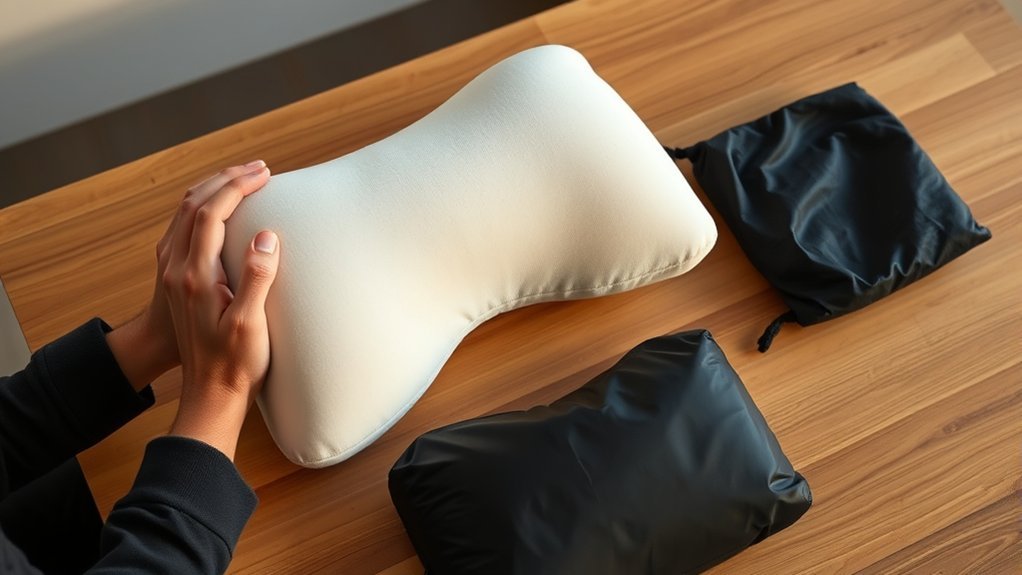
To compress your memory foam travel pillow safely, start by ensuring it’s clean and dry. Gently roll or fold the pillow to remove excess air without damaging the foam structure. For maximum compression, use a vacuum seal bag. Seal it partially, vacuum out the air, and then seal it completely. Store your compressed pillow in a cool, dry place. By following these steps, you’ll not only protect your pillow but also maintain its integrity. Discover additional tips for effective storage ahead.
How to Compress Your Memory Foam Travel Pillow for Travel

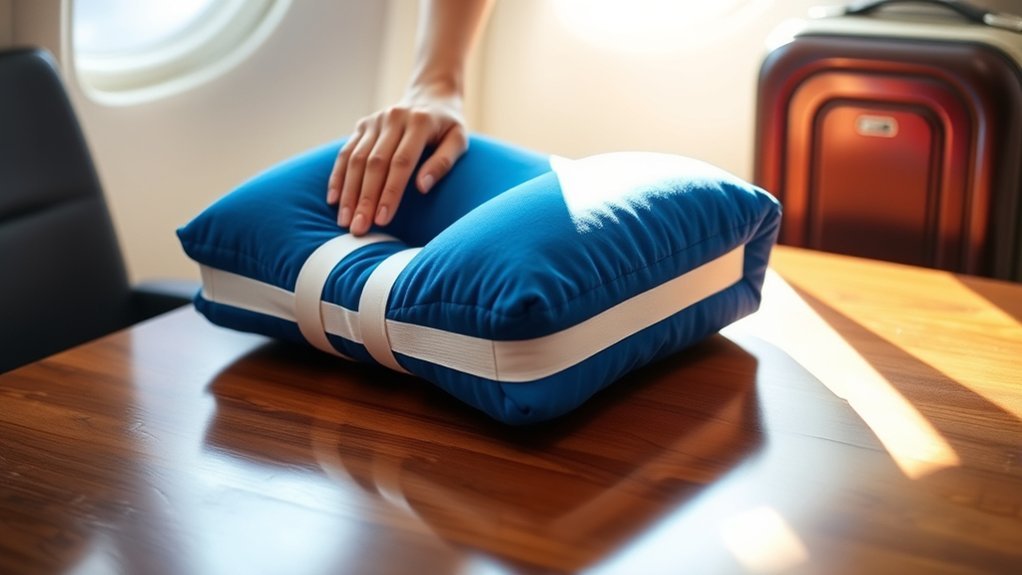
When you’re gearing up for travel, compressing your memory foam travel pillow can save valuable space in your luggage. To effectively use pillow compression techniques, gently roll or fold your pillow to expel air without damaging the foam. A vacuum bag works wonders—seal it tightly and vacuum out the air for maximum size reduction. Just remember to allow your pillow to fully expand before use to restore its loft and comfort. Avoid keeping it compressed for too long; that can lead to a loss of support and shape. Finally, store the compressed pillow in a breathable travel case to protect it from dust and moisture, ensuring you enjoy the travel pillow benefits when you need it most.
Preparing Your Pillow for Compression
Before you compress your memory foam travel pillow, remove the pillow cover and make certain the foam is clean. Airing out the pillow helps eliminate any odors and guarantees it’s ready for storage. Taking these steps will help maintain the pillow’s quality while it’s compacted.
Remove Pillow Cover
To prepare your memory foam travel pillow for compression, start by removing the pillow cover to confirm it’s clean and dry. This step is essential for maintaining pillow hygiene and preventing any moisture buildup that could lead to mold or unpleasant odors. Regular cover maintenance, including washing the removable cover, guarantees a fresh surface when you reattach it after compression. Make certain the pillow itself is completely dry before you compress it; any residual moisture can compromise the foam’s integrity during storage. After you gently roll or fold the pillow to expel air, avoid applying excessive force to protect its structure. Finally, store it in a breathable bag to keep it safe from dust and pests while preserving its shape.
Air Out Pillow
After removing the pillow cover and confirming it’s clean and dry, take the time to air out your memory foam travel pillow. This step is essential for maintaining air quality and moisture control. Allow the pillow to expand and breathe for at least 24 hours to regain its original shape and loft.
| Action | Purpose |
|---|---|
| Air out after use | Dissipates moisture and odors |
| Allow 24 hours | Guarantees full expansion |
| Keep dry | Prevents mold growth |
| Gently roll/fold | Expels air for compression |
| Clean cover | Prevents odors and mildew |
Best Practices for Compressing Your Pillow Safely
While compressing your memory foam travel pillow can save space, it’s important to follow best practices to secure its longevity and performance. Start with gentle rolling techniques to expel air without losing the pillow’s shape and loft. Use a compression bag specifically designed for pillows; this not only reduces size but also protects against dust and moisture. Remember, avoid keeping the pillow compressed for long periods—memory foam needs to breathe to maintain its loft. Before compression, verify the pillow cover is clean and completely dry to prevent mold and odors. Finally, store your compressed pillow in a cool, dry place, away from direct sunlight and extreme temperatures, to uphold its integrity and your pillow maintenance efforts.
How to Use Vacuum Seal Bags?
If you’re looking to maximize space while ensuring your memory foam travel pillow remains in good condition, vacuum seal bags are an excellent option. Start by placing your clean, dry pillow inside the bag without overstuffing it. Seal the bag partially, leaving room for the vacuum hose. Next, use a vacuum cleaner with a hose attachment to remove the air, compacting the pillow and showcasing the vacuum seal benefits. Once the air is completely out, seal the bag completely to keep it compact. Finally, store the vacuum-sealed bag flat in a suitcase or a cool, dry area to prevent moisture buildup. This method not only saves space but also protects your pillow for future travels.
Alternative Methods for Compressing Pillows
When it comes to compressing your memory foam travel pillow, several alternative methods can prove effective. You can gently roll the pillow to expel air or use specialized compression bags that protect it from moisture. Additionally, wrapping the pillow in a towel offers a simple way to reduce its size while providing some cushion and protection.
Rolling Method Advantages
The rolling method offers several advantages for compressing a memory foam travel pillow, making it a preferred choice among travelers. This technique effectively expels air by gently rolling the pillow from one end to the other, reducing its size without damaging the foam. One of the key rolling technique benefits is that it preserves the pillow’s shape and comfort, preventing permanent deformation. Additionally, this method allows for easier storage in bags while maintaining the pillow’s integrity for future use. Unlike compression bags, rolling keeps the pillow breathable, minimizing the risk of moisture buildup and mold. For ideal travel pillow maintenance, consider using a travel case alongside this method to keep your pillow protected and organized during your journeys.
Compression Bags Effectiveness
While rolling and folding methods can be useful, compression bags stand out for their effectiveness in reducing the bulk of memory foam travel pillows. The compression bag benefits include greatly decreasing size by removing excess air, making packing and storage effortless. To maximize these space-saving solutions, verify your pillow is clean and dry before sealing it. This step prevents mold and odors during storage. Properly sealing the bag maintains your pillow’s shape, reducing damage risks from prolonged compression. For best results, use a vacuum cleaner with a hose attachment to achieve a tighter seal and enhanced space savings. Compared to alternative methods, compression bags provide unmatched protection and efficiency for your travel pillow, freeing up valuable space in your luggage.
Towel Wrapping Technique
If you’re looking for a simple yet effective way to compress your memory foam travel pillow, consider the towel wrapping technique. This method involves folding your pillow in half and wrapping it securely in a clean towel, protecting it from dirt and moisture while minimizing space. Use elastic bands to hold everything in place, ensuring easy transport.
| Towel Benefits | Travel Hygiene |
|---|---|
| Provides cushioning | Absorbs moisture |
| Protects from dirt | Prevents mildew growth |
| Easy to pack | Maintains pillow freshness |
| Lightweight | Keeps your gear clean |
| Cost-effective | Enhances overall hygiene |
After your trip, simply unroll the towel and let the pillow expand in a breathable environment to maintain its shape and comfort.
Storing Your Compressed Pillow Effectively
How can you guarantee your compressed memory foam travel pillow stays in great shape? First, store it in a breathable bag or pillowcase to protect it from dust and pests while allowing airflow. Keep an eye on the storage duration; avoid leaving it compressed for too long to prevent loss of loft and comfort. For ideal conditions, choose a clean, dry environment away from direct sunlight and extreme temperatures, as moisture can harm the foam. Regularly check on your pillow, fluffing it occasionally to maintain its original shape and support. By following these guidelines, you’ll guarantee your pillow remains ready for your next adventure, providing the comfort you crave.
Reviving Your Pillow After Compression
After storing your memory foam travel pillow, reviving it is key to restoring its comfort and support. Allow the pillow to fully expand in a clean, dry environment for several hours. Gently massage and fluff it to promote airflow and restore its structure. Keep it away from direct sunlight and extreme temperatures to maintain material integrity.
| Pillow Freshness Tips | Odor Removal Techniques |
|---|---|
| Allow full expansion | Air outdoors for freshness |
| Fluff regularly | Use fabric freshener |
| Check for moisture | Store in a dry place |
| Avoid direct sunlight | Guarantee complete drying |
These steps will guarantee your pillow is ready for use, providing the comfort you deserve.
Frequently Asked Questions
Can I Compress My Pillow if It’s Still Damp?
You shouldn’t compress a damp pillow. Moisture concerns can lead to mold and mildew, ruining its comfort and lifespan. Allow your pillow to dry completely before attempting any compression for best results.
How Long Can I Keep My Pillow Compressed?
You can keep your pillow compressed for up to three weeks. Proper storage guarantees ideal pillow maintenance and longevity, allowing you to enjoy its comfort without compromising quality. Always check for any signs of damage before use.
Will Compression Damage the Pillow’s Material Over Time?
Yes, prolonged compression can negatively impact memory foam durability. The compression effects may lead to a loss of shape and support, so it’s best to avoid keeping your pillow compressed for extended periods to maintain its quality.
Can I Use a Regular Plastic Bag Instead of a Vacuum Seal Bag?
Using a regular plastic bag isn’t ideal for pillow care. Compression techniques work best with vacuum seal bags, ensuring your memory foam maintains its shape and support. Don’t risk damage—choose wisely for best preservation!
Are There Specific Brands of Pillows That Shouldn’t Be Compressed?
Certain pillow types, like those from Tempur-Pedic or Purple, shouldn’t be compressed. These brands use specific materials that can lose their shape and support. Always check brand recommendations to maintain your pillow’s integrity and comfort.
Conclusion
To sum up, compressing your memory foam travel pillow can make your packing experience as easy as pie! By following the steps outlined, you can safely shrink your pillow down to a size that fits effortlessly in your luggage. Remember to revive it properly after compression for maximum comfort. With these tips, you’ll be ready to travel light without sacrificing the cozy support you love. Happy travels!