


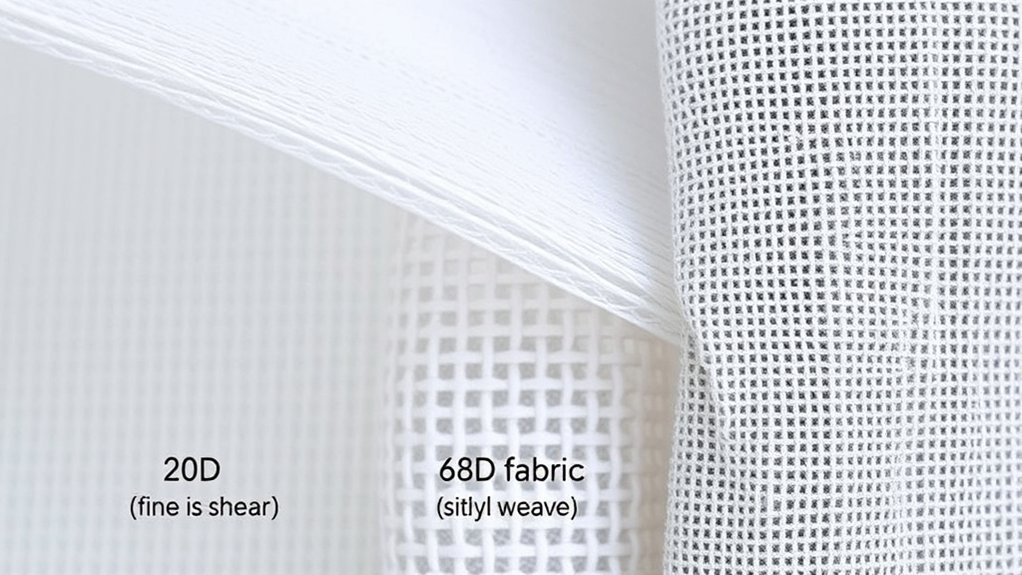
Tent denier refers to the thickness and weight of tent fabrics, influencing their durability and performance. Fabrics are typically categorized into 20D, 40D, and 68D ratings. 20D materials are lightweight and ideal for ultralight backpacking, while 40D strikes a balance between weight and durability for moderate conditions. For rugged adventures, 68D offers heavy-duty protection against wear and tear. Understanding these differences helps you choose the right tent for your needs, and there’s more to uncover about fabric selection.
What Is Tent Denier?

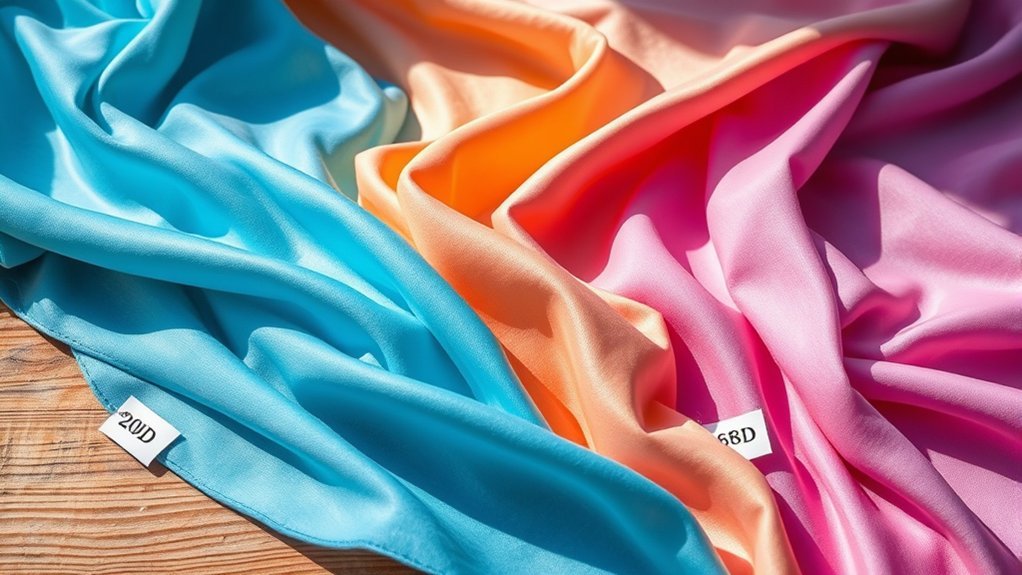
Tent denier is an essential measurement that indicates the thickness and weight of the threads used in tent fabrics. Understanding tent denier basics helps you select the right material for your outdoor adventures. The denier measurement significance lies in its correlation with fabric strength; higher denier counts generally provide greater resistance to wear and tear. For instance, a 20D fabric is lightweight, perfect for ultralight tents, while a 40D fabric strikes a balance between weight and durability, making it ideal for backpackers. If you’re seeking robustness, fabrics rated at 68D and above are suited for car camping or harsher weather conditions. By grasping these nuances, you can make informed decisions based on your specific needs, whether prioritizing weight savings for backpacking or durability for rugged use. Ultimately, understanding tent denier empowers you to enhance your camping experience.
The Importance of Denier in Tent Fabric
When selecting fabric for your tent, understanding the importance of denier is essential for ensuring it meets your specific camping needs. Denier directly impacts the durability and weight of the material, which influences your overall camping experience. Here are three key factors to evaluate during your fabric selection:
Understanding denier is crucial for choosing the right tent fabric to match your camping requirements and enhance your experience.
- Strength: Higher denier ratings, like 68D or 150D, provide enhanced tear strength, making them ideal for high-use scenarios and event shelters.
- Weight: Lightweight fabrics, such as 20D, are perfect for backpacking, allowing for easy transport without sacrificing too much durability.
- Balance: A 40D fabric strikes a balance between weight and durability, suitable for general camping.
Comparing 20D, 40D, and 68D Fabrics
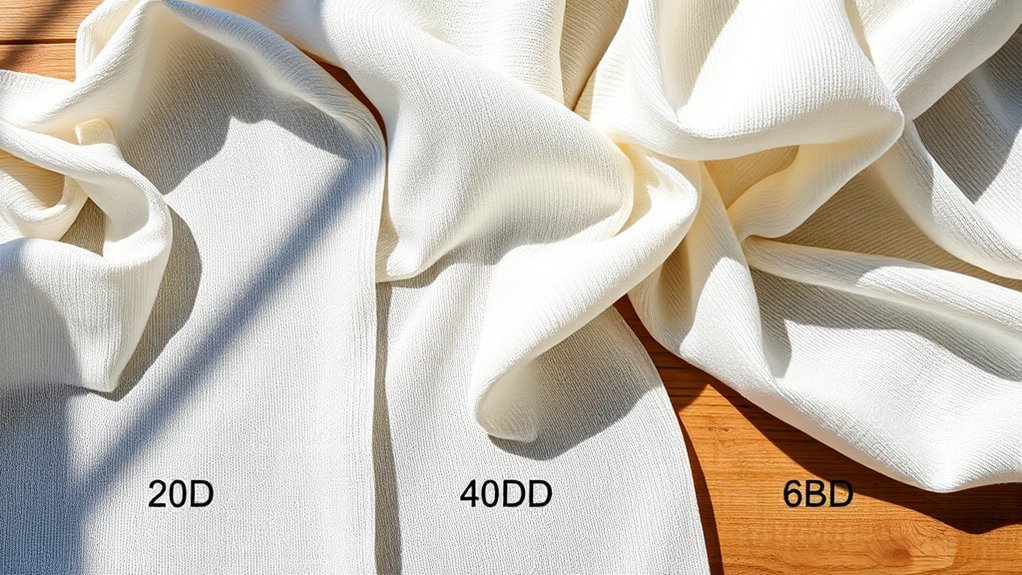
Choosing between 20D, 40D, and 68D fabrics can greatly impact your camping experience, as each denier rating offers distinct advantages and disadvantages. Understanding fabric performance is essential for selecting the right tent for your camping scenarios.
| Denier Rating | Key Features |
|---|---|
| 20D | Lightweight, ideal for ultralight backpacking, less durable in harsh conditions |
| 40D | Enhanced durability, suitable for moderate backpacking and car camping |
| 68D | Excellent durability, abrasion resistance, best for heavy-duty use |
In lightweight setups, 20D fabrics excel, but you sacrifice resilience. If you’re facing moderate conditions, 40D offers a practical middle ground. For long-term setups or harsh weather, 68D provides robust performance, ensuring your shelter withstands wear and tear. Prioritize your camping needs to choose the best fabric for your adventure.
Weight vs. Durability: Finding the Right Balance
When choosing a tent, you need to weigh the benefits of lightweight materials against the necessity for durability. Fabrics with lower denier ratings offer portability but may compromise longevity in rugged conditions. Understanding these weight considerations alongside durability factors is essential for selecting a tent that meets your specific outdoor needs.
Weight Considerations
Understanding the relationship between weight and durability in tent fabrics is essential for making an informed decision. When choosing your tent, consider the following:
- Lightweight Options: Fabrics like 20D or 30D enhance portability, perfect for backpackers, yet may compromise durability in rugged conditions.
- Heavy Duty: Fabrics rated at 68D or higher offer increased resistance to wear and tear, ideal for car camping and extended use, despite being bulkier.
- Balance: Finding the right balance between weight and durability is critical; lighter fabrics can tear easily, while heavier materials can weigh down your pack.
Durability Factors
Balancing weight and durability in tent fabrics is essential for optimizing your camping experience. When you evaluate fabrics like 20D, 40D, and 68D, you’re directly weighing material longevity against portability. Lower denier fabrics, such as 20D, excel in lightweight design but may fall short in durability testing, making them susceptible to damage from abrasions. In contrast, 40D fabrics strike a practical balance, suitable for various camping styles without significant weight penalties. Conversely, heavier 68D materials offer superior durability, resisting punctures and tears but increasing bulk. Your choice should hinge on expected conditions and camping type; lighter options demand careful handling to avoid damage, while sturdier fabrics suit harsher environments. Make your decision with these durability factors in mind for the best experience.
Coatings and Waterproof Ratings
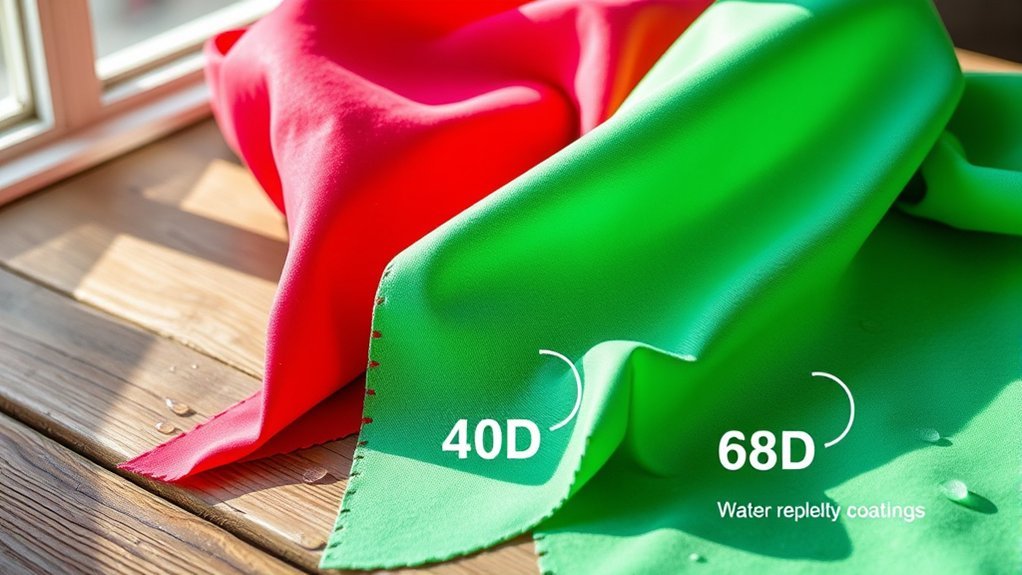
When selecting a tent, understanding coatings and waterproof ratings is essential for ensuring protection against the elements. You’ll find that silicone and PU coatings each offer distinct advantages, impacting both performance and cost. Additionally, knowing the hydrostatic head ratings will help you assess how much water pressure your tent can withstand before leakage occurs.
Types of Coatings
Tent coatings play an essential role in determining a tent’s performance and durability, especially in challenging weather conditions. Understanding the various coating types is vital for your camping experience. Here are three popular options:
- Silicone Coatings: Provide excellent waterproofing and enhance fabric strength but may cause condensation issues inside the tent.
- PU (Polyurethane) Coatings: More affordable, this option balances good breathability factors with effective water resistance by sealing the fabric’s surface.
- SIL/PU Coatings: Combining the advantages of both silicone and PU, these allow for taped seams and improve overall water resistance.
Choosing the right coating can greatly impact your tent’s functionality, ensuring you stay dry and comfortable in diverse environments.
Waterproof Ratings Explained
Understanding coatings lays the groundwork for grasping waterproof ratings, which are crucial for evaluating a tent’s performance in wet conditions. Waterproof ratings, measured in millimeters (mm) of hydrostatic head, indicate how much water pressure a fabric can withstand before leaking. Coatings like PU and silicone enhance these capabilities, with PU being affordable and breathable, while silicone offers UV resistance.
| Rating (mm) | Description |
|---|---|
| 1500mm | Minimum for average waterproof tents |
| 3000mm | Good for heavy rain |
| 5000mm+ | Excellent for extreme conditions |
Regular waterproof testing and maintenance are essential to guarantee your tent remains effective, especially in challenging weather. Choose wisely to stay dry and comfortable!
Recommendations for Choosing Tent Fabrics
Choosing the right tent fabric is essential for ensuring your outdoor experience meets your needs and expectations, especially considering factors like weight and durability. When evaluating tent fabric types, focus on these key aspects:
- Denier Rating: For lightweight backpacking, opt for fabrics with lower denier ratings (10D-30D). If you need durability for car camping or frequent use, consider higher denier fabrics (40D+).
- Usage Conditions: Assess your intended use and environmental conditions. Ultralight tents often utilize 20D fabric, striking a balance between weight and strength, while 68D polyester is ideal for family and basecamp tents due to its durability.
- Material Choices: Prioritize materials that provide tear and abrasion resistance. Higher denier fabrics withstand harsher conditions, enhancing longevity and comfort during your adventures.
Frequently Asked Questions
How Does Denier Affect Tent Breathability?
Denier greatly influences fabric performance; lower denier often enhances breathability factors, allowing moisture to escape. Conversely, higher denier fabrics may reduce airflow, impacting overall comfort during use. Choose wisely based on your specific needs.
Can I Repair a Tent With Different Denier Fabrics?
Sure, you can mix denier fabrics for tent repairs, but isn’t that ironic? The fabric compatibility can complicate durability. Employ tent repair techniques that maintain structural integrity, ensuring a reliable shelter for your adventures.
What Are Common Brands Using 20D, 40D, and 68D Fabrics?
Brands like Big Agnes, REI, and MSR often use 20D, 40D, and 68D fabrics to enhance tent durability and fabric resistance. These materials effectively balance weight and strength, catering to outdoor enthusiasts seeking reliable gear.
Are There Environmental Impacts of Tent Fabric Production?
Yes, tent fabric production can harm the environment. Sustainable sourcing mitigates this, yet production waste still poses significant issues. You can advocate for brands prioritizing eco-friendly practices to reduce these impacts and promote a healthier planet.
How Do Weather Conditions Influence Fabric Choice?
Weather conditions greatly influence your fabric choice; temperature extremes demand durable materials, while high humidity levels require moisture-wicking properties. Selecting the right denier guarantees your tent withstands these challenges, enhancing performance and comfort during outdoor adventures.
Conclusion
In choosing the right tent fabric, understanding denier is essential. You might find it surprising that a 20D fabric can be lighter yet less durable than a 68D option, which offers greater strength for demanding conditions. Coincidentally, your next adventure might hinge on these subtle distinctions. By weighing factors like weight, durability, and waterproof ratings, you’ll guarantee a well-informed decision that suits your needs. Ultimately, the right fabric can transform your outdoor experience.