


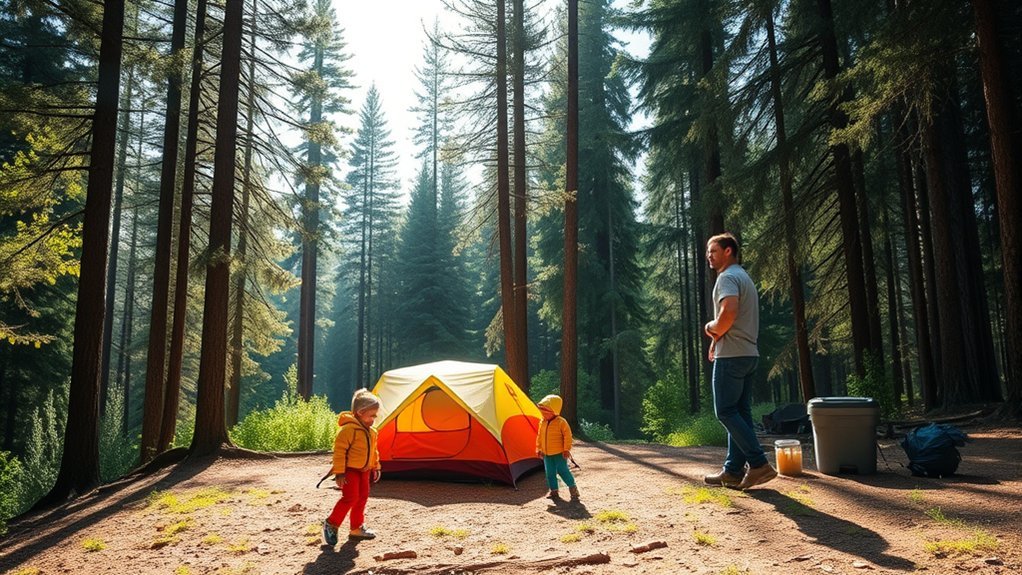
When tent camping in bear country with kids, preparation is key. Contact local wildlife agencies for bear activity updates and set up a clean camp with bear-proof containers for food. Teach your kids to make noise while hiking and to recognize bear signs. Always travel in groups and supervise children closely. If you encounter a bear, stay calm and back away slowly. Follow these smart safety habits to guarantee your family enjoys a safe adventure. There’s much more to discover!
Preparing for Your Camping Trip

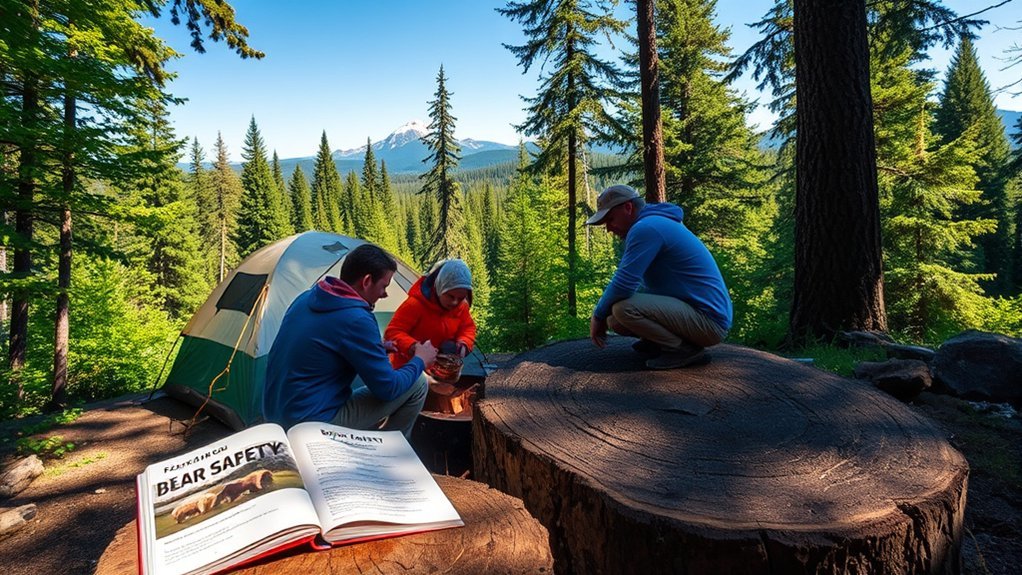
When planning your camping trip in bear country, it’s essential to be proactive about safety. Start by contacting local wildlife agencies to gather information on current bear activity and safety recommendations. Understanding bear behavior and spotting signs, like tracks or droppings, can help you identify potential risks during your adventure.
Next, pack your camping gear wisely. Use bear-proof containers for food and non-food items to minimize odors that might attract bears. Don’t forget extra garbage bags for leftovers and waste, allowing you to follow the “pack it in, pack it out” principle. This keeps your campsite clean and reduces attractants.
Finally, equip yourself with essential gear, like flashlights and binoculars, for safety and enhanced observation, especially after dark. By taking these steps, you’ll not only protect your family but also embrace the freedom of enjoying nature with peace of mind.
Establishing a Clean Camp
Establishing a clean camp is essential for keeping bears at bay and ensuring your family’s safety. Start by using bear-resistant containers for all food and trash, and set up a cooking area at least 100 feet away from your sleeping tents. Teach your kids the importance of proper food storage and trash disposal to help minimize any potential bear attraction.
Food Storage Techniques
To keep your campsite safe from bears, it’s essential to implement effective food storage techniques. Here are some tips to help you establish a secure environment:
- Store all food and food attractants in bear-resistant containers or hang them at least 12 feet away from tree trunks and 5 feet off the ground.
- Clean your cooking and eating areas immediately after use to eliminate any food scraps or odors.
- Follow the “pack it in, pack it out” principle by taking all trash and leftover food with you.
- Keep pet food stored away and only feed pets during designated times to avoid attracting bears.
Trash Management Practices
Keeping a clean camp is just as essential as proper food storage in bear country. By managing trash disposal effectively, you enhance bear awareness and reduce risks. Always follow the “pack it in, pack it out” principle, and use bear-resistant dumpsters to prevent bears from being attracted to human food sources. Here’s a quick guide to help you maintain a clean campsite:
| Action | Purpose | Tips |
|---|---|---|
| Pack out all trash | Prevent bear attraction | Use odor-proof bags for food waste |
| Dispose in bear-resistant bins | Stop bears from accessing food | Check local guidelines for disposal |
| Educate kids on cleanliness | Promote safety for everyone | Use fun activities to teach them |
Educating Kids About Bear Safety
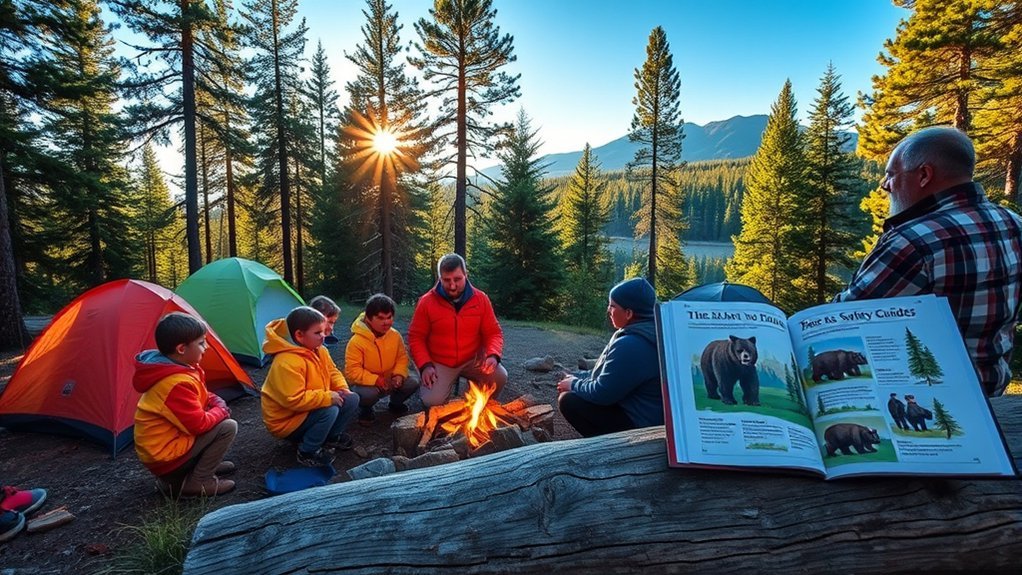
While exploring the great outdoors, it’s essential to equip your kids with the knowledge they need to stay safe in bear country. Here are some key points to share:
- Recognize bear signs: Teach your kids to identify tracks, droppings, and diggings. If they spot fresh signs, explain the importance of leaving the area immediately.
- Make noise: Emphasize the need to make bear noises to alert bears of their presence. Remember, bear bells can be misleading.
- Calm reactions: Instruct children on how to react if they see a bear—stay calm, don’t run, and speak in a firm, soothing voice.
- Store food properly: Reinforce the importance of keeping food and scented items secured to avoid attracting bears, following the “pack it in, pack it out” principle.
Safety During Hikes
When heading out for a hike in bear country, it’s essential to prioritize safety to guarantee a fun experience for the whole family. Start by traveling in groups of four or more, as larger groups create more noise and reduce the chances of surprising a bear. Stick to marked trails and avoid hiking during dawn, dusk, or at night when bears are most active.
Practice good hiking etiquette by making consistent noise—talking, clapping, or singing—since bear bells aren’t as effective. Stay alert for fresh bear signs like tracks or droppings; if you see any, leave the area immediately.
Keep your kids close and supervise them closely, explaining the importance of remaining calm and still if they encounter a bear. Instilling bear awareness in your children will help everyone enjoy the beauty of nature while minimizing risks. Safe hiking means fun hiking, so prepare wisely!
Recognizing Bear Behavior

Understanding bear behavior is vital for ensuring safety in bear country, especially with kids in tow. By recognizing bear vocalizations and body language, you can better evaluate their intentions. Here are key indicators to watch for:
- Curiosity: A bear quietly observing you is likely gauging the situation, not being aggressive.
- Defensive Signs: Woofing, growling, or huffing indicates a bear feels threatened. Keep your distance if you hear these sounds.
- Standing on Hind Legs: This behavior usually means the bear is trying to get a better view, not preparing to attack.
- Predatory Behavior: If a black bear approaches aggressively, it’s essential to fight back and aim for the face.
Responding to Bear Encounters
Encountering a bear can be a nerve-wracking experience, but knowing how to respond can make all the difference. If you find yourself in a bear encounter, stay calm and avoid running, as this might trigger the bear’s predatory instincts. Speak firmly and slowly while backing away, keeping your group close to appear larger and less threatening. Assess the bear’s behavior: if it seems curious, you might need to act aggressively, but if it appears defensive, remain calm and retreat slowly. In a defensive bear attack, use bear spray if the bear approaches, and if contact occurs, play dead by lying flat and covering your neck and head. Always prioritize avoiding bear encounters by making noise, traveling in groups, and staying alert in bear country. Your emergency response can keep you and your kids safe during your outdoor adventure!
Proper Food Storage Techniques
Proper food storage techniques play an essential role in keeping your family safe while camping in bear country. To minimize bear encounters, follow these effective strategies:
Proper food storage is crucial for safety while camping in bear country. Follow these strategies to minimize encounters.
- Use bear-resistant containers for all food types and scented items, including toiletries and pet food. These containers are designed to withstand bear attempts to open them.
- Hang food at least 5 feet off the ground and 12 feet away from tree trunks. This height and distance can greatly deter bears.
- Keep cooking and eating areas at least 100 yards away from sleeping areas. This reduces the chance of nighttime bear visits.
- Dispose of trash responsibly by using bear-resistant dumpsters or following the “pack it in, pack it out” principle. This prevents bears from becoming accustomed to human food sources.
How to Help Protect Bears
While camping in bear country, you can play a crucial role in protecting these magnificent creatures by taking simple yet effective steps. To support bear conservation, avoid camping near natural food sources and follow seasonal restrictions on bear activity. Always use wildlife-proof garbage bins for waste disposal, as this keeps bears from becoming habituated to human food. Embrace the “pack it in, pack it out” principle—leave no trash behind, including food scraps.
When storing food, use bear-resistant containers or hang your supplies at least 12 feet from tree trunks and 5 feet off the ground. This deters bears from accessing your provisions. Finally, if you encounter any bold bear behavior, report it to local authorities. This helps manage bear populations and promotes wildlife education among fellow campers. By taking these actions, you not only protect bears but also promote a safer and more enjoyable camping experience for your family.
Frequently Asked Questions
What Should I Do if I See a Bear While Camping?
If you see a bear while camping, remain calm. Observe its behavior, avoid direct eye contact, and slowly back away. If it approaches, prepare your emergency response, making noise or using bear spray if necessary.
How Can I Choose a Safe Campsite in Bear Country?
Choosing a campsite in bear country’s like maneuvering through a minefield. Look for locations away from bear attractants, like food sources and trails. Settle away from dense brush and water, ensuring safety for you and your kids.
Are There Specific Bear Species I Should Be Aware Of?
You should be aware of black bears and grizzly bears in bear territory. Understanding their behavior helps you avoid encounters. Always respect their space and keep your campsite clean to minimize risks. Stay vigilant!
What Should I Pack for Bear Safety on Family Hikes?
Pack bear spray for immediate protection and guarantee you have proper food storage containers to minimize attractants. Bring a first-aid kit, a whistle, and a flashlight to enhance safety during your family hikes.
How Do I Teach Kids to React if They Encounter a Bear?
Imagine stumbling upon a bear! You’ll want to teach kids about bear behavior through fun safety drills. Encourage calmness, staying still, and backing away slowly while avoiding eye contact. Practice makes perfect for their safety!
Conclusion
Camping in bear country can feel like walking a tightrope, balancing adventure and safety. By instilling smart habits and teaching your kids about bear behavior, you’re weaving a safety net that protects both your family and the bears. Remember the story of the camper who lost their food to a curious bear; it’s a reminder that our actions matter. Embrace the wild, but respect it. With preparation and awareness, you can create unforgettable memories without compromising safety.