


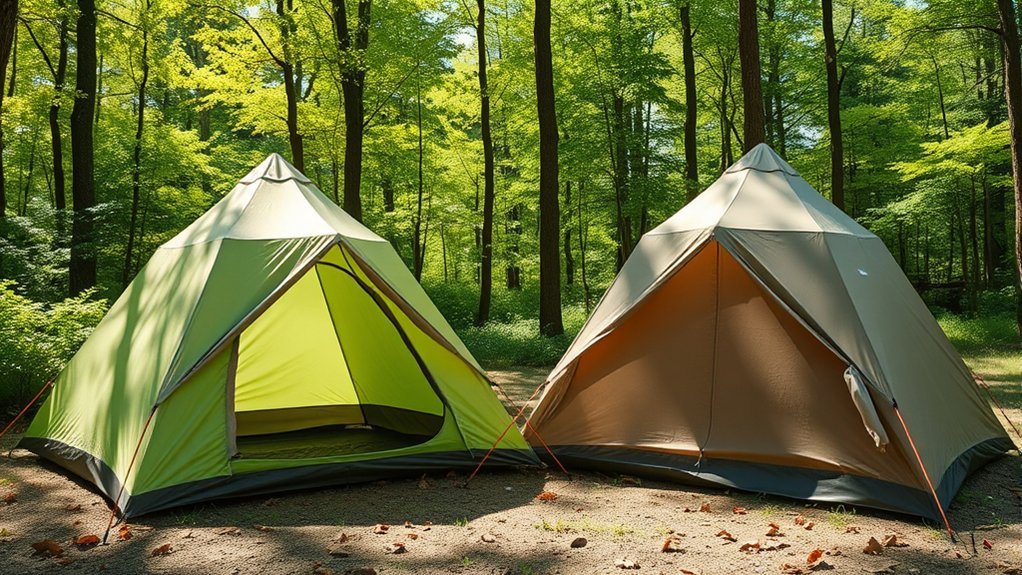
When choosing between nylon and polyester tents, consider your camping needs. Nylon’s lightweight and strong qualities make it a top choice for ultralight backpacking, while polyester’s durability and UV resistance are better suited for family camping and wet conditions. Nylon can sag and degrade under UV exposure, whereas polyester maintains its shape and dries quickly. Your specific adventure demands will dictate the best option for you—exploring further will provide more insights into these fabrics.
Overview of Tent Fabrics

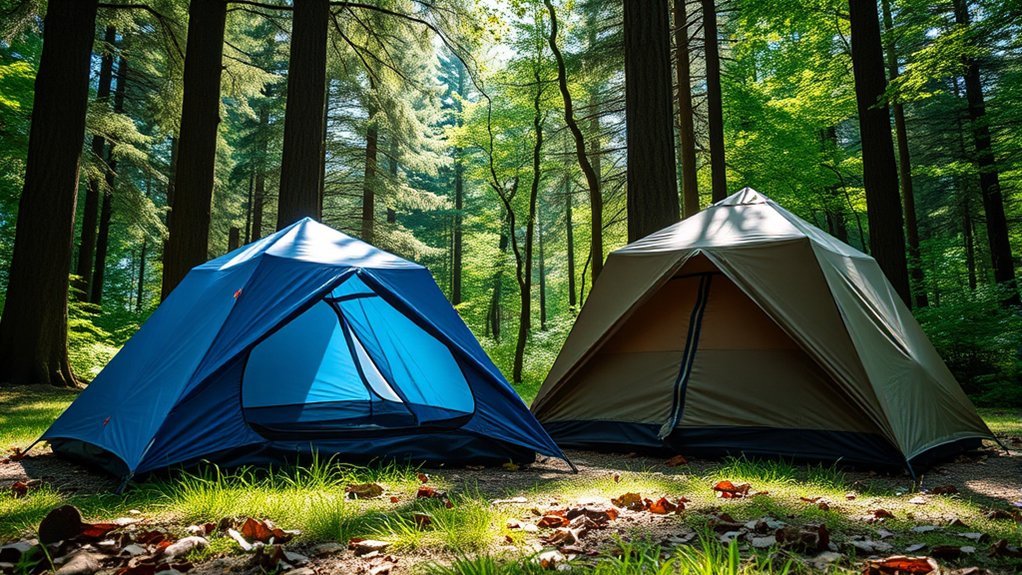
When choosing a tent for your camping adventure, it’s vital to understand the various fabrics available, as each type impacts your experience greatly. The three primary fabrics are nylon, polyester, and polycotton, each with unique strengths and weaknesses. Nylon boasts a superior strength-to-weight ratio and durability, making it perfect for lightweight backpacking. However, it can sag and degrade under UV exposure, requiring diligent tent maintenance and fabric care. On the other hand, polyester tents resist sagging in wet conditions and absorb minimal water, yet they generally have lower tear strength. Finally, polycotton combines the breathability of cotton with the durability of polyester, offering fire-retardant properties. While it’s heavier and pricier, understanding these fabric characteristics is essential for selecting the right tent for your specific camping needs. Prioritizing fabric care will guarantee your tent lasts longer, enhancing your outdoor freedom.
Advantages of Nylon Tents
When you’re choosing a tent for your outdoor adventures, nylon offers impressive advantages that can’t be overlooked. Its lightweight nature guarantees easy portability, while the exceptional strength-to-weight ratio provides durability without the bulk. Plus, with excellent abrasion resistance, nylon tents are built to withstand the rigors of your camping escapades.
Lightweight and Portable
Nylon tents stand out for their impressive strength-to-weight ratio, making them a go-to choice for backpackers who prioritize lightweight and portable gear. The inherent stretchiness of nylon allows it to distribute stress evenly, enhancing durability while you’re out on the trail. Weighing notably less than polyester, nylon tents can be found in ultra-lightweight variants, perfect for minimalist camping.
| Fabric Type | Weight (grams) |
|---|---|
| 7D | 100 |
| 10D | 150 |
| 15D | 200 |
Despite being less durable than heavier materials, they offer excellent abrasion resistance, ensuring your tent holds up in high-stress areas. This lightweight nature makes them easy to carry, reducing strain on your pack during your adventures.
Exceptional Strength Ratio
For backpackers seeking lightweight options, the exceptional strength ratio of nylon tents makes them a standout choice. When you consider strength comparison, nylon’s inherent stretchiness allows it to distribute stress evenly, enhancing durability and minimizing the risk of tearing. This is particularly vital on long treks, where every ounce matters. Ripstop nylon, with its crosshatch pattern, greatly improves tear resistance, adding to its weight efficiency. The lightweight nature of nylon means you can carry more essential gear without sacrificing structural integrity. However, keep in mind that while nylon excels in strength, it’s more vulnerable to UV degradation, especially at high elevations. Balancing these factors will help you choose the best tent for your adventures.
Abrasion Resistance Benefits
While many materials vie for dominance in the camping gear market, nylon stands out due to its exceptional abrasion resistance, making it a top choice for outdoor enthusiasts. This durability is essential when traversing rugged terrains, as high-stress areas are less likely to succumb to wear and tear. The ripstop design enhances tear resistance, allowing you to handle your tent without worrying about sharp objects. Nylon’s stretchiness helps distribute stress evenly, maintaining structural integrity even under intense conditions. Though it may be more susceptible to UV degradation, its abrasion resistance considerably contributes to fabric longevity. By choosing nylon, you’re investing in lower tent maintenance and a reliable shelter that can endure the demands of your adventurous spirit.
Disadvantages of Nylon Tents
When considering nylon tents, it’s important to recognize their water absorption issues, which can lead to increased weight and sagging during rainy conditions. Additionally, nylon is susceptible to UV degradation, particularly at higher elevations, shortening the tent’s lifespan considerably. These factors can compromise both the functionality and durability of your camping experience.
Water Absorption Issues
Water absorption presents a significant drawback for nylon tents, impacting their performance and usability in various conditions. When wet, nylon can absorb water, increasing its weight and causing sagging by up to 3.5% in length. This sagging complicates setup and introduces condensation issues, as dripping fabric can dampen your camping experience. Over time, the moisture absorption leads to wrinkling, which negatively affects the tent’s structural integrity. Unlike polyester, nylon tents often require additional waterproof coatings to combat water absorption, but those coatings can wear off, necessitating ongoing maintenance. In high humidity, nylon’s size changes complicate stability and setup, making polyester a more reliable choice for those who value efficiency and ease during their outdoor adventures.
UV Degradation Risks
Nylon tents, despite their lightweight and packable nature, face significant challenges due to UV degradation. Prolonged UV exposure can drastically weaken nylon fibers, reducing tensile strength by up to 50% after just 200 hours. This loss of strength not only increases the risk of tearing but also compromises waterproof coatings, leading to potential leakage issues during your adventures. To combat these UV exposure effects, it’s essential to follow nylon maintenance tips, such as storing your tent in a cool, shaded place when not in use and avoiding direct sunlight during setup. While nylon offers advantages, understanding its vulnerability to UV degradation is critical for maintaining its durability and ensuring a more liberated camping experience.
Advantages of Polyester Tents

Polyester tents offer several advantages that make them a popular choice among campers. First off, their cost effectiveness is hard to beat; you get durability and performance without breaking the bank. These tents excel in weather resistance, maintaining their shape and structural integrity even when wet, unlike nylon tents that can sag and expand. This guarantees a reliable shelter regardless of conditions.
Moreover, polyester’s superior UV resistance means it won’t degrade as quickly under the sun, providing you with a longer-lasting option. Plus, it absorbs minimal water, drastically reducing growth or shrinkage issues. You’ll find that polyester tents dry faster than their nylon counterparts, adding to your convenience during unpredictable weather. Altogether, these features not only enhance your camping experience but also empower you to enjoy the great outdoors with confidence and ease.
Disadvantages of Polyester Tents
While polyester tents present several benefits, they also come with notable disadvantages that can impact your camping experience. One of the key polyester limitations is its lower tear strength compared to nylon, which often requires thicker material to match durability. Although these tents are more stable when wet, they can struggle with poor breathability, leading to condensation issues inside the tent. This moisture buildup can create an uncomfortable environment, especially during humid nights. Additionally, polyester fabrics tend to be heavier than nylon, making them less ideal for ultralight backpacking scenarios where every ounce counts. You should also be aware of color transfer concerns, as dark colors might fade onto lighter materials when exposed to moisture. Finally, while polyester is somewhat resistant to UV damage, it can still degrade over time without proper care, further limiting its lifespan.
Choosing the Right Fabric for Your Camping Needs

When it comes to selecting the right fabric for your camping needs, understanding your specific requirements can make all the difference. Consider your camping conditions and how fabric longevity plays a role in your choice.
| Fabric | Best For |
|---|---|
| Nylon | Ultralight setups; backpacking |
| Polyester | Family camping; wet conditions |
If you’re backpacking, nylon offers a fantastic strength-to-weight ratio, but keep in mind its tendency to sag when wet. On the other hand, polyester maintains its shape, preventing sagging and condensation. It’s especially resilient against UV degradation and mold, making it ideal for various weather conditions.
Ultimately, assess your adventure’s demands—opt for nylon for weight savings or polyester for stability and durability. Your choice will guarantee a more enjoyable camping experience tailored to your needs.
Frequently Asked Questions
Can I Waterproof My Nylon or Polyester Tent Further?
Yes, you can waterproof your nylon or polyester tent further. Use tent waterproofing methods like sprays or seam sealants. Regular tent maintenance tips, such as cleaning and proper storage, guarantee peak performance and longevity in wet conditions.
How Do I Clean and Maintain My Nylon or Polyester Tent?
To clean your tent, use a gentle soap and water solution. Rinse thoroughly, avoiding harsh chemicals. For fabric care, make certain it’s dry before packing, and store it in a cool, dry place to prevent mildew.
Are There Eco-Friendly Options for Nylon and Polyester Tents?
Yes, you can find eco-friendly tents made from sustainable materials. Look for biodegradable options that minimize environmental impact, ensuring your camping experience aligns with your values while enjoying nature’s beauty without leaving a lasting footprint.
How Do Temperature Changes Affect Nylon and Polyester Tents?
Temperature changes can cause nylon to stretch and lose shape, while polyester maintains its form better. For instance, on a chilly night, you’ll notice nylon tents may sag, affecting fabric durability and temperature resistance.
What Is the Average Lifespan of Nylon Versus Polyester Tents?
Nylon tents typically last 10-15 years, while polyester tents offer about 5-10 years. In this fabric comparison, you’ll find that nylon’s durability often outweighs polyester, making it a better long-term investment for campers.
Conclusion
In the end, your choice between nylon and polyester tents hinges on your specific camping needs. Do you prioritize lightweight durability for backpacking, or do you need UV resistance for family camping trips? Nylon offers strength and lightness, while polyester provides better sun protection and cost-effectiveness. Consider factors like weather conditions and intended use to make the best decision. Whichever fabric you choose, guarantee it aligns with your adventure plans for a comfortable outdoor experience.