


To ventilate your tent in hot weather without letting bugs in, use mesh doors and windows to promote airflow while keeping insects out. Position your tent in the shade and orient it to catch cool breezes. Consider implementing an overhead tarp for added ventilation, and keep doors and windows open when possible. Battery-powered fans can enhance airflow inside, too. Stay hydrated and dress in breathable fabrics for ideal comfort; you’ll discover more effective tips ahead!
Utilize Mesh Doors and Windows

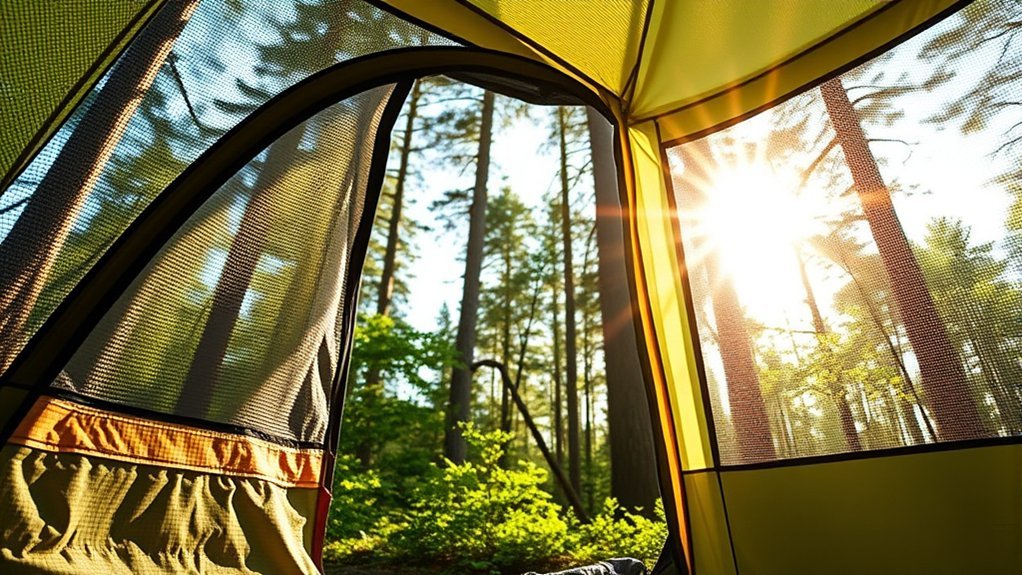
When you’re camping in hot weather, utilizing mesh doors and windows is vital for keeping your tent cool and comfortable. These mesh benefits provide an important balance of airflow and insect protection, allowing cool breezes to flow through while keeping pesky bugs at bay. Many tents come equipped with multiple mesh openings, which you can adjust throughout the day to optimize ventilation as temperatures change.
Consider adding mesh flysheets to enhance airflow without sacrificing insect protection. Regularly check your mesh panels for holes or tears to guarantee they do their job effectively. Remember, positioning your tent to maximize these mesh openings will further enhance your experience, encouraging a revitalizing breeze to circulate. Embrace the freedom of a well-ventilated tent, and enjoy your outdoor adventure without the annoyance of unwanted critters intruding on your space.
Position Your Tent in the Shade
Choosing the right spot for your tent can make a significant difference in your comfort during hot weather. Positioning your tent in the shade offers numerous shade benefits, helping maintain a cooler temperature inside. Here are some tips for selecting the best tent location:
- Look for natural shade sources like trees or hills.
- Research your campsite beforehand for shaded pitches.
- Orient your tent to catch the prevailing cool breezes.
- Avoid open, sunlit areas that amplify heat.
- Consider the sun’s path throughout the day for ideal shade.
Implement an Overhead Tarp
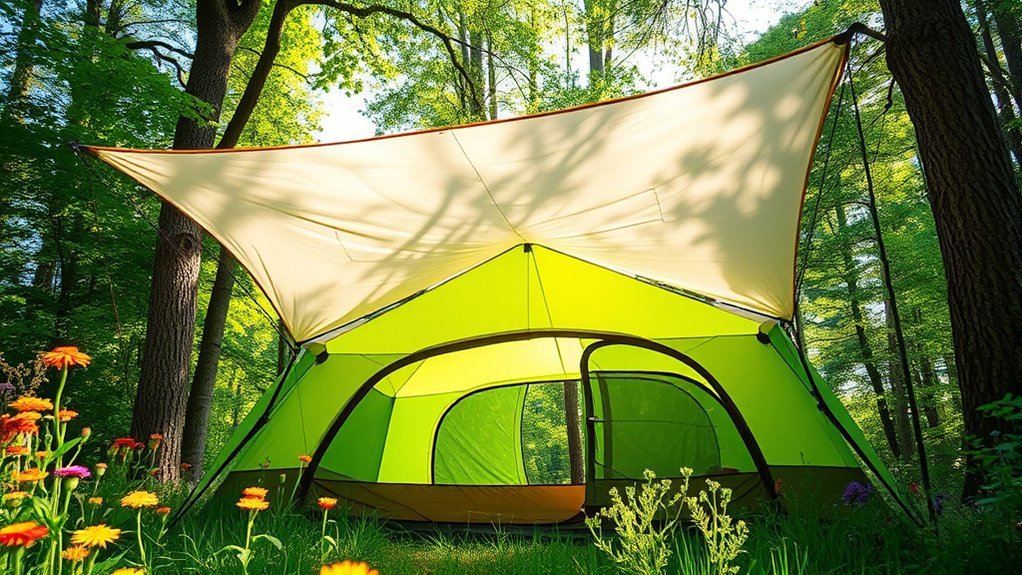
To keep your tent cool in hot weather, setting up an overhead tarp is a smart move. Make certain you choose the right size and position it at an angle to enhance airflow while blocking direct sunlight. Regularly check its setup to guarantee it stays secure and effective throughout your camping trip.
Tarp Setup Techniques
Setting up an overhead tarp can greatly enhance your tent’s ventilation during hot weather. Follow these tarp setup techniques to maximize airflow while keeping the bugs out:
- Choose sturdy tarp materials like nylon or polyester for durability.
- Use poles or tree branches to elevate the tarp, ensuring airflow underneath.
- Position the tarp at an angle to allow cool breezes in and direct rain away.
- Secure the tarp with guidelines to maintain stability during windy conditions.
- Ensure adequate coverage—a size of about 13×10 feet works best for ventilation and protection.
Choosing the Right Size
A larger overhead tarp, ideally around 13×10 feet, can greatly improve your tent’s ventilation in hot weather. It’s essential to match the tarp size to your tent dimensions to guarantee coverage and airflow. A well-positioned tarp blocks direct sunlight while allowing air to flow freely, creating a cooler microclimate beneath.
Here’s a quick reference table to help you choose the right size:
| Tent Size | Recommended Tarp Size |
|---|---|
| 2-3 Person Tent | 10×8 feet |
| 4-Man Tent | 13×10 feet |
| 6-Man Tent | 15×12 feet |
Using the tent’s mesh flysheet along with the tarp keeps bugs out while promoting airflow, meeting your space requirements effectively.
Maximizing Airflow Benefits
Choosing the right size tarp is just the beginning; implementing it effectively can greatly maximize airflow inside your tent. An overhead tarp not only provides shade but also enhances airflow dynamics, keeping your space cool and bug-free. Here are key tips to take into account:
- Use breathable tarp material to allow air circulation.
- Position the tarp at an angle to draw warm air out.
- Select a tarp size of at least 13×10 ft for ideal coverage.
- Secure the tarp with guy lines to avoid blocking entrances.
- Create a gap between the tarp and tent to promote that essential chimney effect.
Maintain Proper Tent Orientation
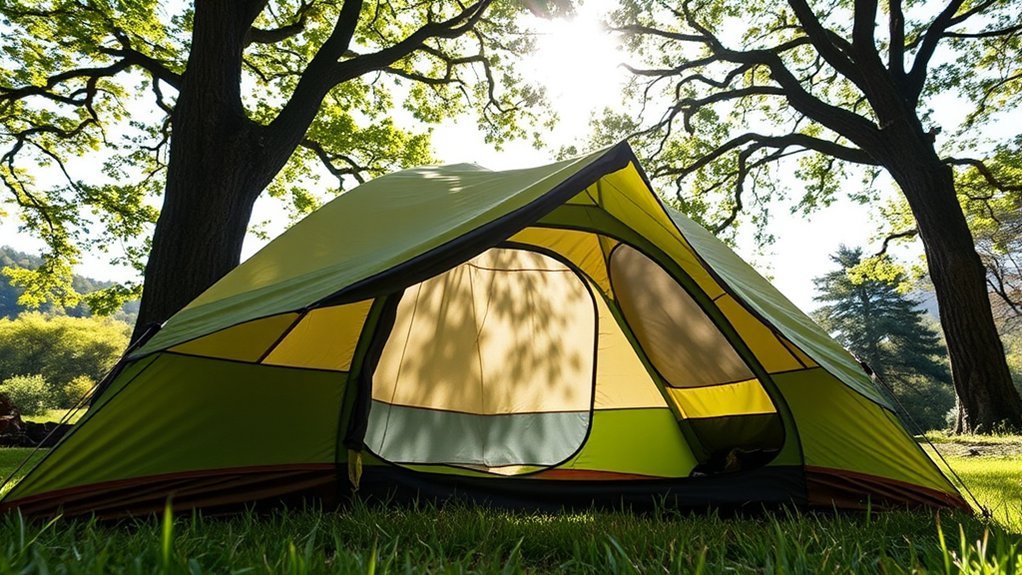
To keep your tent cool, position the entrance to face the prevailing breeze, allowing for better airflow. Setting up in a shaded area can also help reduce heat buildup during peak sun hours. Regularly adjust your tent’s orientation throughout the day to maximize ventilation and comfort.
Face Cool Breezes
Maximizing airflow in your tent during hot weather hinges on its orientation. Position your entrance to face the prevailing cool breezes to enhance ventilation and stay comfortable. Here are some effective airflow techniques:
- Utilize natural landscape features like hills or trees as windbreaks to direct cooler air in.
- Set up your tent in a shaded area to prevent direct sunlight from heating the interior.
- Open all tent doors and windows with mesh screens for cross-ventilation while keeping bugs out.
- Regularly check the weather forecast to anticipate changes in wind direction.
- Adjust your tent’s orientation as needed to maintain ideal airflow.
Utilize Natural Shade
Finding a shaded spot for your tent is key to keeping it cool when temperatures rise. Utilize natural features like trees or hills to protect your tent from direct sunlight and wind. Before your trip, do some campsite research to pinpoint areas that offer ample shade throughout the day. Remember to avoid low-lying spots where heat can accumulate. Instead, choose higher ground for ideal cooling.
| Natural Feature | Benefits | Tips |
|---|---|---|
| Trees | Provides shade and shelter | Set up on the north side |
| Hills | Reduces wind exposure | Position tent facing south |
| Rock formations | Reflects cool air | Use as a backdrop for shade |
With the right orientation, you’ll enjoy a more comfortable camping experience!
Align With Wind Direction
When you position your tent with its openings facing the prevailing wind direction, you greatly enhance airflow and keep the interior cooler. Proper tent orientation is key to maximizing ventilation and comfort. Here are some tips to help you align with wind patterns:
- Check the weather forecast for wind patterns before setting up.
- Use natural features like hills or trees to block direct sunlight while maintaining airflow.
- Opt for a larger tent to improve air circulation.
- Verify your mesh flysheet or screens are intact to keep bugs out.
- Regularly adjust your tent if wind directions change throughout the day.
Keep Ventilation Open When Possible
To keep your tent comfortable in hot weather, always prioritize ventilation whenever possible. Utilize mesh flysheets and tent openings to enhance airflow while keeping insects at bay. During the cooler parts of the day, like early morning or late evening, keep your tent doors and windows open to promote airflow and reduce heat buildup. Position your tent in a shaded area to minimize direct sunlight exposure, which helps maintain cooler internal temperatures while allowing for effective ventilation. When setting up your tent, orient it to face prevailing breezes; this natural airflow will cool the interior. If you’re looking for an alternative for sleeping, consider a bivvy bag. It provides increased ventilation while minimizing insect intrusion, making it a great option for hot weather strategies. By implementing these tent ventilation techniques, you’ll create a more comfortable and liberating camping experience.
Use Battery-Powered Fans
Using battery-powered fans can greatly enhance your comfort during hot weather camping. These fans efficiently circulate air, reducing heat buildup and making your tent a more pleasant space. Here’s how to make the most of them:
- Choose lightweight models that are easy to pack and set up.
- Adjust the speed according to your comfort level; many fans offer customizable airflow.
- Strategically place the fan near tent openings to draw in cooler air while keeping the bugs out.
- Consider fans with built-in LED lights for added functionality during nighttime.
- Keep your setup flexible; reposition the fan as needed for ideal airflow throughout the day.
With proper fan placement and speed adjustment, you’ll create a rejuvenating atmosphere inside your tent without compromising on bug protection. Enjoy your camping adventure with a cool, comfortable space!
Stay Hydrated and Dress Appropriately
Staying hydrated and dressing appropriately are essential for keeping cool during hot weather camping. Aim to drink at least half a gallon (about 2 liters) of water daily and monitor your hydration level by checking the color of your urine. For clothing, opt for moisture-wicking fabrics like polyester or merino wool that help draw sweat away from your skin. Light-colored clothing reflects sunlight, making it a better choice than darker colors that absorb heat.
Here’s a quick reference table for your hydration methods and clothing materials:
| Hydration Methods | Clothing Materials | Tips |
|---|---|---|
| Drink water regularly | Polyester | Reflects sunlight |
| Use electrolyte drinks | Merino wool | Breathable and lightweight |
| Eat lighter snacks | Light-colored fabrics | Keep cool |
| Monitor urine color | Avoid heavy fabrics | Prevent overheating |
| Keep a water bottle handy | Layer for warmth | Adjust as needed |
Stay cool and enjoy your adventure!
Frequently Asked Questions
What Types of Tents Have the Best Ventilation Features?
Look for tents with excellent ventilation systems, like those featuring mesh panels and multiple openings. Dome and cabin tent designs typically enhance airflow, keeping you cool while minimizing bug intrusion. Choose wisely for comfort!
How Can I Seal Gaps to Prevent Bugs From Entering?
You can achieve bug-proof perfection by using tent sealing methods like weather stripping, screen patches, and silicone sealant. These effective bug proofing techniques will keep your space cozy and insect-free, allowing you to enjoy the great outdoors!
Are There Specific Fan Types Suitable for Tents?
Battery operated fans and solar powered fans are perfect for tents. They provide effective airflow while keeping your space cool. Just set them up near openings to enhance ventilation without inviting bugs inside. Enjoy your adventure!
Can I Use a Portable Air Conditioner in a Tent?
Yes, you can use a portable air conditioner in a tent! Imagine camping in sweltering heat while enjoying cool comfort. Portable AC benefits include efficient tent cooling techniques, keeping you refreshed and liberated from the heat.
What Materials Are Best for Overhead Tarps?
For overhead tarps, use durable materials like polyethylene or canvas. Employ secure tarp installation techniques, such as using grommets and tension lines, to guarantee stability and protection from the elements while allowing airflow.
Conclusion
In the heat of summer, staying cool in your tent can feel like an uphill battle. But with the right ventilation strategies, you can create a breezy oasis without inviting unwanted bugs. By using mesh openings, positioning your tent wisely, and employing fans, you’ll enjoy a more comfortable camping experience. So, as you plan your next outdoor adventure, remember: a little effort in ventilation can turn a sweltering tent into a rejuvenating retreat beneath the stars.