


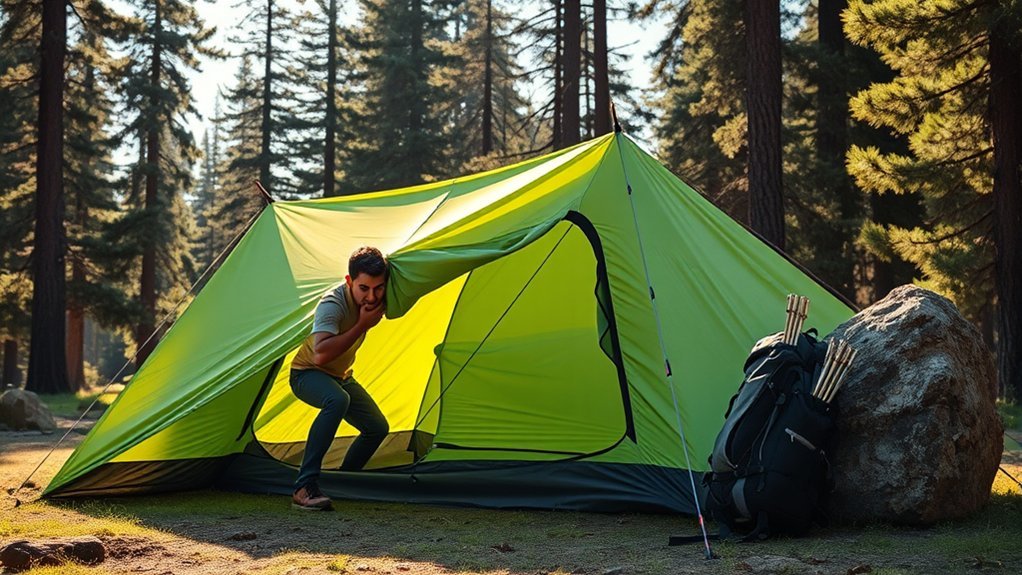
To set up your tent solo quickly and correctly, start by laying out your ground tarp with the shiny side up. Next, unpack your tent and assemble the poles, then slide them into the tent’s grommets. Once the tent stands upright, drape the rain fly over it, ensuring all tabs align. Stake down the corners for stability and check for any gaps. Don’t forget to examine weather conditions for extra preparedness. Stay tuned to uncover more essential tips!
Preparing for Your Camping Trip

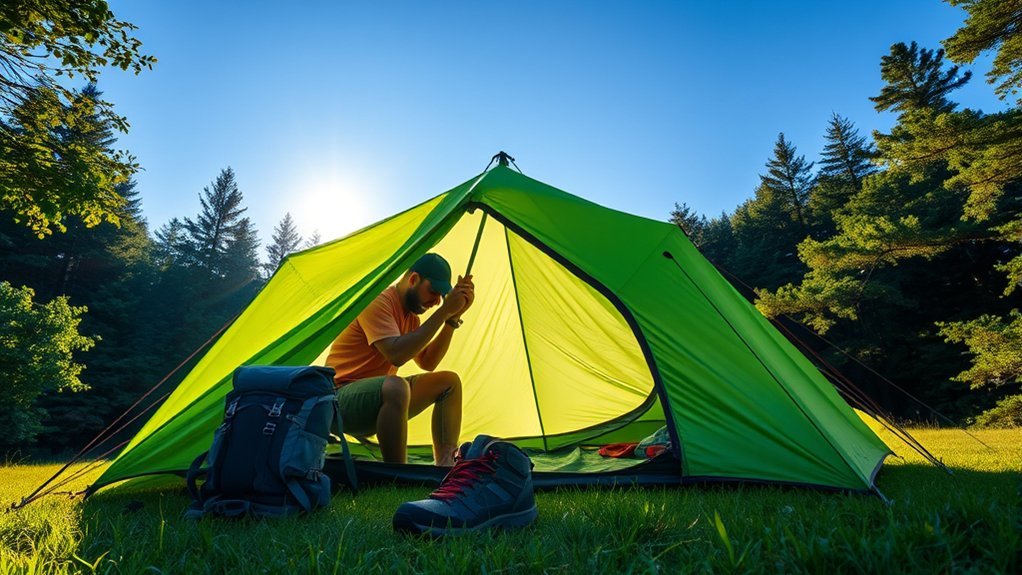
How do you guarantee a smooth camping experience before you even set foot at the site? Start by reserving your campsite through NC parks.gov; this secures your preferred location and sidesteps last-minute chaos. Next, create a thorough camping checklist, ensuring you’ve got all the essential gear packed. Your tent’s components are vital—don’t forget the poles, rain fly, stakes, and ground tarp.
Practice setting up your tent at home; this’ll make the assembly process seamless when you arrive. Familiarity breeds confidence, and you’ll glide through the setup without a hitch.
Check the weather forecast for your camping dates, especially for storms or rain; being prepared can make all the difference. Finally, if your tent includes a ground tarp or footprint, pack that too—it’ll protect the base and enhance durability. With these preparations, you’ll embrace the wilderness, liberated and ready for adventure!
Gathering Essential Tent Components
Before you head out to your campsite, gathering all essential tent components is crucial for a smooth setup. Having everything on hand not only saves time but also enhances your camping experience. Here’s what you’ll need:
Gathering essential tent components before your camping trip ensures a smooth setup and a more enjoyable experience.
- Tent Body & Rain Fly: Verify your tent materials are intact and ready to protect you from the elements.
- Tent Poles: Assemble these according to the manufacturer’s instructions, as they vary by design.
- Stakes & Ground Tarp: Don’t forget sufficient stakes for anchoring your tent. Lay out the ground tarp with the shiny side up to guard against moisture.
Using effective packing techniques will streamline your setup and keep you organized. Look for color-coded tabs on the ground tarp and tent body to make alignment a breeze. With everything gathered, you’re one step closer to enjoying your liberating outdoor adventure!
Laying Out the Ground Tarp
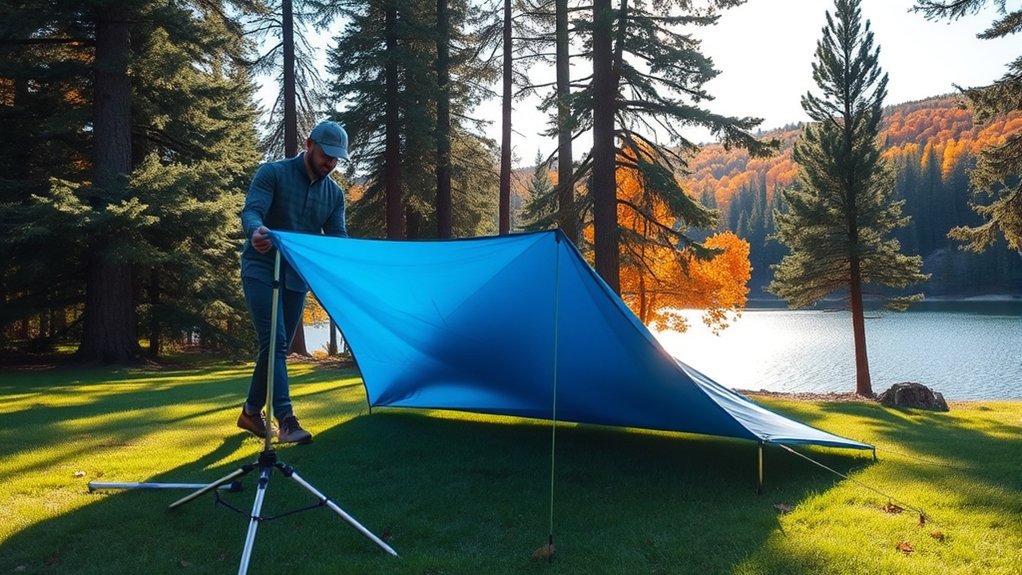
Once you’ve found a flat, clear spot, it’s time to lay out your ground tarp. Unfold it with the shiny side facing up, and make sure it aligns perfectly with your tent’s door. This orientation not only provides protection but also sets the stage for a smooth setup.
Ground Tarp Orientation
Setting up your ground tarp correctly is crucial for a successful solo tent camping experience. The tarp acts as your first line of defense against moisture and elements, so let’s get it right. Follow these steps for ideal ground tarp orientation:
- Lay it flat: Find a dry, flat spot to minimize discomfort inside your tent.
- Shiny side up: Position the shiny side facing up to reflect heat when needed.
- Tent alignment: Verify the tarp’s dimensions accommodate your tent footprint, aligning the door to your desired direction.
Don’t forget to look for colored tabs on the tarp that match your tent components. This will make your tent alignment a breeze, allowing you to connect with nature effortlessly.
Tent Body Positioning
Positioning your tent body correctly on the ground tarp is key to a comfortable and effective camping experience. Start by laying out the tarp with the shiny side facing up, guaranteeing a moisture barrier. Next, place the tent body atop the tarp, aligning it according to your preferred door positioning suggestions. This step is essential; you want that entrance facing the best view or pathway. Look for colored tabs on the tent body that match the tarp for proper alignment. Confirm the tarp extends slightly beyond the tent edges to prevent water pooling underneath. Finally, smooth out the tarp, clearing any debris or sharp objects that could harm your tent’s fabric. Follow these tent orientation tips for a successful setup!
Assembling the Tent Structure
Begin your setup by laying out the ground tarp with the shiny side facing up, then place the body of the tent on top, ensuring the door points in your desired direction. Now, it’s time for tent pole assembly. Follow these steps to secure your connections and create a stable structure:
- Assemble the poles: Connect them per the manufacturer’s instructions, using the appropriate method like sheaths or clips.
- Insert the poles: Carefully slide the assembled poles into the grommets on the tent, treating them gently to avoid damage during setup.
- Secure the structure: Firmly attach the poles to the tent body, making sure all connections are stable and secure.
Once the structure stands tall, double-check its alignment. You’re now ready for the next phase of your setup adventure—installing the rain fly and staking down your home in the wild!
Installing the Rain Fly
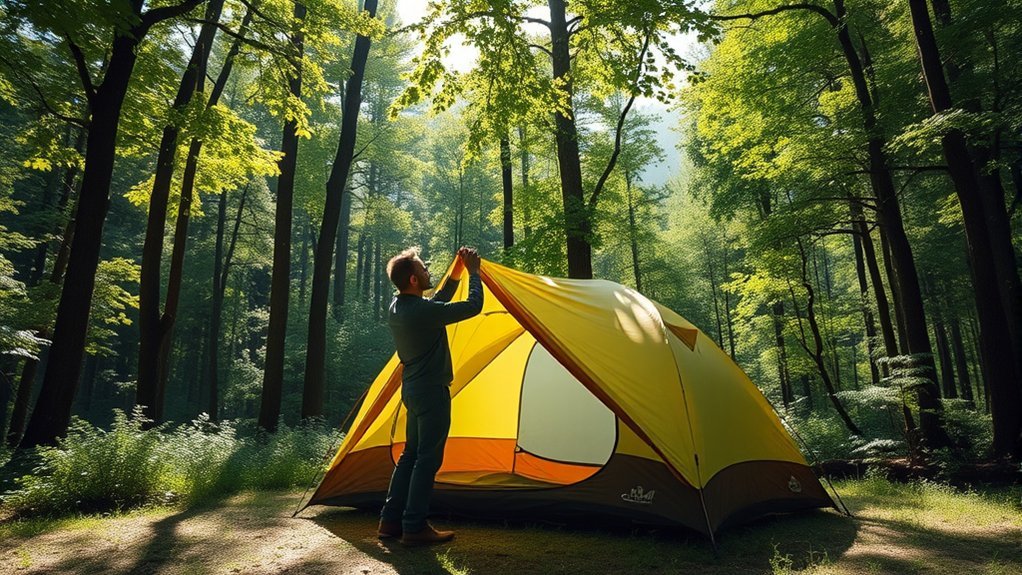
As you prepare to shield your tent from unexpected rain, carefully drape the rain fly over the tent body, guaranteeing the door openings align perfectly for easy access. This alignment not only simplifies entry but also enhances the overall functionality of your setup. Next, locate the matching colored tabs on both the rain fly and the tent body; this guarantees a proper fit and alignment during installation.
For added stability, fit the grommet of the rain fly under the tent pole, securing it in place without tightening just yet. It’s best to wait until you’ve staked the tent to achieve ideal tension and alignment. Once your tent is staked, pull the tabs of the rain fly to secure all corners tightly, preventing water from pooling on top. With this careful rain fly installation, your tent is now ready to face the elements!
Securing the Tent With Stakes
Securing your tent with stakes is essential for keeping it stable, especially in windy conditions. Start by inserting stakes at a 45-degree angle through the loops at the corners and sides, ensuring they’re driven firmly into the ground. This solid foundation not only prevents shifting but also enhances your tent’s resilience against the elements.
Importance of Staking Down
One of the most essential steps in setting up your tent solo is staking it down properly. This significant action guarantees tent stability and provides essential wind resistance, especially in unpredictable weather. Here are three reasons why you shouldn’t skip this step:
- Prevents Movement: Staking down your tent stops it from being blown away or shifted by strong winds, keeping your space secure.
- Enhances Comfort: Properly secured tents maintain their shape, reducing the risk of collapsing and guaranteeing a cozy environment inside.
- Avoids Water Issues: In wet conditions, staking is essential to prevent water from pooling beneath your tent, which can lead to leaks and discomfort.
Proper Stake Angling
Properly angling your stakes is essential for ensuring your tent remains stable and secure throughout your camping trip. Start by inserting each stake at a 45-degree angle; this angle adjustment maximizes grip in the ground, preventing any unwanted movement. Always stake down the corners first to establish a solid structure before addressing the sides. Remember to drive the stakes through the loops of both the tent and the rain fly for added security, especially in windy conditions. Choose sturdy stake material suited for your terrain—thicker stakes work well in hard ground, while sand or snow stakes are ideal for loose soil. Finally, double-check that your tent door is closed and aligned properly to keep rainwater out.
Corner and Side Staking
When you set up your tent, corner and side staking is essential for a stable and secure structure. Follow these steps for ideal corner stability and side tension:
- Stake the corners: Place stakes at a 45-degree angle to maximize grip. Use the loops on the tent body and rain fly for guidance.
- Secure the sides: Once the corners are anchored, move to the sides. Stake them similarly to maintain the tent’s shape and tension.
- Adjust the rain fly: After staking, check the rain fly’s tension. Make sure it’s taut and aligns well with the tent door.
Final Checks for Weather Preparedness
Before you settle in for the night, it’s essential to conduct a few final checks for weather preparedness to guarantee your camping experience remains enjoyable, even in unpredictable conditions. First, review the latest weather conditions; knowing about potential thunderstorms or heavy rain helps you act accordingly. Verify your waterproof tent and rain fly are ready for action. Check that the rain fly is securely attached and aligned with the tent door to keep water out.
Next, stake down your tent at a 45-degree angle to resist wind and movement during stormy conditions. Don’t forget to close the tent door completely, inspecting for any gaps that could invite rainwater in. Finally, consider laying a ground tarp beneath your tent to shield against moisture seeping from below. With these checks, you’ll be prepared for anything Mother Nature throws your way!
Frequently Asked Questions
How Do I Choose the Right Tent for Solo Camping?
To choose the right tent for solo camping, consider tent features like weight, size, and ease of setup. Opt for durable tent materials that withstand weather conditions, ensuring comfort and safety during your adventurous escapes.
What Should I Do if It Rains While Setting Up?
When rain pours down like a curtain, grab your rain gear and seek quick cover. Don’t let the weather dampen your spirit; work swiftly to set up your tent and stay dry while camping.
Can I Set up a Tent on Uneven Ground?
Yes, you can set up a tent on uneven ground. Use tent leveling techniques like placing rocks or digging out low spots. Ground preparation tips, like packing soil tight, guarantee stability and comfort during your adventure.
How Do I Repair a Damaged Tent While Camping?
You can repair your damaged tent by using tent patching kits. Clean the area, apply adhesive, and place the patch securely. Regular gear maintenance prevents further issues, ensuring you enjoy your camping adventures without worries.
What Are Alternatives to Stakes for Securing My Tent?
If you’ve ever watched a kite dance in the breeze, you know it needs proper anchors. Try tent anchors or weighted bags; they’ll ground your tent without the hassle of traditional stakes. Enjoy your freedom!
Conclusion
Now that you’ve conquered the art of solo tent setup, you’re practically a camping wizard! With a flick of your wrist, you’ve transformed a pile of fabric into a cozy haven under the stars. As the night wraps around you like a warm blanket, you’ll feel like the king or queen of the wilderness. So grab your gear, channel your inner adventurer, and head out! Nature awaits, and you’re ready to claim your spot in the great outdoors!