


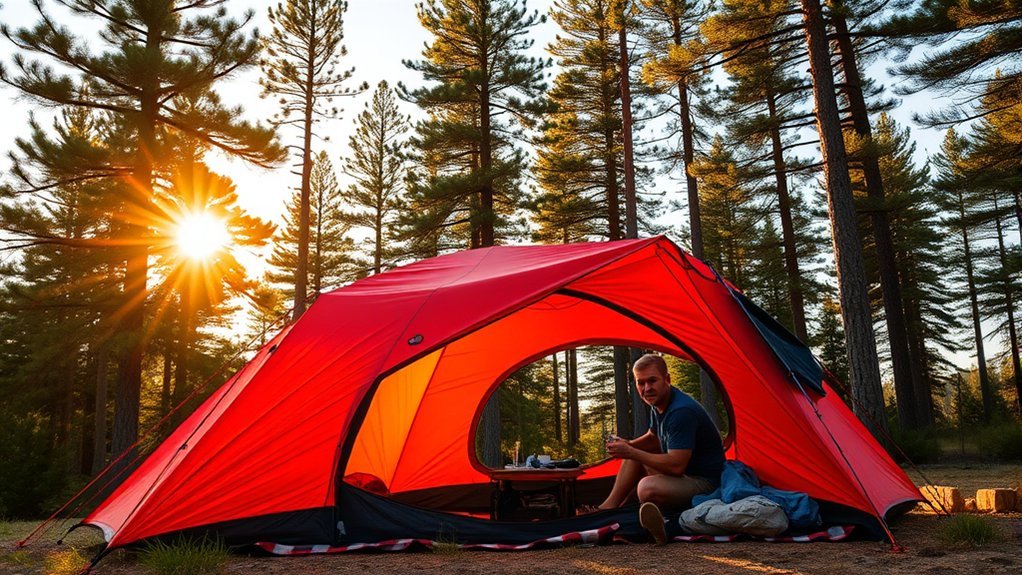
To pitch your tent faster and with less stress, start by familiarizing yourself with its components. Practice in a flat area free of obstacles to simulate real conditions. Set a timer to improve your speed while maintaining accuracy. Guarantee your guy lines are properly tensioned to withstand wind. Make final adjustments for comfort inside. By mastering these skills, you’ll be ready for your next camping adventure, and there’s more to discover to refine your technique.
Understanding Your Tent Components


When you know your tent components well, pitching your tent becomes a breeze. Start by familiarizing yourself with your tent’s anatomy, including the inner and outer layers, poles, pegs, guylines, and rainfly. Each component plays an essential role in providing structure and protection. Before your camping trip, check that everything’s present and functional.
Next, practice pole assembly in a controlled environment. Understand how the poles fit into specific sleeves or clips, as this can differ by model. Knowing the correct order for assembling your tent can greatly reduce setup time and stress.
Finding the Ideal Practice Location
Where can you find the best spot to practice pitching your tent? Start by choosing a flat, open area like your backyard or a local park. Make sure it’s free from obstructions like trees or rocks, and check if you have easy access to water and amenities. This way, you can simulate real camping conditions effectively.
Consider the following factors when selecting your practice site:
| Factor | Importance | Tips |
|---|---|---|
| Tent Orientation | Guarantees proper setup for drying dew | Position tent for morning sun |
| Weather Considerations | Prepares you for elements | Practice in varied conditions |
| Safety | Protects your gear | Clear sharp objects and debris |
Mastering Tent Setup Techniques
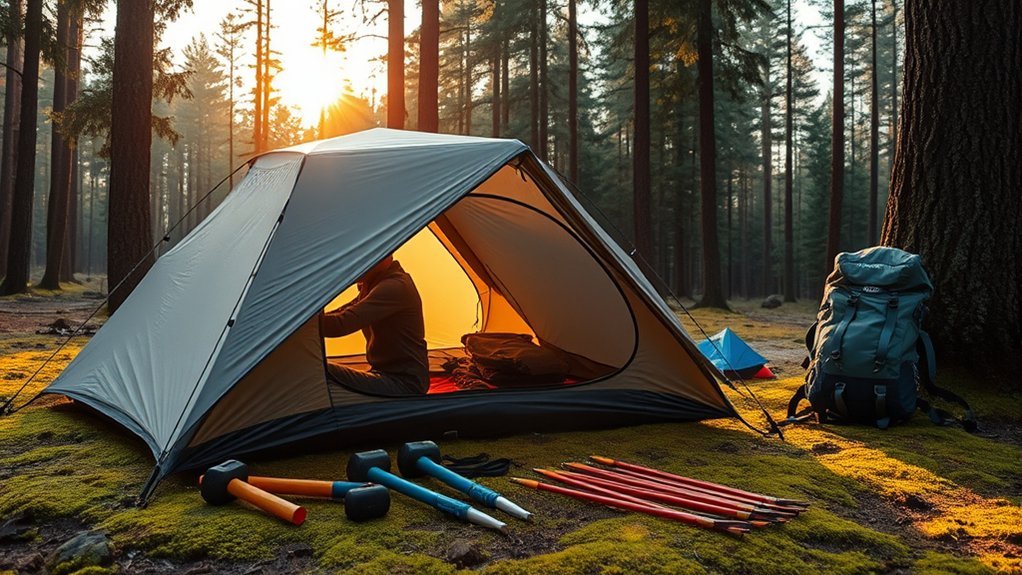
After selecting the right practice location, it’s time to focus on mastering tent setup techniques. Familiarizing yourself with your tent’s components, like pole assembly and flysheet placement, is essential for a smooth setup. Here are four practical steps to enhance your skills:
- Practice at Home: Set up your tent in your backyard to build muscle memory.
- Use a Timer: Challenge yourself to pitch the tent faster while maintaining accuracy.
- Simulate Conditions: Experiment with different terrains and wind conditions to adapt your skills.
- Review Regularly: Refine your technique, ensuring corners are anchored, poles are secure, and adjustments are made for ideal tension.
Ensuring Stability With Guy Lines
To keep your tent stable in varying weather conditions, properly tensioned guy lines play an important role. They help resist strong winds and prevent your tent from collapsing or shifting. Aim for moderate tension; overly tight lines can stress the fabric and cause damage, while loose lines allow excessive swaying.
Before settling in for the night, check and adjust your guy lines to guarantee stability, especially if wind conditions change. Regular guy line maintenance is vital—inspect them for wear and tear, as any damage can compromise your tent’s safety.
Familiarize yourself with your tent’s specific attachment points for ideal guy line positioning. Proper tension adjustment on these lines guarantees that your tent stands firm against the elements, allowing you to enjoy your outdoor experience without worry. With a few simple checks, you can achieve peace of mind and focus on what truly matters—your adventure.
Making Final Adjustments for Comfort

Once you’ve secured your tent, it’s time to make final adjustments for comfort. These tweaks guarantee your space feels inviting and functional. Follow this checklist for an ideal setup:
- Adjust elasticated toggles to minimize sagging sides, creating a stable interior space.
- Check for any overly taut areas in the fabric and relieve pressure to prevent damage.
- Arrange the interior for usability, allowing easy movement and access to your gear.
- Conduct a final inspection of all components, including zippers and seams, confirming everything functions properly before settling in.
Additionally, place a ground mat beneath the tent to smooth out uneven areas, enhancing comfort and protecting the floor. By following these steps, you’ll create a cozy and functional atmosphere that invites relaxation and adventure. Enjoy your liberated camping experience!
Frequently Asked Questions
Can I Practice Pitching a Tent Indoors?
Yes, you can practice pitching a tent indoors. Just guarantee your indoor space is large enough to accommodate the tent dimensions. This helps you familiarize yourself with setup techniques without outdoor distractions or weather concerns.
What Tools Do I Need for Tent Setup?
Imagine a knight preparing for battle. For tent setup, you’ll need stakes, guylines, a mallet, and a reliable partner. Different tent types require unique setup techniques, so gather your tools and conquer the outdoors confidently!
How Do I Clean My Tent After Practice?
After practice, shake out dirt, then use mild soap and warm water with a sponge for cleaning. Rinse thoroughly and air dry. Regular tent maintenance keeps it in great shape for your next adventure!
What Should I Do if It Rains During Practice?
If it rains during practice, grab your rain gear and seek shelter options. Consider pitching your tent under trees or using tarps for protection. Stay dry, focused, and keep practicing your skills despite the weather.
How Often Should I Practice Pitching My Tent?
Like a bird learning to soar, you should practice tent pitching at least once a month. Consistent practice frequency builds your confidence, making the experience smoother and more enjoyable when adventure calls.
Conclusion
By practicing your tent setup regularly, you can cut your pitching time in half, as studies show that experienced campers can set up a tent in as little as 10 minutes. With the right techniques and a solid understanding of your tent’s components, you’ll eliminate stress and create a comfortable space in no time. So grab your gear, find a suitable spot, and get pitching—your next adventure awaits!