


You should always keep your campfire at least 15 feet away from your tent and any flammable materials. This distance helps prevent accidental ignition from sparks or heat and creates a safer environment for your campsite. Be mindful of nearby trees and vegetation, as well as wind conditions. Establishing a proper buffer zone is essential for safely enjoying your fire. There’s plenty more you can learn about setting up your campsite and ensuring fire safety.
Importance of Maintaining Distance

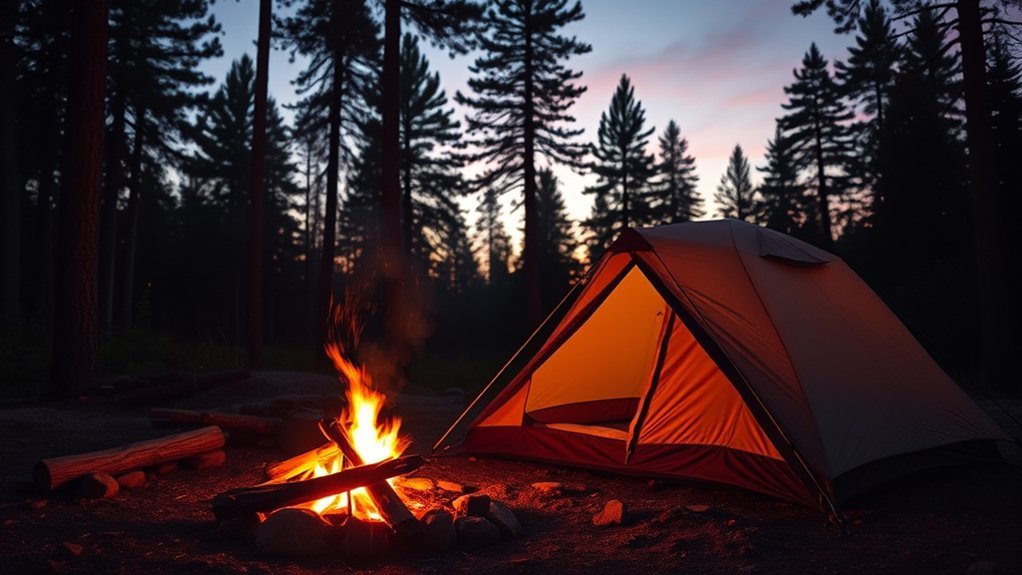
When you’re enjoying a campfire, it is vital to maintain a safe distance from your tent and other flammable materials. Keeping your campfire at least 15 feet away is important for fire prevention. This distance creates a safety buffer, greatly reducing the risk of accidental ignition from sparks or heat. By ensuring proper spacing, you not only protect your gear but also enhance tent safety, minimizing the likelihood of smoke inhalation that could disrupt your sleep and impact your health.
Additionally, fire safety guidelines recommend keeping campfires under three feet in height and diameter. This helps control the flames, further decreasing risks associated with larger fires. Remember, a well-placed campfire allows you to enjoy warmth and ambiance without compromising safety. Prioritizing these precautions lets you embrace the freedom of camping while safeguarding your experience.
Recommended Distance Guidelines
To guarantee your safety and that of your campsite, it’s crucial to adhere to recommended distance guidelines for campfires. Always maintain a minimum of 15 feet between your campfire and your tent placement, as this greatly reduces the risk of accidental ignition. This distance helps confirm that sparks and heat from the fire don’t pose a danger to you while you’re sleeping.
Creating a clear zone of at least 15 feet not only allows for safe movement around the fire but also minimizes potential fire hazards. Additionally, be mindful of low-hanging branches nearby; their proximity can increase the risk of fire spread. Following these campfire safety guidelines contributes to overall campsite safety and helps prevent potential wildfires. By keeping your campfire at a safe distance, you enjoy the warmth and ambiance of the fire without compromising your safety or that of your surroundings.
Assessing Environmental Conditions
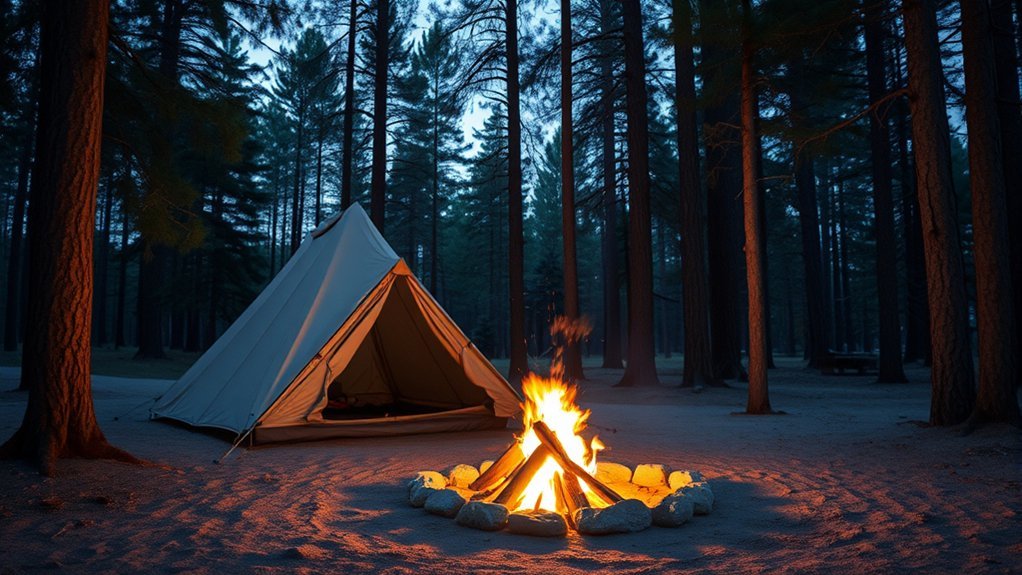
Before lighting your campfire, it’s important to evaluate the environmental conditions surrounding your campsite. Understanding fire weather and conducting a vegetation assessment can help you guarantee safety. Here are some key considerations:
- Check for low-hanging branches that could catch fire.
- Assess the density of nearby vegetation, avoiding areas with lots of dry leaves or twigs.
- Identify potential hazards, like flammable tents or equipment, ensuring they’re at least 15 feet away.
- Monitor wind direction and speed to prevent sparks from traveling toward your tent.
Choosing the Right Campsite
Choosing the right campsite is essential for guaranteeing your campfire remains safe and controlled. Start by selecting a location at least 15 feet away from your tent and other flammable materials. Look for established fire pits or rings; they help minimize fire spread to surrounding vegetation. Make sure you’re on stable ground and avoid areas with overhanging branches or dry brush that could easily ignite.
Establish a clear buffer zone around your campfire to prevent sparks from reaching your tent and gear. This is an important aspect of campfire etiquette that enhances safety for everyone. Also, assess the wind direction before setting up your tent to avoid smoke and flames blowing toward your sleeping area. By prioritizing proper campsite selection, you’ll create a safer environment for your campfire experience while enjoying the great outdoors.
Setting Up Your Fire Pit Safely
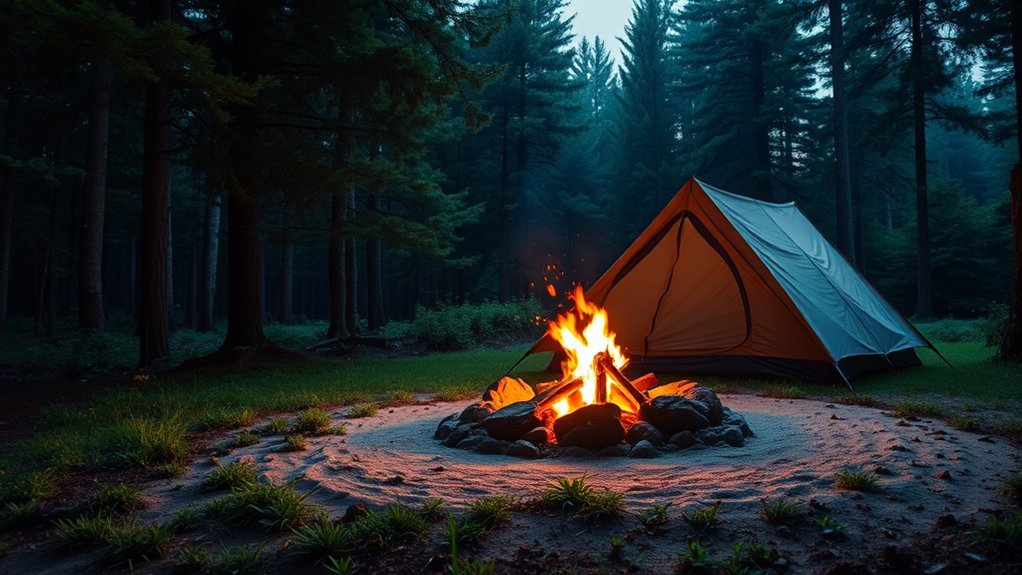
When setting up your fire pit, it’s crucial to prioritize safety to prevent accidents and wildfires. Proper placement and preparation can make all the difference. Follow these steps to guarantee a safe setup:
Prioritize safety when setting up your fire pit to prevent accidents and wildfires. Proper placement is key.
- Keep the campfire at least 15 feet away from tents and flammable materials.
- Use designated fire pits or rings when available to contain the flames and reduce risks.
- Clear the area around the fire pit of dry leaves, twigs, and other combustible debris.
- Position the fire pit on stable ground, away from overhanging branches to prevent sparks from igniting vegetation.
Monitoring the Campfire
When you’re enjoying a campfire, keeping its size in check is essential for safety. Always monitor the fire closely to guarantee it stays within a manageable height and diameter of three feet. Remember, never leave it unattended—constant supervision is key to preventing accidents and responding quickly if something goes wrong.
Campfire Size Control
Maintaining a campfire size under three feet in height and diameter is essential for safety. To effectively manage your fire size and guarantee proper fuel management, keep these tips in mind:
- Regularly monitor the fire’s growth and adjust the fuel you add.
- Contain the campfire within a designated fire pit or ring to control its size.
- Stay aware of wind direction, as it can change the fire’s behavior.
- Never leave the campfire unattended; consistent supervision helps keep it within safe limits.
Constant Supervision Required
Supervising your campfire is a fundamental aspect of safe camping practices. Constant supervision is essential; never leave a burning fire unattended, even for a moment. Following firewatch procedures guarantees you’re always aware of your fire’s status, reducing the risk of accidents. Keep the campfire no more than three feet in height and diameter to maintain control. Regularly check the fire, adjusting fuel as necessary to prevent it from growing too large. Always have a bucket of water or a fire extinguisher nearby for emergencies. Remember, the importance of supervision can’t be overstated—staying vigilant protects not just your campsite, but also enriches your camping experience, allowing you to enjoy nature without fear. Stay safe and liberated!
Proper Fire Extinguishing Techniques
To guarantee safety and prevent wildfires, properly extinguishing your campfire is essential. Here are some effective extinguishing methods to make sure safe practices:
- Pour water over the fire until there’s no hissing sound and all embers feel cold to the touch.
- Stir the ashes and remnants with a shovel to confirm no smoldering embers remain.
- If you spot any red embers, keep dousing them with water until they’re completely submerged.
- Conduct a heat test by holding your hand close to the ashes to verify they aren’t too hot before leaving.
Understanding Local Regulations
Before you light your campfire, it’s essential to understand local regulations regarding fire safety. Many campgrounds require you to keep a minimum distance of 15 feet from tents and other flammable materials. Always check for specific guidelines and restrictions, especially during high fire danger seasons, to guarantee a safe camping experience.
Campground Fire Guidelines
Understanding campground fire guidelines is essential for ensuring your safety and the safety of others while enjoying the outdoors. To practice fire pit safety and adhere to campfire etiquette, keep these key points in mind:
- Maintain at least 15 feet of distance between your campfire and tents.
- Check local campground regulations, as some may require a greater distance.
- Use designated fire rings or pits to contain your fire safely.
- Consult campground hosts or park rangers for current fire safety guidelines.
Local Fire Restrictions
When planning a camping trip, checking local fire restrictions is vital, as regulations can vary widely depending on the location and current environmental conditions. Always consult campground or park websites for specific local guidelines, as they can differ considerably across regions. Be aware of any active fire bans or wildfire warnings, particularly during dry or windy conditions, which may prohibit campfires altogether. To guarantee compliance, consult local authorities or camp hosts for clarification on fire safety rules and designated fire pit locations. Familiarizing yourself with state-specific fire safety laws is essential for a safe camping experience, helping you enjoy the freedom of the outdoors while respecting the environment and minimizing fire hazards. Stay informed and safe!
Safety Distance Requirements
Local fire restrictions set the groundwork for safe camping practices, and it’s equally important to understand the specific safety distance requirements for campfires. Adhering to these guidelines guarantees fire safety and protects your camping equipment. Here are some key points to take into account:
- Maintain at least 15 feet between your campfire and tents or flammable structures.
- Check local regulations, as some sites may impose stricter distance requirements.
- Keep campfires away from gear and vehicles to further reduce fire risks.
- Always use established fire rings or designated fire pits for compliance.
Educating Fellow Campers on Fire Safety
To guarantee a safe and enjoyable camping experience, it is crucial to educate fellow campers about fire safety practices. Start by sharing fire safety tips, like maintaining campfires at least 15 feet away from tents and flammable materials. Emphasize the importance of using established fire pits or rings to contain the flames and reduce wildfire risks. Make sure everyone knows to keep the fire’s size under three feet in height and diameter for better control.
Encourage group discussions about these practices, fostering an open dialogue. Teach campers to never leave a fire unattended, as even a moment can lead to dangerous situations. Discuss the proper methods for extinguishing fires completely before leaving the campsite, making certain that everyone understands their responsibility. By sharing this knowledge, you empower your group to enjoy nature while keeping safety a top priority.
Frequently Asked Questions
Can I Use Portable Fire Pits Near My Tent?
Yes, you can use portable fire pits near your tent, but prioritize tent safety. Keep them at a safe distance, guaranteeing sparks and heat don’t pose a risk. Always follow local regulations to guarantee safety.
What Materials Are Safe for Campfire Fuel?
When you’re kindling a campfire, choose seasoned hardwood like oak or maple for firewood types. If you seek fuel alternatives, consider dry kindling or manufactured logs, ensuring safety and a steady burn for your enjoyment.
How Do Wind Conditions Affect Campfire Safety?
Wind conditions greatly impact campfire safety. Always monitor wind direction; it can carry fire embers, igniting nearby materials. Keep your fire contained and guarantee it’s downwind from your tent to minimize risks. Stay vigilant!
What Should I Do if Sparks Reach My Tent?
If sparks reach your tent, act fast! Smother them with dirt or water, ensuring spark prevention. Check your tent for damage, and prioritize tent safety by moving it away from the fire immediately. Stay vigilant!
Are There Specific Regulations for Campfires in National Parks?
Yes, there are specific campfire regulations you must follow in national parks. Familiarize yourself with the national park guidelines, as they often dictate fire locations, times, and safety measures to guarantee everyone’s safety and enjoyment.
Conclusion
So, you think a campfire’s just a cozy friend? Think again! Keep it at least 15 feet away from your tent—unless you enjoy the thrill of spontaneous combustion. Remember, fire’s not just for roasting marshmallows; it’s a wild beast that loves to roam. So, be smart, follow the rules, and educate your fellow campers. After all, no one wants to share a tent with a flaming inferno, right? Let’s keep the camping experience fun and fire-free!