


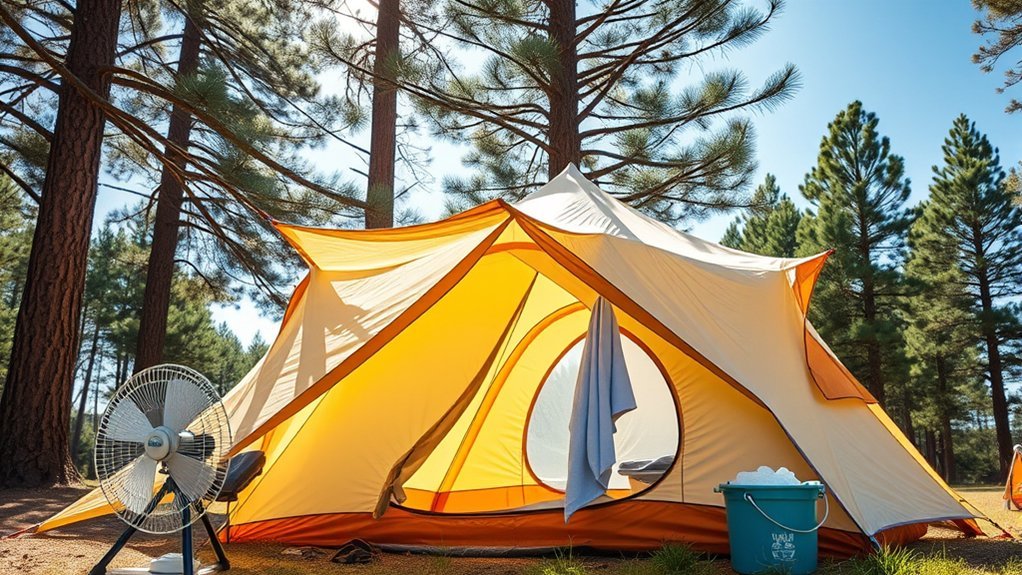
To keep your tent cool in summer, focus on maximizing airflow and blocking heat. Choose tents with breathable materials and adjustable vents. Set up in shaded areas and orient your tent for prevailing breezes. Use reflective tarps or shade canopies to prevent direct sunlight. Incorporate portable or solar-powered fans for added airflow. Stay hydrated with water-rich snacks and wear moisture-wicking clothing. With these strategies, you’re well on your way to a comfortable camping experience. More effective tips await!
Understanding Tent Warmth and Ventilation

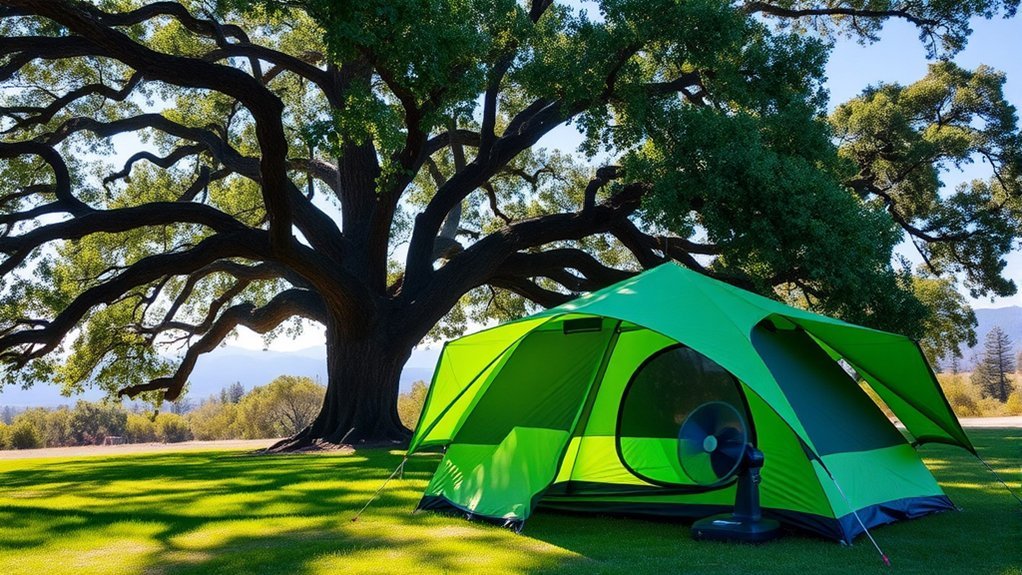
When you set up a tent in the summer, understanding how warmth and ventilation interact is essential for your comfort. Tent insulation materials like polyester and cotton canvas can trap heat, creating a greenhouse effect if proper airflow dynamics aren’t considered. To combat this, guarantee adequate ventilation by utilizing mesh panels and strategically positioning tent openings to facilitate airflow. Larger tents generally offer better airflow, making them a practical choice for hot summer camping.
Consider your tent’s orientation, too; positioning it to face prevailing breezes can enhance cooling considerably. Additionally, removing the rainfly during hot days is a simple yet effective way to improve ventilation, keeping the interior cooler. By focusing on these aspects, you can considerably reduce heat buildup inside your tent, allowing you to enjoy your summer adventures in a more comfortable environment.
Choosing the Right Tent and Utilizing Features
Choosing the right tent is essential for summer camping, especially if you want to keep the interior cool. Consider these features to enhance your tent’s ventilation design and optimize airflow:
| Feature | Benefits |
|---|---|
| Mesh flysheet | Enhances airflow, protects against insects |
| Removable rainfly | Increases ventilation on warm days |
| Multiple openings | Maximizes airflow, prevents heat buildup |
Opt for larger tents made from breathable tent materials, as they promote better ventilation and cooler air circulation. Verify your tent has adjustable vents to help regulate temperature effectively. Additionally, position your tent to face prevailing breezes, which aids in natural ventilation and reduces direct sunlight’s impact. By carefully selecting a tent with these features, you’ll create a more comfortable and liberating camping experience during those hot summer days.
Campsite Selection and Setup
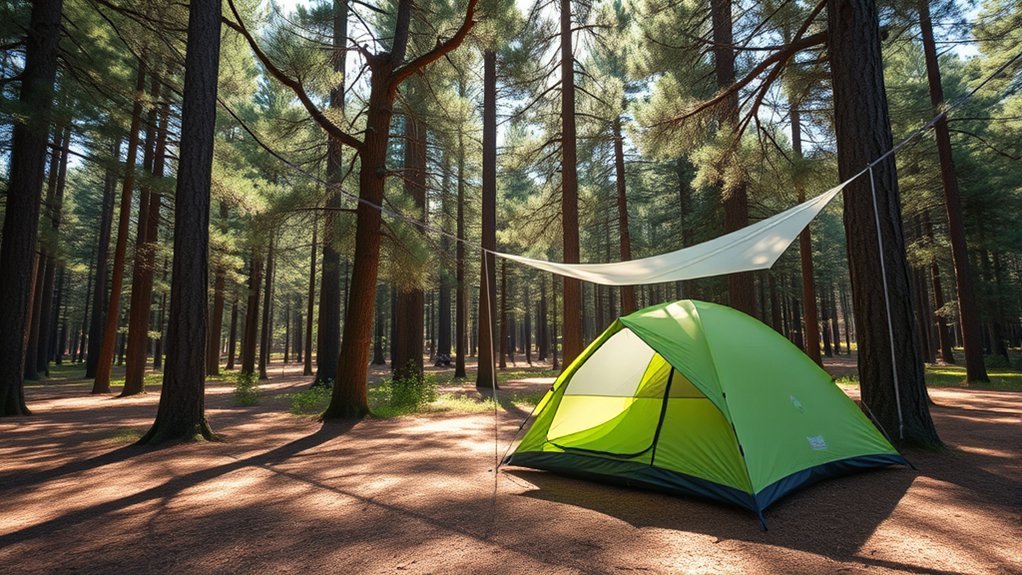
Selecting the right campsite is crucial for keeping your tent cool during summer camping trips. Start by choosing a location that offers ample shade from trees or large rocks, minimizing direct sunlight exposure. Assess the sun’s position and aim for a spot that remains shaded during peak hours, typically from mid-morning to late afternoon.
Confirm the ground surface is level and free of debris, providing a stable base for your tent while steering clear of areas that might become sunny later. When positioning your tent, orient it to face prevailing cool breezes and use natural features like hills or rocks to block harsh sunlight, enhancing ventilation.
Before you set up camp, check the weather forecast to verify ideal conditions for keeping your tent cool and comfortable. By thoughtfully selecting your campsite orientation and ground surface, you can greatly improve your summer camping experience.
Additional Cooling Strategies and Summer Camping Tips
While keeping your tent cool in the summer can be challenging, employing a few additional strategies can make a notable difference. First, disassemble your tent during the day to prevent heat buildup, especially when it’s not in use. Consider using reflective tarps or covers to deflect sunlight, which can greatly reduce internal temperatures. Open tent doors and windows during cooler parts of the day to promote airflow and lower heat levels inside.
When it comes to sleeping, lightweight summer sleeping bags can enhance comfort in warmer conditions. Staying hydrated is essential, so drink water regularly to help regulate your body temperature. Wear moisture-wicking, breathable clothing as part of your camping essentials to keep cool. By incorporating these tent cooling strategies, you’ll enjoy a more comfortable summer camping experience, allowing you to fully embrace the freedom of the great outdoors.
Towel Air Conditioner for Your Tent
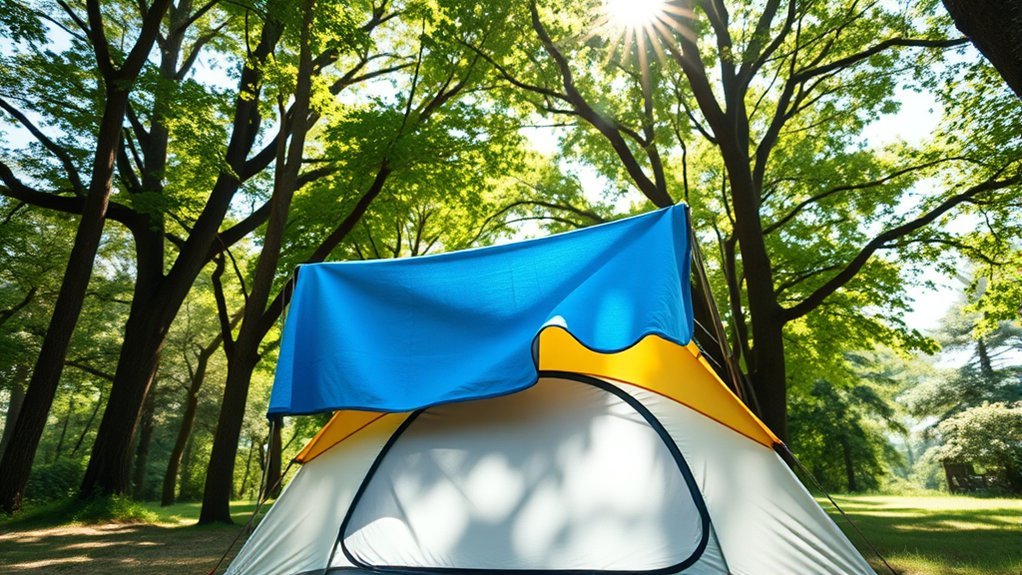
If you’re camping in hot, dry conditions, a towel air conditioner can be an effective way to cool down your tent. This method relies on evaporation techniques to create a rejuvenating breeze. Here’s how to set it up:
- Wet a Thin Towel: Dampen a lightweight towel or sheet, ensuring it’s not dripping wet.
- Suspend the Towel: Hang the towel inside your tent, ideally near a battery-operated or solar-powered fan to enhance airflow.
- Maintain the Towel: Regularly re-wet the towel to sustain its cooling efficiency, especially essential in dry climates.
For added benefits, consider using dark-colored fabrics, as they block sun rays and work in tandem with your towel air conditioner. This approach is perfect for hot, dry environments, providing an easy and effective way to beat the heat while enjoying the great outdoors.
Use of Shade Canopies and Reflective Tarps
Using shade canopies and reflective tarps is essential for keeping your tent cool in the summer heat. A canopy can block direct sunlight, while a reflective tarp deflects solar radiation, greatly reducing the internal temperature. Make sure to secure your setup properly to maximize effectiveness and maintain a comfortable outdoor environment.
Benefits of Shade Canopies
To keep your tent cool during summer camping trips, incorporating shade canopies and reflective tarps is essential. Shade canopies offer significant shade benefits, drastically reducing heat buildup inside your tent, creating a cooler environment for relaxation and sleep. Here are three key advantages of using shade canopies:
- Direct Sunlight Protection: They block harmful rays, keeping the interior temperatures lower.
- Ventilation Enhancement: Canopies improve airflow, allowing cooler air to circulate, which amplifies the cooling effects.
- Easy Setup: Lightweight and portable, they’re simple to transport and anchor securely against wind.
Effective Reflective Tarp Usage
While shade canopies are excellent for blocking direct sunlight, incorporating reflective tarps can take your cooling strategy to the next level. Using reflective tarp materials, you can considerably reduce heat absorption by deflecting sunlight, keeping your tent cooler. Guarantee proper air circulation by leaving space between the tarp and tent, allowing cooler air to flow in. Position the tarp at an angle to maximize sun deflection, enhancing shade around your tent.
| Tarp Size | Benefits |
|---|---|
| 10×10 ft | Ideal for small tents, easy to set up |
| 12×12 ft | Versatile for various setups, increased coverage |
| 8×10 ft | Lightweight and portable, easy to transport |
| 20×20 ft | Great for large groups, extensive shade area |
Using tarps beneath your tent can also reflect ground heat, enhancing cooling.
Staying Hydrated and Cool
Staying hydrated is essential when camping in hot weather, so aim to drink 2-3 liters of water daily to maintain your body temperature. Incorporating cool snacks like watermelon and cucumbers can enhance your hydration while providing a revitalizing energy boost. Keep a portable cooler filled with ice and beverages nearby to guarantee you’re always invigorated and ready to enjoy your outdoor experience.
Importance of Hydration
Hydration plays an essential role in keeping your body cool during the sweltering summer months. To maintain ideal hydration levels while camping, follow these hydration tips:
- Drink at least 64 ounces of water daily—increase this amount if you’re active or in direct sunlight.
- Incorporate hydrating foods like watermelon and cucumbers into your meals to boost your water intake.
- Opt for electrolyte drinks instead of caffeine or alcohol, as they help replenish lost fluids and maintain hydration.
Taking regular breaks in shaded areas and sipping water throughout the day will enhance your comfort and prevent overheating. Staying hydrated not only keeps you cool but also protects you from heat-related illnesses, ensuring a more enjoyable camping experience.
Cooling Snacks and Drinks
Maintaining hydration is just one aspect of staying cool during summer camping trips. You should aim to drink at least 2-3 liters of water daily to regulate your body temperature. Incorporate cooling snacks like watermelon, cucumbers, and yogurt, which are high in water content and help lower your body temp. Freeze water bottles or make fruit juice ice cubes for invigorating drinks that cool you down as they melt. Don’t forget to pack electrolyte-replenishing beverages, such as coconut water or sports drinks, to replace minerals lost through sweating. Choose easy-to-consume snacks like chilled salads or fruit salads to avoid heat buildup from cooking. These strategies will keep you hydrated and revitalized all summer long.
Choosing Breathable Fabrics and Proper Clothing
When you’re gearing up for a summer camping trip, choosing the right fabrics and clothing is essential for your comfort. Opt for lightweight and breathable fabrics that help regulate your body temperature. Here are three key considerations:
- Moisture-wicking materials: Look for fabrics that pull sweat away from your skin, like Merino wool t-shirts, which keep you dry and cool.
- Sun-protective clothing: Wear long-sleeved shirts and wide-brimmed hats to shield yourself from UV rays while maintaining airflow.
- Light colors: Choose light-colored clothing to reflect sunlight, reducing heat absorption during your outdoor activities.
Layering these breathable fabrics gives you the flexibility to adapt to temperature changes throughout the day, ensuring you stay comfortable. By prioritizing these clothing choices, you’ll enhance your overall camping experience while keeping the heat at bay.
Utilizing Portable and Solar-Powered Fans
Selecting breathable fabrics helps keep your body cool, but you can further enhance your tent’s comfort by incorporating portable and solar-powered fans into your setup. These compact, lightweight fans create a rejuvenating breeze, making hot weather more bearable. Solar-powered options are especially appealing, as they harness renewable energy and eliminate the hassle of battery replacements.
For ideal cooling, pay attention to fan positioning. Placing a fan near the tent entrance boosts air circulation, effectively distributing cooler air throughout the space. Many portable fans offer adjustable speed settings, allowing you to customize airflow based on your comfort level and external temperatures.
Combining fans with other cooling techniques, like proper ventilation and shade, can greatly elevate your camping experience. By thoughtfully integrating these fans, you’ll create a more comfortable environment, liberating yourself from the sweltering summer heat while enjoying the great outdoors.
Frequently Asked Questions
Can I Use a Regular Fan Inside My Tent?
You can definitely use a regular fan inside your tent. Just guarantee proper fan placement and enhance tent ventilation for ideal airflow, keeping the space cooler and more comfortable during hot weather adventures.
What Time of Day Is Best for Setting up My Tent?
The best time to set up your tent is early morning or late afternoon, when the sun’s rays soften. This minimizes sun exposure, ensuring a cooler, more pleasant environment for your camping experience.
How Much Does Tent Color Affect Temperature?
Tent color greatly impacts temperature; lighter colors reflect sunlight, keeping the interior cooler, while darker shades absorb heat, raising temperatures. Choosing the right color can enhance your comfort during hot summer outings.
Are There Specific Tent Brands Known for Better Ventilation?
Yes, certain brands excel in ventilation features. Look for tents from REI, Big Agnes, and MSR—they prioritize airflow in their designs. Brand comparisons reveal these options often keep you cooler during hot, summer camping trips.
Can I Use Ice Packs to Cool My Tent?
Yes, you can use ice packs to cool your tent. Place them strategically near ventilation openings to enhance cooling effectiveness. This method helps lower temperatures, providing a more comfortable environment during hot summer days.
Conclusion
By implementing these heat-blocking tricks, you can greatly improve your tent’s comfort during the sweltering summer months. Did you know that tents can reach temperatures up to 20°F higher than the outside air? By choosing the right tent, utilizing shade, and staying hydrated, you can create a cooler oasis in the wilderness. Remember, with a bit of planning and the right tools, you can enjoy your summer camping trips without the oppressive heat.