


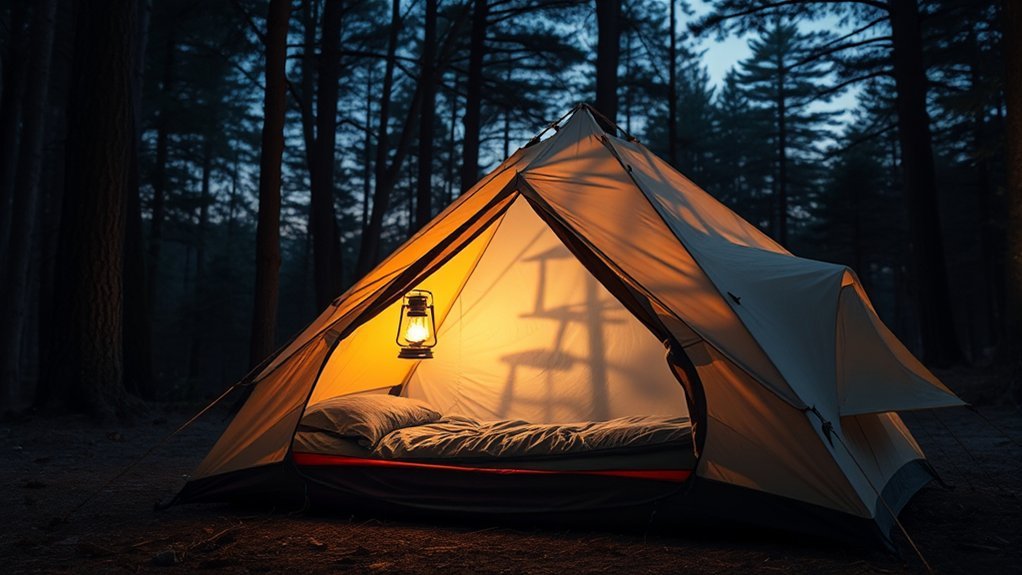
To reduce wind noise in your tent, secure fabric with tarp clips to minimize flapping. Ascertain all zippers are closed and consider using Velcro or fabric snaps for tighter edges. Apply Gorilla tape to seal gaps in steel channels, and wrap paracord around structural elements to disrupt airflow. Adding acoustic barriers like thick carpets or noise-reducing curtains can also help. Implement these solutions for a more peaceful night’s sleep while camping, and discover additional tips to enhance your experience further.
Why Wind Noise Matters for a Good Night’s Sleep

When you’re camping, the last thing you want is wind noise disrupting your sleep. High wind conditions can create disturbances that prevent you from fully relaxing, leading to poor sleep quality. Excessive noise impacts your ability to fall asleep and stay asleep, increasing stress levels and discomfort. Studies show that consistent exposure to loud sounds can negatively affect your overall well-being, leaving you fatigued for your outdoor adventures.
To enjoy your camping experience, it’s essential to mitigate wind noise. A quiet sleeping environment enhances your ability to recharge and appreciate nature. Soundproofing your tent, whether through acoustic barriers or thick carpets, can greatly reduce these disturbances. By implementing practical techniques to improve insulation, you create a peaceful sleeping space that allows you to liberate yourself from the chaos of the outside world, ensuring restful nights and energizing days.
Quick Fixes for Wind Noise Reduction
To effectively reduce wind noise in your tent, start by tensioning the fabric using tarp clips to minimize flapping. You can also implement DIY soundproofing solutions, like sewing Velcro to the edges or using thick carpets inside. These quick fixes will help create a quieter and more stable shelter during windy conditions.
Tensioning Tent Fabric
Tensioning your tent fabric is an essential step in reducing wind noise and enhancing your camping experience. Proper tension not only stabilizes your tent during windy conditions but also minimizes annoying flapping. Here are some quick fixes to improve your tent setup:
| Method | Description | Benefits |
|---|---|---|
| Tarp Clips | Use clips to secure fabric sides | Creates tension, reduces noise |
| Close Zippers | Confirm all zippers are fully closed | Prevents wind gaps |
| Velcro or Snaps | Sew Velcro or attach fabric snaps | Minimizes flapping noises |
| Regular Checks | Adjust tension regularly | Enhances stability and comfort |
Effective fabric maintenance through these techniques will improve your overall camping experience, allowing for peaceful nights even in gusty conditions.
DIY Soundproofing Solutions
DIY soundproofing solutions can greatly enhance your camping experience by reducing wind noise in your tent. Start by hanging acoustic panels inside your tent to deflect sound waves, effectively minimizing external disturbances. Noise-reducing curtains can also be draped within the tent; they absorb sound and block sunlight, creating a serene sleep environment. Consider adding thick carpets to trap sound waves and reduce echo, improving your overall sleep quality. For a quick, budget-friendly fix, earplugs offer personal noise reduction, ensuring a more peaceful night under the stars. If you’re investing in a tent, choose insulated models for added layers that naturally block wind noise, further complementing your soundproofing materials.
Utilizing Gorilla Tape for Steel Channels

To effectively reduce wind noise in your rooftop tent, applying Gorilla tape to the steel channels is a practical solution. This tape seals gaps that can cause whistling sounds, preventing air from entering and greatly enhancing your camping experience. The straightforward application process allows you to implement this method quickly before setting up your tent.
Application Process Overview
While camping in windy conditions, applying black Gorilla tape to cover the steel channels on your rooftop tent can effectively minimize whistling sounds caused by air entering these openings. For best tape efficiency, follow these application tips:
- Clean the channel surface thoroughly to guarantee strong adhesion.
- Cut the tape to the appropriate length, allowing for a snug fit.
- Firmly press the tape onto the channel, ensuring it’s securely adhered.
This quick and easy application method creates a thick seal that reduces vibrations and mechanical sounds generated by wind. Regularly check the tape for wear and reapply as necessary to maintain best noise reduction performance. By enhancing your tent’s soundproofing, you can enjoy a more peaceful camping experience.
Benefits of Tape Usage
Utilizing Gorilla tape on the steel channels of your rooftop tent offers several advantages that enhance your camping experience. This durable, weather-resistant tape effectively seals off channels, preventing wind from whistling through and minimizing annoying noise. By eliminating mechanical vibrations, you can enjoy a peaceful night’s sleep, even in windy conditions.
| Benefits | Impact |
|---|---|
| Tape Durability | Long-lasting outdoor solution |
| Weather Resistance | Performs well in various climates |
| Easy Application | Quick fix for immediate results |
| Noise Reduction | Enhances overall camping comfort |
With this simple yet effective solution, you’ll reclaim your camping experience, ensuring tranquility under the stars.
The Benefits of Wrapping Paracord
When you wrap paracord around the structural elements of your tent, you can effectively disrupt airflow and minimize wind-induced noise and vibrations. This method not only enhances your camping experience but also showcases paracord durability and versatility.
- The helical structure of wrapped paracord breaks down larger airflow vortexes into smaller ones, resulting in reduced noise.
- When soaked, paracord shrinks as it dries, ensuring a tighter fit around crossbars and tent poles, improving its noise-reducing capabilities.
- It’s a cost-effective and readily available solution, making it accessible for all campers seeking peace during their outdoor adventures.
Adding Acoustic Barriers for Enhanced Soundproofing
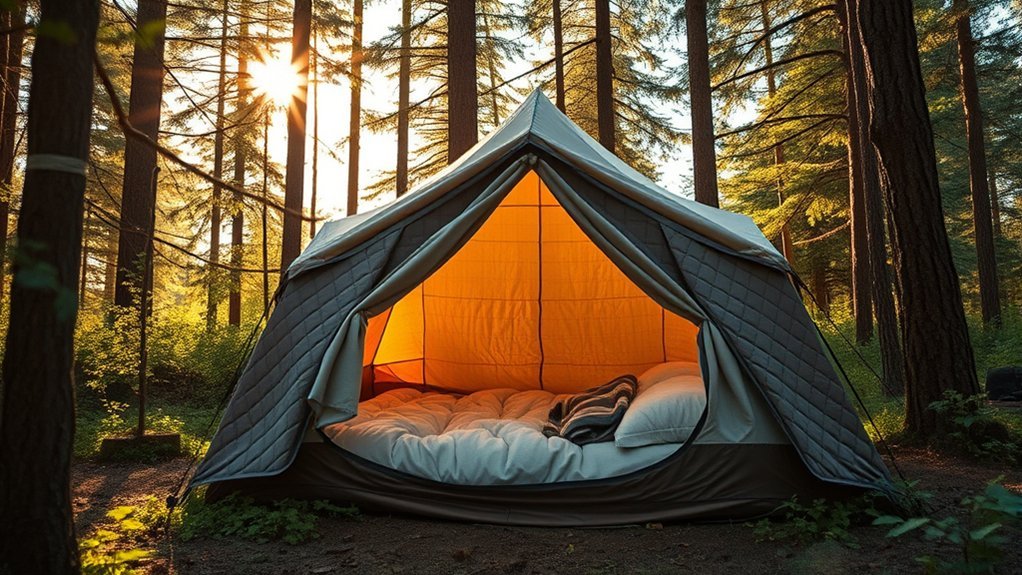
To create a quieter environment inside your tent, adding acoustic barriers can be a game-changer. These barriers, made from various acoustic materials, can be easily hung within your tent to deflect sound waves and greatly minimize external noise intrusion. Temporary acoustic barriers come in various sizes, making them a practical solution for enhancing overall tent comfort.
Additionally, consider incorporating thick carpets on the tent floor. They trap sound waves and improve sound absorption, reducing echo and enhancing acoustic quality. If your tent is already insulated, it provides a solid foundation for these soundproofing measures. By layering acoustic barriers and sound-absorbing materials, you can effectively control noise and create a serene sleeping environment. This way, you’ll enjoy your outdoor experience without the disruptive sounds of the wind and nature, allowing you to fully liberate your camping adventures.
Noise-Reducing Curtains: A Simple Solution
While acoustic barriers can greatly enhance soundproofing in your tent, noise-reducing curtains offer a straightforward and effective solution to further minimize wind noise. These specialized curtains are crafted from thick, heavy curtain materials that dampen and absorb sound, considerably reducing external disturbances. By creating an acoustic barrier, they help trap sound waves and reduce echo within your tent space.
Consider these advantages when choosing noise-reducing curtains:
- Sunlight Blocking: They also block sunlight, contributing to a more restful sleep environment.
- Versatile Styles: Available in various sizes and styles, you can find options that suit both your tent and aesthetic.
- Easy Installation: Hanging them inside your tent is simple and requires minimal effort.
Incorporating noise-reducing curtains into your camping setup not only enhances acoustic design but also guarantees a peaceful retreat from the elements.
Investing in a Soundproof Tent
Investing in a soundproof tent can transform your camping experience, especially if you’re frequently exposed to noisy environments. These tents utilize specialized soundproof materials designed to enhance acoustic insulation, markedly reducing disturbances from wind and campsite activities. By minimizing external noise, you can enjoy improved sleep quality, making them an excellent choice for regular campers seeking peace.
Soundproof tents often feature layered fabrics and integrated soundproofing technologies that effectively block sound waves, outperforming standard tents. While they may come at a higher price point, the added camping comfort and tranquility make the investment worthwhile. Additionally, many soundproofing solutions improve temperature regulation, keeping your tent cooler in summer and warmer in winter. This dual benefit enhances your overall camping experience, allowing you to connect with nature without sacrificing serenity. Investing in a soundproof tent is a practical step towards a more enjoyable outdoor adventure.
Additional Tips for a Quieter Camping Experience
If you want a quieter camping experience, implementing a few practical strategies can greatly reduce wind noise inside your tent. Start by securing your tent with tarp clips to minimize flapping and vibrations. Adding acoustic barriers or noise-reducing curtains inside can absorb sound, enhancing your sleep quality. Thick carpets or mats can also trap sound waves, creating a peaceful atmosphere.
For a quieter camping experience, secure your tent and add sound-absorbing materials to enhance sleep quality.
Here are some additional tips to reflect upon:
- Use Velcro strips on your tent fabric to keep it tightly closed, reducing wind disturbances.
- Employ earplugs for immediate personal noise reduction, ensuring restful sleep despite ambient noise.
- Practice campsite etiquette by keeping your area quiet; this fosters a more serene environment for everyone.
Frequently Asked Questions
Can I Use Regular Tape Instead of Gorilla Tape?
You can use regular tape, but it may not hold as well as Gorilla tape. For strong adhesion, consider tape alternatives like duct tape or double-sided tape, which offer different adhesive types for various applications.
How Does Wind Noise Affect Sleep Quality?
Wind noise can greatly impact your sleep quality, causing sleep disturbances, especially if you’re noise sensitive. It disrupts deep sleep stages, leading to fatigue and decreased cognitive function, ultimately affecting your overall well-being and recovery.
Are There Specific Tents Designed to Reduce Wind Noise?
Yes, wind-resistant tents often incorporate soundproofing materials, reducing wind noise considerably. Studies show that tents with effective soundproofing can enhance sleep quality by up to 40%, making your outdoor experience much more enjoyable and restful.
Will Wearing Earplugs Help With Wind Noise?
Yes, wearing earplugs can greatly enhance sleep improvement by blocking out wind noise. Their effectiveness varies, but investing in quality earplugs often leads to a more peaceful night, allowing you to enjoy your camping experience fully.
Can I Reduce Wind Noise Without Any Tools?
Yes, you can reduce wind noise without tools. Use soundproofing techniques like adding extra tent materials, such as blankets or tarps, to dampen sound. These methods improve your experience by minimizing disruptive wind disturbances while you sleep.
Conclusion
By implementing these strategies, you can transform your tent into a sanctuary of peace, shielding yourself from the relentless howl of the wind. Imagine drifting off to sleep, cradled in silence, with the world outside fading away. Each fix, from acoustic barriers to noise-reducing curtains, works together to create a cocoon of tranquility. As you commence on your next camping adventure, remember: a good night’s sleep is just a few thoughtful adjustments away.