


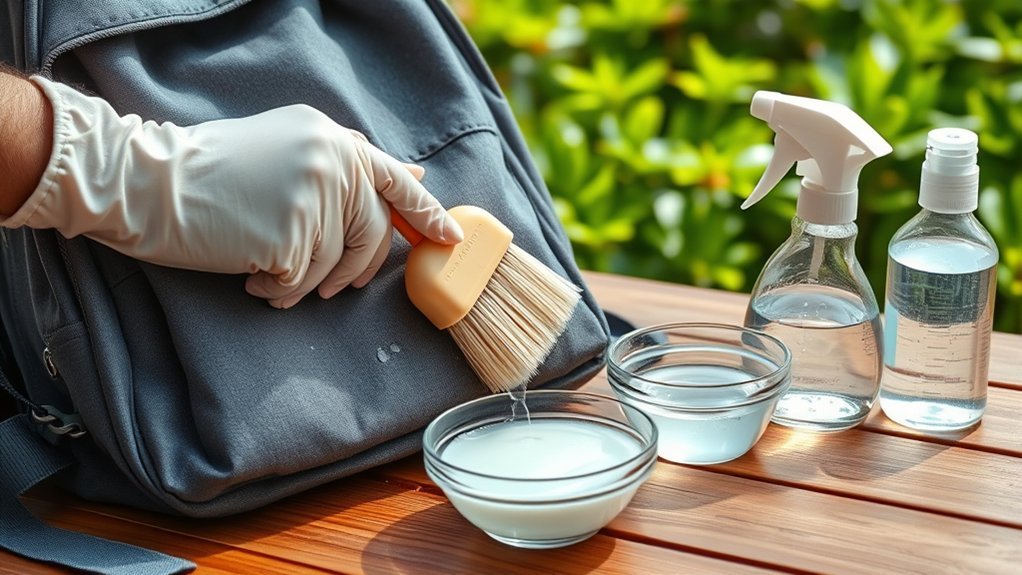
To remove mold from your backpack, first empty it and shake out debris. Mix 1/3 cup of bleach with one gallon of water, then apply this solution to moldy areas using a soft brush. Rinse thoroughly and air dry the backpack upside down. Regular cleaning and proper storage in dry places can prevent future mold growth. If the problem persists, consider more efficient strategies for deeper cleaning—there’s much more to explore for effective mold management.
Understanding the Risks of Mold in Backpacks

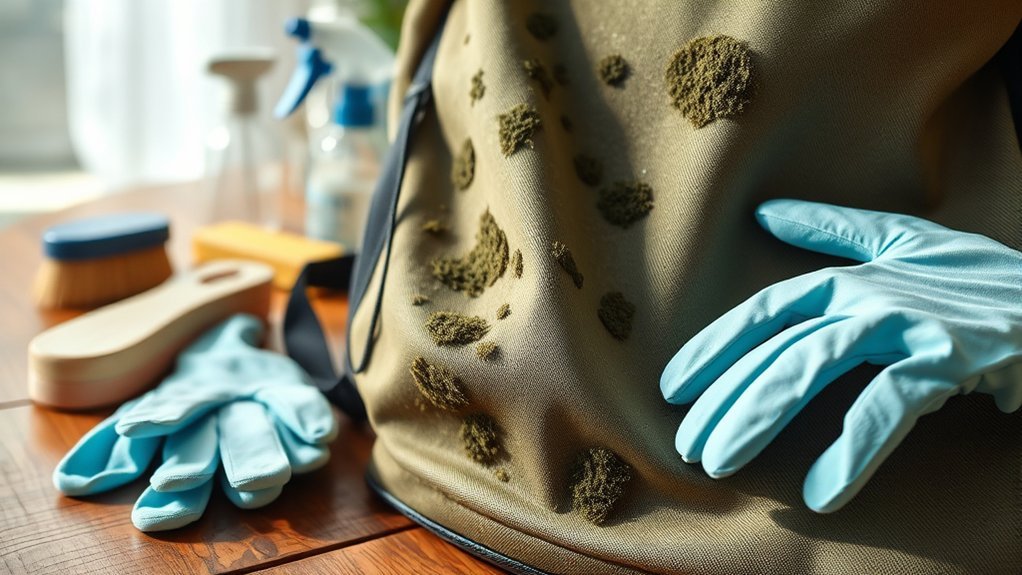
When you’re using your backpack regularly, it’s easy to overlook the risks of mold lurking inside. Mold thrives in environments with moisture, warmth, and organic materials—all common in backpacks. If you store your backpack in damp areas or fail to dry it properly after use, you create an ideal breeding ground for harmful spores.
Exposure to mold can lead to serious health issues, especially if you’re sensitive. You might experience respiratory problems, allergies, or skin irritations that can hinder your daily life. To minimize these risks, regular cleaning and maintenance are essential. By eliminating moisture and organic residues, you can greatly reduce mold growth potential.
If you discover mold, don’t ignore it. It spreads quickly and may require professional cleaning or even disposal of your backpack. Staying vigilant protects your health and guarantees your backpack remains a safe, reliable companion on your journeys.
Signs of Mold Growth in Your Backpack

Recognizing the signs of mold growth in your backpack is essential for maintaining both its integrity and your health. One of the first indicators to look for is dark spots or patches, which signal a moist environment where mold spores can thrive. If you catch a musty or unpleasant odor wafting from your backpack, that’s another red flag, as this smell often arises from the decomposition of organic materials. Additionally, inspect the fabric surfaces for any discoloration or fuzzy texture; these can be clear signs of developing mold. Finally, dampness inside your backpack—especially after exposure to humidity or water—can foster mold growth if not promptly addressed. Regularly checking both the interior and exterior of your backpack for these signs can help you catch mold issues early, preventing further damage and health risks. Stay vigilant to guarantee your backpack remains mold-free and safe for use.
Preparing for Mold Removal
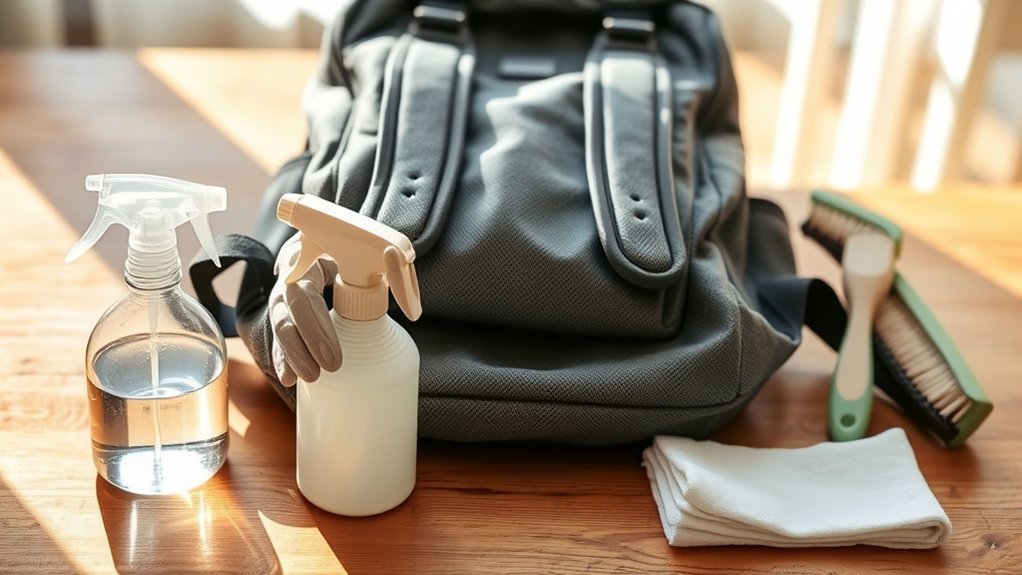
Before you start cleaning, gather all necessary supplies like brushes, cleaning solutions, and protective gear. Next, assess the mold-affected areas and mark them for focused treatment, guaranteeing you don’t miss any spots. Finally, identify the appropriate cleaning method based on the backpack’s fabric care labels to guarantee effective mold removal without damaging the material.
Gather Cleaning Supplies
To effectively tackle mold removal from your backpack, it’s important to gather the right cleaning supplies. Start by assembling the following items:
| Cleaning Supplies | Purpose | Additional Notes |
|---|---|---|
| Clorox™ Disinfecting Bleach | Disinfecting solution | Use only if fabric care label allows |
| Mild detergent | General cleaning | Helps remove dirt and residues |
| Sponge or cloth | Application of cleaning solution | Soft enough to avoid damage |
| Protective gear (gloves & mask) | Safety against mold spores | Critical for personal safety |
| Toothbrush or scrub brush | Targeted mold cleaning | Effective for crevices |
| Microfiber towel | Drying and wiping down the backpack | Prevents moisture retention |
Gathering these supplies facilitates a thorough cleaning process.
Assess Mold Affected Areas
A thorough inspection is essential for identifying mold-affected areas in your backpack. Start by examining all compartments and hidden pockets, as mold thrives in damp, dark spots. Look for visible mold growth or discoloration, paying close attention to seams and corners where moisture collects. Don’t overlook any foul odors, as they can signal hidden mold that may not be immediately visible. Assess the material of your backpack, since different fabrics might need specific cleaning methods to prevent damage. Finally, review the care instructions on the tags to guarantee you follow the recommended procedures for mold removal based on the fabric type. This careful assessment sets the foundation for effective mold eradication and helps preserve your backpack.
Identify Cleaning Method
As you prepare to remove mold from your backpack, it’s essential to identify the most suitable cleaning method based on the materials and extent of the mold growth. Start by completely emptying the backpack and opening all compartments for a thorough inspection. Check the care instructions on the tags to determine appropriate cleaning methods and any precautions regarding water or cleaning products. Assess the severity of the mold and pinpoint areas needing special attention. For effective removal, consider using a bleach and water mixture (1/3 cup of Clorox™ per gallon of water), but always test a small area first for color fastness. Finally, prepare your cleaning environment by wearing gloves and ensuring good ventilation to avoid harmful mold spores.
Cleaning Solutions for Mold Removal
When it comes to cleaning mold from your backpack, you have a variety of options, from natural solutions to chemical cleaners. Each method has its own effectiveness and suitability depending on the fabric type and the severity of the mold. Additionally, implementing preventive maintenance tips can greatly reduce the chances of mold returning after you’ve cleaned.
Natural Mold Cleaners
How can you effectively remove mold from your backpack using natural solutions? Utilizing eco-friendly options not only protects your gear but also the environment. Here are three effective natural cleaners:
- Vinegar Mixture: Combine equal parts white vinegar and water. Spray on the moldy areas to kill spores without harsh chemicals.
- Baking Soda Paste: Mix baking soda with water to create a paste. Apply it to affected spots and gently scrub to deodorize and remove mold.
- Hydrogen Peroxide: Spray 3% hydrogen peroxide directly onto the moldy areas. Let it sit for about 10 minutes before wiping clean.
Always test these solutions on a small, inconspicuous section of your backpack to guarantee they won’t damage the fabric.
Chemical Mold Solutions
While natural solutions are effective for mold removal, chemical options can provide a more potent approach for stubborn infestations on your backpack. A bleach solution, mixing 1/3 cup of Clorox™ Disinfecting Bleach with one gallon of water, is a robust choice. Be certain to wear gloves and work in a well-ventilated area. Apply the solution directly to the moldy spots, letting it sit for at least 10 minutes before rinsing thoroughly. Alternatively, you can use a mixture of equal parts white vinegar and water, which effectively kills most mold types without harsh chemicals. If you opt for commercial mold removers, ascertain they’re fabric-safe and follow the manufacturer’s instructions. Finally, dry your backpack completely to prevent future growth.
Preventive Maintenance Tips
To effectively prevent mold growth on your backpack, it is essential to establish a regular cleaning routine. Incorporate these key practices:
- Monthly Cleaning: Clean your backpack every month and wipe down high-touch surfaces weekly, especially during cold and flu season.
- Sanitize with Bleach: Use a solution of 1/3 cup Clorox™ Disinfecting Bleach per gallon of water to sanitize. Wear gloves and work in a well-ventilated area.
- Proper Drying: After treatment, air dry your backpack upside down, ensuring all pockets and zippers are open for complete air circulation. This prevents moisture retention, which promotes mold growth.
Additionally, consider adding Clorox™ Laundry Sanitizer Liquid to your washing routine for ongoing mold and odor prevention.
Step-By-Step Guide to Remove Mold From a Backpack
Removing mold from a backpack requires a systematic approach to guarantee thorough cleaning and prevention of future growth. Start by emptying your backpack completely and shaking it out to remove loose debris. Inspect it for moldy areas. Next, mix 1/3 cup of Clorox™ Disinfecting Bleach with one gallon of water. Wear gloves and work in a well-ventilated area for safety. Apply the bleach solution to the moldy spots using a soft brush or cloth, scrubbing gently to avoid damaging the fabric. Let it sit for about 10 minutes. Rinse the affected areas thoroughly with lukewarm water to eliminate all bleach residue. Finally, air dry the backpack upside down to prevent moisture trapping. Once it’s dry, assess it for any lingering stains or odors. If necessary, repeat the process and consider implementing regular maintenance cleaning to keep mold at bay.
Drying Your Backpack After Cleaning
After thoroughly cleaning your backpack, the drying process plays an essential role in preventing future mold growth. To guarantee your backpack dries effectively, follow these steps:
- Hang Upside Down: Always air dry your backpack by hanging it upside down. This prevents moisture from getting trapped in pockets, which can lead to mold.
- Open All Pockets and Zippers: Make sure all pockets and zippers are wide open during the drying process. This facilitates airflow, expediting the drying time.
- Avoid Direct Heat: Don’t use a dryer. The heat can cause permanent damage to your backpack’s materials and structure. If drying outside, place it in a shaded area to protect the fabric from fading.
Before hanging, wipe down your backpack with a microfiber towel to remove excess moisture. By following these steps, you can effectively dry your backpack and safeguard it against future mold issues.
Preventing Future Mold Growth
While cleaning your backpack is an important step in managing mold, ensuring its longevity requires proactive measures to prevent future growth. Start by ensuring your backpack is completely dry before storing it; moisture acts as a breeding ground for mold. Choose a cool, dry place with good air circulation to minimize humidity levels. Avoid dark, damp areas like basements or unventilated closets, as these conditions encourage mold formation.
Incorporating silica gel packets or activated charcoal bags into your backpack can effectively absorb excess moisture. Regular cleaning is also essential; aim to clean your backpack at least once a month to eliminate organic materials that can promote mold growth. By adopting these preventive strategies, you’ll safeguard your backpack against mold, ensuring it remains a reliable companion for your adventures. Take control of your backpack’s health, and you’ll enjoy a mold-free experience.
Tips for Maintaining a Clean Backpack
To keep your backpack in top condition, regular maintenance is key, especially if you want to avoid the buildup of dirt, sweat, and odors. By implementing a few simple practices, you can guarantee your backpack remains fresh and clean.
- Monthly Clean: Clean your backpack at least once a month. This prevents dirt and odors from accumulating and keeps it looking new.
- Weekly Wipe Down: Focus on high-touch surfaces weekly, especially during cold and flu season. This helps maintain hygiene and protects your health.
- Proper Drying and Storage: Always air dry your backpack upside down to avoid moisture buildup that leads to mold. Store it in a cool, dry place to further reduce this risk.
When to Seek Professional Cleaning Help
Maintaining a clean backpack is important, but sometimes you might encounter mold that requires more than just your regular cleaning efforts. If the mold covers a large area or is deeply embedded in the fabric, it’s wise to seek professional cleaning services to prevent further damage. Additionally, when your backpack is made from delicate materials that need specialized cleaning, professional help guarantees proper care without compromising the fabric.
If your home cleaning methods fail after several attempts, professionals have access to stronger treatments that can effectively tackle stubborn mold. It’s also essential to consult experts if your backpack has been exposed to harmful mold types, as they can assess potential health risks. Finally, if you’re unsure about the cleaning process or which products to use, reaching out to a professional can provide peace of mind, assuring your backpack is treated safely and effectively.
Frequently Asked Questions
Can Mold Affect the Functionality of My Backpack?
Yes, mold can greatly affect your backpack’s functionality. It damages materials, weakens seams, and can cause unpleasant odors. Regular cleaning and maintenance prevent mold growth, ensuring your backpack remains durable and reliable for your adventures.
Is It Safe to Use Bleach on Moldy Backpacks?
No, it’s not safe to use bleach on moldy backpacks. Bleach can damage fabric, weaken seams, and create harmful fumes. Instead, opt for gentler cleaning solutions that effectively eliminate mold without risking your backpack’s integrity.
How Can I Identify Different Types of Mold?
You can identify different types of mold by examining their color, texture, and growth patterns. Take note of any distinctive odors, and consider using a microscope for detailed analysis if you’re uncertain about the type.
Will Mold Damage My Backpack’s Material Permanently?
Yes, mold can permanently damage your backpack’s material, especially if left untreated. In fact, over 70% of mold-infested items suffer irreversible harm. Acting quickly can help minimize damage and extend your backpack’s lifespan.
Can I Prevent Mold During Storage?
You can prevent mold during storage by ensuring your backpack’s clean and completely dry. Store it in a cool, well-ventilated area, and consider using silica gel packets to absorb moisture and deter mold growth.
Conclusion
To sum up, tackling mold in your backpack isn’t just about cleaning; it’s about preserving your gear and health. By following the steps outlined, you can effectively banish mold like a shadow at dawn. Remember, prevention is key—keep your backpack dry and clean to thwart future growth. With a little diligence and care, your backpack can remain a trustworthy companion on all your adventures. Don’t hesitate to seek professional help if the problem persists; your health is worth it.