


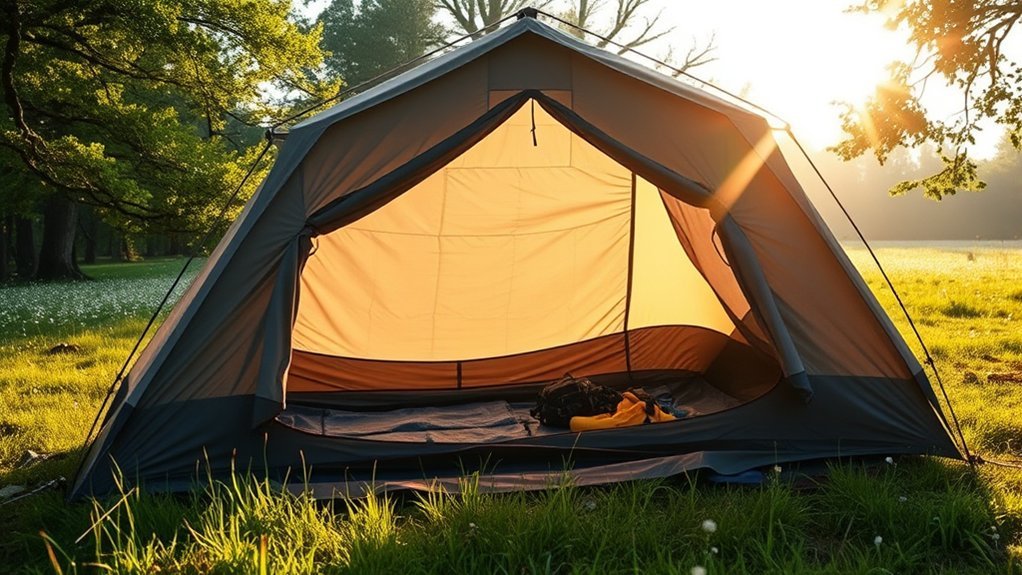
To reduce tent condensation, pitch your tent in the shade of trees to create a warmer microclimate and keep humidity levels lower. Avoid camping near water sources and choose higher ground to minimize moisture buildup. Enhance airflow by opening vents and doors, and manage your gear daily with microfiber towels to absorb excess moisture. These practical strategies can greatly improve your camping experience, and there’s more you can implement to keep condensation at bay.
Causes of Tent Condensation

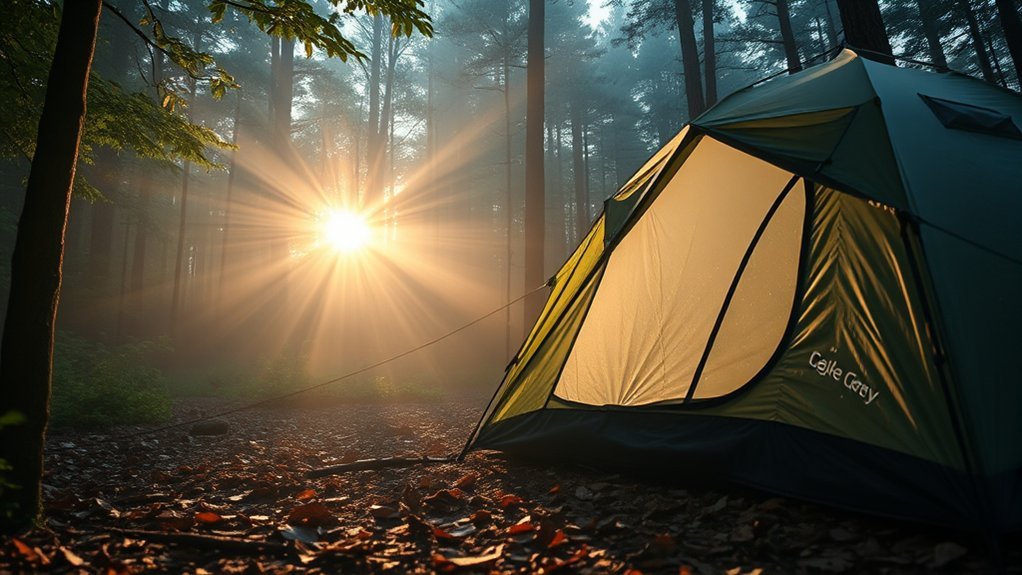
Tent condensation is primarily caused by the interplay of temperature and humidity within the confined space of your tent. When warm, humid air inside contacts the cold tent fabric, moisture accumulates on surfaces. High humidity levels exacerbate this issue, as the moisture-laden air struggles to escape. Additionally, the temperature disparity between the air inside the tent and the fabric can greatly influence condensation. If the difference is substantial, expect more moisture buildup.
In areas with cooler microclimates, such as valleys or near water sources, the pooling of cold air often leads to increased humidity, further amplifying condensation. To combat this, you’ll want to focus on proper ventilation techniques. Opening vents and ensuring airflow allows moist air to escape, reducing condensation effectively. By understanding these causes, you can take proactive steps to create a drier, more comfortable camping experience.
Pitch Your Tent in the Shade of a Tree
Choosing to pitch your tent in the shade of a tree can greatly enhance your camping experience by creating a warmer microclimate. Tree selection is essential, as the air beneath trees is typically warmer, helping with temperature regulation. Here are some benefits of camping in the shade:
- Reduced condensation: Moisture collects on tree leaves instead of your tent walls.
- Lower humidity: Shady areas usually have less humidity compared to open fields, keeping your tent drier.
- Protection from dew: Camping under trees can shield you from morning dew, further minimizing moisture buildup.
When selecting a tree, always verify it’s safe and free from widow-makers to avoid hazards. By strategically placing your tent in a shaded spot, you can greatly reduce condensation and enjoy a more comfortable camping experience. Embrace the natural environment and enjoy the liberation it brings!
Don’t Camp Right Next to Water
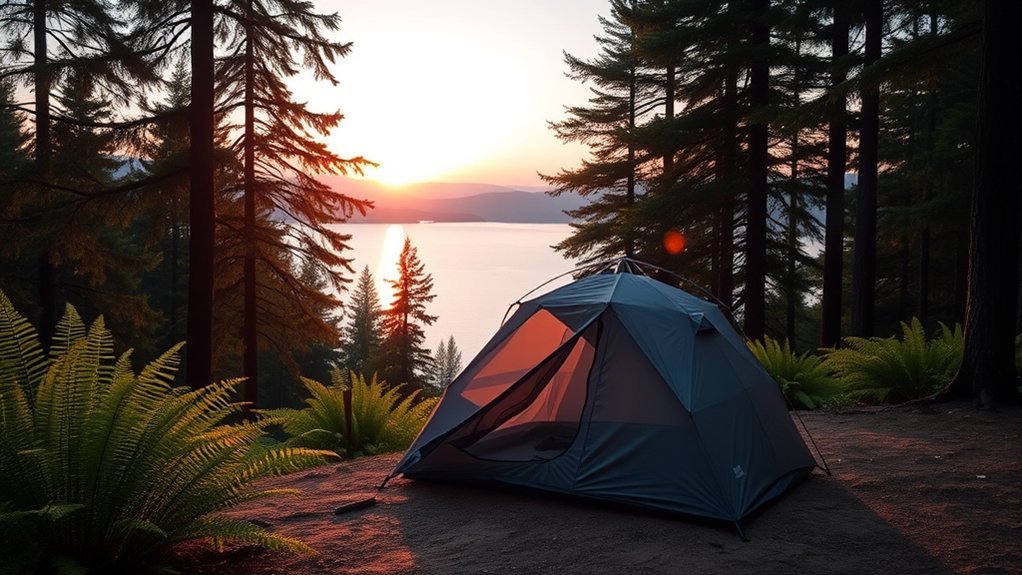
Camping too close to water can markedly increase humidity levels, leading to elevated condensation inside your tent. The proximity to lakes, rivers, or streams often cools air temperatures, which further exacerbates moisture build-up. To minimize this risk, aim to set up your tent at least 200 feet away from any water source. This distance not only reduces humidity but also enhances airflow around your campsite.
When selecting a campsite, balance accessibility to water for cooking or cleaning with a safe distance from it. Choosing a spot further back allows you to enjoy the natural beauty without compromising comfort. You’ll find that a well-chosen location can profoundly impact your overall camping experience. By being mindful of water proximity during campsite selection, you can enjoy a drier, more comfortable stay, liberating you to fully embrace the outdoor adventure without the hassle of excessive tent condensation.
Camp on Higher Ground
When you set up your tent on higher ground, you greatly decrease the likelihood of condensation forming inside. Elevation benefits include reduced humidity levels and better temperature control, making your camping experience much more enjoyable. By incorporating this simple strategy into your camping plans, you can effectively combat moisture issues.
Setting up your tent on higher ground minimizes condensation and enhances your camping comfort with better temperature control.
- Warm air rises: Pitching on elevated terrain keeps your sleeping area warmer.
- Avoid morning dew: Higher ground reduces the adverse effects of dew common in low-lying areas.
- Enhanced drainage: If it rains, an elevated site helps keep your tent dry.
Utilizing these camping strategies not only guarantees a cozier night’s sleep but also enhances your overall outdoor experience. So next time you head out, remember to choose higher ground and enjoy a drier, more comfortable campsite.
Don’t Dry Wet Gear Inside the Tent
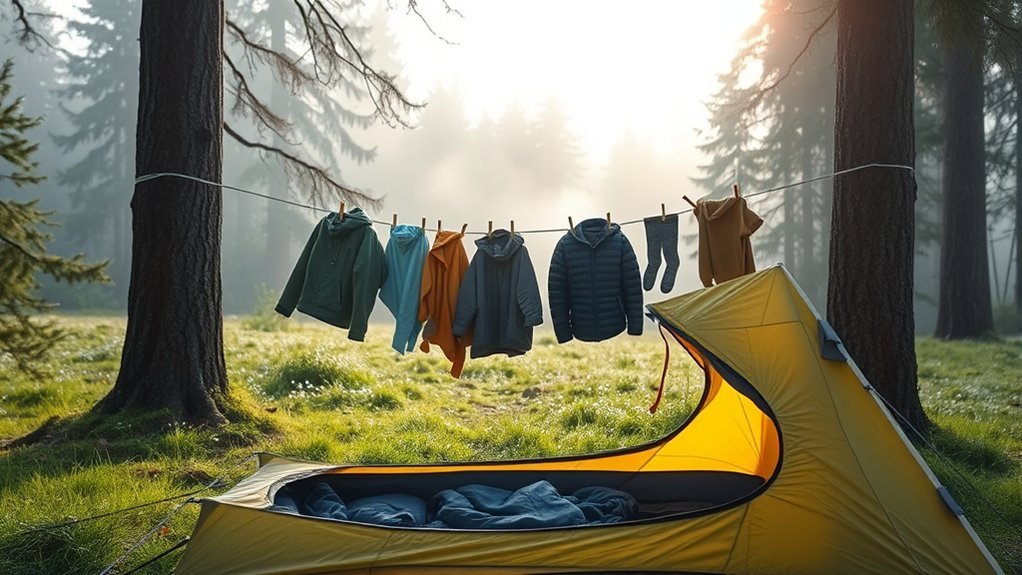
When you dry wet gear inside your tent, you greatly increase internal humidity, which can lead to condensation on the walls. Instead, hang damp items outside under a tarp to allow for proper air circulation and drying. This simple practice helps preserve the tent’s dryness and enhances your overall comfort while camping.
Increase Internal Humidity
To keep condensation at bay inside your tent, it’s essential to avoid drying wet gear within the confines of your shelter. Drying clothes or shoes inside raises humidity levels, leading to excessive moisture and potential mold growth. Instead, focus on these practical strategies for moisture control:
- Hang wet items outside under a tarp to prevent moisture accumulation.
- Bring a change of clothes to minimize the need for drying gear inside.
- Store wet gear separately from your sleeping area to maintain a comfortable environment.
Preserve Tent Dryness
Reducing humidity inside your tent is essential for preventing condensation, so it’s important not to dry wet gear within your sleeping space. Instead, prioritize gear organization by drying damp items outside, ideally under a tarp. This practice not only minimizes moisture buildup but also enhances airflow, promoting efficient drying. If you need to keep wet clothes close, isolate them in a trash bag or dry sack to create moisture barriers, reducing their impact on overall humidity. Consider packing a change of clothes to avoid the necessity of drying gear inside. These strategies will help maintain a comfortable sleeping environment, allowing you to fully enjoy your outdoor adventure without the discomfort of condensation.
Give Your Tent Plenty of Room to Breathe
Making sure your tent has ample room to breathe is essential for minimizing condensation. Proper tent spacing and effective airflow management can greatly enhance your camping experience. Here are some techniques to help you achieve this:
- Pitch double-walled tents correctly to maximize air circulation between the rainfly and inner wall.
- Avoid contact between tent walls and gear inside, as this can trap moisture and increase condensation.
- Utilize sticks or poles under guidelines to improve the wall angle, facilitating better airflow.
Additionally, check that vents and ventilation panels are functional and clear of obstructions. Make certain your tent isn’t overly slack, as sagging can create pockets for moisture to accumulate. By following these practices, you’ll create a more breathable environment and considerably reduce condensation within your tent, leading to a more comfortable camping experience.
Ventilation Is Your Best Friend
To effectively reduce condensation in your tent, you need to prioritize ventilation. Open all vents and windows, and position your tent to face the wind for ideal airflow. Additionally, utilize the rainfly and vestibule to enhance circulation and prevent moisture buildup inside.
Open Vents and Windows
How can you effectively manage tent condensation? Utilizing open vents and windows is essential for promoting air circulation and reducing moisture. Here are some practical ventilation techniques to take into account:
- Open vents and windows: Allow moist air to escape, greatly reducing condensation buildup.
- Roll back the rainfly: Create an open pathway for airflow, especially during humid conditions.
- Position your tent wisely: Face it into the wind to enhance natural ventilation and minimize moisture accumulation.
Optimize Tent Orientation
Optimizing your tent’s orientation is vital for effective ventilation and moisture management. Start by positioning your tent to face the prevailing wind direction; this allows fresh air to flow in, reducing moisture accumulation inside. Open all available vents, windows, and doors to enhance airflow and let moist air escape naturally. During dry conditions, consider rolling back the rainfly and vestibule door to maximize air circulation, promoting a drier environment. Guarantee ventilation panels remain unobstructed by gear, as proper tent pitch is essential for functional airflow. If possible, utilize multiple ventilation options like having at least two vestibules, which greatly improves overall air circulation and further minimizes condensation buildup.
Utilize Rainfly and Vestibule
While camping, utilizing your rainfly and vestibule effectively can greatly enhance ventilation, reducing condensation inside your tent. Start by making rainfly adjustments—roll it back and open vents to let moist air escape. Position your tent facing the prevailing wind to maximize airflow through the vestibule, preventing moisture buildup.
To maintain ideal conditions, consider these tips:
- Keep both vestibules open during the day for air circulation and sunlight exposure.
- Guarantee vestibule management by clearing obstructions, allowing ventilation panels to function unhindered.
- Regularly check and adjust your rainfly and vestibule setup to adapt to changing weather.
Daily Gear Management and Use of Microfiber Towels
To guarantee a comfortable and dry camping experience, managing your gear daily is essential. Incorporate effective moisture management into your daily routines by opening both vestibules each morning to expose gear to sunlight for about 20 minutes. This simple act can greatly reduce overnight moisture. Additionally, utilize microfiber towels to absorb excess condensation from your tent and gear.
| Action | Benefit | Frequency |
|---|---|---|
| Open vestibules | Exposes gear to sunlight | Daily |
| Use microfiber towels | Absorbs condensation effectively | Daily |
| Dry gear in sunlight | Prevents mold and mildew buildup | Daily |
Regularly drying your gear with microfiber towels promotes a drier environment that air drying alone may not achieve. By following these techniques, you enhance your camping experience while extending the life of your equipment.
Frequently Asked Questions
What Type of Tent Is Best for Reducing Condensation?
A tent with a well-ventilated design, like a dome or tunnel shape, promotes condensation prevention. Look for features such as mesh panels and fly vents to enhance airflow and minimize moisture buildup during your adventures.
How Does Humidity Affect Tent Condensation Levels?
Humidity levels above 60% can considerably increase tent condensation, leading to discomfort. To prevent this, you should monitor moisture, ventilate effectively, and choose breathable materials, ensuring a more enjoyable camping experience under varying weather conditions.
Can Sleeping Bags Contribute to Tent Condensation?
Yes, sleeping bags can contribute to tent condensation. Different sleeping bag types affect moisture management, as synthetic materials often wick moisture better than down. Choosing the right bag helps minimize humidity levels inside your tent.
Is It Helpful to Use a Tent Footprint?
Using a tent footprint is beneficial; it creates a barrier against ground moisture. Imagine camping in a damp area—your footprint keeps the tent dry, reducing condensation inside. It’s a smart, practical choice for any adventurer.
What Materials Are Best for Tent Ventilation?
For ideal tent ventilation, choose breathable designs with ventilation fabrics like mesh or ripstop nylon. These materials allow airflow while keeping moisture out, enhancing comfort during your adventures and reducing condensation for a more liberating experience.
Conclusion
By implementing these techniques, you can transform your camping experience from a damp ordeal to a dry oasis. Picture yourself waking up in a tent where sunlight streams through well-ventilated flaps, and the air feels crisp and fresh. With thoughtful positioning, proper gear management, and mindful ventilation, you’ll minimize condensation, allowing you to enjoy the great outdoors without the hassle of moisture. Embrace these strategies, and savor the tranquility of a comfortable, dry camping trip.