


To reduce sparks near your tent, keep cooking stoves and campfires away from your sleeping area and use a fire ring to contain flames. Always choose a stove that’s compatible with your tent and install it correctly with a spark arrestor. Maintain a clear zone around the heat source, and store flammable materials at least 30 feet away. Regularly clean and inspect your stove to prevent buildup. There’s more to learn about ensuring your safety while camping.
Understand the Risks of Using Stoves and Campfires

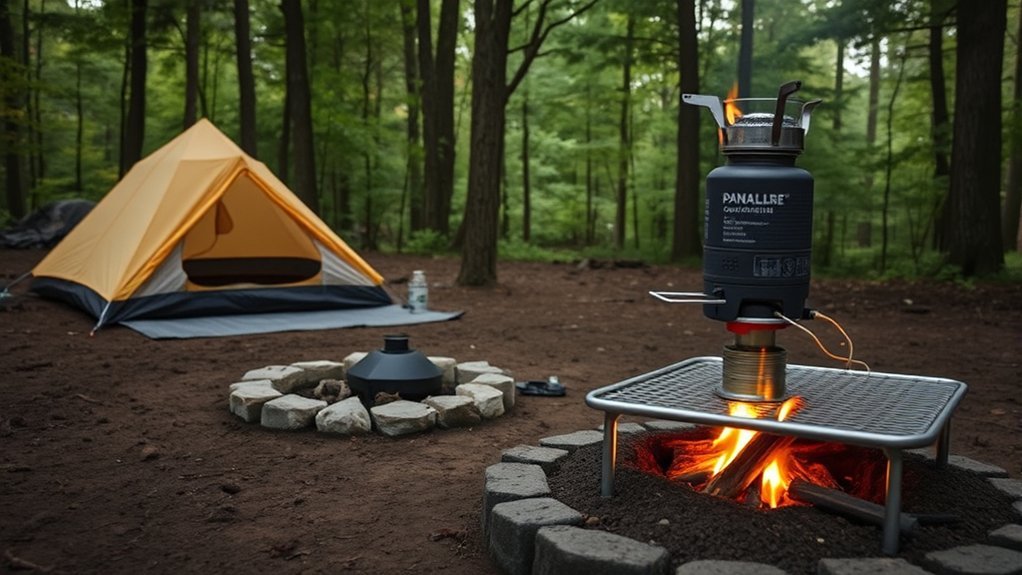
When you’re camping, it’s vital to understand the risks associated with using stoves and campfires, especially since improper use can lead to serious injuries or accidents. Incidental injuries like burns from hot surfaces or singes from escaping sparks highlight the importance of stove safety. Always verify your stove is properly installed to prevent tent fires, which can trap occupants and ignite flammable materials nearby.
Placing your stove and campfire away from your tent and other structures is essential for fire prevention. Using a spark arrestor can help prevent sparks and embers from escaping the stovepipe, greatly reducing fire hazards. Stay aware of these dangers, and maintain a clear zone around your cooking area. By following these safety measures, you’ll create a safer camping experience, allowing you to enjoy the great outdoors with peace of mind.
Learn the Signs of Carbon Monoxide Poisoning
When you’re camping, it’s essential to recognize the signs of carbon monoxide poisoning to keep yourself safe. Watch for symptoms like headache, dizziness, or nausea, as these can escalate quickly. If you notice these signs, act immediately by getting fresh air and seeking medical help.
Symptoms to Watch For
Recognizing the symptoms of carbon monoxide poisoning is essential for your safety while camping. Being aware can empower you in your emergency preparedness. Watch for these key signs:
- Headache
- Weakness or dizziness
- Nausea or vomiting
- Shortness of breath or confusion
In severe cases, blurred vision and loss of muscle control may occur, signaling critical exposure. Loss of consciousness is life-threatening and demands immediate medical attention. Remember, carbon monoxide is colorless, odorless, and tasteless, making it nearly undetectable without monitoring equipment. Always prop tent flaps open for ventilation and guarantee carbon monoxide detectors are regularly checked. Stay alert to these symptoms for a safer outdoor experience. Your awareness can make all the difference.
Immediate Actions Required
Being aware of the immediate actions to take if you notice symptoms of carbon monoxide poisoning can be vital for your safety. If you experience headaches, dizziness, or nausea, act fast. Move to fresh air and call for emergency response. If someone loses consciousness, start first aid immediately, such as performing CPR if necessary.
| Symptoms | Action Required |
|---|---|
| Headache, Dizziness | Move to fresh air |
| Blurred Vision, Confusion | Call emergency services |
| Loss of Consciousness | Begin first aid (CPR if needed) |
Always prioritize ventilation in your tent. Keep the flaps open while exiting to guarantee fresh air circulation and reduce the risk of carbon monoxide buildup.
Choose the Right Stove for Your Tent
When choosing a stove for your tent, size matters; a larger stove can provide better heat and longer burn times in chilly conditions. Make sure the stove is compatible with your tent’s material and includes flame-retardant features to minimize fire risks. Also, check that your tent has a vent hole for proper ventilation to keep carbon monoxide at bay.
Stove Size Considerations
Choosing the right stove size for your tent is essential for efficient heating and minimizing sparks. To help you make the best choice, consider these size guidelines:
- Tent Size: Match your stove to the tent’s dimensions; larger tents may require bigger stoves for adequate warmth.
- Burn Time: Larger stoves typically provide longer burn times, reducing the need for frequent refueling.
- Safety Features: Opt for stoves with fire protection around the flue exit to minimize spark risks.
- Practice Setup: Conduct practice runs at home to familiarize yourself with the stove’s operation and identify spark hazards.
Tent Material Compatibility
Selecting the right stove for your tent starts with understanding the compatibility of materials. When you camp, it’s essential to choose stoves designed for specific tent fabric types, like flame-retardant cotton or poly-cotton canvas. These options minimize fire risk. Make sure your tent has a vent hole for the stove pipe, which helps prevent heat buildup and protects synthetic materials from melting. Avoid stoves with open flames in tents made of silnylon or cuben fiber, as they’re more vulnerable to heat damage. Always check that the stove’s flue exit point includes fire protection to prevent direct contact with the tent fabric. Finally, conduct practice runs at home to confirm stove compatibility and familiarize yourself with safety protocols before venturing out.
Flame-Retardant Features
Flame-retardant features are essential for guaranteeing safety while using a stove inside your tent. When choosing the right stove, consider the following:
- Stove Design: Verify it fits your tent’s dimensions to minimize sparks escaping.
- Material: Opt for stoves made from flame retardant materials like stainless steel or aluminum for better heat resistance.
- Tent Coating: Choose a tent with flame retardant coatings and a vent hole for the stove pipe to manage heat safely.
- Fire Protection: Look for models that incorporate fire protection around the flue exit point to further reduce ignition risks.
Install Your Stove Correctly
To guarantee safety while enjoying your camping experience, it’s essential to install your stove correctly. Following the manufacturer’s instructions guarantees safe stove installation and minimizes spark risks. Here are critical safety measures to keep in mind:
| Safety Measure | Description | Importance |
|---|---|---|
| Proper Installation | Follow the manufacturer’s guidelines. | Reduces spark escape risk. |
| Height of Stove Pipe | Extend at least 24 inches above the tent peak. | Prevents hot gases from entering. |
| Flame-Retardant Mat | Place under the stove to protect the tent floor. | Shields against ash and embers. |
| Clearance Around the Stove | Maintain a 12-inch distance from combustible materials. | Lowers fire incident chances. |
| Regular Checks | Inspect for wear and tear on the stove and pipe. | Guarantees ongoing safety. |
Implementing these measures will help create a safer campsite and enhance your overall outdoor experience.
Use a Spark Arrestor
Using a spark arrestor is essential for any camping stove, as it prevents sparks and embers from escaping the stovepipe. This vital safety device considerably reduces the risk of accidental fires, protecting your tent and surrounding flammable materials. Here are some key spark arrestor benefits and installation tips:
- Fire Prevention: Keeps stray sparks contained, reducing fire hazards in your camping area.
- Durability: Choose arrestors made from heat-resistant materials like stainless steel or aluminum for long-lasting performance.
- Regulatory Compliance: Installing a spark arrestor helps you meet camping area regulations, giving you peace of mind.
- Maintenance: Regularly clean and inspect your spark arrestor for damage to guarantee it functions effectively.
Maintain a Safe Distance From Combustibles
While enjoying the great outdoors, it’s crucial to maintain a safe distance from combustibles to prevent accidental fires. Start by placing your fire pit at least 10 feet away from tents, vehicles, and any flammable vegetation. To further guarantee safe camping, clear a five-foot radius around your campfire or stove, eliminating combustible materials that could catch sparks.
Store unused firewood and other flammable items at least 30 feet from the fire to minimize hazards. A fire ring or stones can help contain your flames, reducing the risk of spreading to nearby combustibles.
If you’re using a stove, install it with a spark arrestor and keep it at a safe distance from the tent fabric. By following these precautions, you can enjoy your camping experience while keeping safety a top priority.
Keep Emergency Equipment Accessible
Having emergency equipment easily accessible can make all the difference when it comes to fire safety while camping. Being prepared is key to enjoying your outdoor adventure without worry. Here are four essential items you should keep close:
- Fire Extinguisher: Always guarantee it’s charged and ready for use.
- Bucket of Water: Keep it filled and nearby your stove or campfire.
- Shovel: Handy for smothering flames or managing hot coals.
- Flashlight and Sharp Knife: Essential for quick responses in emergencies.
Additionally, maintain a clear escape path from the stove or campfire to your tent door. This allows for a swift evacuation if needed. Position flammable materials like sleeping bags away from heat sources to minimize risks. By prioritizing emergency preparedness, you can confidently enjoy your camping experience while keeping safety at the forefront.
Clean and Maintain Your Stove Regularly
To guarantee your stove operates safely and efficiently, regular cleaning and maintenance are essential. Start with routine stove cleaning to remove soot and debris, enhancing airflow and minimizing the risk of sparks escaping. Before each camping trip, inspect your stove for damage, like loose connections or corrosion, to ascertain safe and efficient use.
Don’t forget the stovepipe! Equip it with a spark arrestor to prevent sparks and embers from escaping into the air. Make sure all components fit securely and are properly installed, as this reduces the chances of sparks igniting nearby materials.
Establish a consistent cleaning schedule, especially after heavy use, to avoid buildup that can lead to increased spark production and fire hazards. By prioritizing these simple maintenance steps, you’ll create a safer camping environment and enjoy your outdoor experience with peace of mind.
Frequently Asked Questions
What Materials Are Best for Stove Placement to Reduce Fire Risk?
For stove placement, use fire resistant materials like metal or stone. Consider sturdy stove base options such as a heat-resistant pad or fireproof mat. This will help minimize fire risk and guarantee safer cooking experiences.
How Far Should I Place My Stove From My Tent?
You should place your stove at least 10 to 15 feet away from your tent for ideal stove safety. This distance minimizes fire risk and keeps your camping experience enjoyable and worry-free. Stay safe, enjoy nature!
Can I Use My Stove in Windy Conditions?
You shouldn’t use your stove in windy conditions. The wind can blow flames and embers, compromising stove safety. Instead, find a sheltered spot or wait for calmer weather to guarantee a safer cooking experience.
What Are Alternative Cooking Methods to Avoid Sparks?
You can enjoy cooking without sparks by using solar cookers or Dutch ovens. They’re efficient, easy to use, and eliminate the hassle of open flames, letting you focus on delicious meals instead of worrying about safety.
How Do I Properly Extinguish a Campfire After Use?
To extinguish a campfire, use fire extinguishing techniques like dousing it with water, stirring ashes, and ensuring it’s cold. Always follow safety precautions; check for embers and never leave it unattended until completely out.
Conclusion
By taking these precautions, you can enjoy your camping experience while minimizing the risk of sparks and fire hazards. For instance, consider a camper who safely installed a spark arrestor on their stove, preventing a small ember from igniting nearby leaves. This simple step not only protected their tent but also guaranteed a safe environment for everyone around. Stay proactive and vigilant; your safety and that of your fellow campers depend on it.