


To prevent rainfly contact with the inner tent, elevate the rainfly using longer poles, creating air pockets that enhance ventilation and reduce condensation. Pitch the rainfly higher on the edges to avoid sagging, and use tension straps or guylines to maintain its height. Regularly check the tautness of the rainfly, especially in wet conditions, to guarantee it doesn’t touch the inner tent. Follow these steps closely, and you’ll discover even more tips for a comfortable camping experience.
Understanding the Importance of Keeping Rainfly Elevated


When you set up your tent, elevating the rainfly is crucial for maintaining a comfortable environment inside. By keeping the rainfly lifted, you create a pocket of dead air that helps regulate temperature and reduces condensation buildup. This is particularly important when you consider the rainfly materials; high-quality options guarantee durability while allowing for effective airflow.
Properly designed tent structures benefit from longer poles at the sides, enabling water to run off efficiently and preventing pooling. This elevation minimizes contact with the inner tent, reducing the risk of moisture transfer and safeguarding the effectiveness of the Durable Water Repellent (DWR) treatment.
Additionally, maintaining distance between the rainfly and inner fabric prevents disruptions in surface tension, which can lead to leaks. Ultimately, an adequately elevated rainfly enhances ventilation, contributing to a more enjoyable camping experience by keeping humidity levels in check.
Techniques for Proper Tent Setup
To prevent the rain fly from contacting your inner tent, start by optimizing its height during setup. Use a tensioning system to keep the fly taut, which not only enhances ventilation but also minimizes sagging. Remember, proper elevation and tension are key to maintaining that essential separation between the fly and tent walls.
Optimize Rainfly Height
Maximizing the height of your rainfly is essential for ensuring effective ventilation and preventing contact with the inner tent. Start by using longer poles to elevate the sides of the rainfly, creating a pocket of dead air that enhances airflow and reduces condensation. Pitch the rainfly higher at the edges than at the center to avoid sagging and contact with the inner tent. Utilize tension straps or guylines to secure it at the ideal height, ensuring enough distance to prevent moisture transfer. Regularly inspect the rainfly, especially in windy or rainy conditions, to maintain its tautness and avoid draping over the tent walls. Properly adjusted rainfly materials can greatly improve your camping experience by keeping you dry and comfortable.
Use Tensioning System
After maximizing the rainfly height, it’s time to focus on the tensioning system for your tent setup. Utilize adjustable guy lines to create tension on the rainfly, ensuring it remains lifted away from the inner tent fabric. This promotes proper ventilation and prevents moisture transfer. Employ tensioning techniques that include additional poles or supports to elevate the rainfly, creating a pocket of dead air. Always pitch the rainfly tautly; sagging can lead to unwanted contact during rain or wind. Position your tent on higher ground to enhance airflow and reduce water pooling. Regularly check and adjust your tensioning systems throughout your trip, especially after heavy weather, to maintain ideal separation between the rainfly and inner tent.
Benefits of Creating Air Pockets
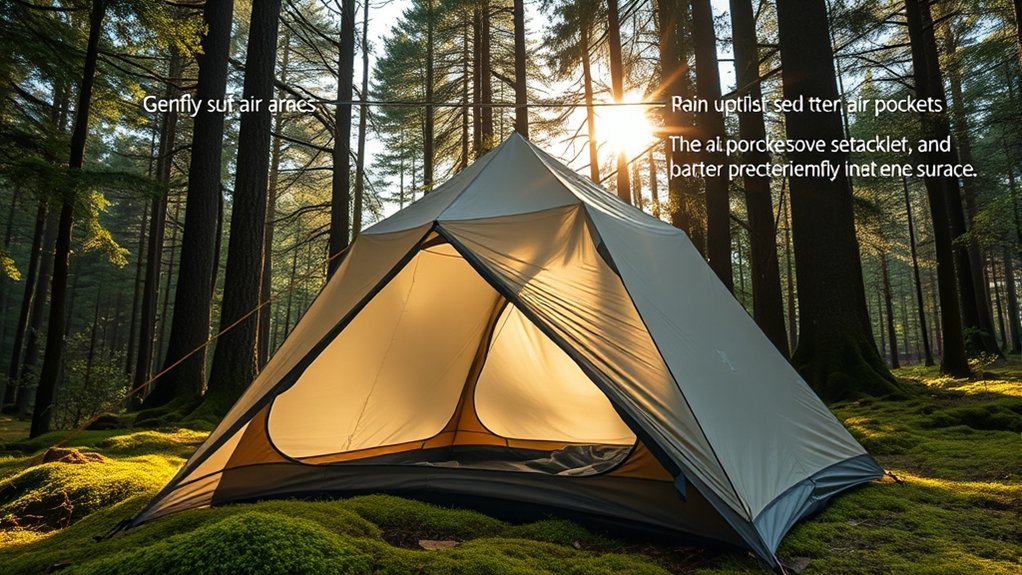
Creating air pockets between your rainfly and inner tent offers several key benefits. You’ll notice enhanced ventilation, which reduces the risk of condensation buildup, keeping your space comfortable. Additionally, maintaining this barrier can prolong the lifespan of both your rainfly and inner tent, ensuring they perform well for many camping trips to come.
Enhanced Ventilation Benefits
When you lift the rainfly with poles, you not only prevent contact with the inner tent but also establish essential air pockets that greatly enhance ventilation. These pockets allow moist air to escape, improving moisture management and keeping your tent dry. Proper ventilation techniques create a dead air space, acting as insulation to maintain a comfortable temperature inside. This reduces the risk of mold and mildew, safeguarding your gear. Enjoy these benefits:
| Benefit | Description | Emotional Connection |
|---|---|---|
| Improved Airflow | Fresh air circulates easily | Feel the freedom of fresh air |
| Enhanced Comfort | Regulates humidity for better sleep | Experience restful nights |
| Long-lasting Gear | Reduces wear on tent fabric | Protect your adventure |
| Healthier Environment | Minimizes moisture-related issues | Breathe easy outdoors |
| Elevated Experience | Enhances overall camping enjoyment | Embrace nature fully |
With these air pockets, your camping experience becomes liberating and comfortable.
Reduced Condensation Risk
By ensuring there’s a gap between the rainfly and the inner tent, you greatly cut down the chances of condensation forming on the inner walls. This air pocket acts as a barrier, minimizing direct contact and reducing condensation causes. With dead air space, airflow improves, allowing moisture management to take place, keeping your inner tent drier, especially in humid conditions. Elevating the rainfly with poles or tensioning lines prevents outside moisture from seeping in, further lowering condensation risk. Enhanced ventilation through these air pockets lets warm, moisture-laden air escape efficiently, decreasing the likelihood of dampness. Ultimately, maintaining this separation not only enhances comfort but also makes your camping experience more enjoyable, especially during wet weather.
Improved Tent Longevity
Maintaining air pockets between the rainfly and inner tent considerably boosts your tent’s longevity. By elevating the rainfly with poles, you create a dead air space that enhances ventilation, reducing humidity and minimizing the risk of mold and mildew. This buffer also helps maintain a stable temperature inside your tent during fluctuating weather. Keeping the rainfly from direct contact with the inner tent prevents water from wicking through the fabric, preserving your tent’s waterproof integrity. Plus, it prolongs the effectiveness of the Durable Water Repellent (DWR) treatment by reducing wear and dirt accumulation. Remember these maintenance tips: prioritize air pockets to enhance the durability of your tent materials and guarantee a longer-lasting camping experience.
Choosing the Right Poles for Stability
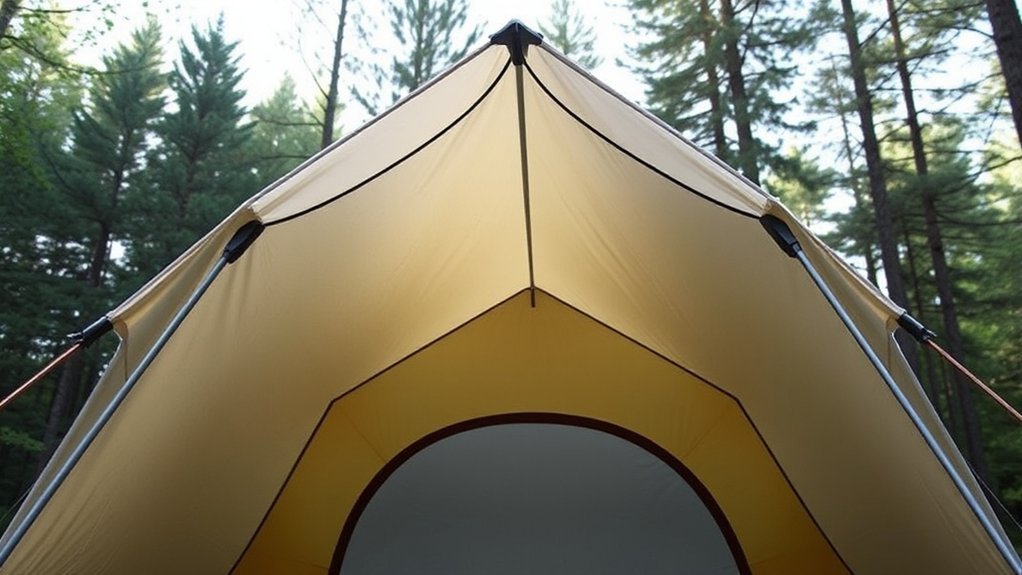
Choosing the right poles for your tent is essential if you want to keep your rainfly elevated and prevent it from making contact with the inner tent. Opt for longer poles that raise the rainfly higher, creating a pocket of dead air that reduces condensation. Lightweight aluminum or fiberglass poles are ideal; they offer stability without adding unnecessary weight for transport.
Pay attention to the pole configuration, making sure they’re correctly positioned to create a taut rainfly. This prevents sagging, which can lead to unwanted contact during rain or wind. If you’re camping on varied terrain, consider poles with adjustable lengths for custom height settings, enhancing fly elevation.
Always check the pole connections and stakes before your trip to verify stability. A well-structured setup will keep your rainfly secure, allowing you to enjoy your adventure without worrying about moisture intrusion.
Tips for Maintaining Temperature Control
Properly setting up your rainfly not only provides shelter from rain but also plays a significant role in temperature control inside your tent. Use longer poles to elevate the rainfly’s sides, creating a pocket of dead air that acts as effective tent insulation against temperature changes. Keep the rainfly taut and elevated to prevent sagging, which can lead to condensation and heat loss. Enhance airflow by utilizing open vents and doors, allowing warm air to escape and maintaining a comfortable internal environment. Position your tent in shaded areas to protect against direct sunlight, regulating temperatures and minimizing overheating. Finally, consider using additional poles or guy lines to support the rainfly, ensuring it remains elevated. By paying attention to these details and selecting appropriate rainfly materials, you can maintain a consistent temperature within your tent, enhancing your outdoor experience.
Troubleshooting Common Issues With Rainfly Contact
When setting up your tent, addressing rainfly contact issues is essential for a dry and comfortable experience. Here are some troubleshooting tips to keep your inner tent protected:
- Guarantee the rainfly is pitched high enough to create a pocket of dead air, enhancing ventilation and preventing condensation.
- Use longer poles or add supports to elevate the rainfly, especially if your tent orientation is prone to sagging.
- Regularly check and adjust the tension of the rainfly to avoid it touching the inner tent, particularly during wet weather.
Additionally, consider rainfly materials designed for extended coverage to shield the inner tent from moisture intrusion. Incorporating guylines and stakes will secure the rainfly tautly, minimizing movement caused by wind or rain. By addressing these common issues, you’ll enhance your camping experience and enjoy a liberating night under the stars without worrying about leaks.
Frequently Asked Questions
What Materials Are Best for Rainfly Construction?
For rainfly construction, choose lightweight nylon or polyester with waterproof coatings. These materials balance durability and weight, ensuring you stay dry without added bulk. Always consider fabric weight for ideal performance in diverse weather conditions.
Can I Use My Tent Without a Rainfly?
You can use your tent without a rainfly, but guarantee proper tent ventilation and moisture management. This setup might expose you to elements, so choose dry conditions to enjoy the freedom of the outdoors safely.
How Do I Clean My Rainfly?
To clean your rainfly, use gentle soap and water for effective cleaning techniques. Rinse thoroughly and air dry. Regular maintenance tips include inspecting for damage and storing it properly to guarantee longevity and performance.
What Factors Affect Rainfly Durability?
Rainfly durability depends on rainfly tension and weather exposure. Proper tension minimizes wear from flapping, while consistent exposure to harsh elements can degrade materials. Regular checks can help maintain its integrity for longer-lasting performance.
How Can I Store My Rainfly Properly?
Store your rainfly in a cool, dry place, away from direct sunlight. Fold it neatly and use a breathable storage bag to prevent mildew. Proper rainfly storage is essential for effective tent maintenance and longevity.
Conclusion
To keep your camping experience enjoyable, make certain your rainfly stays elevated, your poles are sturdy, and your air pockets are intact. By prioritizing proper setup, maintaining temperature control, and addressing rainfly contact issues promptly, you create a more comfortable and secure environment. Remember, a well-placed rainfly shields you from the elements, promotes ventilation, and enhances your overall camping adventure. With attention to detail and a proactive approach, you can truly enjoy nature without the worry of rain dampening your spirits.