


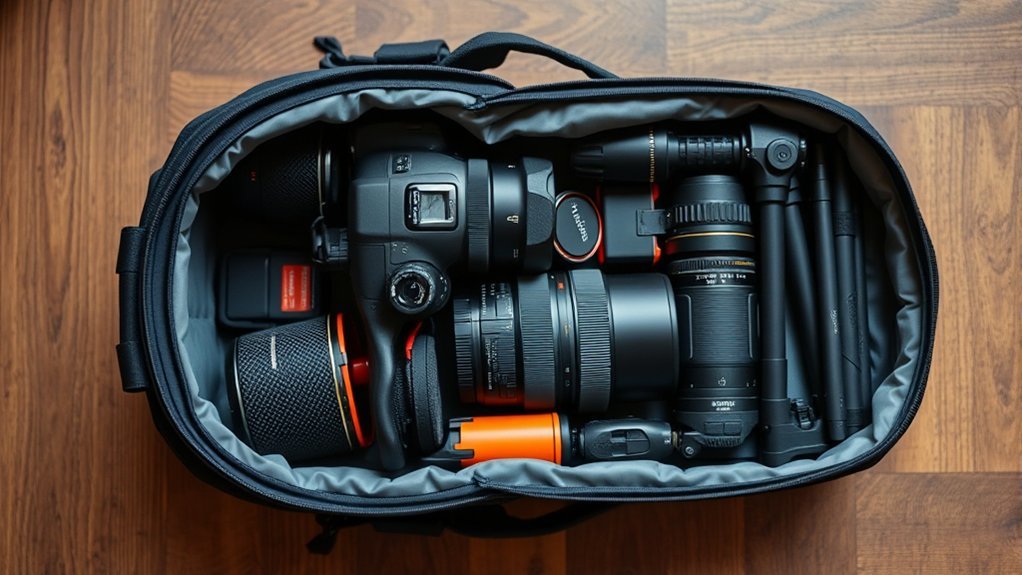
To pack your camera gear in a backpack effectively, start by evaluating your needs and selecting versatile lenses. Organize camera bodies and essentials in designated compartments for easy access. Manage weight by keeping heavier items close to your back, aiming for a total weight of 10-15% of your body weight. Avoid overpacking by prioritizing critical gear and backups. Finally, prepare for different weather conditions to protect your equipment. There’s more to optimize your packing strategy!
Assessing Your Gear and Needs

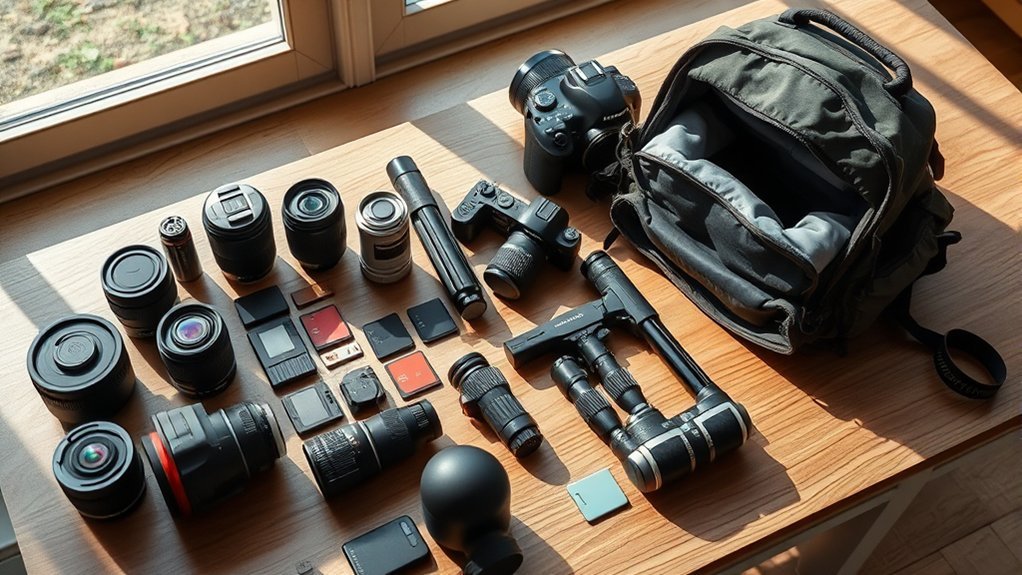
Before you start packing, it’s essential to assess your gear and needs to guarantee you have everything necessary for your trip. Begin by laying out all your camera gear on a flat surface. This visual inventory helps you evaluate each item and decide what’s crucial. Review your travel itinerary to tailor your gear to planned activities and shooting scenarios.
Prioritize versatile all-in-one zoom lenses, like the Sony 24-105mm F4, to keep your pack light. They cut down on bulk while offering diverse shooting options. Next, identify non-essential items and eliminate them to avoid overpacking. Focus only on gear you’ll actively use.
Finally, consider the practicality of each item, including camera bodies and accessories. Make sure everything meets your specific photography needs without adding unnecessary weight. By doing this, you’ll pack efficiently, allowing you to enjoy your journey with freedom and creativity.
Choosing the Right Lenses
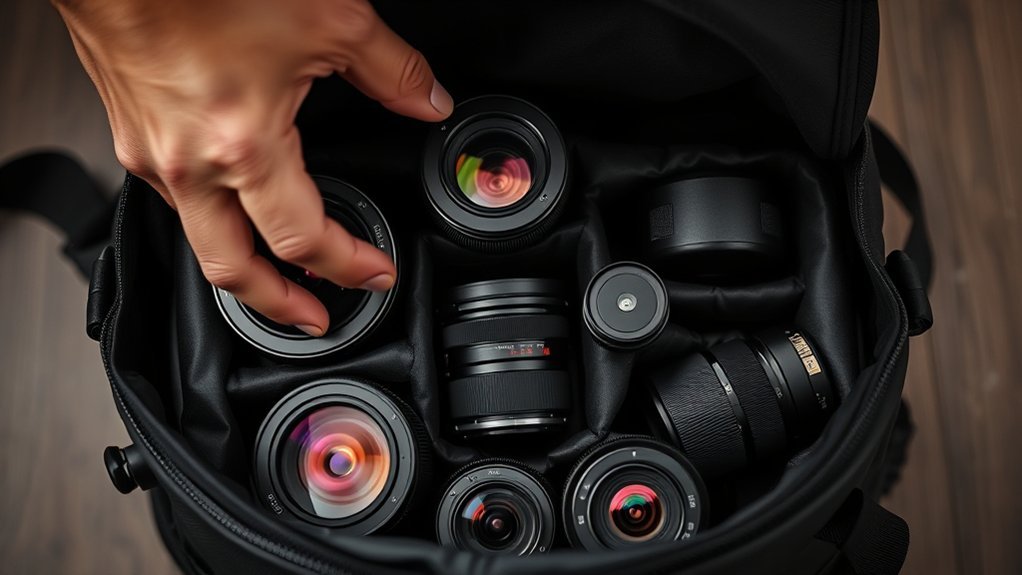
Packing your camera gear means you’ll need to make smart choices about your lenses. To lighten your load while maximizing versatility, consider all-in-one lenses like the Sony 20-70mm F4 or 24-105mm F4. These options help minimize weight and space, perfect for travelers. If you’re into landscape and architecture photography, a 16-35mm lens is ideal for capturing expansive scenes. The Tamron 17-50mm F4 is another solid choice, offering a balance of quality and portability for varied shooting situations.
Opting for zoom lenses reduces bulk and allows you to move freely, enhancing your shooting experience. Before you pack, evaluate your shooting conditions and planned activities. This helps guarantee you only bring the essential lenses, avoiding the burden of unnecessary weight. By making informed decisions, you’ll enjoy a liberating photography experience without the hassle of excess gear.
Organizing Your Camera Bodies and Accessories
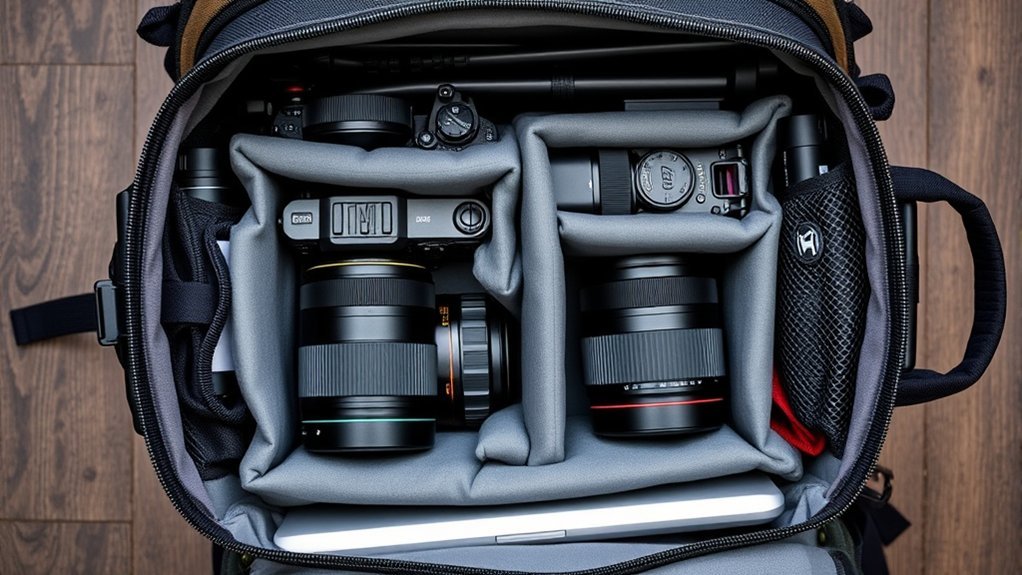
When organizing your camera bodies and accessories, focus on packing only the essentials to keep your backpack lightweight and clutter-free. Consider the specific photography needs for your trip and choose gear that maximizes both space and efficiency. By prioritizing what’s necessary, you’ll guarantee that every item in your bag contributes to a smooth shooting experience.
Prioritize Essential Gear Only
Choosing the right camera gear can make all the difference for your photography trip. Start by selecting camera bodies that match your specific needs, leaving behind any unnecessary equipment. Prioritize essential accessories by evaluating their space and weight; pack only those that enhance your shooting experience. Streamline your pack by removing grips and cages from your camera bodies, allowing for easier mobility. Invest in quality glass for your lenses, as sharper images and cropping flexibility can capture those once-in-a-lifetime moments. When packing backups, choose reliability over excess—focus on critical gear like microphones while avoiding non-essential duplicates. This way, you’ll travel lighter and be ready to seize every photographic opportunity that comes your way.
Optimize Space and Weight
After determining what gear is truly necessary for your photography adventure, it’s time to focus on how to optimize space and weight in your backpack. Start by prioritizing essential camera bodies and accessories, removing grips and cages to save weight. Assess each accessory’s necessity; keep only those that enhance your experience. Stock camera bodies are often sufficient, so leave behind extras you won’t use. Organize items based on usage frequency, placing frequently used gear in easy-to-reach compartments.
| Essential Gear | Accessories | Weight Saving Tips |
|---|---|---|
| Camera Body | Lens Cleaner | Remove Grips |
| Extra Lens | Tripod | Use Compact Gear |
| Batteries | Filters | Rethink Necessity |
This way, you maximize efficiency and freedom on your journey.
Managing Space and Weight Effectively
When packing your camera gear, prioritize essential items to keep your bag lightweight and manageable. Assess the weight distribution of your gear to guarantee comfort and balance while traveling. Finally, optimize your bag space by organizing items strategically, allowing for easy access during shoots.
Prioritize Essential Gear Only
To manage space and weight effectively, start by packing only the essential gear tailored to your specific shooting needs. This approach helps you avoid unnecessary weight and discomfort during your travels. Here are some key items to take into account:
- An all-in-one zoom lens, like the Sony 24-105mm F4, to cover versatile focal lengths.
- A lightweight camera body that suits your style.
- Essential accessories such as extra batteries and memory cards.
- A sturdy, protective bag that’s easy to carry.
- A compact tripod if stability is vital for your shots.
Avoid the “just in case” mindset to keep your pack light. Regularly reassess your gear choices based on past trips to refine your packing strategy for future adventures.
Assess Weight Distribution Smartly
Packing light is only part of the equation; how you distribute that weight plays a significant role in comfort during your journey. Keep heavier items, like camera bodies and lenses, close to your back. This setup maintains balance and reduces strain. Use compartments wisely: stash lighter accessories, such as filters and batteries, in outer pockets for easy access and to prevent overcrowding. Leave some room for adjustments during your trip, as you might pick up additional gear along the way. Regularly check your backpack’s total weight, aiming for 10-15% of your body weight to enhance mobility. Finally, keep frequently used items within arm’s reach, allowing quick adjustments without disrupting your overall weight balance.
Optimize Bag Space Efficiently
Efficiently optimizing bag space is essential for any photographer on the go. To make the most of your backpack, follow these tips:
- Assess lens sizes and leave room for unexpected gear configurations.
- Prioritize essentials; eliminate non-critical items for a lighter load.
- Organize gear based on shooting scenarios for quick retrieval.
- Avoid tight packing; allow flexibility for adjustments on the fly.
- Evaluate the weight of each item, aiming for a lighter, more mobile bag.
Avoiding Overpacking and Ensuring Backup Essentials
When planning your camera gear for a shoot, it’s crucial to focus on essentials that match your specific needs instead of falling into the trap of packing “just in case” items. Start by prioritizing critical gear, like microphones, and only bring backups that serve a clear purpose. Many beginners tend to overpack, so assess your previous trips to refine your choices—what worked and what didn’t?
Evaluate each item’s weight and space to eliminate non-essentials; overpacking can hinder your mobility and comfort while traveling. Create a packing checklist based on your itinerary to guarantee you have necessary backups without any extra clutter. This streamlined approach not only lightens your load but also enhances your freedom to move and capture stunning shots without the burden of unnecessary gear. Embrace minimalism, and your shooting experience will be all the more liberating!
Enhancing Quick Access to Your Gear
To capture those fleeting moments without fumbling, it’s crucial to enhance your gear’s accessibility. Here are some tips to streamline your setup:
- Organize by Scenario: Place frequently used items at the top or in easy-access pockets.
- Use Large Zippers: Guarantee visibility and quick retrieval by utilizing larger zippers and designated compartments.
- Quick Access Bags: Opt for bags with side openings or rear access for rapid gear retrieval.
- Keep It Lightweight: Avoid clutter by limiting pockets, making organization simpler and more efficient.
- Pair Lenses with Bodies: Store lenses with their respective camera bodies to minimize search time and facilitate adjustments.
Preparing for Different Weather Conditions and Environments
As you venture into different environments, being prepared for unpredictable weather can make all the difference in your photography experience. Here’s a quick guide to help you pack efficiently:
| Weather Condition | Packing Tips |
|---|---|
| Rain or Moisture | Use weather-resistant gear and rain covers. |
| Sudden Temperature Change | Keep thermal layers and a waterproof jacket handy. |
| Dusty or Harsh Elements | Include lens bags or wraps for protection. |
| Bright Lighting | Don’t forget neutral density filters and lens hoods. |
Always assess your surroundings before setting down your backpack. Avoid placing it on wet or muddy surfaces to keep your gear clean and dry. By preparing for various weather conditions, you can focus on capturing stunning images without worry. Happy shooting!
Frequently Asked Questions
How Do I Clean My Camera Gear Before Packing?
Start by using a microfiber cloth to gently wipe your lenses and body. For sensors, use a blower to remove dust. Finally, check and clean your tripod and accessories to guarantee everything’s ready for packing.
Can I Pack a Tripod in My Backpack?
Absolutely, you can pack a tripod in your backpack! Just make sure it’s secure, like a steadfast tree in a storm, to avoid any damage to your gear. A well-packed tripod enhances your creative freedom.
What’s the Best Way to Protect My Gear From Moisture?
To protect your gear from moisture, use waterproof bags or cases, silica gel packets, and keep your equipment in a dry, ventilated area. Always check weather conditions before heading out to guarantee your gear stays safe.
Should I Remove Batteries When Packing?
Yes, you should remove batteries when packing. This prevents accidental activation and protects your gear. Plus, it helps avoid battery corrosion, ensuring your equipment stays safe and ready for your next adventure.
How Can I Label My Gear for Easy Identification?
Label your gear with color-coded tags or waterproof stickers; studies show 70% of photographers lose valuable time searching for equipment. Streamline your process, and free up your creative spirit to capture unforgettable moments effortlessly.
Conclusion
Packing your camera gear doesn’t have to feel like fitting a square peg in a round hole. By thoughtfully evaluating your needs and organizing your equipment, you can create a well-balanced backpack that feels like an extension of yourself. Remember, it’s not just about what you carry; it’s about how you carry it. With careful preparation, you’ll be ready to capture the world, rain or shine, without the weight of overpacking dragging you down. Happy shooting!