


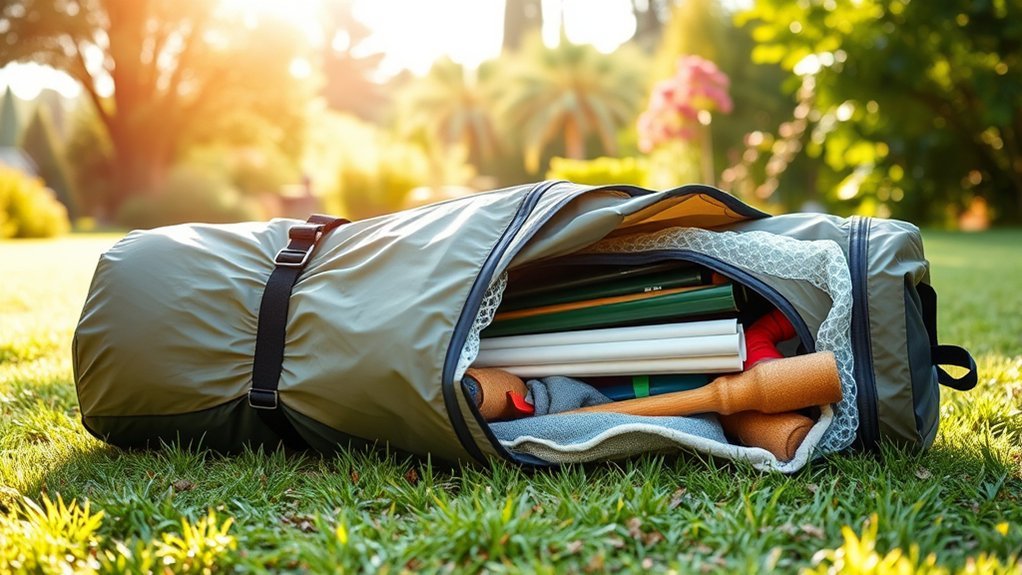
To pack your tent for air travel without damage, start by removing poles and stakes, and lay the rainfly inside for protection. Fold the tent lengthwise to create a manageable width, rolling it tightly while tucking in clips and webbing to prevent snagging. Secure the rolled tent with Velcro straps and place it horizontally in your backpack for better impact protection. Store poles in a side pocket and stakes in the main compartment to keep everything organized and accessible. Discover additional tips for safe packing methods ahead.
Disassembling the Tent

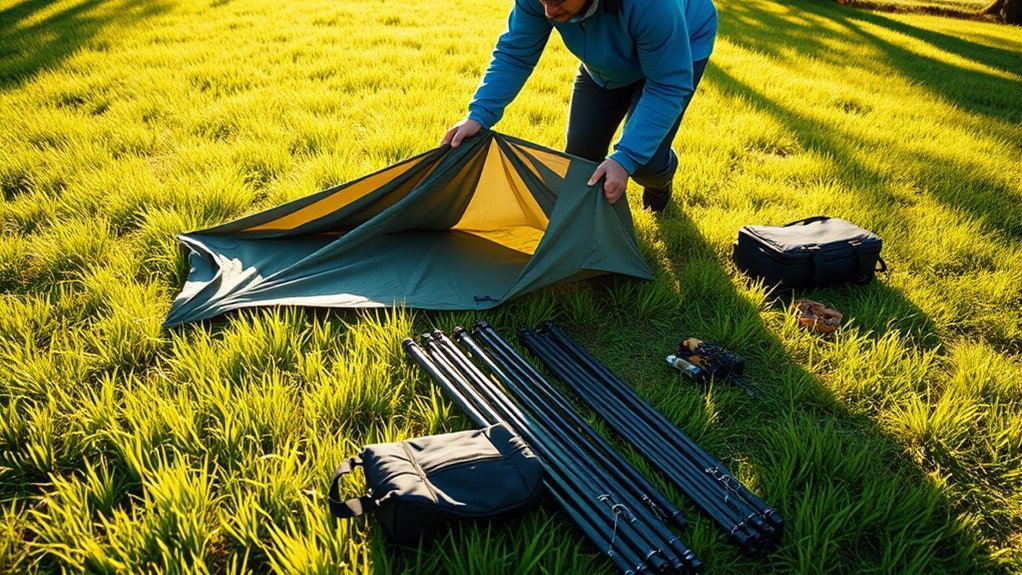
To disassemble your tent for air travel, start by removing the poles and stakes, which helps minimize bulk and prevents damage during transport. Next, verify all corners of the tent are staked in before folding. This step maintains the tent’s shape and simplifies the packing process. For improved organization and to protect it from getting lost, lay the rainfly inside the tent.
Fold the tent lengthwise to achieve a width that matches or is narrower than your backpack or travel bag. This adjustment enhances packing efficiency and guarantees a streamlined fit. Use a consistent folding technique to create manageable sections, which allows for a tight roll. This method reduces the risk of creases that could lead to fabric failure, a vital aspect of tent maintenance. By following these steps, you can guarantee a hassle-free packing experience as you prepare for your adventure.
Organizing the Rainfly
The rainfly is an essential component of your tent setup, and organizing it properly for air travel can prevent damage and guarantee easy accessibility. Start by folding the rainfly neatly, rolling it tightly to minimize volume and avoid creases. Utilize a protective bag or stuff sack for added cushioning against impacts. Place the rainfly in the main compartment of your backpack or in a dedicated pouch to keep it separate from the tent body.
| Packing Strategy | Benefits | Maintenance Tips |
|---|---|---|
| Neatly fold and roll | Reduces volume, prevents creases | Confirm it’s dry to prevent mildew |
| Use a protective bag | Offers extra cushioning | Check for moisture before packing |
| Tuck away clips/webbing | Prevents snagging on other items | Inspect for damage before packing |
Folding the Tent for Packing
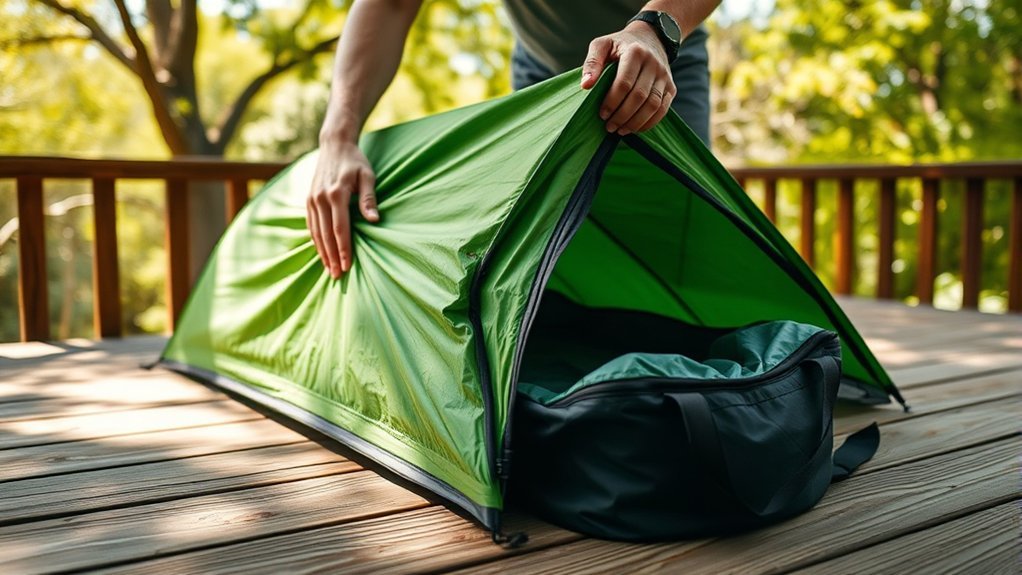
With the rainfly organized, you can now focus on folding the tent for packing. Begin by removing the tent poles and stakes, then lay the rainfly inside the tent for organization. Fold the tent lengthwise to create a manageable width that aligns with your backpack’s dimensions, guaranteeing easy packing. Use a consistent folding technique by bringing both sides inward, achieving a narrower width that fits snugly. After folding, roll the tent tightly from one end, keeping it straight as you go. Tuck in any webbing and clips to maintain a clean finish.
Once rolled, secure the tent with Velcro straps to preserve its shape, facilitating horizontal placement inside your backpack. This method works well for various tent types and guarantees that your packing materials remain protected during air travel. By following these steps, you’ll effectively safeguard your tent, ready for adventure without the worry of damage.
Rolling Technique for Protection
A tight rolling technique is crucial for protecting your tent during air travel. Start by folding the tent lengthwise to achieve a narrow width that matches your backpack’s dimensions. This minimizes the risk of damage and guarantees a snug fit, critical for tent maintenance. As you roll, tuck webbing and clips into the roll to prevent snagging or tearing, which can compromise the tent’s integrity. Once rolled, secure the tent with velcro straps to keep everything compact and organized, reducing the likelihood of crushing or deformation during transit. Always position the rolled tent horizontally within your backpack; this orientation provides better protection against impact compared to vertical placement. Mastering this rolling technique is essential for maintaining your travel essentials, allowing you to adventure freely without worrying about tent damage. Proper packing guarantees your gear stays in top shape, ready for your next journey into the wild.
Securing the Rolled Tent
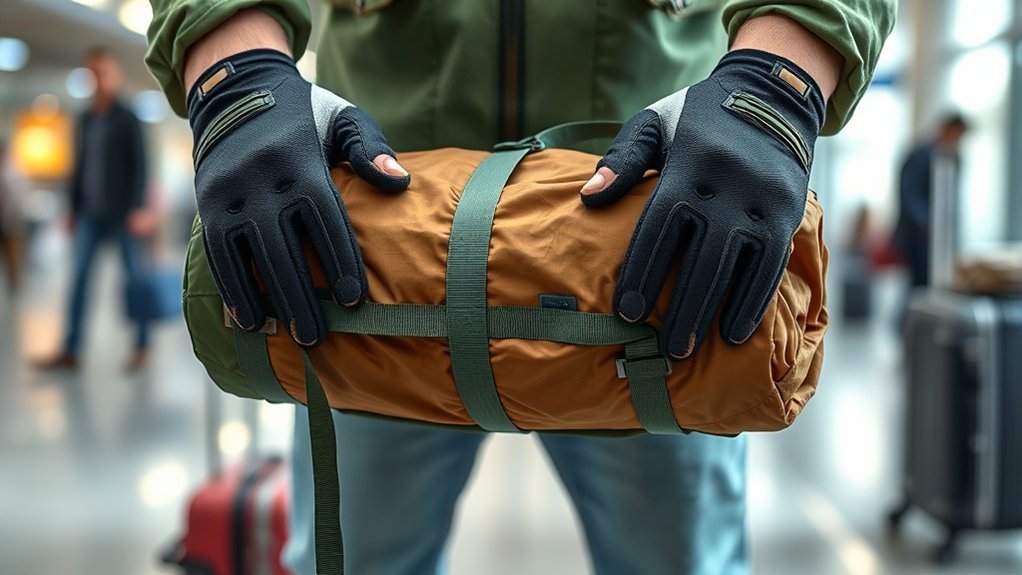
To secure the rolled tent, use Velcro straps to keep it tightly compact and organized. Wrap the strap around the tent while holding it in place, ensuring it doesn’t unroll during transit. For ideal space management, store the secured tent horizontally in your backpack.
Use Velcro Straps
Securing your rolled tent with velcro straps is crucial for safe air travel. These straps prevent your tent from unrolling during transport, maintaining its compact form. When using velcro, wrap it tightly around the rolled tent to hold its shape and prevent shifting. For larger tents, consider multiple velcro straps to enhance security. Confirm your straps are durable, ready to withstand travel rigors.
| Velcro Strap Type | Recommended Use |
|---|---|
| Standard | Small to medium tents |
| Heavy-duty | Larger tents |
| Adjustable | Variable sizes |
| Multi-pack | Extra support |
Following these tent maintenance tips with the right velcro strap types will keep your tent secure and ready for your next adventure.
Store in Backpack
Packing your rolled tent securely in your backpack is essential for efficient air travel. After rolling the tent tightly, use Velcro straps to keep it from unrolling during transit. Confirm the rolled tent is narrow enough to fit snugly in your backpack without wasting space. Position it horizontally inside the backpack to maintain organization and balance. Keep the tent separate from the poles and stakes; pack stakes in the main compartment and poles in a side pocket for easy access. Utilize compression straps on the backpack to provide additional security for tall items, including the rolled tent. This method not only protects the tent material but also enhances packing efficiency, making your travel experience smoother.
Packing Poles and Stakes Separately
When traveling by air with your tent, storing poles and stakes separately is essential for preventing damage and ensuring a hassle-free experience. Start by placing your tent poles in a side pocket of your backpack. This keeps them organized and easily accessible. For the stakes, pack them inside the main compartment to avoid losing any and to prevent sharp objects from puncturing your tent material.
Consider using dedicated storage bags for both poles and stakes. These bags offer extra protection and keep your tent accessories from tangling with other gear. Always check airline regulations regarding camping gear transport, as some airlines may have specific requirements for carrying poles and stakes. By following these packing materials guidelines, you can travel confidently, knowing your gear is secure and ready for your next outdoor adventure.
Frequently Asked Questions
Can I Bring My Tent as a Carry-On Item?
You can bring your tent as a carry-on if it meets airline size restrictions. Use effective packing techniques to reduce bulk, ensuring it fits comfortably while allowing you the freedom to travel with your gear.
What Are the Weight Limits for Packed Tents on Flights?
Weight restrictions for packed tents vary by airline, typically ranging from 50 to 70 pounds. Additionally, make certain your tent dimensions meet carry-on or checked baggage limits to avoid extra fees or complications during travel.
Will Airport Security Allow Tent Stakes Through?
Tent stakes often trip up travelers at security screening. You’ll find that most airport security doesn’t allow them through due to regulations. Consider alternative packing strategies to guarantee your adventure stays unimpeded.
How Do I Prevent My Tent From Getting Wet?
To prevent your tent from getting wet, apply waterproofing techniques like seam sealing and using a durable waterproof spray. Store your tent in a dry, breathable bag to maintain its integrity and prevent moisture accumulation.
Do I Need to Declare My Tent at Check-In?
Yes, you should declare your tent at check-in. Follow tent declaration procedures and use baggage handling tips to guarantee it travels safely. This way, you’ll minimize damage risks while enjoying your journey.
Conclusion
By following these steps, you can protect your tent during air travel and guarantee it arrives intact. Did you know that nearly 30% of outdoor enthusiasts experience gear damage during transport? Proper packing techniques can greatly reduce this risk. Remember to disassemble your tent carefully, organize the components efficiently, and use rolling methods for added protection. With these strategies, you’ll be ready to hit the trails with confidence, knowing your equipment is safe and sound.