


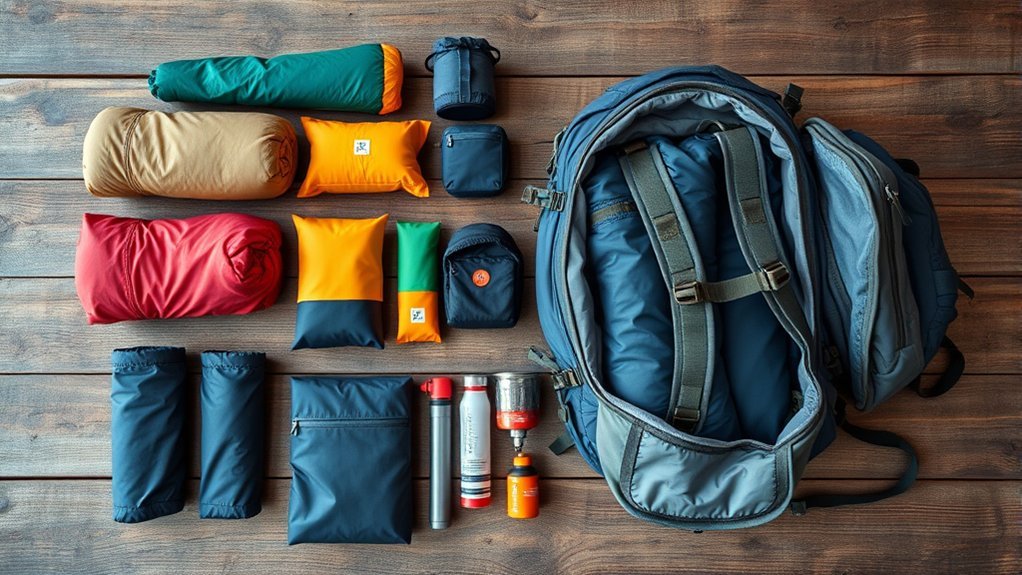
To pack a backpack like a pro, start by choosing the right size for your adventure. Place heavier items in the middle for balance, and store your sleeping bag at the bottom for lumbar support. Keep quick-access essentials, like your tent and hydration reservoir, at the top. Organize gear by usage frequency and secure all items to prevent shifting. Adjust your load as you hike for comfort. Discover more tips to enhance your packing strategy for a smoother experience.
Understanding the Importance of Proper Packing

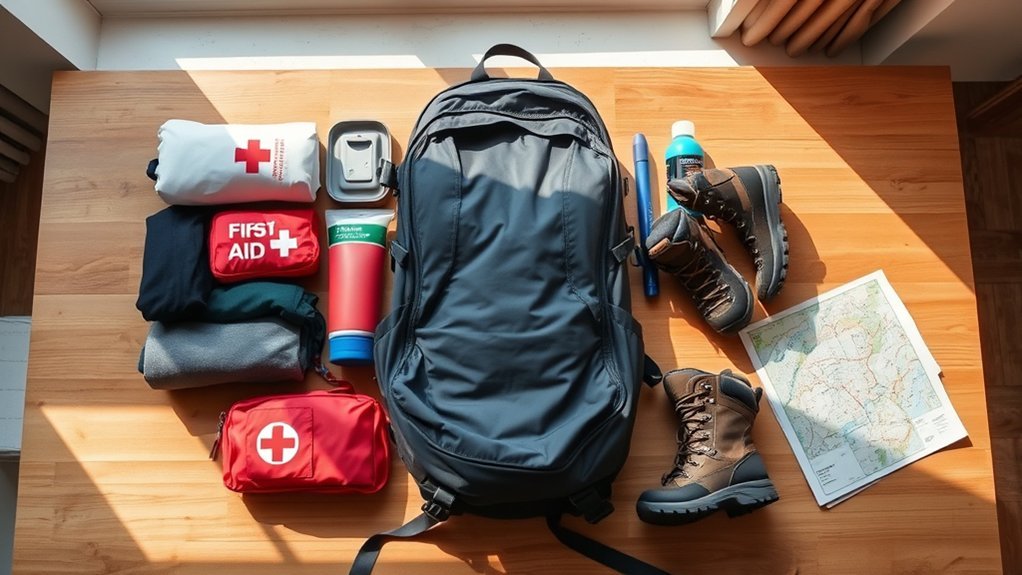
When you pack your backpack properly, you not only enhance weight distribution but also reduce fatigue and the risk of back pain during hikes. Start by placing heavy gear in the middle section of your pack. This positioning supports your back and keeps your center of gravity stable. Utilize gaps effectively for smaller items, creating a denser packing system that minimizes movement on the trail.
Quick access to essential gear, like your first aid kit or headlamp, is vital for safety and efficiency—especially when weather conditions change unexpectedly. Organize your gear by frequency of use and weight, ensuring that your most needed items are easily reachable without disrupting the pack’s stability. By following these packing principles, you’ll not only enjoy a more comfortable hike but also navigate the challenges of the trail with confidence and ease.
Selecting the Right Backpack for Your Needs

When selecting a backpack, size is essential for your specific activities. For day hikes, aim for 20-30 liters, while multi-day trips need 50-70 liters or more. Comfort features like adjustable straps and a hip belt will make your journey easier and more enjoyable.
Backpack Size Matters
Choosing the right backpack size is essential for a comfortable and successful trip. For weekend excursions, a 40-50 liter pack works well, while longer adventures call for a 60-70 liter pack. Make sure to measure your torso length and try on various packs to find the right fit, paying attention to hip belt size for added comfort. If you prefer a minimalist approach, opt for a lightweight pack. For heavier loads or rugged terrains, choose a more durable option with extra features. An adjustable suspension system helps with weight distribution, enhancing your overall experience. Finally, consider your activities; specialized packs for hiking, climbing, or skiing will cater to your specific needs and elevate your adventure.
Features for Comfort
To guarantee comfort on your adventures, it’s crucial to select a backpack that meets your specific needs. Look for one with an adjustable suspension system to customize the fit based on your torso length, securing optimal weight distribution. Choose a pack with padded shoulder straps and a hip belt to reduce strain on your back and shoulders during long hikes. The backpack’s volume, usually measured in liters, should accommodate your gear without being bulky. Multiple compartments and pockets help you stay organized and grant easy access to vital items while on the trail. Finally, evaluate the material and weather resistance to guarantee durability and protection against the elements, so you can focus on enjoying your journey.
Packing the Bottom: Creating a Comfortable Base

Packing the bottom of your backpack effectively sets the stage for a comfortable hiking experience. Start by placing your sleeping bag at the bottom; it cushions your lumbar area and helps distribute weight evenly. To enhance comfort, include a sleeping pad and sleep clothes in this section for cozy rest periods.
| Item | Purpose |
|---|---|
| Sleeping Bag | Cushions lower back |
| Sleeping Pad | Adds insulation and comfort |
| Sleep Clothes | Keeps you warm at night |
| Lighter Items | Stabilizes the pack’s base |
Avoid packing heavy items low in the backpack to minimize strain on your lower back. If your pack has a separate compartment for sleep items, use it to keep essentials organized and accessible. Fill the bottom with lighter, fluffier items to create a stable foundation for the rest of your gear.
Balancing Weight in the Middle Section
To achieve ideal gear placement, focus on the middle section of your backpack for heavier items. Using effective weight distribution techniques not only stabilizes your load but also reduces strain on your back. Make sure to secure all items tightly to minimize movement and enhance your overall hiking experience.
Optimal Gear Placement
When hiking, placing heavier and bulkier items like a bear canister filled with food and a cooking kit in the middle section of your backpack is essential for ideal balance. This approach helps distribute weight evenly, reducing strain on your back and enhancing stability on the trail.
- Pack heavier items first to create a solid foundation.
- Utilize gaps in the middle section for extra clothes to minimize movement.
- Secure everything tightly to prevent shifting during your hike.
- Regularly check weight distribution to adapt to your body and hiking style.
Weight Distribution Techniques
Balancing weight effectively in the middle section of your backpack is essential for a comfortable hike. Place heavier items like a bear canister and cooking kit here to keep your center of gravity close. This reduces strain and enhances stability.
| Packing Tips | Benefits |
|---|---|
| Use the middle section | Maintains ideal balance |
| Pack tightly | Minimizes item movement |
| Distribute weight evenly | Prevents tipping |
| Secure all items | Avoids discomfort on the trail |
Utilize gaps for extra clothing, creating a denser packing system. By following these techniques, you’ll enjoy a more liberated hiking experience, allowing you to focus on the journey ahead.
Securing Items Effectively
As you pack your backpack, securing items effectively in the middle section is essential for maintaining balance and comfort during your hike. Place heavier and bulkier gear here to keep the center of gravity close to your back. This not only enhances stability but also reduces strain on your body.
- Bear canister filled with food
- Cooking kit
- Extra clothes to fill gaps
- Tighten straps to minimize movement
Quick Access Essentials at the Top
How can you guarantee quick access to your essentials while hiking? Start by placing the tent components—like the rain fly, poles, and stakes—at the top of your backpack. This way, you can easily grab them during sudden weather changes. Next, keep your hydration reservoir at the top, allowing you to hydrate effortlessly on the go. Use the top lid for vital items, such as a headlamp and first aid kit, ensuring you’re prepared for emergencies without digging through your pack.
Don’t forget to pack extra layers for warmth or rain in the shovel pocket, making them readily available when conditions shift. This organization not only keeps your essentials within reach but also enhances your freedom on the trail, so you can focus on the adventure ahead. Streamline your packing strategy, and you’ll experience an effortless journey, no matter where the path takes you.
Utilizing External Pockets for Convenience
To maximize convenience while hiking, utilize the external pockets of your backpack effectively. These pockets are designed for easy access to essentials, allowing you to stay focused on the trail rather than fumbling through your gear.
- Store your water bottle in an external pocket for quick hydration and easy filtering.
- Keep your poop kit and bear spray handy in a separate pocket for immediate reach.
- Place your headlamp and first aid kit in the top lid for emergencies or low-light conditions.
- Use the shovel pocket for extra layers, enabling fast access to warmth or rain gear.
Additionally, if you use trekking poles, attach them to the exterior loops. This keeps your internal space free and makes it simple to grab them when needed. By organizing wisely, you’ll guarantee a smoother hiking experience and maintain a sense of freedom on your adventure.
Organizing Your Gear for Efficiency
When organizing your gear for efficiency, start by strategically placing items based on their weight and frequency of use. Here’s a simple layout to follow:
| Location | Items | Purpose |
|---|---|---|
| Bottom | Sleeping bag | Cushions lumbar area, reduces back pain |
| Middle | Bear canister, cooking kit | Maintains balance and support |
| Top | Tent components (rain fly, poles) | Allows quick access during weather changes |
| External pockets | Water bottle, first aid kit, bear spray | Guarantees essential items are reachable |
Fill gaps with extra clothing to stabilize your load, and pack items securely to minimize movement while hiking. This organized approach not only enhances your comfort but also boosts your efficiency on the trail, allowing you to focus on the adventure ahead.
Tips for Securing and Minimizing Movement
Securing your gear effectively is essential for a comfortable hiking experience. To minimize movement and guarantee stability, follow these tips:
- Pack heavy and bulky items in the middle section for better balance.
- Use gaps between packed items to stuff in extra clothes, creating a denser load.
- Secure everything with compression straps or internal ties to keep items from sliding.
- Arrange your gear to distribute weight evenly, maintaining a stable center of gravity.
As you hike, regularly check and readjust your load. This practice keeps everything secure and well-balanced, preventing discomfort and back pain. By following these strategies, you’ll enhance your freedom on the trail, allowing you to focus on the adventure ahead rather than the shifting weight on your back. Enjoy the liberation that comes with a well-packed backpack, making every step feel lighter and more effortless.
Personalizing Your Packing Strategy
Personalizing your packing strategy can greatly enhance your hiking experience. Start by evaluating your hiking style and the environments you explore. This helps you identify essential items and prioritize them in your pack.
Consider this packing strategy table:
| Packing Tip | Description |
|---|---|
| Weight Distribution | Place frequently used items in easy-to-reach spots, like snacks in hip belt pockets. |
| Experiment with Layout | Adjust heavy items’ placement for better stability. |
| Organize by Category | Group similar items together for streamlined access. |
| Use Packing Tools | Utilize packing cubes or stuff sacks to maximize space. |
Final Checks Before Hitting the Trail
Before you hit the trail, double-check your gear organization and make sure everything’s in its place. Balance the weight distribution by centering heavier items in the middle of your pack for better support. Finally, confirm that your essentials are easily accessible, so you can grab them without hassle during your hike.
Verify Gear Organization
As you prepare to hit the trail, it’s essential to verify your gear organization to guarantee a smooth and enjoyable hike. Start by ensuring all items are securely packed, especially heavier ones in the middle for balance. Check that essential gear is readily accessible, like your first aid kit, headlamp, and snacks. Here are some key points to confirm:
- Pack your sleeping bag at the bottom for lumbar support.
- Load your water reservoir first for easy hydration access.
- Secure all external gear, such as trekking poles and shoes, to prevent loss.
- Make sure heavier items aren’t pressing directly against your lower back.
These final checks will set you up for a stress-free adventure ahead!
Check Weight Distribution
To guarantee a comfortable and safe hike, checking the weight distribution in your backpack is essential. Start by placing the heaviest items in the center, which helps maintain balance and minimizes strain on your back. Aim to keep the center of gravity close to your body, ideally around your hips, for better stability and control.
Once packed, stand up with your backpack and adjust the straps for a snug fit, ensuring minimal movement during your hike. Bend slightly from side to side to test for any shifting or discomfort, making necessary adjustments for ideal distribution. Remember, weight distribution can change as you hike, so periodically reassess and readjust your load for ongoing comfort and balance.
Confirm Accessibility of Essentials
Confirming the accessibility of your essentials can make a significant difference in your hiking experience. You want to grab what you need quickly without fumbling through your pack. Here’s a quick checklist to guarantee everything’s within reach:
- Water bottle: Store it in an external pocket for easy hydration.
- First aid kit & headlamp: Keep these in the top lid for emergencies or night hikes.
- Poop kit & bear spray: Place them in an easily reachable pocket for hygiene and safety.
- Cell phone & trail snacks: Stash these in the hip belt pocket for convenience while moving.
Make certain all items are secured and organized to minimize movement, helping you maintain balance and comfort on your adventure.
Frequently Asked Questions
How Do I Choose the Right Size Backpack for My Trip?
Choose a backpack size based on your trip length and essentials. For day trips, go for 20-30 liters. For weekend adventures, aim for 40-60 liters. Always consider comfort and fit to enhance your experience.
What Items Should I Avoid Packing in My Backpack?
Avoid packing heavy books, unnecessary gadgets, or anything that doesn’t serve a purpose. Think minimalism; you’re not hauling a treasure chest. Keep it light and functional, so you can roam freely and enjoy your adventure.
How Can I Prevent My Backpack From Getting Wet?
To prevent your backpack from getting wet, use a waterproof cover or a rain-resistant bag. Store electronics in waterproof pouches, and avoid placing your pack on wet surfaces. Stay dry and keep your gear protected!
What Are the Best Materials for Backpack Durability?
You’ll want to look for high-denier nylon or polyester for durability. These materials resist wear and tear while remaining lightweight. Reinforced stitching and water-resistant coatings can also enhance your backpack’s longevity, ensuring it stands the test of time.
How Can I Pack My Backpack for a Multi-Day Hike?
To pack for a multi-day hike, prioritize essentials. Distribute weight evenly, keep heavy items close to your back, and use compression bags for clothing. Don’t forget snacks and hydration, and always check weather conditions!
Conclusion
By following these steps, you’re not just packing a backpack—you’re setting yourself up for success. You’re ensuring comfort, maintaining balance, and prioritizing accessibility. You’re organizing your gear for efficiency, securing your items to minimize movement, and personalizing your strategy to fit your adventure. So, double-check your pack, trust your preparation, and embrace the journey ahead. With the right approach, you’re ready to hit the trail with confidence and ease. Happy hiking!