



To fold a tent properly for easier packing, begin by removing the rain fly and zipping both doors, leaving the inner door slightly open. Unclip the tent from the frame and gently pull it down from the doorway. Shake the tent to flatten and fold each side to the center. Roll it tightly from back to front to remove air, ensuring it fits in the bag without force. Discover more tips to keep your tent in top shape for future adventures.
Preparation for Folding Your Tent

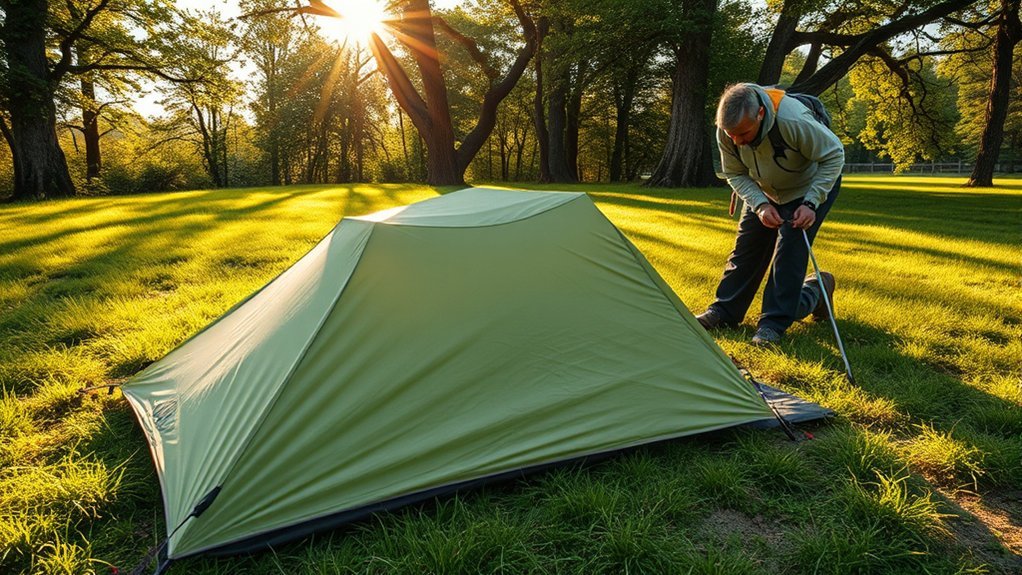
Before you fold your tent, it’s essential to prepare properly to avoid damage and guarantee an efficient process. Start by removing the skull cap or rain fly, setting it aside to prevent any wear during folding. Unroll the inner door and partially zip it close to help maintain the tent’s shape. Roll down the outer canvas door without zipping it completely; this allows easy access for packing later.
Next, unclipping the tent from the frame should begin at the bottom of each pole, leaving corner pegs in place for stability until you’re ready to lower the tent. Standing in the doorway, pull down the center of the tent to initiate the folding process. Handle the frame with care to prevent injury or damage. These preliminary steps not only enhance your tent setup but also greatly boost your packing efficiency, paving the way for a liberated camping experience.
Managing the Tent Frame
To manage the tent frame safely, start by standing in the doorway and gently pull down the center to initiate the lowering process. Carefully remove the clips holding the tent to the frame, maintaining control to prevent the legs from springing out unexpectedly. Ensuring the frame is fully collapsed before you proceed will streamline your packing experience and prevent any damage or injury.
Lowering the Frame Safely
As you prepare to lower the tent frame, standing in the doorway provides you with the leverage and control needed for a smooth operation. Begin by carefully unclipping the tent from the frame, starting at the bottom of each pole. This prevents sudden movements that could compromise frame stability. Next, remove the remaining clips before gently lowering the frame to avoid injury or damage.
- Verify the tent is free from obstructions.
- Use proper lowering techniques for a controlled descent.
- Keep an eye on the legs to prevent any springing.
Taking these precautions will help you lower the frame safely and efficiently, allowing for a hassle-free packing experience.
Preventing Springing Legs
Lowering the tent frame can result in unexpected springing of the legs if not managed properly. To guarantee tent leg safety, always stand in the doorway while lowering the frame. Carefully remove the clips holding the tent to prevent sudden springing of the legs. Hold the frame securely and apply steady pressure as you lower it to minimize risk. After your initial folds, remove corner pegs to create a stable base before proceeding with further folding steps. Here’s a quick reference to aid in springing leg prevention:
| Step | Action | Safety Tip |
|---|---|---|
| Stand in the doorway | Lower frame cautiously | Maintain control |
| Remove clips carefully | Avoid sudden movements | Prevent springing |
| Hold frame securely | Apply steady pressure | Protect yourself and the tent |
| Remove corner pegs | Stabilize base | Guarantee stability before folding |
| Proceed with folding | Follow methodically | Enhance overall packing efficiency |
Initial Tent Folding Techniques

To start folding your tent efficiently, zip both doors and leave the inner door’s bottom open for airflow. Use the center pull technique to flatten the tent by shaking it gently to each side, ensuring a tidy structure. Once flat, gather ropes and cords inside to keep the area organized before moving on to the neat fold process.
Center Pull Technique
The center pull technique is an efficient method for folding your tent, guaranteeing it packs neatly for transport. Start by zipping both the outer canvas and inner doors, leaving the inner door’s bottom open to release air. Stand in the doorway and pull down the tent’s center, consolidating the fabric to one side for a flat surface.
- Shake the tent gently to flatten it out.
- Pull the center over to the front and then to the opposite side.
- Continue gathering the center back towards the middle.
This method guarantees all folds are tidy and compact, facilitating easier tent folding and fitting it back into its original bag. Happy adventuring!
Neat Fold Process
Once you’ve zipped the outer canvas and inner doors, leaving the inner door’s bottom open for air expulsion, you’re ready to initiate the neat fold process. Start by pulling the center of the tent to one side and shaking it gently to flatten the fabric, guaranteeing a smooth surface. Repeat this by pulling the center to the front and then to the opposite side, achieving an even shape. For neat organization, fold each side over to the center line, then fold one half completely over the other. While kneeling, create small folds at the back and roll the tent tightly to expel air, making it manageable for packing. These folding techniques guarantee your tent is compact and ready for your next adventure.
Final Folding Steps for Compactness
Begin the final folding process by gathering all ropes inside the tent before removing the corner pegs; this keeps the base secure as you fold. Next, fold each side of the tent over to the center line, guaranteeing the folds are neat and aligned for easier handling. Then, completely fold one half of the tent over the other to create a compact shape.
Gather ropes inside the tent, fold sides to the center, and then fold in half for a neat, compact shape.
While kneeling, roll the tent tightly from the back towards the front to expel air and achieve a more compact form.
- Confirm that the folded tent fits back into the original bag.
- Verify all parts are neatly secured.
- Check alignment to facilitate compact storage.
Completing the Packing Process
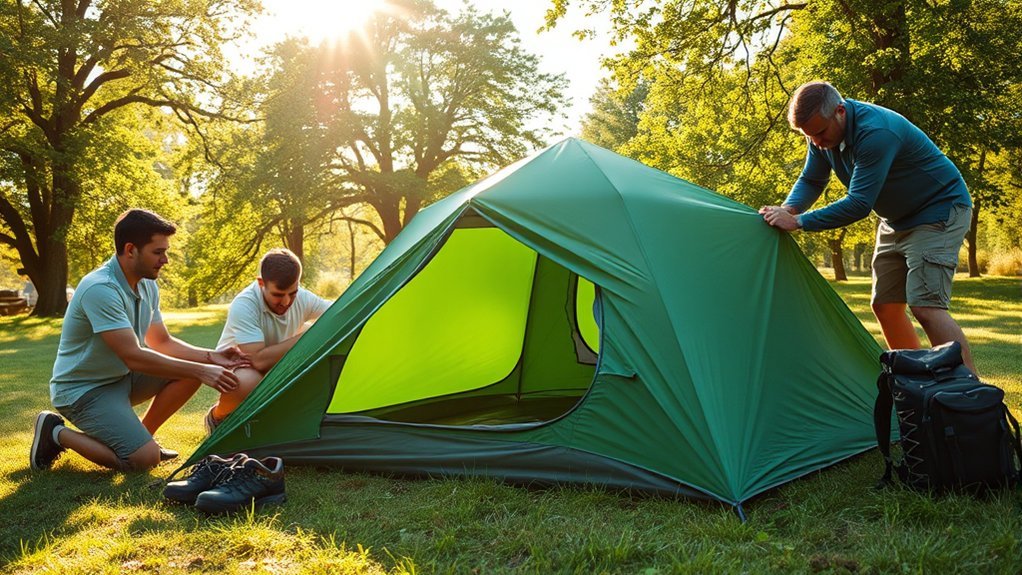
After verifying your tent is neatly folded and compact, it’s time to complete the packing process. Start by rolling the tent tightly, removing excess air to enhance packing efficiency. Confirm it fits back into its original bag without forcing it; this prevents damage. For the skull cap, fold it in half twice to create a manageable size, then further fold it into the center for compactness.
Next, gather all components, validating that the tent and skull cap fit seamlessly into the bag. Don’t forget to count and store your pegs separately; this organization tip keeps them from mixing with the tent fabric and helps prevent loss.
If you want to refine your technique, review additional videos for setup and packing tips. With these steps, you’ll maximize your packing efficiency and be ready for your next adventure with ease.
Tips for Maintaining Tent Shape
To maintain your tent’s shape effectively, always guarantee that all clips are securely fastened to the frame before packing. This simple step prevents unnecessary stress on the fabric, ensuring longevity. Here are some essential tips for tent maintenance and fabric care:
- Regularly inspect for tears or broken poles and repair them promptly to uphold the structure.
- When folding, use a smooth, flat surface to avoid sharp creases that can weaken the material.
- Store your tent in a cool, dry place, away from direct sunlight to prevent UV damage.
Common Mistakes to Avoid
Maintaining your tent’s shape is just the start; avoiding common mistakes during the folding process is equally important. First, always remove the skull cap or rain fly before you fold. Leaving it on creates a bulky pack, undermining your packing efficiency. Next, make sure you unclip the tent from the frame properly. Neglecting this can damage the poles or result in an unstable fold, complicating your process. Pay attention to neat, flat folds during the initial steps; uneven folds lead to a bulky tent that’s difficult to roll. Don’t forget to count and securely store your pegs separately—losing these essential components can hinder future setups. Finally, remember that compactness is key. If you overlook this while rolling, your tent may not fit back into its original bag, making transportation cumbersome. Avoid these common folding mistakes to guarantee a hassle-free packing experience.
Essential Packing Accessories
When packing for your camping trip, having the right accessories can make all the difference. Essential packing accessories not only enhance tent organization but also boost packing efficiency. Here are three must-haves:
- Compression sack: This helps you pack your tent compactly, allowing it to fit easily into your backpack or vehicle.
- Separate bag for tent pegs: Keep your pegs organized and prevent loss during transport, ensuring you have everything you need.
- Tent repair kit: Accidents happen; a kit with patches and seam sealant is vital for quick fixes on the go.
Additionally, consider lightweight stakes and guylines to save space without sacrificing stability. A ground tarp is another wise investment, as it protects your tent from moisture and dirt, prolonging its lifespan. With these accessories, you’ll enjoy a more organized and efficient camping experience.
Storing Your Tent for Longevity
After you’ve enjoyed your camping adventure and packed up your tent, proper storage is key to ensuring its longevity. Start by making sure your tent is completely dry; moisture can lead to mold and mildew, compromising its integrity. Store it in a cool, dry place—this is one of the most effective tent maintenance tips you can follow. Instead of the original compression bag, opt for a breathable storage solution to prevent crushing the fabric over time. Regularly inspect your tent for signs of wear, like tears or broken seams, and repair them promptly to extend its lifespan. Finally, avoid placing heavy items on top of the tent during storage; this can cause unnecessary stress on the fabric and poles, leading to deformation and damage. By following these steps, you’ll keep your tent in excellent condition for your next outdoor escapade.
Additional Resources for Tent Care
To guarantee your tent remains in peak condition, it’s vital to utilize a variety of resources dedicated to tent care. By incorporating effective tent cleaning and maintenance techniques, you’ll extend its lifespan and enhance your camping experience.
Ensure your tent stays in top shape by following proper cleaning and maintenance methods for a better camping experience.
- Manufacturer’s Instructions: Always familiarize yourself with the specific care guidelines for your tent’s materials and construction.
- Inspection Routine: Regularly check for tears or damage before and after each trip to confirm reliability.
- Cleaning Supplies: Use a mild soap and water solution to remove dirt and debris, steering clear of harsh chemicals that can harm the fabric.
Storing your tent in a cool, dry place is essential to prevent mold and mildew. Additionally, using a footprint or ground tarp can protect your tent from moisture and abrasions. By following these resources, you’ll keep your tent ready for future adventures, guaranteeing freedom and comfort in the great outdoors.
Frequently Asked Questions
Can I Fold a Wet Tent, or Should I Wait?
You shouldn’t fold a wet tent. Instead, let it dry completely to prevent moisture damage. Folding it damp can lead to mold and mildew, ruining your gear and future adventures. Prioritize drying for longevity.
How Often Should I Clean My Tent After Use?
You should clean your tent after every use to guarantee ideal tent maintenance. Regular cleaning prevents mold, mildew, and dirt buildup, so aim for a thorough wash at least twice a season for best results.
What’s the Best Way to Store My Tent Long-Term?
Like a cocoon cradling a butterfly, store your tent in a cool, dry place. Use breathable bags for tent storage, ensuring long-term protection against moisture and pests, so it’s ready for your next adventure.
Can I Use a Washing Machine to Clean My Tent?
You shouldn’t use a washing machine for tent care. Instead, opt for gentle washing techniques like hand washing with mild soap and a soft brush. This protects the fabric and maintains your tent’s integrity for future adventures.
How Can I Prevent Mold From Forming on My Tent?
“An ounce of prevention’s worth a pound of cure.” To prevent mold on your tent, prioritize moisture control. Store it dry, clean it regularly, and use breathable bags for ideal tent care during off-seasons.
Conclusion
By folding your tent properly, you not only make packing easier but also extend its lifespan. Did you know that improperly stored tents can lose their waterproofing in just one season? By following the steps outlined, you guarantee your gear remains in top condition for your next adventure. Remember, a well-folded tent is the first step to hassle-free camping trips. Invest a little time in the packing process, and you’ll enjoy countless outdoor experiences without the stress.