


To find dispersed camping in national forests, start by researching specific locations and their regulations. Use the U.S. Forest Service’s Interactive Visitor Map to identify areas and verify land ownership. Apps like OnX Offroad and US Public Lands can guide you to dispersed sites. Always check local rules, pack necessary supplies, and consider safety tips like fire regulations and water sources. With these insights, you can enjoy a fulfilling wilderness experience that respects the environment.
Understanding Dispersed Camping

When you think about escaping into nature, dispersed camping offers a unique way to experience the great outdoors away from crowded campgrounds. This style of camping involves setting up your campsite on public lands, away from developed facilities, which means you’ll need to be self-sufficient. Familiarize yourself with local regulations, as you can typically camp for up to 14 days within a 28-day period.
Before heading out, verify you’ve got the right camping gear, including a sturdy tent, cooking supplies, and ample water. Safety tips are important; check weather conditions, inform someone of your plans, and know how to navigate using a map or GPS. Always verify land ownership to avoid trespassing, and follow Leave No Trace principles to protect the environment. By embracing dispersed camping, you’ll find freedom in nature while minimizing your impact on the beautiful landscapes you explore.
Researching National Forests for Dispersed Camping
Exploring the vast landscapes of national forests for dispersed camping can be an exciting adventure that requires some research and preparation. Start by identifying national forests that permit dispersed camping, noting their specific regulations on camping locations, stay durations, and vehicle access. Use the Interactive Visitor Map from the U.S. Forest Service to find designated areas and confirm land ownership.
Engage with land managers or ranger stations for current insights on accessibility and seasonal restrictions. Online platforms and forums can also be valuable, offering firsthand accounts of hidden gems. Familiarize yourself with Leave No Trace principles to enjoy the dispersed camping benefits while respecting nature.
| Resource Type | Description | Link |
|---|---|---|
| Visitor Map | Interactive map for forest areas | [U.S. Forest Service](https://www.fs.usda.gov) |
| Ranger Stations | Direct contact for up-to-date info | Search local forest info |
| Online Forums | Community experiences and tips | [Campendium](https://www.campendium.com) |
| Regulations | Understand specific forest rules | [Forest Regulations](https://www.fs.usda.gov) |
| Leave No Trace | Principles for responsible camping | [Leave No Trace](https://lnt.org) |
Essential Apps for Finding Dispersed Campsites
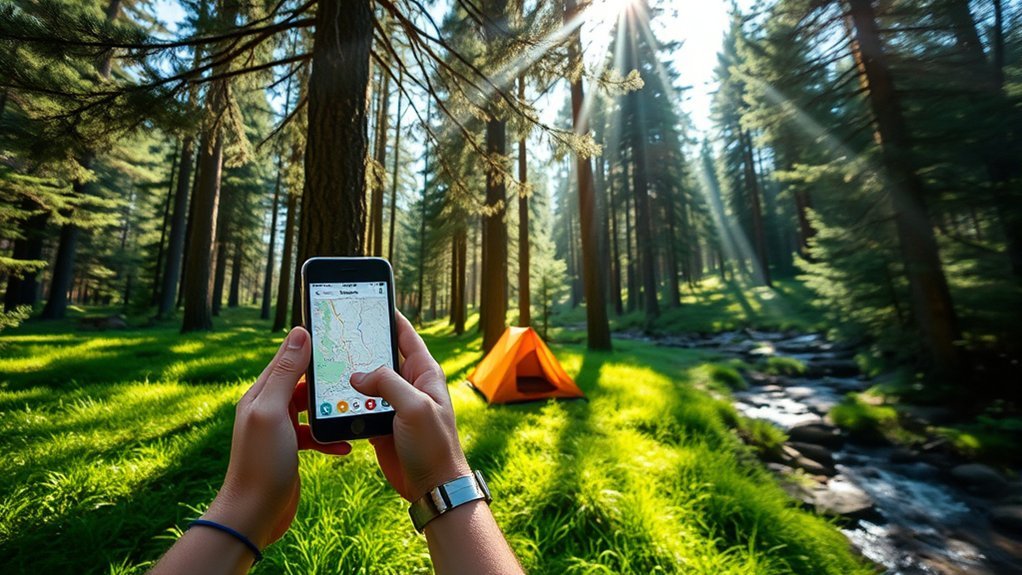
When you’re on the hunt for dispersed campsites, having the right apps can make all the difference. From OnX Offroad’s extensive features to the budget-friendly US Public Lands App, these tools offer essential navigational capabilities and insights from fellow campers. With user-generated content in apps like iOverlander and FreeCampsites.net, you can find hidden gems and avoid the hassle of searching blindly.
Top Camping Apps
Finding the perfect dispersed camping site has never been easier, thanks to a variety of superior camping apps designed to enhance your outdoor experience. OnX Offroad offers detailed features, including public land overlays and offline guidance for $34.99/year, perfect for maneuvering with your camping gear. If you’re budget-conscious, the US Public Lands App at $3.99 helps verify dispersed camping areas. iOverlander, a free crowd-sourced app, provides user reviews and conditions but requires you to verify spots for safety. For hidden gems, check FreeCampsites.net, which features user-submitted information. Don’t forget The Dyrt and Campendium; they provide extensive directories, ensuring you follow campsite etiquette while enjoying the freedom of the great outdoors. Happy camping!
Navigational Features Explained
Traveling through the vast landscapes of national forests can be intimidating, especially when you’re on the hunt for the perfect dispersed campsite. Luckily, several directional tools can help you master map reading and discover ideal spots:
- OnX Offroad: Offers public land overlays and offline navigation for $34.99/year.
- US Public Lands App: A budget-friendly option at $3.99, perfect for beginners.
- iOverlander: A free, crowd-sourced app with campsite reviews—just verify popular spots!
- FreeCampsites.net: A web-based platform with user-submitted listings for low-cost campsites.
- Gaia GPS: Advanced mapping app featuring topographic layers for traversing remote areas.
With these tools, you’ll feel empowered to explore and enjoy the wild!
User-Generated Content Benefits
Utilizing user-generated content can markedly enhance your search for dispersed campsites in national forests. Apps like iOverlander and Dyrt provide a wealth of user reviews and campsite tips, ensuring you get firsthand insights about conditions and amenities. FreeCampsites.net opens up a treasure trove of budget-friendly options, revealing hidden gems you might otherwise miss. The US Public Lands App makes it easy to identify legal camping areas, perfect for beginners venturing into the wild. Plus, Campendium offers crowd-sourced information on cell signal availability, helping you stay connected. Embracing these resources not only simplifies your planning but also enriches your overall camping experience, allowing you to explore with confidence and freedom.
Verifying Land Ownership and Regulations
Before you set up camp, it’s essential to verify land ownership to guarantee you’re on public land where dispersed camping is allowed. Familiarizing yourself with local regulations is equally important, as rules can differ greatly from one national forest to another. To get the most accurate and up-to-date information, don’t hesitate to reach out to local ranger stations or land management offices.
Importance of Ownership Verification
When you set out to enjoy dispersed camping in national forests, verifying land ownership is essential for a hassle-free experience. Camping on private land without permission can lead to ownership disputes and unwanted legal trouble. To ascertain you’re camping legally, consider the following:
- Use apps like OnX Offroad and US Public Lands to identify public land boundaries.
- Go beyond public listings; check local regulations for the most accurate information.
- Contact land management agencies for confirmation of land access.
- Familiarize yourself with specific rules, such as campfire restrictions and stay durations.
- Utilize interactive visitor maps to clarify land ownership before your trip.
Taking these steps guarantees a smoother, more enjoyable camping adventure while respecting the land.
Understanding Local Regulations
Understanding local regulations is essential for a successful dispersed camping experience, especially since each national forest may have its own unique set of rules. Before you head out, verify land ownership using apps like OnX Offroad or the US Public Lands App. This guarantees you camp legally and avoid unwelcome surprises. Don’t forget to reach out to local land managers for specific regulations regarding campfires, group sizes, and stay limits. Familiarize yourself with dispersed camping etiquette to minimize your impact, and consider local wildlife considerations to keep both the environment and yourself safe. By researching these regulations, you’ll dodge fines and enjoy a liberating adventure in nature, fully embracing the great outdoors.
Tips for Successful Dispersed Camping
Successful dispersed camping requires careful planning and awareness, so you can fully enjoy the beauty of the wilderness without any hiccups. Here are some essential tips to enhance your experience:
Successful dispersed camping demands thoughtful preparation and mindfulness to truly appreciate the wilderness without interruptions.
- Verify land ownership and regulations with apps like OnX Offroad or the US Public Lands App.
- Pack all necessary camping gear, including food, water, and waste disposal methods, as dispersed sites lack amenities.
- Engage with local land managers for insights on lesser-known camping spots and specific regulations.
- Use mapping tools like Gaia GPS or Google My Maps to navigate and create a detailed itinerary.
- Always be prepared for wildlife encounters by storing food securely and making noise while hiking.
Leave No Trace Principles for Campers
To fully enjoy the wonders of nature while minimizing your impact, embracing Leave No Trace principles is crucial for every camper. Start by setting up your tent at least 200 feet away from water sources to protect water quality and guarantee wildlife protection. Practicing good camping etiquette means packing out everything you bring, including food scraps, to prevent pollution and keep the area pristine. For human waste, dig a 6-inch deep hole at least 200 feet from water, or use a portable toilet to dispose of it properly. Avoid damaging vegetation by sticking to existing campsites and paths instead of trampling over plants. By following these principles, you contribute to a sustainable outdoor experience and help preserve these beautiful spaces for future adventurers. Remember, your actions today can make a significant difference in maintaining the natural beauty we all cherish.
Navigating Campfire Regulations
While enjoying the great outdoors, it’s essential to navigate campfire regulations to guarantee safety and environmental protection. Start by checking with your local Forest Supervisor’s Office for any current fire restrictions. Always use existing fire rings to minimize your impact and keep the area safe.
When it comes to firewood sourcing, gather only from dead, downed trees; breaking branches from living trees is a big no-no. No permits are needed for collecting wood, but if you plan to transport it, make sure to grab one first. Finally, remember your campfire etiquette: always extinguish your fire completely before leaving, ensuring the ashes are cool to the touch.
- Check local regulations
- Use existing fire rings
- Gather dead, downed wood only
- No permits needed for local firewood
- Fully extinguish fires before leaving
Safety Measures to Prevent Wildfires
When you’re camping in national forests, keeping safety in mind is essential to prevent wildfires. Always follow campfire safety guidelines, like using existing fire rings and ensuring your fire’s completely extinguished before leaving. Additionally, practice proper waste disposal to minimize fire risks and help protect the beautiful landscape around you.
Campfire Safety Guidelines
Before you light a campfire in a national forest, it’s essential to understand the safety guidelines that can prevent wildfires. Follow these campfire etiquette tips to guarantee a safe and enjoyable experience:
- Check for local fire restrictions before starting your fire.
- Use existing fire rings to minimize environmental impact.
- Source firewood only from dead, downed trees; never take from living ones.
- Completely extinguish your campfire, making sure ashes are cool to the touch.
- Pack out non-burnable items like plastics and aluminum to reduce pollution.
Proper Waste Disposal Practices
Maintaining a clean campsite is just as important for safety as following campfire guidelines. Effective waste management protects both you and the environment. When it comes to human waste, dig a 6-inch hole at least 200 feet from water sources to prevent contamination. Remember to pack out all trash and leftover food; burying or burning scraps can attract wildlife and risk igniting fires. Always guarantee your campfire is fully extinguished by stirring the ashes until they’re cool to the touch. Use existing fire rings to minimize your impact and avoid damaging vegetation. Stay informed about local fire restrictions and gather firewood only from dead, downed trees. By practicing these eco-friendly habits, you contribute to a safer, cleaner wilderness for all.
Finding Water Sources and Purification Methods
While exploring the beauty of national forests, you’ll quickly realize that finding reliable water sources is essential for a successful camping experience. Look for streams, rivers, or lakes, but remember to collect water at least 200 feet away from your campsite to protect its quality. Always pack a portable water filter or purification tablets to treat your water collection, as untreated sources can harbor harmful microorganisms.
Here are some effective purification techniques:
- Boil water for at least one minute (three minutes at higher elevations).
- Use a portable water filter for on-the-go purification.
- Pack purification tablets for lightweight convenience.
- Consider hydration systems for easy transport of purified water.
- Research local water conditions and contaminants with forest service offices.
Engaging With Local Camping Communities
Finding the right dispersed camping spot can sometimes feel overwhelming, but engaging with local camping communities can make the process much easier and more enjoyable. Joining Facebook groups or online forums opens the door to valuable insights about lesser-known camping spots and current conditions. These communities often provide real-time updates on accessibility, weather, and regulations, acting as essential community resources for your planning.
You’ll also discover tips on camping etiquette, ensuring that your adventures are sustainable and respectful to nature. Platforms like iOverlander or Campendium let you contribute your experiences, enriching the collective knowledge and helping others find great sites. Plus, networking with fellow campers can lead to group outings, enhancing safety and sharing valuable resources like maps and navigation tools. Engaging with these communities not only boosts your camping experience but also fosters a sense of connection with nature-loving peers.
Frequently Asked Questions
What Is the Best Time of Year for Dispersed Camping?
The best camping seasons are spring and fall. You’ll enjoy milder weather, fewer bugs, and stunning scenery. Just keep an eye on weather considerations like rain or snow, ensuring your adventure remains safe and enjoyable.
Are There Fees for Dispersed Camping in National Forests?
Dispersed camping fees can feel like a hidden stone in a river. Most national forests don’t charge for dispersed camping, but always check local regulations to avoid unexpected surprises and fully embrace your adventure!
Can I Camp With My Pet in Dispersed Areas?
Yes, you can camp with your pet in dispersed areas! Just follow pet camping guidelines and prioritize pet safety tips—keep them on a leash, clean up after them, and make sure they’re comfortable in the wilderness.
How Do I Report a Problem or Hazard at a Campsite?
To report a problem or hazard at a campsite, contact the local forest service office directly. They appreciate your help in maintaining campsite safety and ensuring everyone enjoys a safe outdoor experience. Don’t hesitate to share!
What Should I Do if I Encounter Wildlife While Camping?
Encountering wildlife’s like stepping into a living tapestry. For wildlife safety, stay calm, back away slowly, and avoid direct eye contact. In bear encounters, make noise, raise your arms, and never run.
Conclusion
Dispersed camping in national forests offers a unique way to connect with nature, with over 38 million acres of public land available for your adventures. Imagine setting up camp under a sky filled with stars, far from the hustle of crowded campgrounds. By using the right tools and following regulations, you can guarantee a safe and enjoyable experience. So grab your gear, explore the wilderness, and embrace the beauty of solitude that dispersed camping has to offer!