


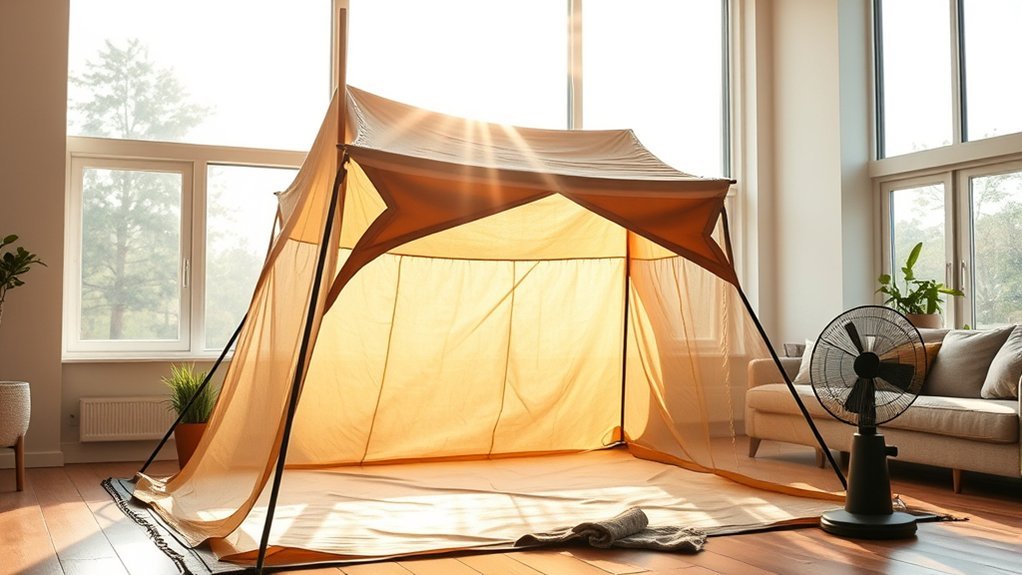
To dry a tent in your apartment without making a mess, first shake it out outside to remove excess water and debris. Then, lay out a clean tarp indoors and hang the tent on a shower rod or sturdy hangers. Increase airflow by opening windows and using fans. Make sure every part is completely dry before folding and storing it in a breathable sack. Proper techniques can extend your tent’s lifespan, and there’s more to learn about maintaining it effectively.
Why You Shouldn’t Store A Tent Wet

When you store a tent wet, you risk serious damage that can compromise its performance and longevity. Tent degradation accelerates in damp conditions, as waterproof coatings may disintegrate or delaminate, making your tent less effective when you need it most. Prolonged moisture damage can also lead to seam tape peeling away, reducing durability and increasing leak risk.
The chances of mold and mildew growth skyrocket when a tent remains wet, potentially ruining the fabric and structural integrity. Additionally, metal components like poles can oxidize in a damp environment, weakening over time and jeopardizing your tent’s overall stability.
Ultimately, storing a wet tent not only threatens its waterproof capabilities but also makes it unsafe for future adventures. To fully enjoy your outdoor experiences, it’s vital to guarantee your tent is completely dry before storing it. Your adventures deserve the best gear; don’t let moisture damage hold you back.
Tips On How To Dry Out A Wet Tent
When your tent gets wet, drying it properly is essential to prevent mold and mildew. Utilize your indoor space effectively by laying it out flat or hanging it up, and don’t forget to use fans for better air circulation. Spot clean any dirt before air drying to keep your living area tidy and your gear in good shape.
Utilize Indoor Drying Space
Drying a wet tent indoors can be a straightforward process if you have the right approach. Start by laying out the tent on a clean, flat surface like a tarp or blanket to catch drips and protect your floors. Hang the tent components, such as the fly and inner tent, over a shower rod or sturdy hangers to enhance airflow and allow moisture to escape. Utilize indoor ventilation by opening windows or using a fan to expedite drying and reduce humidity levels. If space permits, set the tent up indoors to air out completely, but check for moisture on the ground. Keep an eye on hidden areas, ensuring everything is fully dry before storing your tent away.
Use Fans for Circulation
Using fans can greatly speed up the drying process of your wet tent. Position your fans strategically in the room to create effective airflow enhancement. Aim them directly at both the tent’s interior and exterior surfaces, focusing on corners where moisture tends to hide. If you have multiple fans, use them to improve circulation—especially crucial in confined spaces like apartments.
| Fan Placement | Purpose | Additional Tips |
|---|---|---|
| Directly at Tent | Evaporate moisture quickly | Verify tent is fully spread |
| In corners | Target hidden moisture | Adjust angles as needed |
| Across the room | Enhance overall airflow | Use in tandem with a dehumidifier |
This setup will help reduce drying time and lower the risk of mold or mildew.
Spot Clean and Air Dry
Spot cleaning and air drying your wet tent is essential for maintaining its condition and preventing mold. First, lay out a tarp or large cloth to catch excess water and dirt while you clean. Use a microfiber cloth for effective spot cleaning techniques, targeting heavily soiled or damp areas on the tent’s fly and body. Once you’ve wiped it down, hang the tent in a well-ventilated spot, like over a shower rod or balcony, to promote airflow. If space is tight, drape the fabric over furniture, ensuring it doesn’t touch the ground. Allow it to air dry completely before folding and storing to avoid mildew, ensuring your next outdoor adventure remains liberating and hassle-free.
Using Your Apartment Space Effectively
To dry your tent effectively in an apartment, utilize vertical space by hanging components like the fly and inner tent from hooks or a shower rod. Designate specific drying zones in your living room or bathroom to keep the process organized and minimize mess. By maximizing your available space, you can guarantee proper airflow and expedite drying.
Utilize Vertical Space
Maximizing vertical space is essential when drying a tent in your apartment, especially if you’re short on floor area. Consider vertical hanging techniques to enhance airflow improvement and speed up drying. Use curtain rods or door frames to suspend your tent, allowing it to dry without cluttering the floor. A collapsible drying rack can hold smaller components, like the rainfly, keeping everything organized and elevated. You can also drape the tent over furniture like sofas or chairs, ensuring it doesn’t soak any surfaces. Wall or ceiling hooks offer another option for hanging the tent or its parts, promoting better air circulation. If you have a shower rod, utilize it to contain the fabric while preventing drips.
Designate Drying Zones
Creating a designated drying zone in your apartment is essential for efficiently drying your tent and its components. Choose an area with good airflow, like near a window or balcony, to set up your designated area. Lay down a large tarp or waterproof mat to protect your floor from moisture and dirt. Hang the tent fly and inner tent separately using shower rods or sturdy furniture to maximize space and airflow. Don’t forget to dry all components, including poles and stakes, in this drying zone to prevent rust and moisture retention. To speed up the process, use fans or air conditioning as drying equipment, enhancing ventilation and helping moisture evaporate more quickly. Your apartment will remain mess-free while you dry your gear!
Alternative Drying Methods for Indoor Spaces
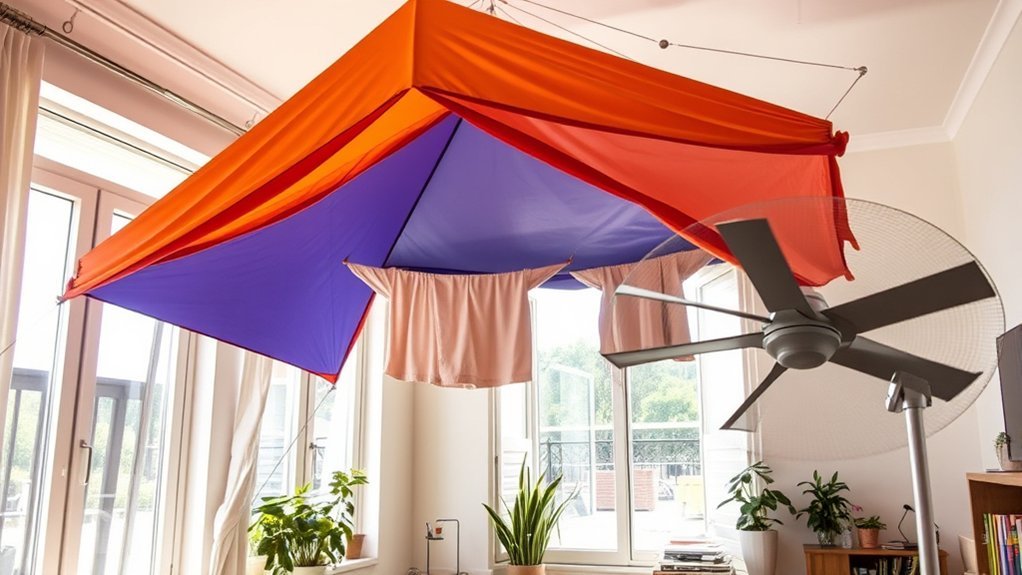
While drying a tent indoors can pose challenges, several effective methods can help you do so without causing a mess. One of the best alternative drying methods is to hang your tent in the bathtub or over the shower rod. This way, you can contain any dripping water and protect your floors. To speed up indoor tent drying, utilize a fan or turn on your air conditioning to promote airflow. If you have a designated area, lay out wet items on towels, spreading them out for maximum air exposure. If you have space, consider using a patio or balcony, keeping the tent off wet surfaces. Finally, a large tarp can serve as a base to catch any runoff while you clean and dry your tent indoors, making the cleanup process a breeze. These methods will help you dry your tent efficiently without compromising your living space.
Preventing Mess While Drying
To prevent a mess while drying your tent indoors, start by laying out a clean tarp or large blanket in a designated area of your apartment. This will catch any drips and dirt during the drying process. Before bringing your tent inside, shake it out outdoors to remove excess water and debris, minimizing mess. For effective tent cleaning, use a microfiber cloth to wipe down wet areas, reducing moisture before you set it up for drying.
Hang the tent in a well-ventilated area using a shower rod or door frame, ensuring it doesn’t touch the floor to avoid water marks. If you’re drying indoors, place a fan nearby to improve airflow. This step not only speeds up drying time but also enhances moisture control, reducing the risk of mold or mildew. Following these steps will help you keep your space clean while ensuring your tent dries effectively.
Final Steps for Ensuring a Dry Tent
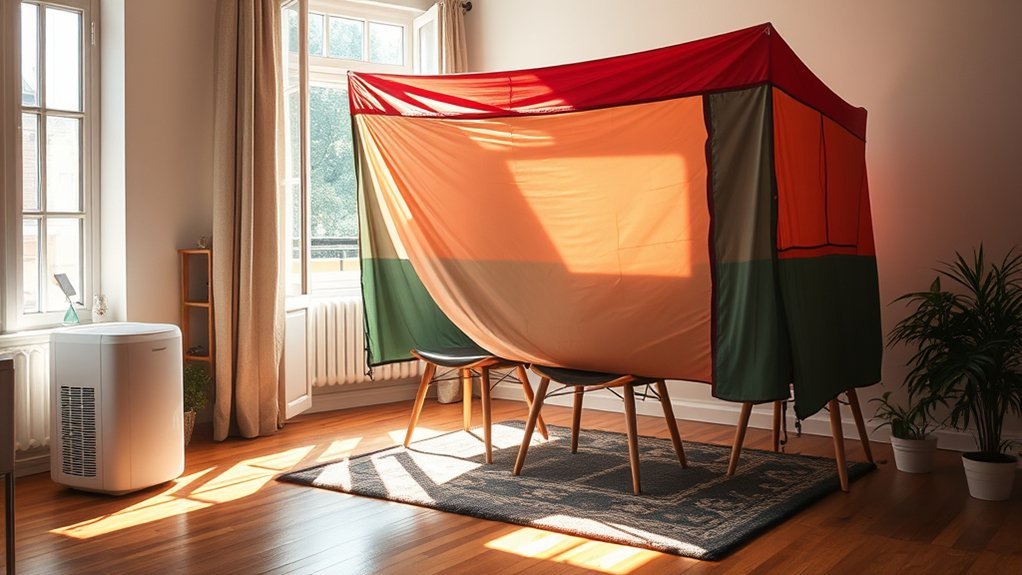
After confirming your tent is hanging in a well-ventilated area, it’s time to focus on the final steps to guarantee it’s completely dry. Start by using a microfiber cloth to wipe down the tent fly, removing any stubborn moisture that lingers. Don’t forget to flip the tarp or drying surface to avoid re-soiling the tent fabric with wet grass or surfaces.
Conduct a thorough inspection, checking corners and any absorbent parts, as these areas can trap dampness. To enhance moisture control, let the tent air out, using a fan or opening windows to boost airflow.
Once you’re confident the tent is completely dry, fold it carefully and store it in a breathable carry sack. This way, you’ll maintain its condition and prevent moisture build-up. Following these final steps confirms effective tent maintenance and prepares you for your next adventure without worry.
Maintaining Your Tent for Longevity
Proper maintenance of your tent is essential if you want it to last through many camping adventures. After each use, make certain to dry your tent thoroughly to prevent the disintegration of waterproof coatings and maintain its structural integrity. Store your tent in a dry, airy environment, as damp conditions can lead to mold and mildew growth.
Don’t forget to inspect and dry all components, including poles and stakes, separately. This prevents moisture retention that can cause rust and degradation. Always keep the carry sack open during storage to promote airflow and reduce moisture buildup.
Routine tent maintenance, such as re-pitching and airing it out in sunlight, can greatly extend its lifespan and functionality. By following these practical tips, you’ll guarantee your tent remains a reliable companion on your outdoor adventures, granting you the freedom to explore without worry.
Frequently Asked Questions
Can I Use a Hairdryer to Dry My Tent?
You can use a hairdryer to dry your tent, but guarantee you maintain safety. Keep it on a low setting to avoid damaging tent materials. Move it around to prevent overheating any specific area.
How Long Does It Take for a Tent to Dry Indoors?
Drying a tent indoors can feel like waiting for paint to dry. Depending on indoor factors like humidity and ventilation, it usually takes 24 to 48 hours. Be patient; your adventure awaits!
What if My Tent Has a Musty Smell After Drying?
If your tent has a musty odor, try cleaning techniques like washing it with a mild detergent or using a vinegar solution. Rinse thoroughly and let it air dry completely to eliminate lingering smells.
Is It Safe to Dry My Tent Near a Heat Source?
It’s not safe to dry your tent near a heat source. High temperatures can damage the fabric and create moisture concerns. Instead, choose a well-ventilated area to guarantee proper drying without risking your gear.
Can I Dry My Tent in a Small Bathroom?
You can dry your tent in a small bathroom, like hanging laundry on a line. Just guarantee bathroom ventilation is good, and use tent drying techniques like spreading it out or using a fan for airflow.
Conclusion
In the end, drying your tent indoors is like nurturing a delicate flower; it requires care and attention to flourish. By following these tips and using your space wisely, you can guarantee your tent dries properly without leaving a mess. Remember to check for any damp spots and store it in a breathable bag. With a little effort, you’ll keep your tent in top shape, ready for your next adventure!