


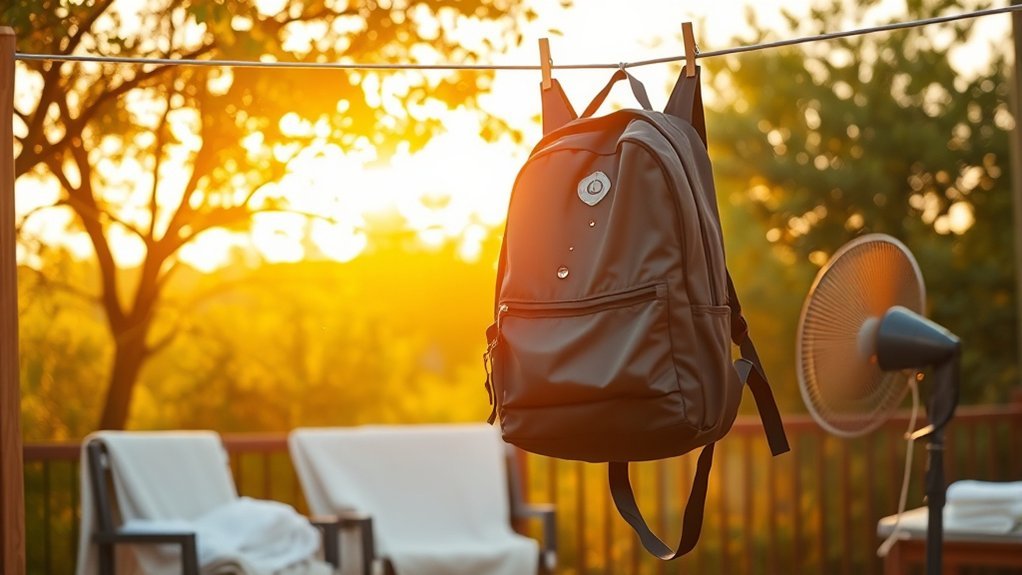
To dry your backpack quickly, first, use absorbent towels to soak up excess moisture. Then, hang it in a well-ventilated area, avoiding direct sunlight to prevent fading. Employ high-speed fans to enhance air circulation, and consider using a dehumidifier if it’s humid outside. Make sure to check all compartments for dampness, and never overstuff it during drying. These steps will help keep mold and odors at bay while preserving your bag’s shape. More tips await!
Importance of Proper Drying Techniques

When you neglect proper drying techniques, you risk damaging your backpack and its contents. Maintaining your backpack’s shape and integrity is essential; without it, you could face mold growth and unpleasant odors. Drying synthetic fabrics like nylon or polyester usually takes 6–12 hours, while natural fabrics like canvas or leather may need over 24 hours.
Air drying is the safest method, preserving the fabric and components effectively. Machine drying can lead to melting parts or shrinking fabrics due to high heat. Before you start drying, use absorbent towels to remove excess moisture, speeding up the process and preventing water damage. Don’t forget to check all compartments; neglecting to dry them thoroughly can lead to serious mold issues and material deterioration. By prioritizing proper drying techniques, you’ll extend your backpack’s lifespan and keep it in prime condition for your adventures.
Recommended Drying Methods
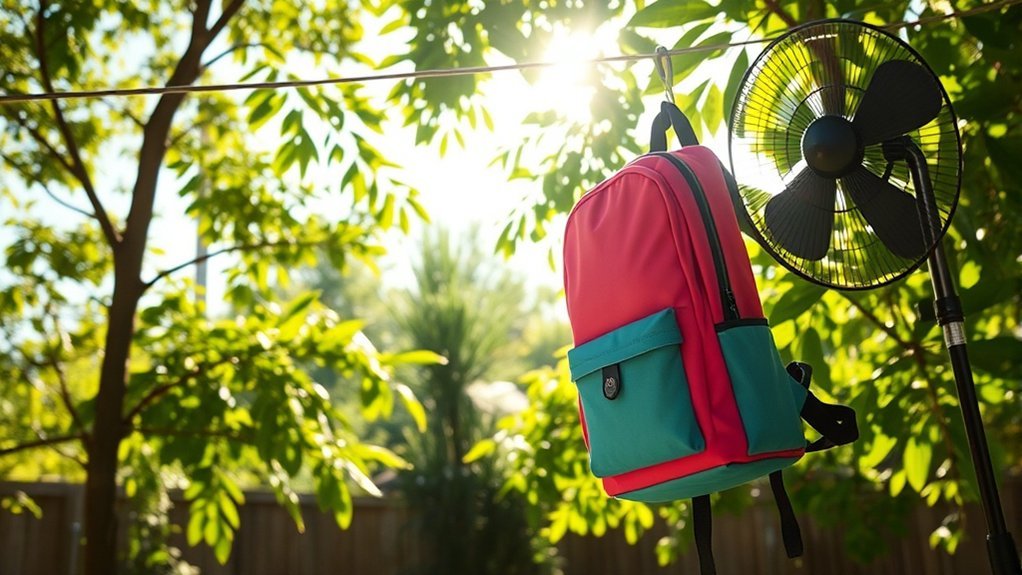
After understanding the importance of proper drying techniques, it’s time to explore the best methods for drying your backpack. Air drying is your safest bet; it preserves the fabric and shape while typically taking 6–12 hours for synthetic materials and 24+ hours for canvas or leather. To speed up the process, use absorbent towels to soak up excess water, considerably cutting down your drying time.
If you’re in a humid environment, consider using high-speed fans to enhance air circulation or dehumidifiers to extract moisture. Always avoid direct sunlight, as it can fade colors; instead, choose a shaded area for gentle drying. If you opt for a dryer, use the lowest heat setting and check frequently to avoid damaging delicate components. With these methods, you’ll keep your backpack in top shape while ensuring it dries efficiently.
Quick Drying Techniques
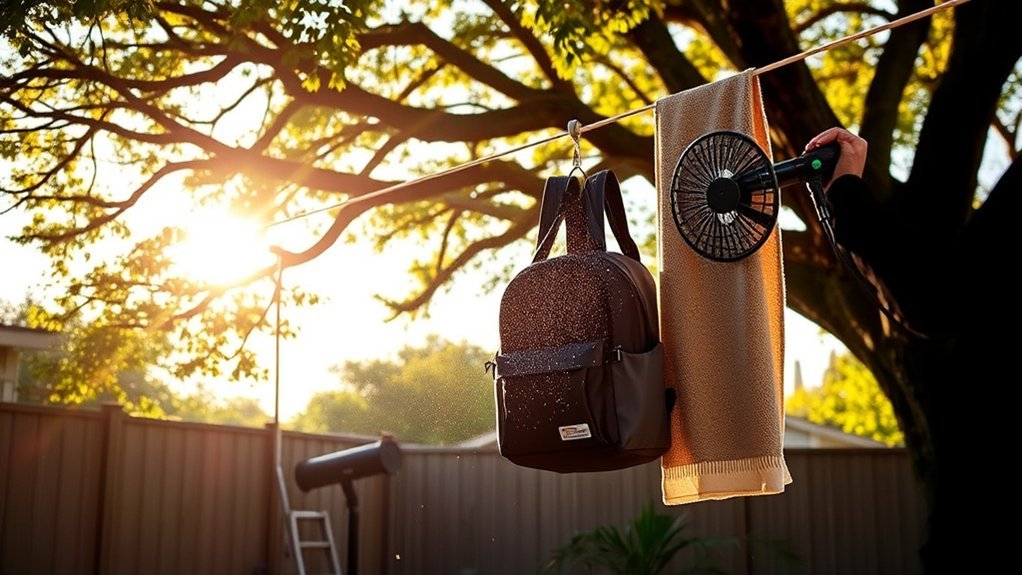
To dry your backpack quickly, employing specific techniques can make a significant difference. Start by using high-speed fans to promote even airflow, which enhances evaporation and cuts down drying time. If you’re in a humid area, consider placing a dehumidifier nearby to extract moisture from the air. For targeted drying, a hairdryer on low heat can help dry specific wet spots, but keep it at a safe distance to avoid damaging the materials.
Ensure proper cross ventilation by placing your backpack in a well-ventilated area to further accelerate moisture evaporation. Remember, avoid overstuffing the backpack during this process; it hampers airflow and can lead to mold growth in hidden compartments. By following these techniques, you can have your backpack dry and ready for your next adventure in no time!
Common Mistakes to Avoid
While drying your backpack, it’s crucial to avoid common mistakes that can hinder the process or cause damage. First, steer clear of high heat settings, as they can melt synthetic fabrics or crack leather. Always choose low heat or air drying methods instead. Next, don’t neglect to dry all compartments; moisture left inside can lead to mold growth and unpleasant odors.
Another pitfall is overstuffing your bag during drying. This hampers airflow, prolonging the drying time and trapping moisture. Additionally, skipping pre-cleaning invites bacteria and odors, so give your backpack a thorough clean before starting the drying process. Finally, avoid improper storage of damp backpacks. Sealing them in a bag or leaving them in a dark place can degrade materials and promote mold growth. By dodging these mistakes, you’ll guarantee your backpack dries efficiently and remains in great condition.
Final Tips for Backpack Maintenance
Maintaining your backpack is essential for guaranteeing its longevity and performance, so don’t overlook routine checks and cleaning. Regularly inspect all components, including zippers and clips, to prevent rust and guarantee everything functions smoothly. After cleaning, always air dry your backpack in a well-ventilated area, steering clear of direct heat sources to protect its materials.
To speed up the drying process, use absorbent towels to soak up excess moisture before hanging it up. Store your backpack in a cool, dry place to avoid mold and damage from dampness. Finally, schedule maintenance checks, focusing on spot cleaning and inspecting waterproof coatings, to extend your backpack’s lifespan. By following these simple tips, you’ll keep your essential gear in top shape, ready for your next adventure. Embrace your freedom and enjoy the journey with a well-maintained backpack!
Frequently Asked Questions
Can I Use a Hairdryer to Speed up Drying?
Yes, you can use a hairdryer to speed up drying, but keep it on a low setting. Hold it at a safe distance to avoid damaging your backpack’s material or causing any overheating. Stay cautious!
How Long Does It Typically Take for a Backpack to Dry?
You’d think a backpack dries instantly, right? Typically, it takes several hours to fully dry, depending on materials and conditions. To speed things up, consider airflow and avoid direct heat sources that might damage it.
Is It Safe to Dry a Waterproof Backpack the Same Way?
Yes, it’s safe to dry a waterproof backpack the same way. Just avoid high heat sources, as they can damage the materials. Instead, air-dry it in a well-ventilated space for best results.
What Materials Are Most Prone to Damage During Drying?
When it comes to drying, delicate materials like nylon and mesh can suffer. They’re prone to fraying or melting under heat. Keep them away from direct sunlight and high temperatures to guarantee they stay intact.
Can I Dry My Backpack Indoors Without Ventilation?
You can dry your backpack indoors, but it’s best to avoid areas without ventilation. Without airflow, moisture lingers, potentially causing mold or odors. Try placing it near a fan or open window for better results.
Conclusion
By following these drying techniques, you’ll not only keep your backpack in top shape but also extend its lifespan. Remember to avoid common mistakes, embrace quick drying methods, and prioritize proper maintenance. Whether you’re camping, hiking, or traveling, a dry backpack is essential for comfort and durability. So, dry it right, care for it well, and enjoy every adventure it brings! Your gear deserves the best, and so do you.