


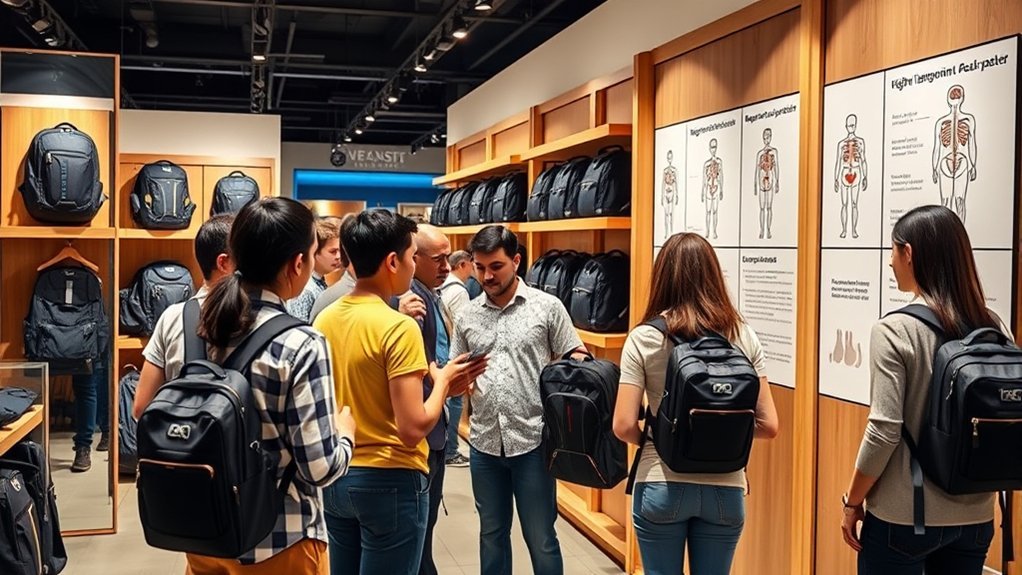
To choose a backpack that supports your back, first weigh your load—aim for 10-15% of your body weight. Select a size that fits your torso and features wide, padded straps. Organize heavier items close to your back for balance, and guarantee proper strap adjustment using the two-finger test. Assess for pressure points and comfort as you try it on. Want more tips on maximizing your backpack’s potential? There are strategies waiting for you.
Understanding Backpack Weight Limits


When choosing a backpack, it’s crucial to understand weight limits to protect your back and shoulders. Ideally, your backpack should weigh no more than 10-15% of your body weight. Exceeding this limit can lead to poor posture, discomfort, and even long-term spinal issues. Think critically about your intended use; different activities might require different weight capacities. For instance, a day hike may allow for a heavier load than a school day.
To maintain an appropriate weight, regularly assess your backpack’s contents. This practice helps you avoid unnecessary strain throughout the day. If you find your backpack feels too heavy, consider utilizing lockers or sharing resources with classmates. Such strategies not only lighten your load but also promote a more liberating experience, allowing you to move freely without the burden of excessive weight. Embrace these tips to guarantee your backpack supports rather than hinders your journey.
Selecting the Right Size and Fit
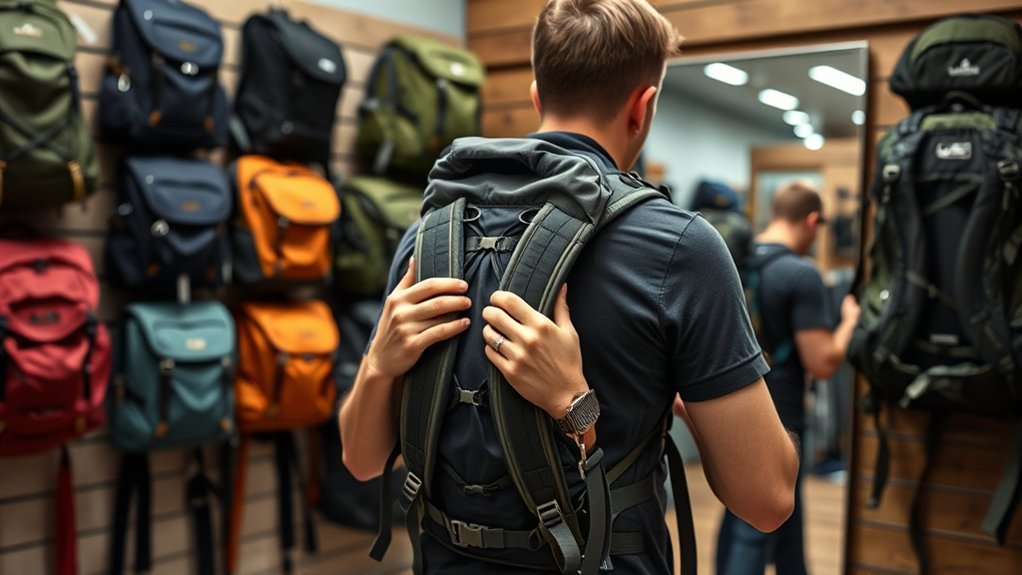
A well-fitted backpack is key to maintaining back support and preventing discomfort during use. To guarantee you select the right size and fit, consider the following guidelines:
| Measurement | Guideline |
|---|---|
| Back Length | Should reach your hip bones |
| Width | Must not exceed your torso width |
| Length Below Waist | No longer than 4 inches |
| Shoulder Straps | Opt for wide, padded straps |
The backpack should rest comfortably between your shoulder blades, promoting balance and reducing pulling. Look for adjustable torso length features to customize the fit to your body type. A well-fitted backpack should land at the belt line, guaranteeing proper weight distribution and minimizing strain on your back. By focusing on these elements, you can enhance your comfort and support, empowering your journey with freedom from discomfort.
Importance of Load Arrangement

While you might focus on choosing the right backpack, the way you arrange your load is equally essential for maintaining back support. To minimize the risk of poor posture and back pain, place heavier items, like laptops, closest to your back and at the bottom. Opt for slim backpacks for these heavier items, as they help maintain balance by keeping weight near your spine. For lighter items, like sports gear, shapeless backpacks allow flexibility without sacrificing stability.
Utilize side pockets for water bottles, keeping them near your spine to enhance weight distribution. Internal pockets also play a significant role in organizing and stabilizing heavier items, preventing them from shifting and causing discomfort during movement. By thoughtfully arranging your load, you not only promote back support but also guarantee a more liberating experience while carrying your backpack.
Evaluating Pressure Points for Comfort
Proper load arrangement sets the stage for evaluating pressure points in your backpack. To guarantee comfort, focus on areas that might create discomfort during use. Assess the following points:
Evaluate pressure points in your backpack to ensure comfort and reduce discomfort while carrying your essentials.
- Pressure around shoulder straps and waistband
- Contact with the frame and stem knob strap
- Padded areas and strap adjustability
A well-fitting backpack should hug your body without causing pain. It’s crucial to physically test the backpack before purchasing, as individual needs vary. Just like selecting an office chair, think about personal comfort and your intended use. A backpack with a frame and breathable net can greatly enhance your experience by reducing pressure and improving airflow. Always remember that the right adjustability in straps can minimize pressure points, allowing for a more liberating experience while you carry your essentials. Prioritize these evaluations to find a backpack that supports your posture and reduces strain effectively.
Testing for Proper Strap Adjustment
How can you guarantee your backpack straps are adjusted correctly for ideal support? Start with the two-finger test; you should be able to fit two fingers between the strap and your shoulder, assuring a snug yet comfortable fit. Next, raise your arms overhead. If the straps stay in place, you’ve got proper support. Remember to regularly reassess the tightness throughout the day, especially if your load changes.
Here’s a quick reference for strap adjustment:
| Step | Action |
|---|---|
| 1. Two-Finger Test | Adjust till two fingers fit comfortably |
| 2. Arm Raise Check | Confirm straps stay put when arms raised |
| 3. Daily Reassessment | Check strap tightness during the day |
| 4. Even Weight Distribution | Distribute weight evenly across shoulders |
| 5. Avoid One-Strap Use | Always use both straps for balance |
Following these steps will help prevent strain and promote a healthier back.
Seeking Professional Advice for Backpack Use
When you’re unsure about the best backpack for your needs, seeking professional advice can greatly enhance your choice. Consulting with a specialist, like Dr. Dawes at Stones River Chiropractic, offers personalized insights that help minimize back strain and promote proper posture.
Consider the following steps during your consultation:
- Bring your backpack for a fitting session to assess fit and weight distribution, ensuring it aligns with your body dimensions.
- Evaluate spine support by allowing professionals to identify pressure points that may cause discomfort during use.
- Access educational resources that offer videos or materials on proper backpack usage, enhancing your understanding of ergonomic principles.
Regular check-ins with your healthcare provider can monitor any back pain linked to backpack use, allowing for adjustments that optimize your back health. Embrace professional guidance to empower your choice and liberate yourself from discomfort.
Frequently Asked Questions
What Materials Are Best for Back Support in Backpacks?
For ideal back support, choose backpacks made from breathable mesh, padded foam, and durable nylon. These materials enhance comfort, reduce strain, and promote proper posture, ensuring your back feels supported during everyday use and adventures.
How Do I Clean and Maintain My Backpack?
To clean and maintain your backpack, regularly wipe down surfaces with a damp cloth, spot clean stains with mild soap, and air dry it completely. Avoid harsh detergents and machine washing to preserve its structure and materials.
Can a Backpack Affect My Posture Over Time?
Yes, a backpack can negatively impact your posture over time. For instance, if you routinely carry a heavy bag on one shoulder, you may develop an uneven spine, leading to discomfort and long-term postural issues.
Are There Specific Brands Known for Ergonomic Backpacks?
Yes, brands like Osprey, Deuter, and Gregory are known for ergonomic backpacks. They prioritize back support and comfort, ensuring you maintain proper posture while carrying your essentials. Try them out for a better experience.
What Additional Features Should I Consider for Hiking Backpacks?
When selecting hiking backpacks, consider features like hydration reservoirs, adjustable straps, ventilation systems, lightweight materials, and ample pockets. These elements enhance comfort, accessibility, and efficiency, ensuring you enjoy your outdoor adventures without unnecessary strain.
Conclusion
Choosing the right backpack is essential for your back health. Did you know that carrying more than 15% of your body weight in a backpack can increase the risk of back pain? By understanding weight limits, selecting the right size, and arranging your load effectively, you can greatly reduce discomfort. Remember to adjust the straps properly and consider professional advice if needed. A well-chosen backpack not only supports your back but also enhances your overall comfort and mobility.