


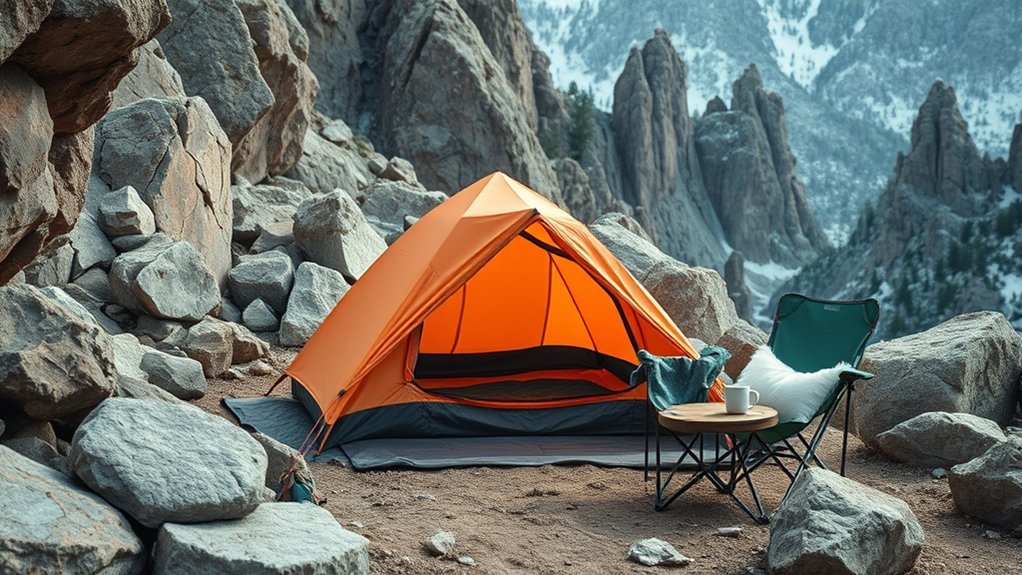
Camping on rocky ground means you need to be smart about your setup for comfort. Start with a sturdy, durable tent and set it up on a flat surface, anchoring it with rocks as needed. Use a quality sleeping pad and ground tarp for added comfort and protection against sharp rocks. Always scout the area for hazards and stay aware of weather changes. There’s more you can do to enhance your experience; let’s explore further.
Essential Gear for Camping on Rocky Terrain

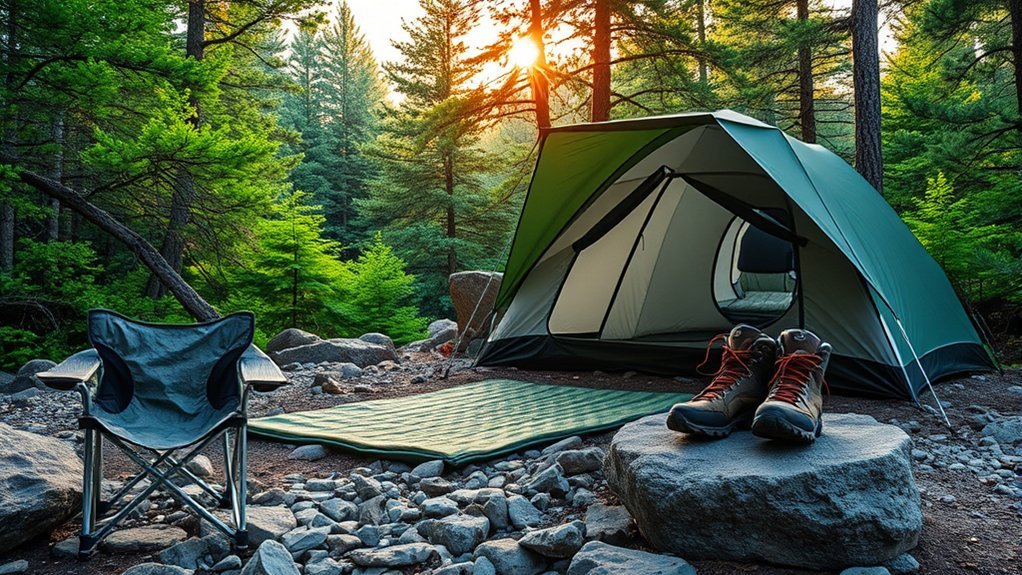
When camping on rocky terrain, having the right gear can make all the difference. A sturdy tent made from durable materials is indispensable; it’ll withstand harsh weather and protect you from sharp rocks. Don’t skimp on footwear either—invest in hiking boots with strong ankle support and reliable grip to navigate those uneven surfaces safely.
Fundamental tools for navigation include maps, compasses, and GPS devices. These will keep you oriented and guarantee safe exploration of challenging landscapes. For cooking, a portable stove paired with lightweight, non-perishable food options is essential for maintaining your energy levels in rugged environments.
Lastly, personal hygiene items like biodegradable soap and hand sanitizer are crucial for cleanliness and minimizing your environmental impact. With the right camping gear, you can embrace the wilderness with confidence and freedom, ready for whatever adventure awaits.
Tips for Setting Up Your Camp
When setting up your camp, start by selecting a flat and stable surface free of sharp rocks and debris. Secure your tent effectively by using rocks to anchor it, especially in windy conditions. Position your tent with the entrance away from the wind and consider any natural windbreaks nearby for added protection.
Selecting the Right Location
Selecting the right location for your camp is crucial to guarantee a comfortable and safe experience. Look for flat, stable ground, avoiding sharp rocks, roots, or debris that could damage your tent. Assess the campsite orientation; position your tent with the wind direction in mind, using natural windbreaks like shrubs or rocks for added protection. Confirm you’re not in a flood-prone area, especially during rain. Clear the ground of sharp rocks and branches to create a smooth sleeping surface. Access to clean water from nearby rivers or lakes is important, but also consider wildlife considerations—stay clear of ant hills and unstable terrain to enhance your safety while embracing the great outdoors.
Effective Tent Anchoring Techniques
To guarantee your tent remains stable on rocky ground, effective anchoring techniques are essential. Here are some methods you can use:
- Big Rock, Little Rock: Place a smaller rock under the sliding loop of your guy line and a larger rock in front to maintain tension.
- Gather Rocks: Collect enough rocks to secure all corners and guy-out points, ensuring stability, especially in windy conditions.
- Deadman Techniques: If stakes can’t penetrate the rock, employ deadman setups by burying a sturdy object horizontally in the ground.
- Quality Cordage: Use durable cordage tied with bowline knots for easy adjustments and reliable performance on uneven terrain.
With these techniques, your tent will be secure, allowing you to enjoy your camping experience.
Choosing the Right Location
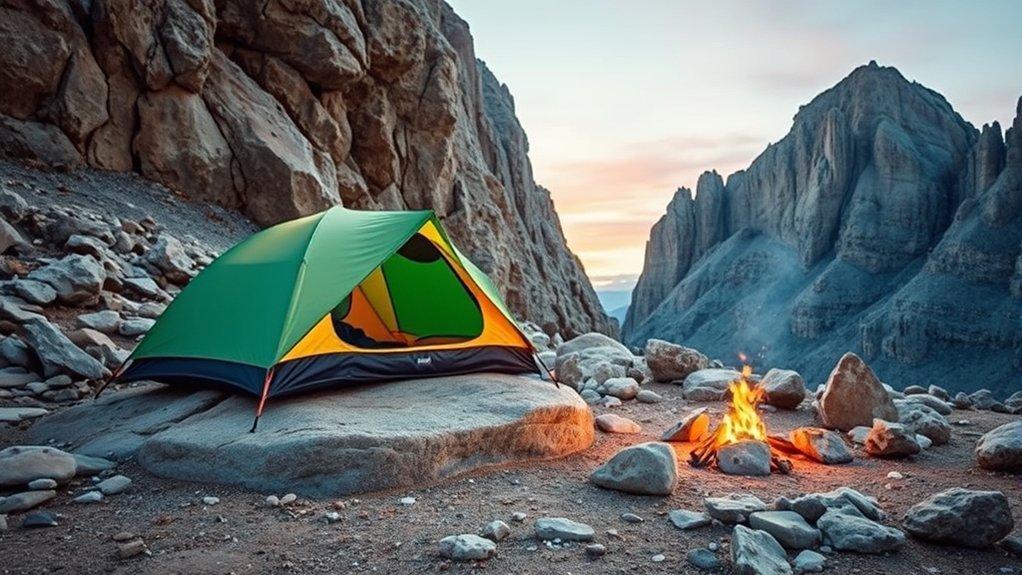
When choosing a campsite on rocky ground, assess the stability of the ground first to guarantee a comfortable setup. Look for potential hazards like sharp rocks or steep inclines that could pose risks. Don’t forget to locate clean water sources nearby for cooking and hydration, as they’re essential for your camping experience.
Assess Ground Stability
Finding a stable spot on rocky ground is essential for a comfortable camping experience. To guarantee a solid ground assessment, consider these tips during your stability evaluation:
- Look for Level Surfaces: Choose flat areas to minimize slipping or rolling at night.
- Inspect for Hazards: Check for loose rocks, roots, or debris that could disrupt your sleep or damage your tent.
- Avoid Low Areas: Stay clear of spots prone to flooding; they can collect rainwater during storms.
- Utilize Natural Windbreaks: Position your tent near shrubs or rock formations to shield against harsh winds.
Check for Hazards
As you choose the right location for your campsite, checking for hazards is essential to confirm safety and comfort. Begin by prioritizing flat, stable surfaces on the rocky terrain to reduce discomfort during sleep. Inspect your site for sharp rocks, roots, and debris that could damage your tent or cause injury. It’s also wise to avoid low-lying areas prone to flooding, especially during rain; steer clear of slopes where water collects. Look for natural windbreaks like shrubbery or rock formations to enhance tent stability against strong winds. Finally, while you want to be near clean water sources, stay away from ant hills and high wildlife activity to confirm your campsite safety remains intact.
Locate Water Sources
How can you guarantee a reliable water supply while camping on rocky ground? Start with proper water source identification to verify you have clean, accessible options. Here are four tips to help you choose wisely:
- Look for Flowing Water: Seek rivers, streams, or lakes within 500 feet to minimize environmental impact.
- Check Clarity: Verify the water is flowing and clear; avoid stagnant sources that harbor bacteria.
- Review Regulations: Always check local guidelines regarding water usage to protect ecosystems.
- Use Purification Methods: If the source isn’t well-known for being potable, bring a purification system or tablets to secure safe drinking water.
Position your tent away from water sources to prevent flooding and keep wildlife at bay. Stay safe and hydrated!
Safety Precautions for Rocky Camping
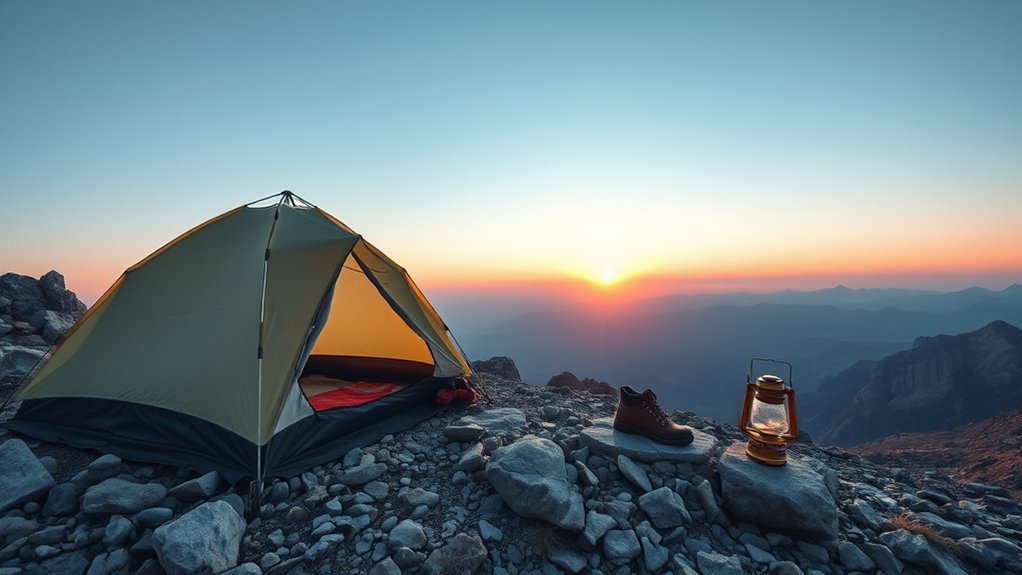
When camping on rocky ground, it’s important to prioritize safety to prevent accidents and injuries. Start by scouting the area for loose rocks and steep inclines, as these can lead to dangerous falls. Proper footwear with strong ankle support and good grip is vital for traversing these uneven surfaces, minimizing slips and sprains.
To deter wildlife encounters, store your food in airtight containers or bear-proof canisters. Improper food storage can attract animals, putting you at risk. Always carry a first aid kit with items for treating common injuries like cuts and sprains, ensuring you’re prepared for emergencies.
Stay hydrated and protect against sun exposure by wearing sunscreen and suitable clothing, as rocky terrains often lack shade. By taking these precautions, you can enjoy your adventure while prioritizing safety and injury prevention, allowing for a liberating experience in nature.
Comfort Enhancements for Better Sleep
Getting a good night’s sleep while camping on rocky ground requires some thoughtful preparation. By implementing effective comfort strategies, you can enhance your sleeping experience and wake up refreshed. Here are four essential tips for your sleeping gear:
- Invest in a quality sleeping pad or air mattress: This provides insulation and reduces pressure points, making your rest more comfortable.
- Choose the right sleeping bag: Verify it’s suited for the expected season and temperature, offering adequate insulation and size for maximum comfort.
- Bring extra pillows: Whether it’s additional camping pillows or stuffed clothing, having neck support can greatly improve your sleeping posture.
- Use a ground tarp: This protects against moisture and sharp rocks, creating a cushioned surface beneath your sleeping gear.
With these enhancements, you’ll transform rocky terrain into a more restful sleeping environment.
Navigating Weather Challenges
As you plan your camping trip on rocky ground, managing weather challenges is essential for a safe and enjoyable experience. Start by checking the weather patterns before you go, ensuring you’re prepared for any unexpected changes. Knowing the prevailing wind direction is key; position your tent perpendicular to it for better stability against gusts. Look for natural windbreaks like shrubbery or rock formations to provide extra shelter from harsh elements.
Choose a tent with a durable rainfly, and stake it securely to prevent it from lifting during storms. While camping, keep an eye on the sky for signs of impending weather changes, such as darkening clouds or sudden temperature drops. Making timely adjustments to your setup can make all the difference in your comfort and safety. By staying vigilant and prepared, you can fully embrace the freedom of your rocky camping adventure.
Fun Activities While Camping in Rocky Areas
With your weather preparations in place, it’s time to embrace the fun activities that rocky camping areas offer. These unique landscapes provide a playground for adventure and creativity. Here are four activities you shouldn’t miss:
- Rock Climbing: If you’ve got the skills and gear, tackle those challenging terrains for an adrenaline rush and personal growth.
- Nature Photography: Capture the breathtaking rock formations and wildlife; your camera will love the dramatic backdrops.
- Stargazing: At night, enjoy the clear skies with fewer lights, making constellations pop like never before.
- Fishing: Find nearby streams or lakes and relax by the rocky shorelines, where diverse aquatic life awaits.
These activities will not only keep you entertained but deepen your connection with nature. Get ready to explore and create unforgettable memories!
Frequently Asked Questions
What Types of Tents Work Best on Rocky Ground?
For rocky ground, choose durable tent types like dome or tunnel tents. Opt for materials like ripstop nylon or polyester for extra strength. These tents withstand harsh conditions while keeping you comfortable and secure during your adventures.
How Do I Clean My Campsite After Camping on Rocks?
To clean your campsite, gather all trash and dispose of it properly. Use designated waste disposal sites, pack out what you pack in, and leave no trace to maintain the beauty of nature for others.
Can I Use a Hammock on Rocky Terrain?
You can definitely use a hammock on rocky terrain! About 70% of campers prefer hammocks for comfort. Just guarantee your hammock setup is secure between sturdy trees or boulders to enjoy a peaceful night without discomfort.
What Should I Do if I Encounter Wildlife?
If you encounter wildlife, prioritize safety. Stay calm, make noise to alert animals, and back away slowly. For bear encounters, don’t run; instead, speak firmly while giving them space. Never approach or feed wildlife.
How Can I Prevent Injuries While Hiking on Rocky Paths?
To prevent injuries while hiking on rocky paths, prioritize hiking safety by wearing sturdy boots. Statistically, 70% of hiking injuries stem from falls; stay alert, maintain balance, and choose stable footing for injury prevention.
Conclusion
Camping on rocky ground doesn’t have to be a hassle. With the right gear, careful planning, and a little creativity, you can enjoy the great outdoors just like our ancestors did, trading their flint for your modern comforts. Remember to choose your spot wisely, stay safe, and enhance your comfort for a restful night. Embrace the challenges, and you’ll discover that camping on rocky terrain can be both an adventure and a relaxing escape. Happy camping!