


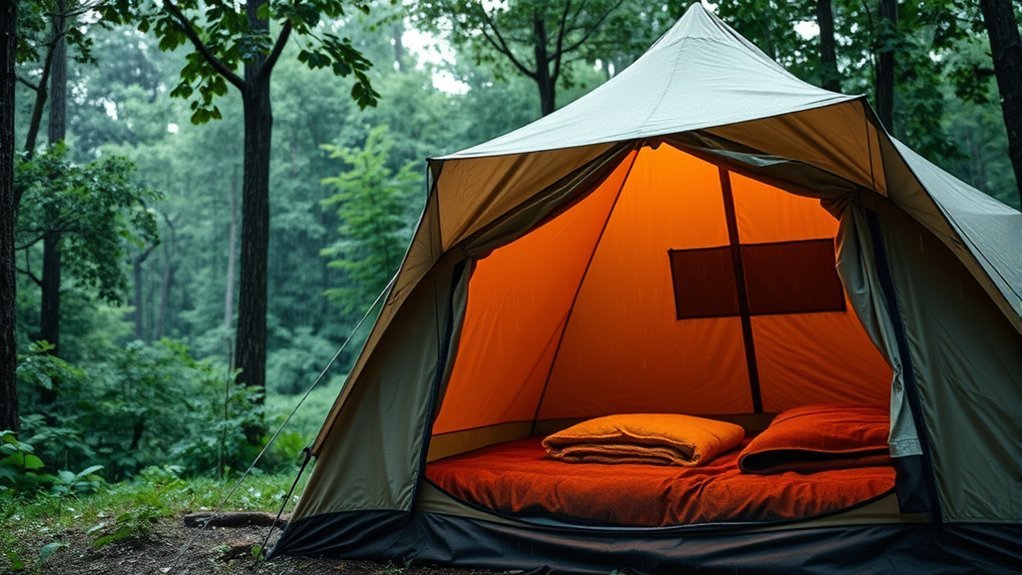
To camp comfortably in the rain, opt for a double-wall tent with a fly-first pitch design, ensuring quick and effective setup. Use a durable tent with a high hydrostatic head rating and incorporate a tarp to create a dry cooking area. Elevate your gear with dry bags for waterproof organization and avoid water pooling by staking your tent and fly properly. With these tent-specific tricks, you can enjoy a cozy experience despite the wet weather, and there’s even more to discover!
Essential Gear for Rainy Camping

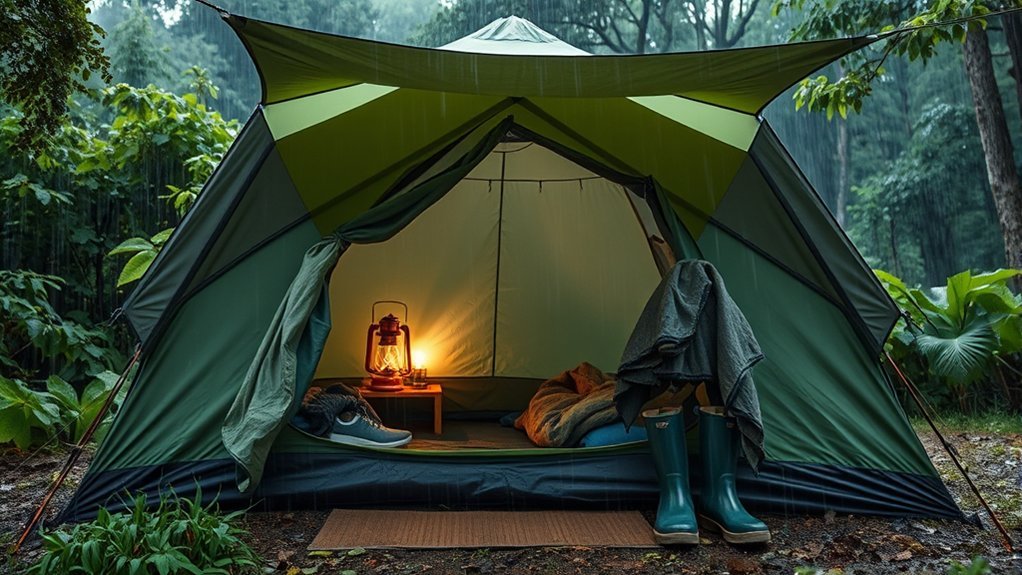
When you’re gearing up for a rainy camping trip, it’s essential to choose the right equipment to stay comfortable and dry. Start with a solid hardshell jacket that blocks rain and wind while allowing moisture management through its breathable fabric. Layer your clothing with quick-dry and moisture-wicking materials to guarantee you stay cozy. For your sleeping bag, opt for synthetic insulation instead of down; it retains warmth when wet, perfect for those drizzly nights. Lightweight, compact dry bags are a must for organizing your gear, and lining your pack with a trash bag adds extra protection against water intrusion. Don’t forget a reliable headlamp rated IPX4 or higher, so you can navigate and set up camp safely, even in downpours. With the right rain gear, you’ll embrace the elements and enjoy your adventure, rain or shine!
Choosing the Right Tent for Wet Conditions
Choosing the right tent for wet conditions can make all the difference in your camping experience, especially when the skies open up. Opt for a double-wall tent with a fly-first pitch design; it simplifies setup in the rain and offers superior moisture management. Look for durable tent materials, ensuring the rainfly boasts a high hydrostatic head rating to withstand heavy downpours without leaking. A spacious tent with a roomy vestibule is essential too; it provides extra space for wet gear, enhancing your comfort during extended stays.
Make sure your tent features an adequate floor height and a sealed bathtub design to keep water at bay during heavy rains. If you’re looking for a communal hangout space, consider floorless pyramid shelters that protect while allowing for airflow. With the right tent, you can embrace the elements without sacrificing comfort or freedom.
Waterproofing Your Gear Effectively
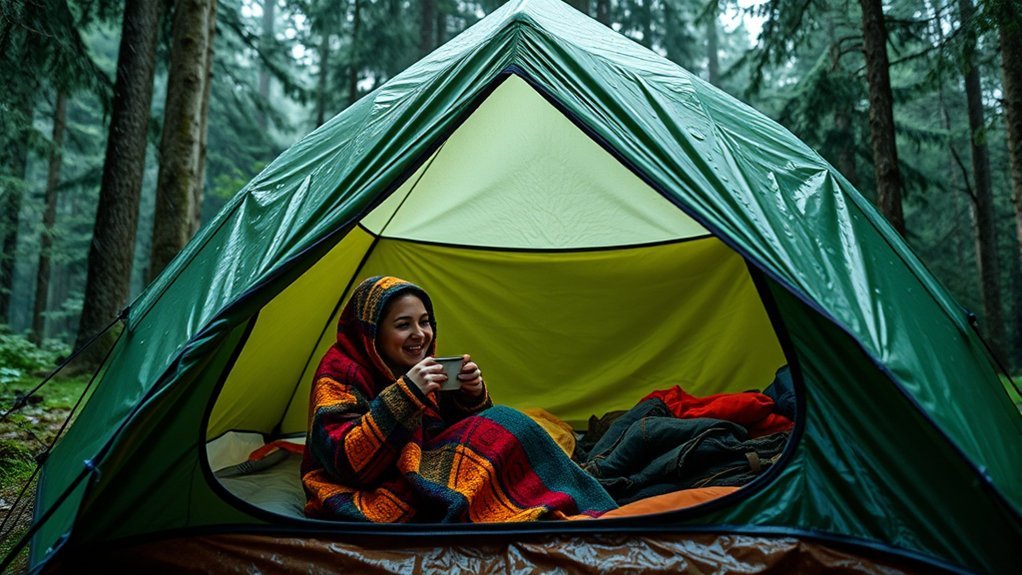
To keep your gear dry during rainy camping trips, it’s essential to implement effective waterproofing strategies. Start by lining your backpack with a trash bag; this simple step shields your gear from rainwater intrusion. Next, embrace drybag organization by sorting your belongings into small, lightweight drybags. Choose compact, waterproof-rated drybags to enhance protection and make access effortless.
Don’t overlook your headlamp—ensure it has an IPX4 rating or higher so it remains functional in wet conditions. This way, you’ll always have light when you need it most.
Selecting an Ideal Campsite in Rain
Finding the right campsite during rainy weather can make all the difference in your comfort and safety. To guarantee a pleasant experience, consider these essential factors:
Choosing the right campsite in rainy weather is crucial for your comfort and safety.
- Campsite elevation: Choose a well-drained, elevated area to prevent water pooling. Avoid low spots prone to flooding.
- Natural shelters: Look for trees or rock formations to shield your tent from wind and rain while you set up.
- Proximity to water: Confirm a reliable water source is nearby for cooking and cleaning purposes.
- Flat ground: Select a flat area with enough space for your tent and a tarp, creating a dry zone around your setup.
Efficient Tent Setup Techniques
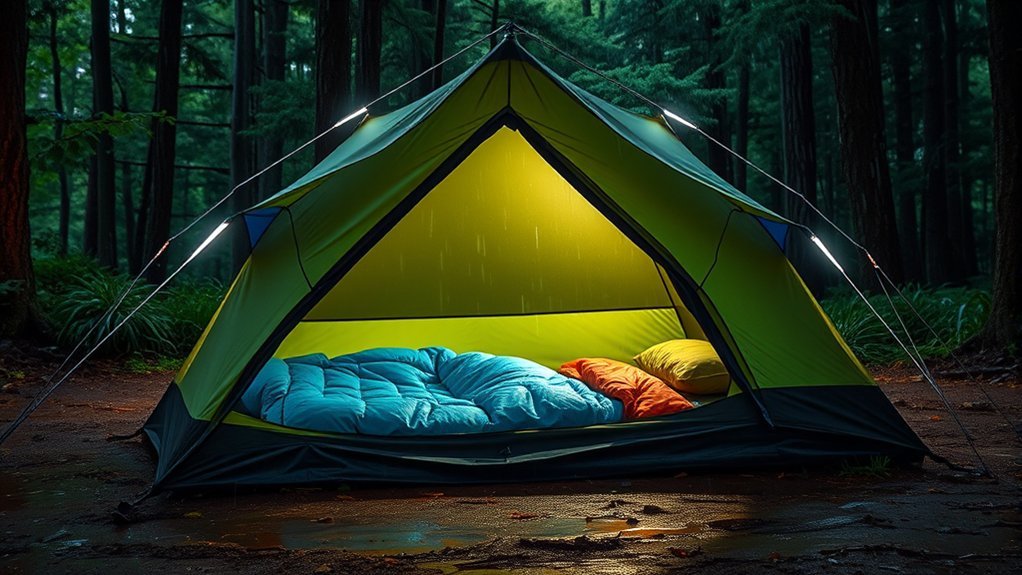
When the rain starts pouring, having efficient tent setup techniques can make all the difference. You’ll want to master tarp utilization to create a dry zone around your tent, while also learning effective pitching methods to keep your shelter secure and water-resistant. With the right approach, you can turn a soggy situation into a cozy retreat.
Tarp Utilization Tips
How can you guarantee your camping experience remains comfortable even in the rain? Mastering tarp utilization is key. Follow these tarp setup techniques to enhance your adventure:
- Use a large tarp that extends beyond your tent, creating a dry storage and cooking area.
- Set the tarp at a slight angle to allow rainwater to run off and provide a sheltered entrance.
- Elevate the tarp with trekking poles or branches for better airflow, reducing water drip.
- Secure it with guy lines and stakes to withstand windy conditions, keeping it taut and stable.
Efficient Pitching Methods
Although the rain may threaten to dampen your camping spirit, mastering efficient pitching methods can transform your setup into a swift and hassle-free experience. Begin by practicing tent maintenance at home; knowing your gear inside and out guarantees a quick setup in wet conditions. Opt for a double-wall tent with a fly-first pitch design, allowing you to shield your sleeping space from the rain while setting up. Stake out the tent and fly to redirect water away, preventing unwanted pooling. Choose a well-drained campsite on high ground to keep your area dry, and don’t forget to utilize a tarp over your tent for extra waterproofing and gear storage. With these techniques, you’ll embrace the adventure, rain or shine!
Creating a Comfortable Dry Area With Tarps
Creating a comfortable dry area with tarps can greatly enhance your camping experience, especially during rainy weather. A well-placed tarp can keep you dry and provide a cozy space outside your tent. Here’s how to set it up effectively:
Enhance your camping experience with a well-placed tarp, keeping you dry and cozy even in rainy weather.
- Choose larger tarp dimensions to guarantee ample coverage for your tent and entrance area.
- Elevate the tarp above the tent, preventing water from pooling and dripping inside.
- Position it strategically to shield against prevailing winds and rain, maximizing protection.
- Secure the tarp with poles or trees, allowing airflow while still blocking the rain.
Don’t forget to stake it down firmly to keep it stable in strong winds. With these tips, you’ll create an inviting, dry area that makes rainy camping feel like a breeze, allowing you to enjoy nature without the worry of getting soaked.
Clothing Layers for Wet Weather
When the rain starts to fall, staying comfortable and dry is just as important as having a reliable tarp overhead. Mastering layering techniques is key to effective moisture management. Start with quick-dry base layers that wick away sweat and keep you warm, even when damp. Opt for synthetic insulation over down, as it retains warmth in wet conditions, making it your best ally. Don’t forget to pack extra base layers and socks; staying dry is essential for your comfort.
A solid hardshell jacket protects against wind and rain, while a brimmed hat shields your eyes from dripping water. For your feet, waterproof boots are non-negotiable; they’ll keep you grounded and dry in sloppy terrain. By choosing the right layers, you can embrace the rain and enjoy your adventure without the discomfort of dampness weighing you down.
Cooking in the Rain: Tips and Tricks
As the rain patters down, you might think cooking outdoors is a lost cause, but with the right strategies, you can whip up delicious meals even in wet conditions. Embrace these tips to enhance your cooking techniques and streamline meal planning:
- Use an integrated canister stove in your tent’s vestibule for a sheltered cooking space.
- Pack a lightweight tarp to create a dry kitchen area outdoors, keeping your gear protected.
- Opt for dehydrated comfort foods that cook quickly and require minimal effort, making meal prep hassle-free.
- Ensure your equipment is waterproof (IPX4 or higher), so your headlamp and tools function flawlessly in the rain.
These simple adjustments not only keep you dry but also make outdoor cooking an enjoyable experience. With a bit of creativity, you can savor warm meals, even when the weather turns gloomy.
Staying Entertained During Bad Weather
When the rain keeps you inside your tent, it’s the perfect time to get creative with indoor games and activities. You can whip up tasty treats in the kitchen or share stories and campfire songs with your companions, turning a gloomy day into a memorable experience. With a little planning, you’ll find plenty of ways to stay entertained and make the most of your rainy camping adventure.
Indoor Games and Activities
How can you keep the fun alive when the rain starts pouring during your camping trip? Embrace the cozy confines of your tent and immerse yourself in some engaging indoor games and activities. Here are a few ideas to keep spirits high:
- Pack a deck of cards for classic card games, perfect for any group size.
- Bring a lightweight book or e-reader filled with your favorite novels to escape into different worlds.
- Consider a small travel-sized puzzle or brain-teaser game to challenge your mind and spark creativity.
- Use your camping gear for a mini scavenger hunt, turning your tent into an exciting adventure zone.
With these activities, you’ll find joy even when the skies are gray!
Cooking and Baking Projects
Rainy weather doesn’t have to dampen your camping spirit; instead, it can inspire some delightful cooking and baking projects that turn your tent into a cozy kitchen. You can whip up comforting dehydrated meals with an integrated canister stove, perfect for the vestibule to keep things dry. If you want to take the fun outside, a lightweight tarp creates a sheltered cooking space where you can prepare meals without getting soaked. For a special treat, try baking projects with an Omni oven, transforming simple ingredients like flour, sugar, and apples into a warm, scrumptious apple pie. Engaging in meal preparation not only fills your belly but also strengthens bonds, making the rainy days feel like a joyful adventure.
Storytelling and Campfire Songs
As the rain patters against your tent, cozying up around a warm campfire becomes the perfect way to keep spirits high. Embrace the magic of storytelling and shared songs to forge connections and lift your mood. Here are some ideas to keep the evening lively:
- Prepare a list of favorite campfire stories to share.
- Encourage everyone to contribute personal tales or local legends.
- Bring a waterproof speaker for a playlist of beloved campfire songs.
- Sing together to create camaraderie, turning rain into a backdrop for joy.
Making the Most of Your Rainy Camping Experience
When you’re faced with wet weather on your camping trip, embracing the challenge can transform your experience into an adventure. Choose a double-wall tent with a fly-first pitch to keep your gear dry from the get-go. Opt for a spacious setup with a roomy vestibule to stash wet gear, enhancing your comfort during those extended rainy days. Line your pack with a trash bag and organize essentials into small dry bags for easy access while setting up camp.
Set your tent on well-drained ground, steering clear of low spots to prevent water pooling. Use a tarp to create a dry area around your tent without touching it, allowing for effective runoff and a cozy space to lounge or cook. Don’t forget to indulge in rainy activities—there’s magic in the sound of raindrops on the tent as you sip warm drinks and share stories. Embrace the rain!
Frequently Asked Questions
How Can I Improve My Tent’s Drainage During Heavy Rain?
To improve your tent’s drainage during heavy rain, choose a high, sloped tent placement. Use drainage tips like creating trenches around the tent and elevating the groundsheet to redirect water away from your cozy shelter.
What Types of Food Are Best for Cooking in the Rain?
You’ll love easy camping meals like hearty stews or foil packet dinners. With waterproof cooking gear, you’ll whip up delicious dishes, even in the rain, embracing the adventure and savoring every flavorful bite amidst nature’s rhythm.
How Do I Prevent Mold in My Tent After Rainy Camping?
To prevent mold in your tent, prioritize tent maintenance and moisture control. Dry your tent thoroughly after each use, store it in a cool, dry place, and use breathable materials to keep airflow ideal.
Can I Use a Regular Tarp Instead of a Camping Tarp?
Sure, you can use a regular tarp instead of a camping tarp, but keep in mind that tarp materials and sizes vary. A thicker tarp usually provides better protection against the elements, enhancing your outdoor experience.
What Should I Do if My Tent Leaks Despite Waterproofing?
If your tent leaks despite waterproofing, check for damaged seams or fabric. Regular tent maintenance, like reapplying waterproofing techniques, can prevent leaks and keep you dry. Don’t let a little rain dampen your adventure!
Conclusion
Embracing rainy camping can lead to some of your most memorable adventures. While you might worry about getting wet and uncomfortable, remember that with the right gear and techniques, you can create a cozy environment that transforms the experience. Picture yourself huddled in your tent, listening to raindrops dance on the fabric while enjoying warm food and laughter. Don’t let a little rain deter you; instead, let it inspire you to seek out the beauty and tranquility in nature’s embrace.