


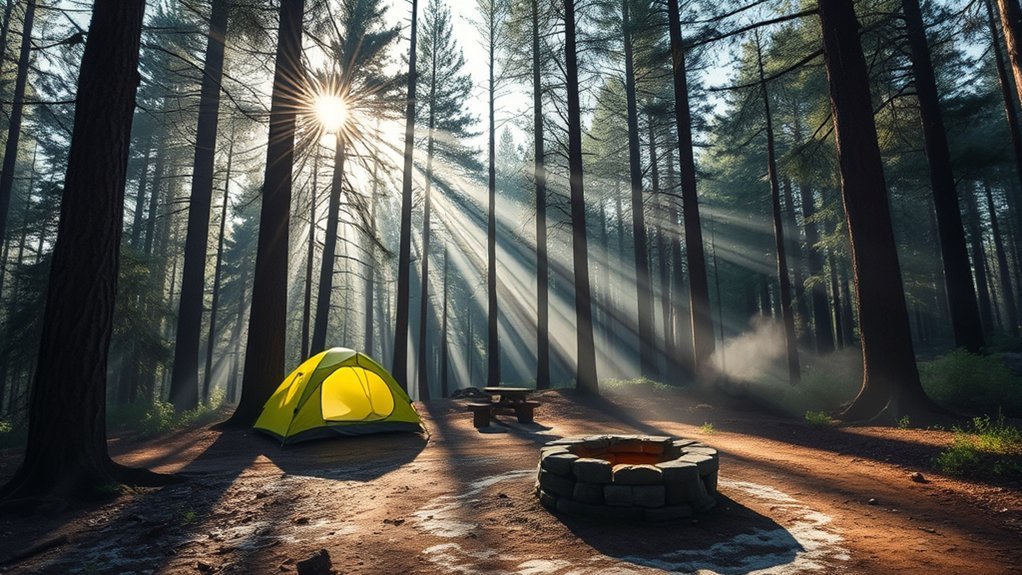
Dispersed camping in U.S. National Forests allows you to enjoy nature in unmarked areas, but it comes with rules. Set up camp at least 200 feet from water sources, pack out all trash, and use existing fire rings. You’ll need to follow specific waste disposal guidelines, like digging a cathole for human waste. Check with local ranger stations for the latest regulations and possible permits. There’s plenty more to explore about making your experience safe and enjoyable.
What Is Dispersed Camping?

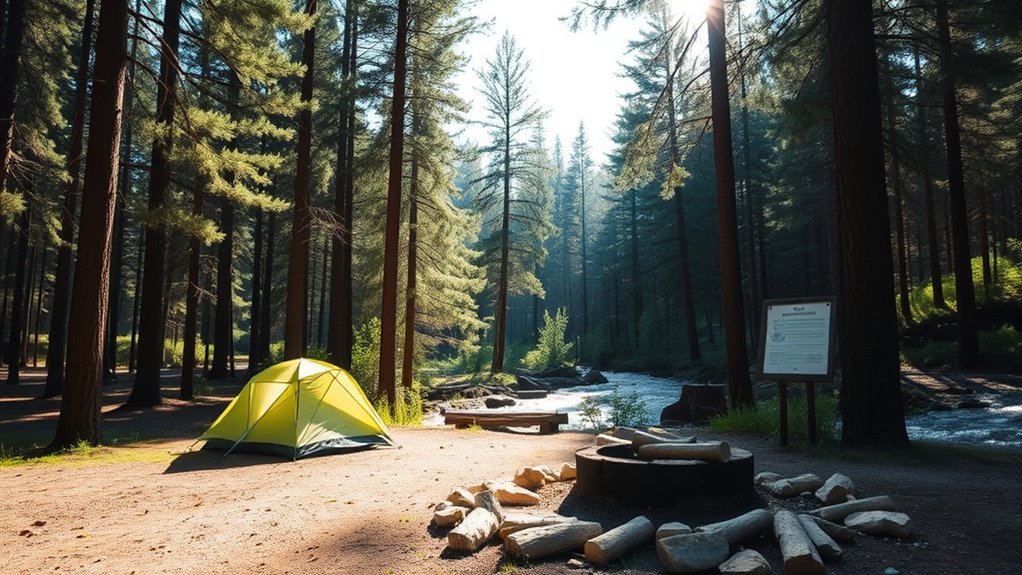
Dispersed camping is an adventurous way to experience the great outdoors, allowing you to set up camp in the wild without the confines of designated sites. Typically occurring in national forests, BLM lands, and wildlife management areas, this style of camping offers a unique freedom. However, it comes with responsibilities. You’ll need to bring all your camping gear, including water, food, and waste disposal methods, as there are no amenities. Always set up your campsite at least 200 feet away from any water sources to protect the environment. Familiarize yourself with the rules of the area, as stay limits usually cap at 14 days within a 28-day period. Adhering to Leave No Trace principles is essential, so guarantee you minimize your impact. Finally, keep safety tips in mind, like checking weather conditions and informing someone of your plans. Enjoy your liberating journey into nature!
Where Can You Disperse Camp?
When you’re planning to disperse camp, your best options are public lands like National Forests, BLM areas, and Wildlife Management Areas. Don’t hesitate to reach out to local rangers for guidance on specific rules and recommended sites. Additionally, online tools like the U.S. Forest Service’s interactive map can help you find permitted locations and regulations for your camping adventure.
Public Land Options
If you’re looking to immerse yourself in nature without the confines of a designated campsite, public lands like National Forests and Bureau of Land Management (BLM) areas offer great opportunities for dispersed camping. These lands provide public access for adventurous souls wanting to escape the ordinary. Typically, you can camp for up to 14 days within a 30-day period in National Forests and for 14 days within a 28-day period on BLM land. Remember to set up camp at least 200 feet away from water sources to protect water quality. Always aim to use existing campsites to minimize your environmental impact. Familiarize yourself with the specific camping regulations of each area to guarantee a responsible and enjoyable experience.
Local Ranger Guidance
To guarantee you find the best spots for dispersed camping, it’s essential to consult local ranger stations. They offer invaluable local ranger assistance, ensuring you stay informed about camping regulations and specific site availability. Here’s what you should check:
- Legal dispersed camping locations and restrictions
- Guidelines for maintaining environmental integrity, like staying 200 feet from water sources
- Duration limits, typically 14 days in National Forests and BLM lands
Online Resource Tools
After gathering insights from local ranger stations, it’s time to explore online tools that can help you find the best spots for dispersed camping. Utilizing online mapping through Google Maps is a great starting point to identify Bureau of Land Management (BLM) areas, National Forests, and state forests. The U.S. National Forest Service interactive map offers detailed regulations and camping zones. Additionally, camping apps like www.boondocking.org and Freecampsites.net can help you discover free camping options. Always check local regulations, as they can differ considerably between areas.
| Resource | Description | Link |
|---|---|---|
| Google Maps | Find BLM and National Forests | [Google Maps](https://maps.google.com) |
| U.S. National Forest | Interactive forest map | [Forest Service Map](https://www.fs.usda.gov) |
| Boondocking.org | Free camping locations | [Boondocking.org](https://www.boondocking.org) |
| Freecampsites.net | Locate free camping across public lands | [Freecampsites.net](https://www.freecampsites.net) |
Fees and Permits for Dispersed Camping
Wondering about fees and permits for dispersed camping in U.S. National Forests? You’re in luck! Most areas offer a free experience, allowing you to enjoy nature without breaking the bank. However, local fees might apply in some spots, so it’s wise to check ahead.
- Confirm with local BLM offices for specific fees on Bureau of Land Management land.
- Larger groups or certain activities may require permits; always check with local rangers.
- Utilize the U.S. National Forest Service’s interactive map to find regulations and any potential costs.
Dispersed Camping Rules and Guidelines
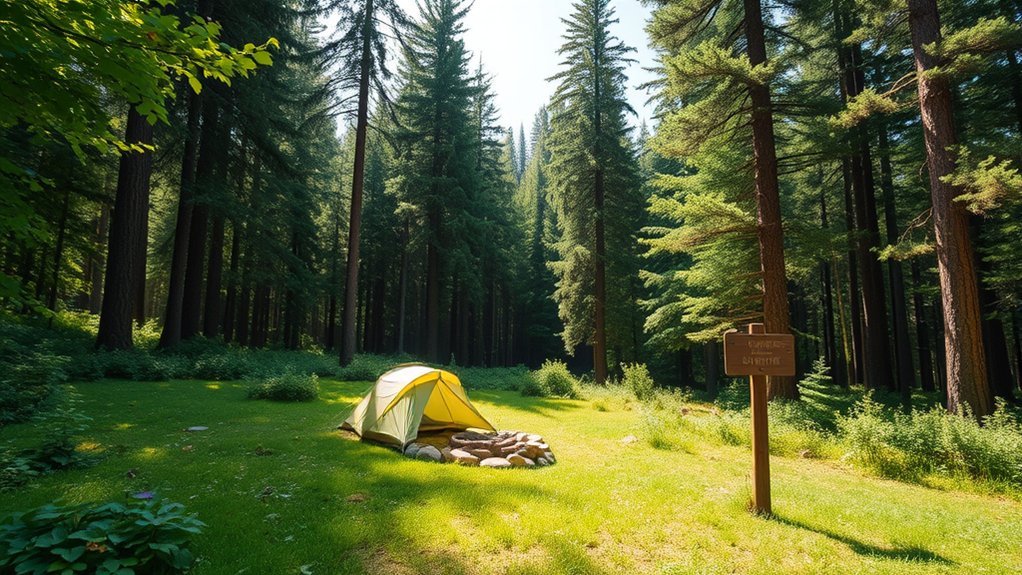
When you’re dispersed camping, it’s essential to follow minimum distance requirements, like setting up at least 200 feet from water sources to protect water quality. You also need to dispose of waste properly to keep the environment clean and safe for everyone. By adhering to these guidelines, you help preserve the natural beauty of the forest for future campers.
Minimum Distance Requirements
To guarantee a sustainable camping experience, it’s crucial to follow minimum distance requirements when setting up your dispersed campsite. These guidelines help protect the environment and guarantee a more enjoyable trip.
- Stay at least 200 feet away from any stream or water source to protect water quality.
- Keep your campsite a minimum distance of 100 feet from roads and trails to minimize disturbances.
- If using existing sites, verify they’re also 200 feet from water sources to reduce environmental impact.
Waste Disposal Practices
Proper waste disposal is essential for preserving the environment during your dispersed camping experience. Following effective waste management and sanitation practices not only protects nature but also enhances your adventure. Here’s a quick reference to keep in mind:
| Waste Type | Disposal Method | Notes |
|---|---|---|
| Human Waste | Dig a cathole (8 inches deep, 200 feet from water) | Pack out toilet paper |
| Used Hygiene Products | Seal and pack out in a container | Avoid burying for environmental safety |
| Trash & Leftovers | Pack out all trash and food; no burying or burning | Leave No Trace principles apply |
| Washing | Use biodegradable soap | Stay 200 feet away from water sources |
Leave No Trace Principles
Respect for nature is at the heart of the Leave No Trace principles, guiding campers to minimize their environmental impact. By following these essential guidelines, you can guarantee your camping experience supports environmental conservation and upholds camping etiquette:
- Camp at least 200 feet away from water sources to protect water quality.
- Pack out everything you bring in, including food scraps, to prevent harming wildlife.
- Use a cathole at least 6 inches deep and 200 feet away from trails and water for human waste.
Embracing these principles not only preserves the beauty of natural spaces but also allows future campers to enjoy pristine conditions. Every small action counts—by respecting the land, you contribute to a sustainable outdoor experience. So, gear up, get out there, and let nature thrive!
Fire Safety Regulations
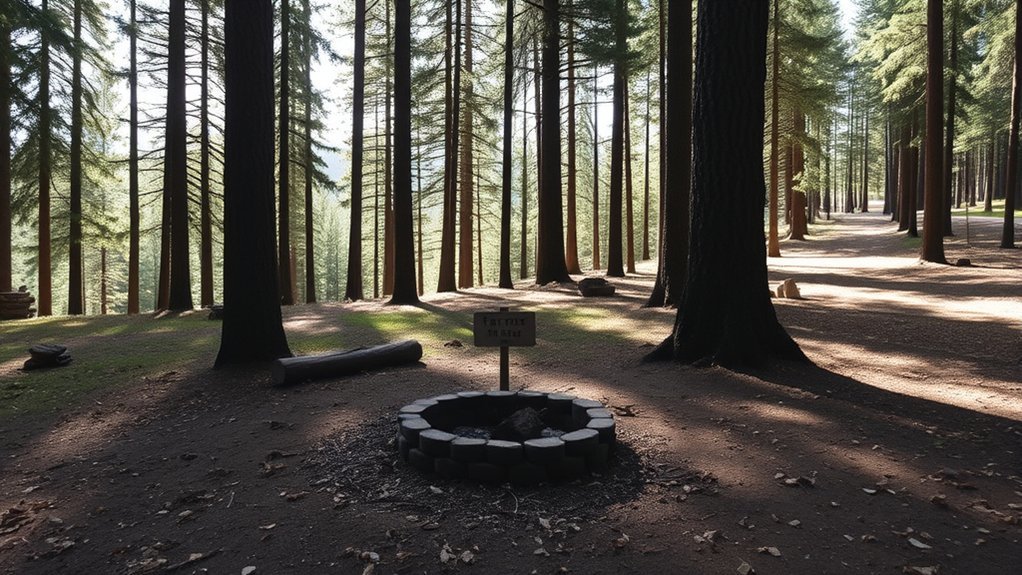
While enjoying the great outdoors, it’s essential to prioritize fire safety in U.S. National Forests. Before lighting a campfire, check with the local Forest Supervisor’s Office for any fire restrictions in place. When you do make a fire, always use existing fire rings to minimize your impact on the environment and keep your fire at least 100 feet away from water sources and low-hanging branches.
Stick to burning only wood and paper; never use aluminum cans or plastics. Gather firewood responsibly from dead, downed trees instead of breaking branches from living ones.
Water Purification Methods
When you’re camping, always purify natural water sources to avoid getting sick from harmful bacteria and parasites. Boiling water for at least a minute is a reliable method, but portable water filters can also help, though they have limitations. Understanding these purification methods will keep you safe and hydrated during your outdoor adventures.
Boiling Water Effectively
Boiling water is one of the most effective ways to purify it, as it eliminates harmful pathogens like bacteria, viruses, and parasites. To guarantee water safety during your camping adventures, follow these steps:
- Bring the water to a rapid boil and maintain that temperature for at least one minute (or three minutes at higher elevations).
- Use a clean pot or kettle, avoiding containers that could leach harmful chemicals.
- Allow the boiled water to cool in sterilized containers to prevent recontamination.
Before boiling, filter the water through a cloth or coffee filter to remove larger particles. By practicing these methods, you’ll enhance your camping hygiene and enjoy safe, clean water while embracing the great outdoors.
Portable Water Filters
Portable water filters are vital tools for ensuring safe drinking water during your camping excursions. They effectively remove bacteria, protozoa, and sediments, providing peace of mind when relying on natural water sources. Many filters utilize ceramic or hollow fiber membrane technology, purifying down to 0.2 microns or smaller. When selecting a filter, consider the specific contaminants in your water source; some may require additional purification methods. Regular filter maintenance, including cleaning and replacing cartridges, is essential for ideal performance and longevity. Also, think about weight, flow rate, and ease of use, especially for backpacking or dispersed camping. Prioritizing water source safety not only enhances your outdoor experience but also keeps you healthy on your adventures.
Waste Disposal in the Wilderness
Proper waste disposal is essential for maintaining the pristine nature of our national forests. Following effective waste management and sanitation practices helps protect the environment and guarantees a safe experience for all campers. Here’s what you need to keep in mind:
- Dig a cathole for human waste at least 6 inches deep and 200 feet from water sources or trails.
- Pack out used toilet paper and hygiene products in a sealed container; they don’t decompose well in the wild.
- Always carry out food scraps and leftovers—burying, scattering, or burning waste attracts wildlife.
Remember to use biodegradable soap at least 200 feet away from any water source and follow Leave No Trace principles. By respecting these guidelines, you contribute to preserving the beauty of our forests for future adventurers.
Pet Considerations While Camping
While camping in U.S. National Forests, it’s important to prioritize pet safety and etiquette. Most areas welcome pets, but always check local regulations to guarantee compliance. Keep your furry friend on a leash no longer than six feet to protect wildlife and other visitors, and to prevent them from wandering into sensitive areas.
Cleaning up after your pet is essential; pack out all waste to maintain cleanliness and adhere to Leave No Trace principles. Never leave your pet unattended at your campsite, especially where wildlife may roam, to avoid potential confrontations.
Additionally, make certain your pet’s vaccinations are up-to-date and they’re protected against parasites, as they’ll likely encounter various animals while camping. By following these guidelines, you can enjoy the great outdoors with your pet while respecting nature and fellow campers. Happy camping!
Resources for Dispersed Campers
When planning a dispersed camping trip, you’ll find various resources that can enhance your experience in U.S. National Forests. Start by checking the U.S. Forest Service’s interactive map, which helps you locate forests and understand specific regulations. Local ranger stations are also invaluable for obtaining information on rules, limitations, and potential fees.
Here are some essential resources to take into account:
- U.S. Forest Service website: Offers maps and guidelines for dispersed camping.
- Local ranger stations: Get tailored advice and current conditions.
- Leave No Trace principles: Learn to minimize your environmental impact.
Don’t forget to pack the right camping gear and always review safety tips, especially regarding fire restrictions that can change based on weather. Being well-informed guarantees you can enjoy your freedom in nature while respecting the land.
Frequently Asked Questions
Can I Camp in Winter at Dispersed Sites?
Yes, you can winter camp at dispersed sites, but make certain you take safety precautions. Dress in layers, bring proper gear, and stay aware of weather conditions to enjoy a safe and liberating experience in nature.
What Equipment Do I Need for Dispersed Camping?
Camping calls for essential gear! Grab your backpack, tent, sleeping bag, stove, food, water, and first-aid kit. Check off your gear checklist to guarantee you’re ready for a wild, wonderful adventure in nature!
Are There Restrictions on Campfires During Specific Seasons?
Yes, there are campfire regulations with seasonal restrictions that vary by location. Always check local guidelines before starting a fire, especially during dry seasons when fire bans may be in effect to guarantee safety.
How Do I Find Available Dispersed Camping Sites?
To find available dispersed camping sites, use dispersed camping apps that show locations and conditions. You can also check online resources for finding campgrounds, ensuring you’re ready for your next adventure in nature.
What Should I Do if I Encounter Wildlife?
If you encounter wildlife, stay calm and observe from a distance. Don’t approach or feed animals, and make noise to alert them of your presence. Always prioritize wildlife safety and respect their space during animal encounters.
Conclusion
To sum up, dispersed camping in U.S. national forests offers a unique adventure, much like the wild west of yesteryear. By understanding the rules and guidelines, you can enjoy nature responsibly while protecting the environment. Remember to follow Leave No Trace principles, properly dispose of waste, and consider your pets’ needs. With a little preparation, you’ll create unforgettable memories in the great outdoors, ensuring that these beautiful landscapes remain pristine for generations to come.