
Last Updated on September 24, 2025 by Daniel Globe
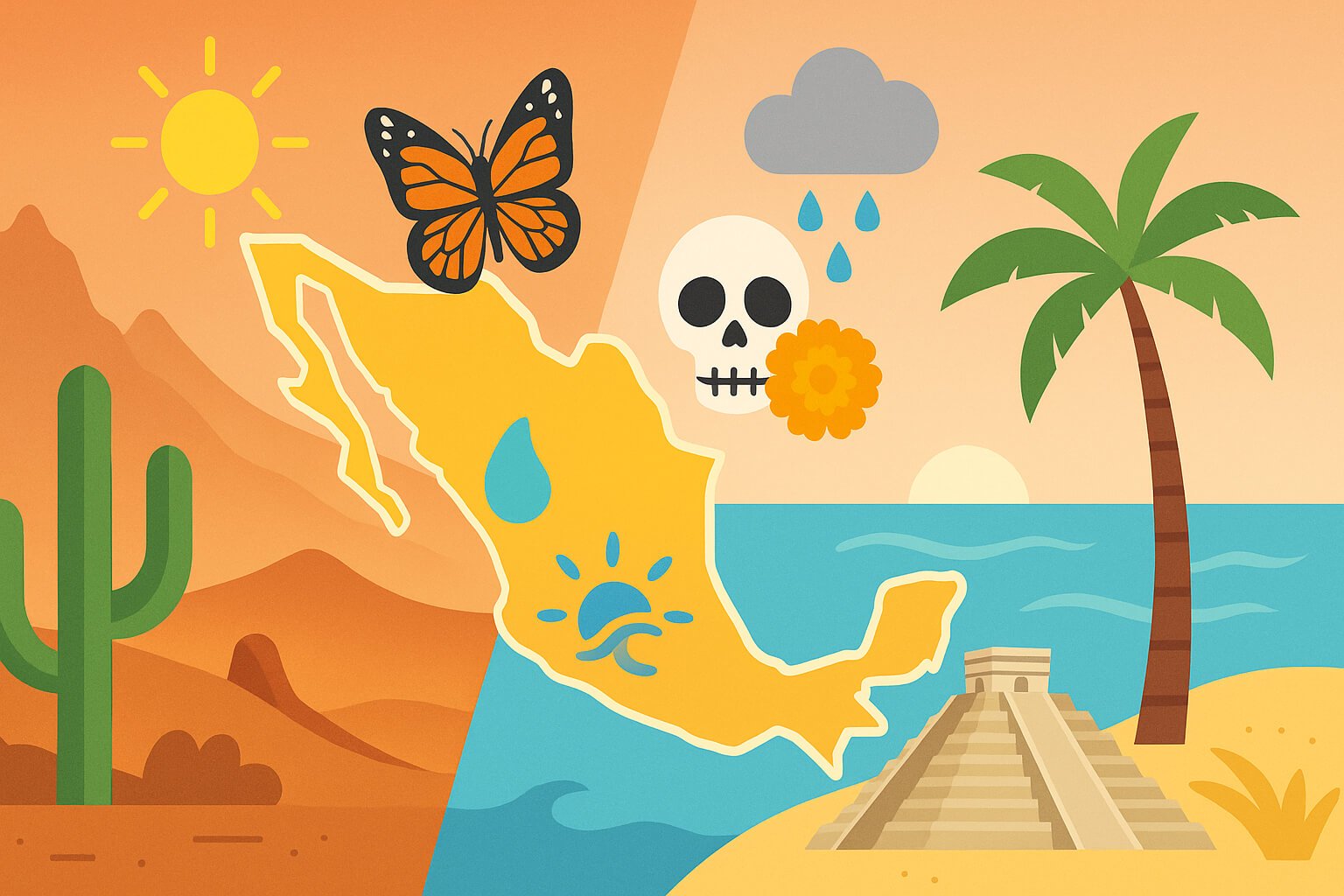
Mexico’s climate is as diverse as its geography, which ranges from arid deserts to lush rainforests and temperate highlands. The country experiences a variety of climatic zones, influenced by factors such as altitude, latitude, and proximity to the ocean. Generally, Mexico can be divided into two main seasons: the dry season, which typically runs from November to April, and the rainy season, which spans roughly June to October (timing varies by region) (source).
However, this generalization does not capture the full complexity of the climate across different regions. In coastal areas like Cancun and Acapulco, the climate is characterized by warm temperatures year-round, with a tropical feel that attracts beachgoers. In contrast, the central highlands, including Mexico City and Guadalajara, experience a more temperate climate with cooler evenings and a distinct dry season.
The northern regions, such as Baja California, can be quite arid, while the southern states like Chiapas and Oaxaca are known for their humid conditions and significant rainfall during the summer months. Understanding these regional variations is crucial for travelers looking to optimize their experience based on their interests and activities.
Key Takeaways
- Mexico has a diverse climate, with the best time to visit depending on the specific activities and experiences you are looking for.
- Beach lovers should visit Mexico during the dry season from November to April for sunny and warm weather.
- Cultural and historical exploration enthusiasts should visit Mexico during the shoulder seasons of spring and fall to avoid extreme temperatures and crowds.
- Outdoor adventure seekers should visit Mexico during the dry season for ideal conditions for activities like hiking, climbing, and exploring natural wonders.
- Festivals and events in Mexico are abundant throughout the year, but the Day of the Dead is observed on November 1–2 (with events often Oct 31–Nov 2) for especially rich cultural experiences (UNESCO).
- Budget travelers should consider visiting Mexico during the shoulder seasons for lower prices on accommodations and activities.
- To avoid crowds, it’s best to visit Mexico during the shoulder seasons and mid-week, rather than during major holidays and peak vacation times.
- When traveling to Mexico, book accommodations and activities in advance during peak seasons, and stay mindful of safety and weather conditions—especially during hurricane season (Atlantic: Jun 1–Nov 30; Eastern Pacific: May 15–Nov 30; NOAA/NHC).
Disclosure: As an Amazon Associate I earn from qualifying purchases. Some links on this page are affiliate links, at no extra cost to you.
The Best Time to Visit Mexico for Beach Lovers
For beach enthusiasts, the ideal time to visit Mexico largely hinges on the desire for warm weather and minimal rainfall. The dry season, particularly from December to April, is often considered the best time for sun-seekers. During these months, coastal destinations like Playa del Carmen, Tulum, and Puerto Vallarta enjoy sunny skies and pleasant temperatures averaging between 75°F to 85°F (24°C to 29°C).
This period is perfect for lounging on the beach, swimming in the turquoise waters, and engaging in water sports such as snorkeling and scuba diving. However, it’s important to note that while the dry season offers optimal beach conditions, it also coincides with peak tourist season. This means that popular beach destinations can become crowded, and accommodation prices may surge.
For those willing to brave slightly warmer temperatures and occasional rain showers, late April to early June can be an excellent alternative. During this shoulder season, visitors can still enjoy warm weather while experiencing fewer crowds and more affordable rates. The beaches remain inviting, and the ocean is warm enough for swimming, making it a great time for those who prefer a more tranquil beach experience. On Mexico’s Caribbean coast (Cancun/Riviera Maya), seasonal sargassum seaweed can affect beaches in late spring and summer; check local monitoring before you go (forecast maps, Quintana Roo network).
The Best Time to Visit Mexico for Cultural and Historical Exploration

Travelers interested in immersing themselves in Mexico’s rich cultural heritage and historical sites will find that the best time to visit largely depends on their specific interests. The months of October through April are particularly favorable for exploring cities like Mexico City, Oaxaca, and Puebla. During this period, temperatures are generally mild, making it comfortable for walking tours of ancient ruins such as Teotihuacan or Monte Albán.
Additionally, cultural festivals often take place during these months, providing visitors with unique opportunities to engage with local traditions. For instance, Day of the Dead is celebrated November 1–2 (with many events Oct 31–Nov 2), a vibrant display of Mexican culture that attracts visitors from around the world (UNESCO).
Similarly, the Guelaguetza festival in Oaxaca during July showcases indigenous music and dance, offering a deep dive into the region’s cultural tapestry. The main “Lunes del Cerro” performances are held on the last two Mondays of July (e.g., July 21 and 28 in 2025; SECTUR Oaxaca). By planning visits around these events, travelers can gain a richer understanding of Mexico’s diverse cultural landscape while enjoying pleasant weather conducive to exploration.
The Best Time to Visit Mexico for Outdoor Adventure
| Month | Temperature (°C) | Rainfall (mm) | Activities |
|---|---|---|---|
| January | 20-25 | 5-10 | Hiking, Mountain Biking |
| April | 25-30 | 10-20 | Rock Climbing, Zip-lining |
| July | 30-35 | 20-30 | Snorkeling, Scuba Diving |
| October | 25-30 | 15-25 | Surfing, Kayaking |
Outdoor enthusiasts seeking adventure in Mexico will find that the best time to visit varies depending on the specific activities they wish to pursue. For hiking in mountainous regions such as the Sierra Madre or exploring national parks like Parque Nacional de las Mariposas Monarca (Monarch Butterfly Biosphere Reserve), the dry season from November to April is ideal. During these months, temperatures are cooler and more comfortable for strenuous activities like trekking or mountain biking. Peak monarch viewing generally runs from mid-winter through late February (UNESCO; opening dates vary each season per CONANP).
Conversely, if water-based adventures such as white-water rafting or kayaking are on the agenda, the rainy season from June to October can be advantageous. Rivers tend to swell with rainwater during this time, creating optimal conditions for thrilling water sports. However, travelers should be mindful of potential weather-related disruptions during this period.
For example, while summer storms can enhance river conditions for rafting in places like Veracruz or Chiapas, they can also lead to flash floods or road closures. Therefore, careful planning is essential for those looking to maximize their outdoor experiences while navigating Mexico’s varied climate.
The Best Time to Visit Mexico for Festivals and Events
Mexico is renowned for its vibrant festivals and events that celebrate everything from religious traditions to local culture. The best time to visit for festival enthusiasts is undoubtedly during the fall months leading into winter. Notable events such as Día de los Muertos (Day of the Dead) on November 1–2 offer a unique glimpse into Mexican culture through colorful altars, parades, and community gatherings (UNESCO).
Cities like Oaxaca and Mexico City come alive with festivities that honor deceased loved ones in a joyous manner. Another significant event is Las Posadas, celebrated from December 16th to December 24th across the country. This festival commemorates Mary and Joseph’s search for shelter before Jesus’ birth and includes processions, caroling, and traditional foods.
For those interested in music and dance, the Cervantino Festival in Guanajuato during October showcases an array of performances from local and international artists. Each of these events provides an opportunity not only to witness but also to participate in Mexico’s rich cultural heritage.
The Best Time to Visit Mexico for Budget Travelers

Budget-conscious travelers will find that timing their visit can significantly impact their overall expenses in Mexico. The off-peak season from May to October generally offers lower prices on accommodations and flights due to decreased tourist traffic. During this period, travelers can take advantage of discounts on hotels and tours while enjoying a more authentic experience without the crowds that characterize peak season.
However, it’s essential to consider that traveling during the rainy season may come with trade-offs such as unpredictable weather. While some regions may experience heavy rainfall, others might only see brief afternoon showers followed by sunshine. For instance, visiting coastal areas like Cancun or Playa del Carmen during September can yield significant savings on hotel rates while still allowing for enjoyable beach days if one is willing to navigate occasional rain. Keep an eye on tropical cyclone outlooks in both basins that affect Mexico (Atlantic: Jun 1–Nov 30; Eastern Pacific: May 15–Nov 30; NOAA/NHC).
Additionally, many local attractions offer reduced admission prices during off-peak times, making it an excellent opportunity for budget travelers to explore without breaking the bank.
The Best Time to Visit Mexico for Avoiding Crowds
For those who prefer a more serene travel experience free from large crowds, timing is crucial when planning a trip to Mexico. The months of May through October are typically less crowded compared to the peak tourist season from December through April. During this off-peak period, popular destinations such as Cancun, Tulum, and Mexico City see fewer visitors, allowing travelers to explore attractions at a leisurely pace.
Visiting during shoulder seasons—specifically late April or early November—can also provide a balance between favorable weather conditions and reduced crowds. For example, visiting archaeological sites like Chichen Itza or Palenque during these times allows for a more intimate experience without long lines or throngs of tourists. Additionally, local markets and restaurants are often less busy during off-peak times, providing opportunities for authentic interactions with locals and a deeper appreciation of Mexican culture.
Tips for Traveling to Mexico During Peak and Off-Peak Seasons
Traveling to Mexico during peak or off-peak seasons requires strategic planning to ensure an enjoyable experience regardless of the timing. For those venturing during peak season (December through April), booking accommodations well in advance is essential due to high demand. Travelers should also consider flexible travel dates; flying mid-week rather than on weekends can often yield better rates and availability.
On the other hand, if traveling during off-peak months (May through October), it’s wise to stay informed about regional weather patterns. While some areas may experience heavy rainfall, others might remain relatively dry; thus researching specific destinations can help mitigate any potential weather-related issues. Additionally, taking advantage of local festivals or events during off-peak times can enhance the travel experience by providing unique cultural insights.
Regardless of when one chooses to visit Mexico, being adaptable and open-minded will lead to memorable experiences filled with rich culture, stunning landscapes, and warm hospitality that define this vibrant country.
FAQs
What is the best time to travel to Mexico?
The best time to travel to Mexico is during the dry season, typically November through April, when most regions see minimal rainfall (reference).
What is the weather like in Mexico during the best time to travel?
During the dry season, Mexico experiences warm and sunny weather with minimal rainfall. Temperatures are typically comfortable, making it an ideal time for outdoor activities and sightseeing.
Are there any specific events or festivals to consider when planning a trip to Mexico?
Mexico hosts a variety of cultural events and festivals throughout the year. Notable events include Día de los Muertos on November 1–2, and (in Oaxaca) the Guelaguetza on the last two Mondays in July (UNESCO; SECTUR Oaxaca).
Are there any areas of Mexico to avoid during certain times of the year?
Stay informed about travel advisories and weather. Hurricane season affects Mexico on both coasts (Atlantic: June 1–Nov 30; Eastern Pacific: May 15–Nov 30). Monitor official updates if visiting coastal areas during these months (NOAA/NHC).
What are some popular tourist destinations in Mexico to visit during the best time to travel?
Popular picks in the dry season include Cancun and the Riviera Maya for beaches, Mexico City for culture and history, and Oaxaca for its vibrant arts scene. For nature, consider the Monarch Butterfly Biosphere Reserve (best viewing mid-winter; exact opening/closing dates vary each season per CONANP).
