


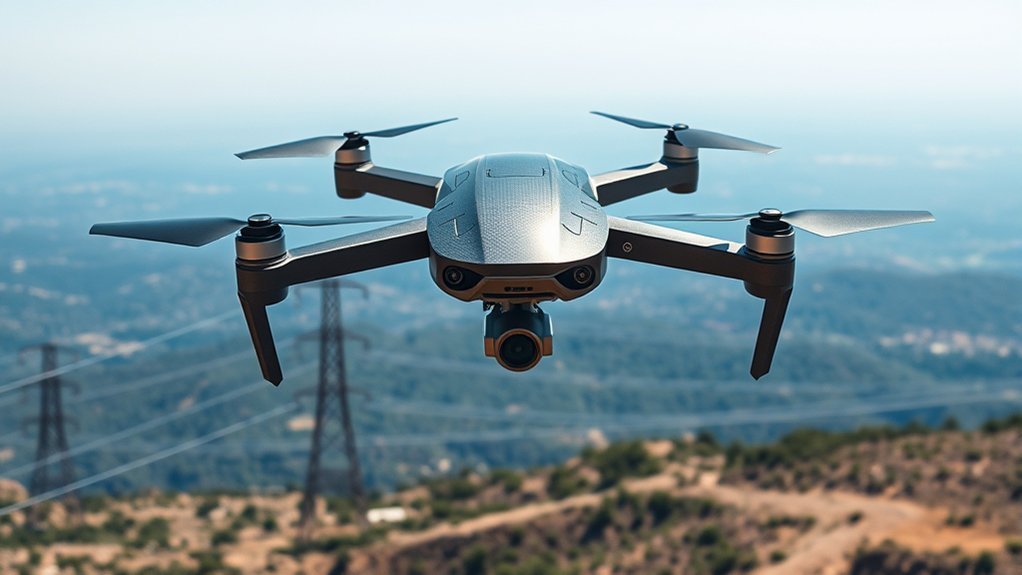
For power line inspections in 2026, consider the Autel EVO II Dual 640T for its 640×512 thermal resolution and impressive 38-minute flight time. The Bwine F7GB2 Pro boasts a 4K camera and 75-minute flight time, perfect for extensive routes. The 5G FPV Drone adds an 8K camera and 360° obstacle avoidance features. Prioritizing thermal imaging, flight time, and safety will enhance your inspections. Stick around to uncover the top features and capabilities you might need!
| Autel EVO II Dual 640T Thermal Imaging Drone |  | Best for Inspections | Camera Quality: 50MP visible camera, 640×512 thermal imaging | Flight Time: 38 minutes | Stabilization: Real-time mapping with 19 sensors | VIEW LATEST PRICE | Read Our Analysis |
| Bwine F7GB2 Pro Drone with Camera 4K UHD |  | Best for Beginners | Camera Quality: 4K UHD camera with 120° field of view | Flight Time: 75 minutes | Stabilization: 3-axis gimbal stabilization | VIEW LATEST PRICE | Read Our Analysis |
| 5G FPV Drone with 4K/8K Camera and GPS |  | Best for Versatility | Camera Quality: 8K Ultra HD camera with 50X digital zoom | Flight Time: 60 minutes | Stabilization: 3-axis gimbal with EIS anti-shake | VIEW LATEST PRICE | Read Our Analysis |


More Details on Our Top Picks
Autel EVO II Dual 640T Thermal Imaging Drone
The Autel EVO II Dual 640T Thermal Imaging Drone is an excellent choice for utility companies and inspectors who need reliable, high-resolution thermal imaging for power line inspections. With a 640×512 thermal resolution and 30 fps, you can easily detect issues up to 100 meters away. Its 50MP visible camera offers impressive clarity with 4x lossless zoom. Enjoy a flight time of up to 38 minutes, maximizing efficiency during inspections. Equipped with advanced features like temperature measurement modes and D-RI ranges, this drone enhances safety and reduces inspection time, making it a top pick for your power line monitoring needs.
- Camera Quality:50MP visible camera, 640×512 thermal imaging
- Flight Time:38 minutes
- Stabilization:Real-time mapping with 19 sensors
- Navigation Features:Path planning with real-time mapping
- Safety Features:Temperature measurement and alarm
- Accessories Included:3 batteries, smart controller, protective cases
- Additional Feature:640×512 thermal resolution
- Additional Feature:15km video transmission range
- Additional Feature:Supports multiple temperature modes
Bwine F7GB2 Pro Drone with Camera 4K UHD
For professionals conducting power line inspections, the Bwine F7GB2 Pro Drone’s impressive 4K UHD camera and robust features make it an ideal choice. With a detachable 4K video camera and a 120° field of view, you’ll capture detailed imagery. The 3-axis gimbal guarantees stable shots, even with 5x digital zoom. Plus, you’ll enjoy a generous flight time of 75 minutes thanks to its three intelligent batteries. Its advanced navigation modes, like GPS follow and auto return, enhance safety. Weighing just 550 grams, this drone is perfect for both beginners and seasoned inspectors looking for reliability and quality.
- Camera Quality:4K UHD camera with 120° field of view
- Flight Time:75 minutes
- Stabilization:3-axis gimbal stabilization
- Navigation Features:GPS Follow, Waypoint, Orbit Fly
- Safety Features:Auto return on low battery or lost signal
- Accessories Included:3 batteries, carrying case, propeller blades
- Additional Feature:120° field of view
- Additional Feature:Fast charging capability
- Additional Feature:75 minutes total flight time
5G FPV Drone with 4K/8K Camera and GPS
Equipped with an 8K Ultra HD camera and advanced stabilization technology, the G FPV Drone is an ideal choice for professionals conducting power line inspections. With 50X digital zoom and a 90° adjustable lens, you’ll capture detailed visuals effortlessly. Its 360° laser obstacle avoidance guarantees safety, while the GPS features allow for precise hovering and a one-key auto return function for peace of mind. Enjoy up to 60 minutes of flight time with dual batteries, and its foldable design makes transport a breeze. Whether you’re a beginner or an expert, this drone adapts to your needs with smart flight modes for seamless operation.
- Camera Quality:8K Ultra HD camera with 50X digital zoom
- Flight Time:60 minutes
- Stabilization:3-axis gimbal with EIS anti-shake
- Navigation Features:GPS and optical flow for precise hovering
- Safety Features:360° laser obstacle avoidance
- Accessories Included:2 batteries, 8 spare blades, USB fast charger
- Additional Feature:8K Ultra HD camera
- Additional Feature:50X digital zoom
- Additional Feature:Intelligent foldable design
Factors to Consider When Choosing Drones for Power Line Inspections
When choosing a drone for power line inspections, you need to contemplate several key factors. Thermal imaging capabilities, flight time, and safety features are essential for effective assessments. Additionally, evaluating camera quality and navigation options will guarantee you select the best drone for your needs.
Thermal Imaging Capabilities
Many drones offer impressive thermal imaging capabilities that are essential for effective power line inspections. These systems can detect temperature variations, helping you identify overheating components in power lines and substations. If you choose a drone with high-resolution thermal sensors, like 640×512 resolution, you’ll spot issues from considerable distances, greatly enhancing your inspection efficiency. Look for advanced features such as 16x digital zoom and multiple temperature measurement modes, which allow for precise monitoring of electrical equipment. With real-time thermal analysis, you can markedly reduce inspection times and costs, as these drones can cover large areas quickly. Plus, effective thermal imaging systems can detect subjects up to 100 meters away, making them invaluable for inspecting hard-to-reach areas safely.
Flight Time Considerations
Thermal imaging capabilities are just one aspect to evaluate for effective power line inspections; flight time plays a significant role too. Longer flight times, like those exceeding 38 minutes, let you cover more distance and inspect multiple sections in one go. If you’re tackling extensive routes, consider drones that can fly for over 60 minutes to reduce the need for frequent landings and battery swaps, enhancing productivity. Opting for drones with multiple batteries can extend your operational time, allowing for continuous inspections with minimal downtime. Also, evaluate how quickly the batteries recharge, as efficient charging options can further boost your overall flight time and keep your inspections running smoothly. Prioritize these factors to maximize your inspection efficiency.
Safety Features Importance
While inspecting power lines, prioritizing safety features in your drone can make a significant difference in operational success. Look for drones equipped with 360° laser obstacle avoidance, which helps prevent collisions and guarantees safe navigation in complicated environments. GPS and optical flow technology enhance precise hovering, allowing you to capture detailed inspections without risking damage. Features like one-key auto return activate when battery levels drop or signals are lost, making certain your drone returns safely to its launch point. Additionally, enhanced wind resistance capabilities are essential for stable flight in variable weather conditions. By choosing drones with these safety features, you not only protect your equipment but also minimize risks associated with manual inspections in hard-to-reach or hazardous locations.
Camera Quality Assessment
When selecting a drone for power line inspections, you’ll want to prioritize camera quality, as it directly impacts your ability to detect issues effectively. High-resolution cameras, like those with 640×512 thermal imaging and 50MP visible sensors, enhance your inspection capabilities. Look for digital zoom options, such as 16x for thermal and 4x lossless for visible cameras, to get close-up views of hard-to-reach infrastructure. A 3-axis gimbal stabilization system is crucial for steady footage, guaranteeing minimal image blur during windy conditions. Additionally, choose cameras with advanced features like temperature measurement and image enhancement tools to gather critical data. Finally, verify the drone captures 4K video resolution for high-quality images, essential for detailed inspections and reporting.
Navigation and Control Options
Effective navigation and control options are essential for conducting thorough power line inspections with drones. Look for drones equipped with GPS navigation systems for precise location tracking and waypoint navigation, which are critical for systematic inspections. Advanced modes like Follow-Me and Orbit allow your drone to autonomously track and inspect power lines from various angles. Safety features like one-key auto return are fundamental, ensuring the drone returns to its launch point if the battery runs low or the signal is lost. Real-time video transmission capabilities enable you to monitor inspections live, evaluating power line conditions as they’re captured. Finally, enhanced obstacle avoidance technology helps navigate around structures and cables, reducing collision risks during your inspections.
Frequently Asked Questions
What Is the Average Flight Time of These Drones?
The average flight time of these drones typically ranges from 20 to 40 minutes, depending on the model and battery capacity. You’ll want to take this into account when planning your inspections for efficiency and coverage.
Are These Drones Suitable for Extreme Weather Conditions?
Yes, these drones are designed to withstand extreme weather conditions. Their robust build and advanced technology guarantee reliable performance in high winds, rain, and even snow, making them suitable for varied inspection environments.
Can These Drones Be Used for Other Inspections?
Yes, you can use these drones for various inspections, like infrastructure assessments and environmental monitoring. Their versatility and advanced features make them suitable for a range of applications beyond just power line inspections.
How Do I Maintain and Service These Drones?
To maintain and service your drones, regularly check battery levels, clean the propellers, update firmware, and inspect the hardware for wear or damage. Also, follow the manufacturer’s guidelines for routine maintenance to guarantee peak performance.
What Is the Estimated Cost of Replacement Parts?
Replacement parts for drones typically range from $50 to $500, depending on the component. Notably, about 30% of drone owners report needing replacement parts within the first year, so budgeting for them’s essential.
Conclusion
In the world of power line inspections, choosing the right drone can feel like searching for a needle in a haystack. With options like the Autel EVO II and Bwine F7GB2, you’ve got powerful tools at your fingertips. Remember to weigh factors like thermal imaging and camera quality to guarantee safety and efficiency. By selecting wisely, you’re not just flying; you’re soaring into the future of inspections, making your job easier and more precise than ever!