


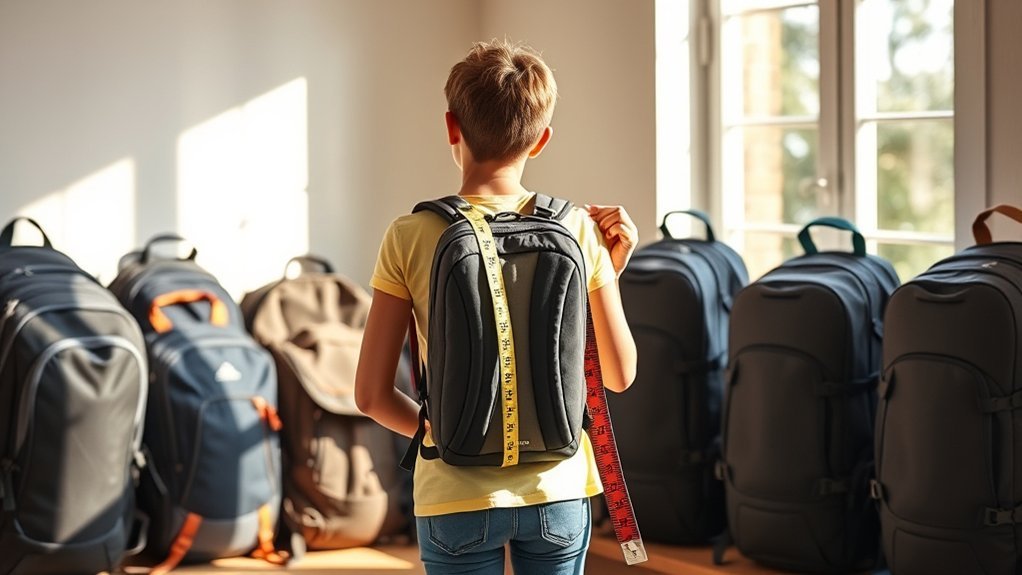
When choosing a backpack as a shorter individual, prioritize torso length by measuring from your C7 vertebra to iliac crest. Aim for packs that fit your torso size, typically between 15-30 liters for various trip lengths. Make sure the hip belt rests correctly on your hip bones for comfort and stability. Look for adjustable features in shoulder straps and hip belts for a customized fit. There’s more to know to maximize your backpack’s comfort and functionality.
Importance of Torso Length in Backpack Selection


When selecting a backpack, understanding your torso length is essential because it directly impacts your comfort and fit. Your torso length influences how the weight of the pack distributes across your body, making it critical for a pleasant experience during outdoor activities. If you’re shorter, finding a backpack that matches your torso length prevents strain and enhances stability. Many brands offer size charts linking torso length to specific pack sizes, ensuring a tailored fit for you.
Additionally, adjustable torso lengths in backpacks can considerably improve comfort and support. This feature lets you customize the fit, allowing for better weight distribution, which is crucial for longer hikes or travel. Prioritizing the right torso length not only enhances your physical comfort but also liberates you to explore without the distraction of an ill-fitting pack. Embrace the freedom of movement by choosing a backpack that aligns with your unique body shape.
Measuring Your Torso Length Accurately

Accurate measurement of your torso length is key to finding a backpack that fits well. Start by dropping your chin to your chest to locate the C7 vertebra, the prominent bone at the base of your neck. Use a tape measure to measure straight down from the C7 bone to the top of your iliac crest, the bony ridge of your pelvis. Make certain to stand tall during this process; it guarantees the tape runs directly down your spine for an accurate reading. For the most reliable result, take three measurements and average them. This average will give you a precise torso length, which is essential for selecting a backpack that offers the right comfort and support. A well-fitting backpack can make all the difference in your adventures, empowering you to explore without discomfort. Take the time to measure accurately; your back will thank you!
Understanding Hip Width and Its Relevance

Understanding your hip width is essential for finding a backpack that fits well and distributes weight effectively. A properly sized hip belt rests on your hip bones, enhancing comfort during your adventures. Additionally, adjustable hip belts can cater to different hip widths, ensuring a personalized fit that supports your needs.
Importance of Hip Measurement
The importance of hip measurement can’t be overstated when selecting a backpack. Proper hip measurement guarantees the hip belt rests on your hip bones, providing essential support and weight distribution. Here are some key points to take into account:
- Accurate Measurement: Measure at the widest part of your hips for the best fit.
- Enhanced Comfort: A well-fitted hip belt increases comfort and stability, vital for short individuals with unique body proportions.
- Interchangeable Options: Many brands offer interchangeable hip belts, allowing you to customize based on your measurements.
- Balanced Load: Understanding hip width, alongside torso length, helps achieve a balanced load, preventing strain during use.
Choosing the right hip measurement empowers you to enjoy your adventures without discomfort.
Impact on Fit
When selecting a backpack, hip width greatly impacts fit and comfort, especially for shorter individuals. A properly fitted hip belt guarantees effective weight distribution, reducing strain on your shoulders and back. To find the right fit, measure your hip width at the widest part of your hips.
| Hip Width (inches) | Recommended Backpack Size | Fit Quality |
|---|---|---|
| 28-30 | Small | Snug & Supportive |
| 31-33 | Medium | Comfortable |
| 34+ | Large | Roomy |
A snug hip belt rests on your hip bones, preventing shifting during use. Remember, a well-fitting hip belt is vital for comfort and effective load management, so choose wisely!
Adjustable Hip Belts
A well-fitted hip belt not only enhances comfort but also stabilizes your load, making adjustable hip belts a valuable feature for shorter individuals. Understanding hip width is essential for achieving the right fit. Here’s how to get it right:
- Measure Hip Width: Identify the widest part of your hips and measure there for accuracy.
- Choose Adjustable Options: Look for belts that can be customized for your unique shape.
- Consider Interchangeable Belts: Many brands offer belts that you can swap out for better fitting.
- Prioritize Comfort: A well-fitted hip belt helps reduce strain on your back and shoulders, enhancing your overall experience.
With the right adjustable hip belt, you’ll feel the freedom of movement on your adventures.
Ideal Backpack Sizes for Short Travelers
What size backpack should you choose as a short traveler? For minimalist day trips, opt for a 15-20 liter pack. This size accommodates your essentials—water, snacks, and a few personal items—without adding unnecessary bulk. If you’re exploring cities, a 20-25 liter backpack is ideal. It offers enough space for extra gear like a camera or guidebook while remaining lightweight and easy to carry.
For longer excursions, consider a 25-30 liter pack. This size gives you the capacity to pack additional food, clothing, or specialized equipment needed for various activities.
Always verify your backpack doesn’t extend beyond your natural waist curve and matches your torso width for the best fit. Prioritize packs with adjustable torso lengths and hip belts that rest on your hip bones to enhance comfort and improve weight distribution. This way, you’ll feel liberated and ready to tackle any adventure!
Key Features to Look for in a Backpack
When choosing a backpack, focus on the proper torso length for a comfortable fit. A well-fitted hip belt and adjustable shoulder straps are essential for weight distribution and ease of movement. These key features will enhance your overall carrying experience, making your adventures more enjoyable.
Proper Torso Length
Understanding proper torso length is essential for finding a comfortable backpack, as it guarantees the pack fits your body correctly. Here are key features to take into account:
- Torso Measurement: Measure from the C7 bone at the base of your neck to the top of the iliac crest to determine your torso length.
- Backpack Fit: Confirm the pack doesn’t extend beyond your natural waist curve for ideal weight distribution.
- Shoulder Straps: Look for straps that contour to your shoulders without pinching or gaps, ensuring a snug fit.
- Load Lifters: Check for load lifters just below the shoulder straps to help adjust weight and maintain balance.
Prioritize these features to enhance your backpacking experience and liberate your adventures!
Comfortable Hip Belt
A comfortable hip belt is essential for effective weight distribution and support during your outdoor adventures. Look for a hip belt that rests directly on your hip bones, ensuring the best support. Adjustable straps are a must, allowing you to customize the fit for your unique body shape. Sufficient padding enhances comfort, especially when you’re carrying heavier loads over long distances. The belt’s width should align with the natural curve of your hips to prevent pinching while maintaining stability. Some backpacks even offer interchangeable hip belts, giving you the freedom to choose what fits best. By prioritizing these key features, you’ll enhance your comfort and enjoy your journey to the fullest.
Adjustable Shoulder Straps
Adjustable shoulder straps are vital for achieving a personalized fit in your backpack, especially for shorter individuals. Here’s what to look for:
- Contouring Fit: Verify the straps hug your shoulders without pinching or leaving gaps for comfort during long wear.
- Load Lifters: Look for adjustable load lifters that help pull the pack closer to your body, enhancing balance and reducing back strain.
- Padded Straps: Opt for well-padded shoulder straps to alleviate pressure points, essential for a tailored fit.
- Torso Length Adjustment: Choose backpacks that accommodate different torso lengths, and test the fit with weight to verify functionality.
With these features, you’ll enjoy a liberating and comfortable carrying experience!
Popular Backpack Brands for Short Individuals
Finding the right backpack can make all the difference for shorter individuals, and several popular brands cater specifically to your needs. Osprey’s Aura AG 50 offers sizes tailored for torso lengths from 14-21 inches, ensuring a snug fit. Gregory’s Deva and Diva models also accommodate shorter builds with sizes ranging from 14-20 inches, perfect for small and medium options. If you’re looking for versatility, consider the REI Co-op Flash 45 Pack, designed with a single torso measurement ideal for shorter users. The North Face features women’s-specific packs that include shorter torso lengths, providing both comfort and support. Additionally, Kelty offers adjustable torso lengths, allowing you to customize your fit for enhanced comfort during use. Each of these brands understands that a well-fitted backpack is essential for your freedom and mobility, empowering you to explore with ease.
Tips for Trying on Backpacks in Store
Choosing the right backpack involves more than just picking a brand; it’s also about guaranteeing the fit is perfect for your body. Here are some practical tips to keep in mind while trying on backpacks in-store:
Selecting the ideal backpack goes beyond brand preference; ensuring the perfect fit for your body is essential.
- Check Shoulder Straps: Make sure they contour to your shoulders without pinching or leaving gaps for comfort.
- Adjust the Hip Belt: Position it on your hip bones to facilitate proper weight distribution and support.
- Use Load Testers: Fill the backpack with weight to simulate a realistic carrying experience and assess comfort.
- Examine the Torso Fit: Guarantee the backpack doesn’t extend beyond your natural waist curve for the right torso length.
Adjusting Your Backpack for Optimal Comfort
To guarantee maximum comfort during your adventures, it’s vital to properly adjust your backpack. Start by confirming the hip belt rests firmly on your hip bones; this promotes weight distribution and reduces strain on your back. Next, adjust the shoulder straps so they contour to your shoulders without pinching or creating gaps, guaranteeing even load distribution.
Don’t forget the load lifters! Position them below the shoulder straps to pull the weight of the pack closer to your body, enhancing stability. It’s important to regularly check and tighten all straps during use, as they can loosen with movement, impacting your comfort and balance.
As you make adjustments, confirm the pack sits comfortably without restricting your movement or causing pressure points on your torso. A well-adjusted backpack not only enhances your experience but also liberates you to fully enjoy your journey without discomfort.
Additional Considerations for Packing Essentials
When planning your backpack’s contents, think about the activities you’ll engage in and the duration of your trip. Choosing the right pack size is essential for carrying your essentials efficiently. Here are four key items to contemplate packing:
- Water: Stay hydrated with built-in reservoirs or water bottle pockets, especially during outdoor adventures.
- Snacks: Keep energy levels up with lightweight, non-perishable snacks.
- Light Jacket: A compact layer can protect against changing weather conditions.
- Personal Needs: Don’t forget medical supplies or specific dietary items to keep you comfortable.
For day trips, a 15-20 liter pack suffices, while urban travel benefits from a 20-25 liter option. If your journey stretches beyond a day, go for a 25-30 liter pack to accommodate extra gear. With thoughtful packing, you’ll feel liberated and ready for any adventure!
Frequently Asked Questions
Can I Use a Regular-Sized Backpack if I’M Short?
Yes, you can use a regular-sized backpack if you’re short. Just adjust the straps for a snug fit, ensuring comfort and balance. Try it out, and see if it meets your needs effectively.
What Are the Consequences of Poor Backpack Fit?
Poor backpack fit can cause discomfort and injury; studies show 50% of students experience back pain due to improper sizing. You’ll struggle with posture, fatigue, and even decreased focus, limiting your ability to enjoy adventures.
How Much Weight Should a Short Person Carry in a Backpack?
You shouldn’t carry more than 10-15% of your body weight in a backpack. This helps prevent strain and allows you to move freely, ensuring you stay comfortable and enjoy your adventures without unnecessary burden.
Are There Specific Brands for Women With Shorter Torsos?
Brands like Osprey, Deuter, and REI offer excellent options tailored for women with shorter torsos. Focusing on fit and function, these fantastic finds guarantee comfort during your adventurous outings. Adventure awaits, so explore!
How Often Should I Adjust My Backpack While Hiking?
You should adjust your backpack whenever it feels uncomfortable or shifts during your hike. Regularly check the straps, especially after long climbs or descents, ensuring it fits snugly against your back for ideal support.
Conclusion
In the journey of finding the perfect backpack, your torso length is your compass, guiding you to comfort and function. By understanding your unique measurements and the key features that cater to shorter frames, you can set out on adventures without the weight of discomfort. As you adjust your pack, remember it’s not just about fitting your essentials; it’s about fitting your spirit. So gear up, and let every trail you tread become a story worth telling.