


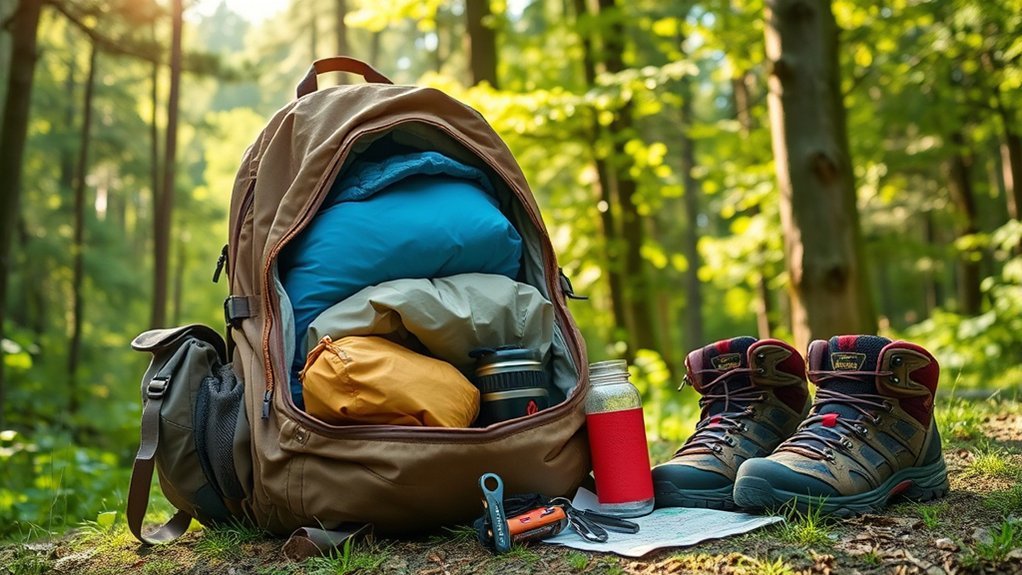
To pack for your backpacking trip, focus on essential gear like a light cooking system, water filter, and a reliable sleeping setup. Choose an ultralight tent or tarp and a cozy sleeping bag paired with a good pad. Prioritize comfortable clothing in layers, suitable footwear, and a compact first aid kit. Don’t forget navigational tools and personal hygiene items. Each choice matters for your comfort and safety. Keep going to uncover more tips for your adventure!
Essential Gear for Backpacking

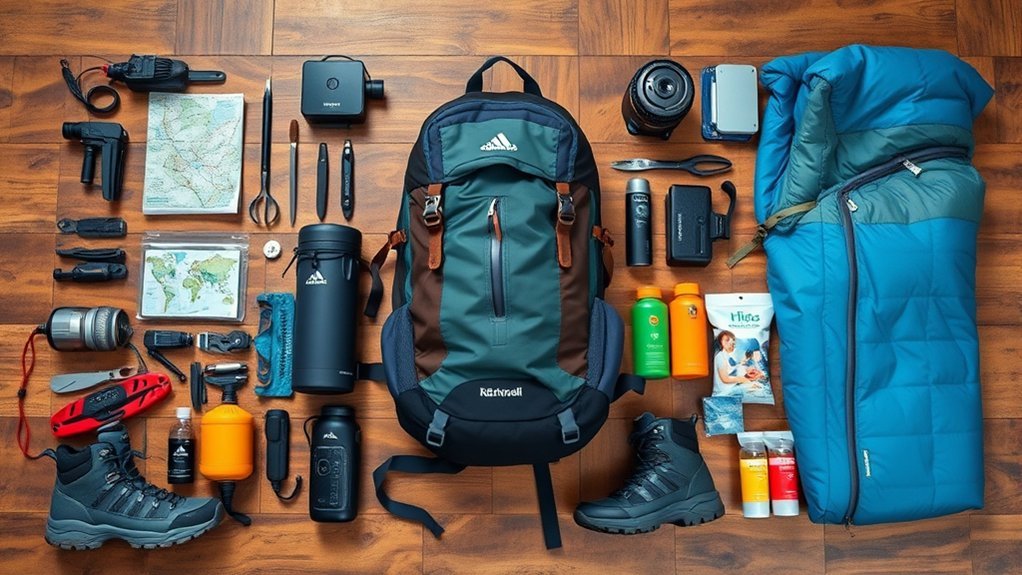
When you’re gearing up for a backpacking trip, it’s crucial to choose lightweight equipment to keep your pack manageable and comfortable. Aim for a total pack weight of around 15 pounds, allowing for ease of transport. Start by organizing your gear: place your sleeping bag and pad at the bottom, heavier items like your tent and stove in the middle, and essentials like snacks and a rain jacket at the top for quick access.
Don’t forget a reliable cooking system, like a Jetboil mini, along with necessary fuel and dehydrated meals to save weight. Stay hydrated with a Sawyer water filter for easy water refills. Pack a lightweight bathroom kit, including a trowel and portable bidet for cleanliness. Finally, prioritize navigation and safety gear—bring a Garmin inReach Mini for emergencies, a compass, a printed map, and an ultralight medical kit. This thoughtful packing guarantees you’re ready to embrace the wild!
Lightweight Shelter Options
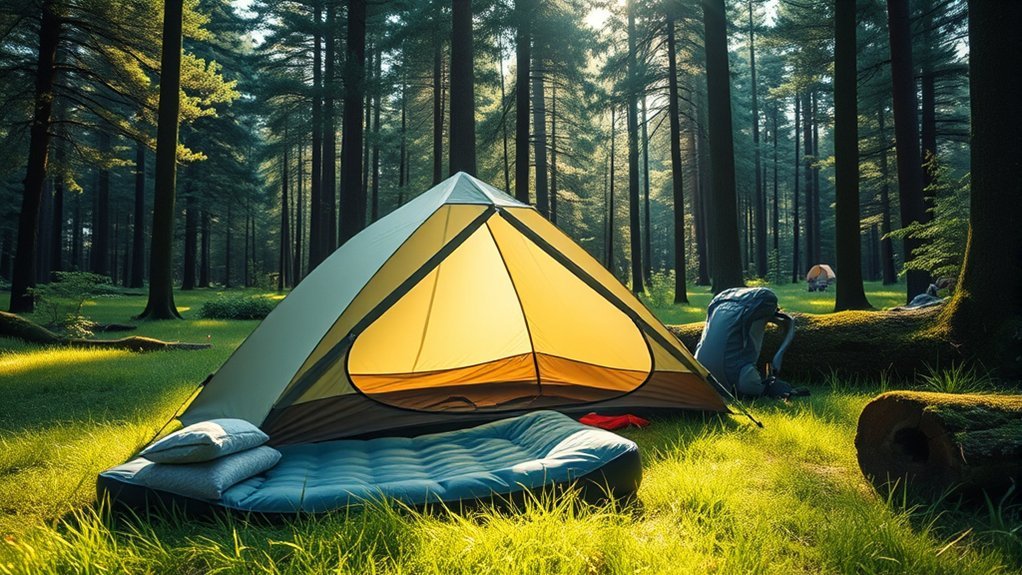
When it comes to lightweight shelter options, you’ve got some exciting choices that can enhance your backpacking experience. From ultralight tents like the Nemo Hornet to versatile tarps that keep you dry without weighing you down, each option has its perks. Plus, understanding how to choose the right sleeping system can make all the difference in comfort and convenience on the trail.
Tent Types Overview
For those venturing into the wilderness, choosing the right lightweight tent can make all the difference in your backpacking experience.
Here’s a quick overview of popular types:
| Tent Type | Key Benefits |
|---|---|
| Freestanding Tents | Easy setup, versatile terrain use |
| Non-Freestanding | Lighter weight, requires stakes |
| Ultralight Shelters | Packs small, minimalistic design |
| Two-Person Tents | Spacious for comfort, extra gear |
| Single-Person Tents | Compact, weight-saving design |
With options typically weighing between 1 to 3 pounds, you can prioritize comfort and mobility. Look for durable materials and weather-resistant features to guarantee your shelter stands strong against the elements. Embrace the freedom of the outdoors with the perfect lightweight tent!
Ultralight Tarps Benefits
Ultralight tarps are a game-changer for backpackers seeking to lighten their load without sacrificing shelter. Weighing as little as 5 ounces, these versatile shelters let you create various configurations for protection against rain, sun, or wind. Crafted from durable materials like Dyneema or Silnylon, ultralight tarps stand up to harsh weather while staying compact in your pack. You’ll appreciate how quickly they set up, often requiring just a few stakes and trekking poles, enhancing your efficiency on the trail. By opting for a tarp, you greatly reduce your backpack’s overall weight, granting you greater flexibility in gear selection and comfort. Embrace the freedom of ultralight backpacking and revel in the adventure that awaits!
Choosing Sleeping Systems
After setting up your ultralight tarp, it’s time to think about your sleeping system, which plays an essential role in ensuring a good night’s rest on the trail. Choose a sleeping bag like the Nemo Disco 15 for warmth and packability. An ultralight tent, such as the Nemo Hornet one-person tent, is perfect for solo hikers. Pair these with a high-quality inflatable sleeping pad like the Nemo Tensor insulated long wide for comfort and insulation. Don’t forget a compressible pillow, like the Sea to Summit down pillow, to maintain sleep quality without extra weight. Aim for a total sleep system weight around 5 pounds for ease on your journey.
| Item | Weight |
|---|---|
| Nemo Disco 15 Sleeping Bag | ~2.5 lbs |
| Nemo Hornet Tent | ~2 lbs |
| Nemo Tensor Sleeping Pad | ~1.5 lbs |
Sleep System Considerations
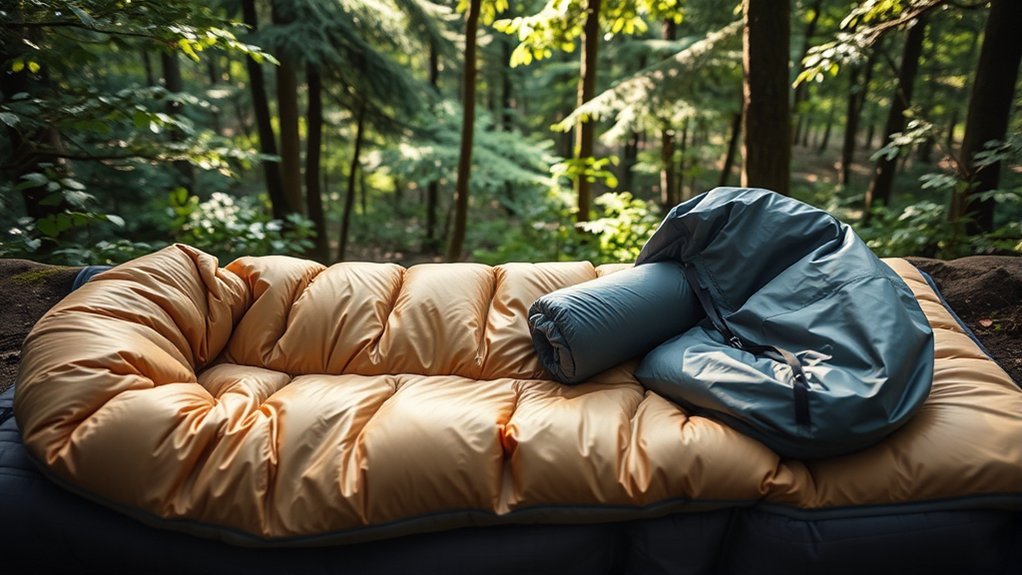
As you prepare for your backpacking adventure, selecting the right sleep system is essential for ensuring a good night’s rest in the great outdoors. A lightweight sleeping bag, like the Nemo Disco 15, offers warmth and comfort, making it perfect for three-season trips. Pair it with a high-quality sleeping pad, such as the Nemo Tensor insulated long wide, to insulate you from the chill of the ground and elevate your sleep experience.
Don’t forget a compressible pillow, like the Sea to Summit down pillow, which adds a touch of luxury without weighing you down. When packing, place your sleeping bag at the bottom of your pack to optimize space and maintain balance. Prioritize a sleep system that balances warmth, weight, and compactness—this way, you can enjoy restful nights while keeping your pack light. Embrace the freedom of the wild, knowing you’re well-rested and ready for the adventures that await!
Cooking and Food Preparation
When it comes to cooking and food preparation on your backpacking trip, having the right gear can make all the difference. A Jetboil mini system is a fantastic choice for lightweight cooking; it efficiently heats meals and coffee while requiring minimal fuel. To keep your pack light, consider packing dehydrated meals; they’re perfect for maximizing your food capacity without adding bulk.
Proper food storage is essential, so use thin dry bags to hang food and protect against wildlife encounters. This prevents unwanted visitors while you’re savoring the great outdoors.
While you’re focused on meals, don’t forget that you’ll need clean water to cook and stay energized. Using a Sawyer water filter allows you to refill from clean sources along the trail. Always carry a reliable water bottle, ideally a 34 or 40-ounce plastic one, to guarantee you stay refreshed during your adventure. Enjoy the freedom of cooking in nature!
Hydration Solutions
Staying properly hydrated is essential for enjoying your backpacking adventure, especially as you navigate varied terrains and weather conditions. Opt for soft water bottles; they’re lightweight, easy to pack, and help distribute weight evenly. This makes them ideal for those long hikes. If you prefer convenience, consider using a hydration reservoir for quick sips on the go, but be mindful that it might complicate your packing.
Aim to drink about half a liter per hour during moderate activity, adjusting for heat or altitude. To guarantee you always have clean water, a Sawyer water filter is a game-changer, allowing you to refill from natural sources without the bulk of extra water. Distributing the water weight evenly across your pack using multiple soft bottles can enhance your hydration management, making access and refills easier during your trek. Staying hydrated not only fuels your journey but also elevates your backpacking experience.
Personal Hygiene and First Aid
Maintaining personal hygiene and having a solid first-aid plan is essential for a successful backpacking trip. Start by packing a lightweight bathroom kit that includes a Vargo Dig Dig Tool trowel for digging cat holes and Smelly Proof Storage Bags for packing out used toilet paper. An Igneous Bottle Cap Bidet enhances cleanliness, and a Kula Cloth—antimicrobial and just 0.5 oz—makes drying easy without weighing you down.
For your first-aid kit, focus on the essentials learned during Wilderness First Aid training. Include adhesive bandages, antiseptic wipes, and blister treatment supplies to tackle common injuries on the trail. Don’t forget to incorporate sunscreen and insect repellent to protect your skin and keep you comfortable. By prioritizing hygiene and safety, you empower yourself to enjoy your adventure fully, knowing you’re prepared for whatever the wilderness throws your way.
Clothing and Footwear Choices
Choosing the right clothing and footwear can make or break your backpacking experience, as it’s essential to stay comfortable and adaptable on the trail. When gearing up for a three-season adventure, focus on a minimal yet versatile selection. Here are three key items to evaluate:
Choosing the right gear is crucial for a comfortable and adaptable backpacking experience in the great outdoors.
- Layering System: Start with moisture-wicking base layers, followed by insulating mid-layers, and finish with waterproof outer layers to tackle unpredictable weather.
- Footwear: Opt for trail running shoes like the Topo Athletic Pursuit instead of heavy boots. They offer better comfort, performance, and a zero-drop design for natural movement.
- Extra Comfort Essentials: Always pack an extra pair of socks to keep your feet dry and blister-free, and don’t forget a down jacket for warmth during chilly nights.
With this approach, you’ll embrace the freedom of the great outdoors while staying comfortable on your journey.
Navigation and Safety Gear
When you’re out on the trail, having the right navigation and safety gear can make all the difference. Packing a Garmin inReach Mini guarantees you can find your way and call for help if needed, while a trusty knife and ultralight medical kit prepare you for any mishaps. Don’t forget to include a compass and a printed map as backup, keeping your pack light at around 15 pounds for comfort and ease on your adventure.
Essential Navigation Tools
As you begin your backpacking adventure, having the right navigation tools is essential for ensuring your safety and enhancing your experience in the wild. Here are three must-have items to pack:
- Garmin inReach Mini – This device provides reliable navigation and emergency communication, critical for remote areas where signals can drop.
- Compass and Printed Map – These serve as crucial backups if electronics fail, allowing you to stay oriented and confident on your journey.
- Ultralight Medical Kit – While not strictly navigation, having this handy addresses potential injuries and keeps you prepared for any unexpected situations.
With these tools, you’ll navigate the trails with ease, ensuring a more liberated and enjoyable backpacking experience.
Emergency Safety Equipment
Emergency safety equipment is your lifeline in the unpredictable wilderness, ensuring you’re prepared for anything that comes your way. Carry a Garmin inReach Mini for reliable navigation and emergency communication; it’s a game changer when you need help. Don’t forget a compass and a printed map as backups—technology can fail, but these tools won’t. An ultralight medical kit is essential; include band-aids, antiseptic wipes, and a blister medic pack to tackle injuries swiftly. Keep a knife handy for food prep, gear repairs, and safety. Finally, familiarize yourself with local wildlife behavior and food storage techniques to minimize encounters in bear-prone areas. Equip yourself wisely, and relish the freedom of exploring nature confidently!
Frequently Asked Questions
How Do I Choose the Right Backpack Size?
To choose the right backpack size, measure your torso length and consider your gear needs. A properly fitted backpack distributes weight evenly, making your journey more comfortable, so you can fully enjoy your adventure.
What Are the Best Lightweight Cooking Tools?
Think of lightweight cooking tools like feathers—easy to carry and essential. Opt for a compact stove, titanium pot, and a multi-tool. These items guarantee you cook efficiently while keeping your pack light and manageable.
How Can I Minimize My Pack Weight Further?
To minimize your pack weight further, prioritize multi-use gear, eliminate non-essentials, and choose lightweight materials. Consider food options that don’t require bulky containers, and balance comfort with necessity to keep your load manageable.
What Snacks Are Best for Energy on the Trail?
Nuts, dried fruits, and energy bars are perfect for the trail. They’re lightweight, nutrient-dense, and pack a punch of energy. Keep some handy, and you’ll conquer those miles with a smile and sustained vigor!
How Do I Prevent Blisters While Hiking?
You’re not auditioning for a blister parade, so wear moisture-wicking socks and well-fitted shoes. Keep your feet dry, avoid cotton, and use blister prevention tape. That way, you’ll conquer trails, not foot pain!
Conclusion
As you lace up your boots and venture into the wild, remember that every item in your pack is a stepping stone to adventure. With the right gear, you’ll not only survive but thrive in nature’s embrace. So, whether you’re gazing at star-lit skies or maneuvering rugged trails, let your preparation guide you like a compass. Embrace the journey ahead, and don’t forget: the best stories are often found just beyond your comfort zone. Happy backpacking!