


A backpacking backpack is your go-to gear for extended outdoor trips, designed to carry everything you need with comfort. It typically features an internal frame that transfers most of the weight to your hips, reducing shoulder strain. These packs come in different sizes—under 50 liters for short weekends and over 70 liters for longer hikes. Adjustable torso lengths guarantee a perfect fit. If you’re curious about choosing the right one or its key features, there’s more to explore ahead!
Understanding Backpacking Backpacks

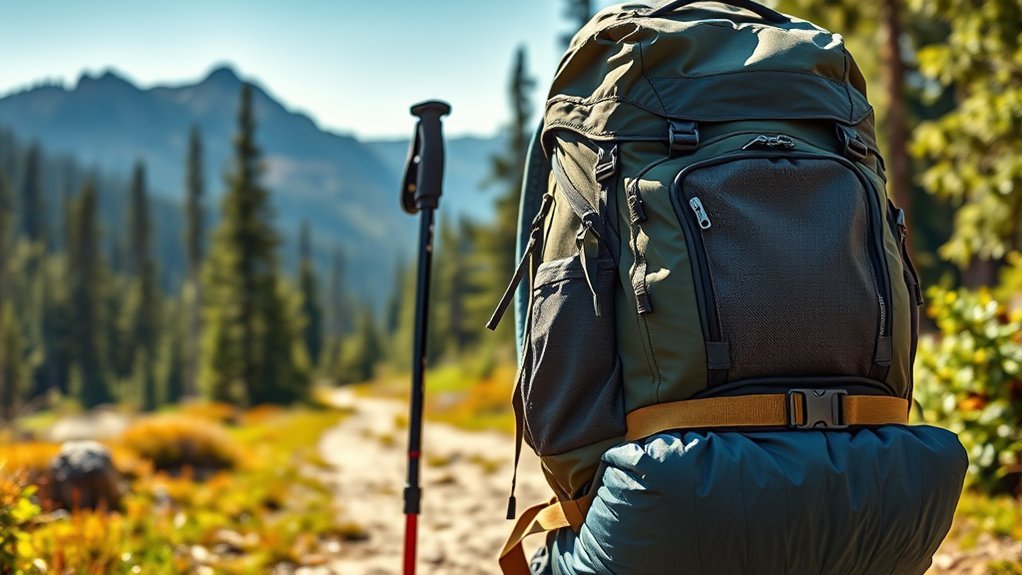
When it comes to choosing a backpacking backpack, understanding the different features and types can make all the difference. These backpacks are tailored for carrying gear over extended periods, with capacities ranging from under 50 liters for short trips to over 70 liters for multi-day adventures. Internal frame packs dominate the market, providing superior weight distribution and support, transferring about 80% of the load to your hips.
Look for adjustable torso lengths, varied padding firmness, and multiple access methods like roll or cinch tops to enhance comfort. Pockets, such as hip belt compartments and side water bottle holders, offer quick access to essentials while you’re on the move. Additionally, features like attachment points, compression straps, and optional rain covers boost functionality and adaptability, ensuring your gear stays secure in various hiking conditions. Choosing wisely means you’ll enjoy freedom and comfort on your adventures!
Key Features of Backpacking Backpacks
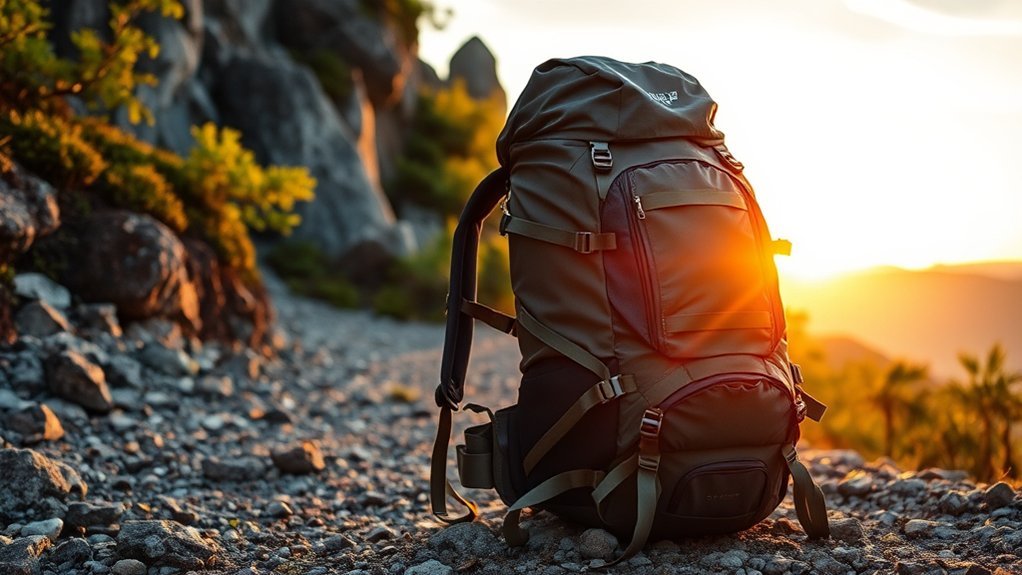
While selecting the right backpacking backpack, you’ll want to focus on key features that enhance its functionality and comfort. First, consider the capacity; choose under 50 liters for weekend trips or over 70 liters for extended journeys. An internal frame suspension system is crucial, as it transfers about 80% of the load to your hips, guaranteeing better weight distribution. Adjustable torso lengths cater to your height, while various access methods, like roll-top closures and side access pockets, make retrieving gear easier.
Look for smart storage options, including top lid pockets for snacks, side pockets for water bottles, and hip belt pockets for quick essentials. Additional features such as attachment points for gear, compression straps for load stabilization, and optional rain covers enhance versatility and protection. By focusing on these key features, you’ll guarantee a comfortable and efficient backpacking experience tailored to your adventures.
Benefits of Using a Backpacking Backpack
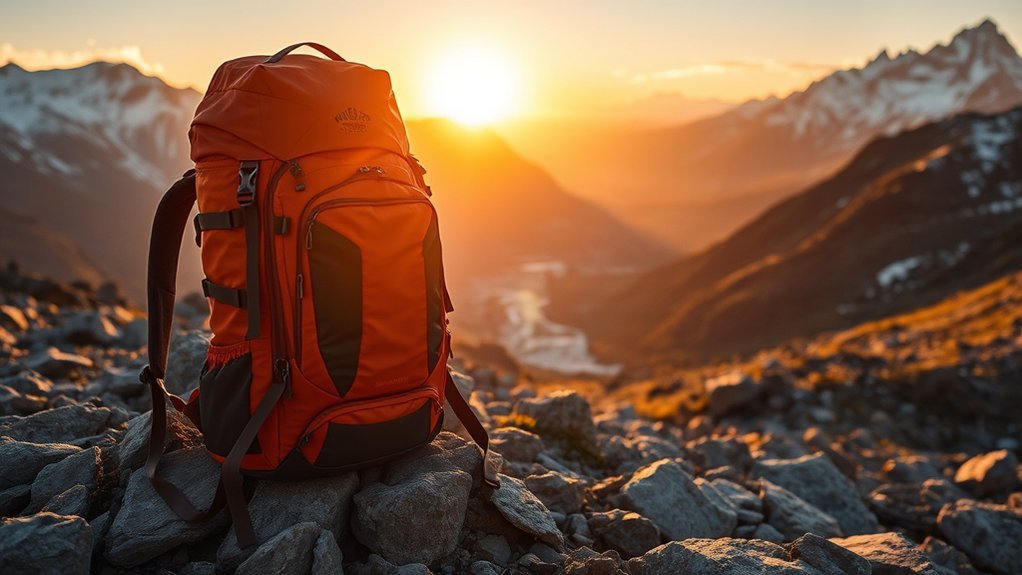
Using a backpacking backpack can greatly enhance your outdoor experience, especially during long hikes. These packs are designed to transfer up to 80% of the load to your hips, notably improving comfort and reducing strain on your shoulders. With various capacities available, you can find the perfect fit for your adventure, whether it’s a weekend getaway or a multi-day trek.
The internal frame design provides better support and airflow, making it easier to carry heavier loads. Plus, many models come with adjustable torso lengths and padding, letting you customize the fit for peak performance. You’ll also appreciate the multiple pocket options and attachment points, which help you organize your gear efficiently and keep essentials within easy reach.
In short, a backpacking backpack combines comfort, support, and organization to elevate your outdoor journey, allowing you to explore with freedom.
Choosing the Right Size and Fit
Selecting the right size and fit for your backpacking backpack is crucial for guaranteeing comfort and effective load distribution during your hikes. Start by evaluating your trip duration: for weekend adventures of 1-3 days, opt for a pack under 50 liters. For multi-day excursions of 3-5 days, packs between 50-80 liters usually suffice. If you’re planning an extended journey lasting over 5 days, consider packs of 70 liters and above, unless you have resupply options.
Don’t forget to factor in seasonal clothing bulk, which can influence your pack size. An adjustable torso length is essential for achieving a custom fit, allowing the pack to sit comfortably on your back. This adjustment guarantees ideal weight distribution, reducing strain and enhancing your overall hiking experience. Remember, a well-fitted backpack can liberate you to fully enjoy the great outdoors without discomfort weighing you down.
When to Use a Backpacking Backpack
Knowing when to use a backpacking backpack can make all the difference in your outdoor adventures. These packs are perfect for multi-day trips lasting 3 to 5 days, offering a capacity of 50 to 80 liters to carry all your essential gear. If you’re planning a weekend getaway, stick to a backpack under 50 liters; however, for extended journeys exceeding 5 days, opt for a pack with 70 liters or more.
The adjustable torso length in most backpacking backpacks guarantees a snug fit, promoting comfort during those long hikes. Internal frame packs are your best bet for stability, effectively transferring weight to your hips for better load distribution. Plus, features like side access pockets and gear attachment points add convenience, making these backpacks versatile for various outdoor excursions. So, when adventure calls, grab your backpacking backpack and embrace the freedom of the wild!
Frequently Asked Questions
Can I Use a Backpacking Backpack for Daily Commuting?
Yes, you can use a backpacking backpack for daily commuting! Its spacious compartments and comfortable straps make it ideal for carrying essentials. Just make sure it fits your daily needs and doesn’t feel bulky during your commute.
How Do I Clean and Maintain My Backpacking Backpack?
Imagine your backpack’s like a trusty steed; it needs care to keep carrying you on adventures. To clean it, hand wash with mild soap, air dry, and check straps regularly for wear. You’ll prolong its life!
What Materials Are Backpacking Backpacks Typically Made From?
Backpacking backpacks are typically made from durable materials like nylon, polyester, or ripstop fabric. These materials offer water resistance, tear strength, and lightweight properties, ensuring your gear stays safe and comfortable during every adventure you pursue.
Are There Waterproof Options for Backpacking Backpacks?
Absolutely, you’ll find plenty of waterproof options for backpacking backpacks. These resilient packs often feature sealed seams and water-resistant materials, ensuring your gear stays dry while you conquer the trails and embrace the elements.
How Much Weight Can a Backpacking Backpack Carry Comfortably?
You can comfortably carry about 20-30% of your body weight in a backpacking backpack. Adjust the load based on your fitness level and terrain, ensuring it distributes weight evenly to avoid discomfort during your adventures.
Conclusion
So, you thought a backpacking backpack was just a fancy bag for hauling stuff? Ironically, it’s your best ally in the wild, turning challenging adventures into unforgettable experiences. With the right fit and features, it becomes an extension of yourself, not just a tool. Whether you’re trekking through mountains or wandering in the woods, using one elevates your journey. So, next time you gear up, remember: this isn’t just a backpack; it’s your ticket to exploration.