


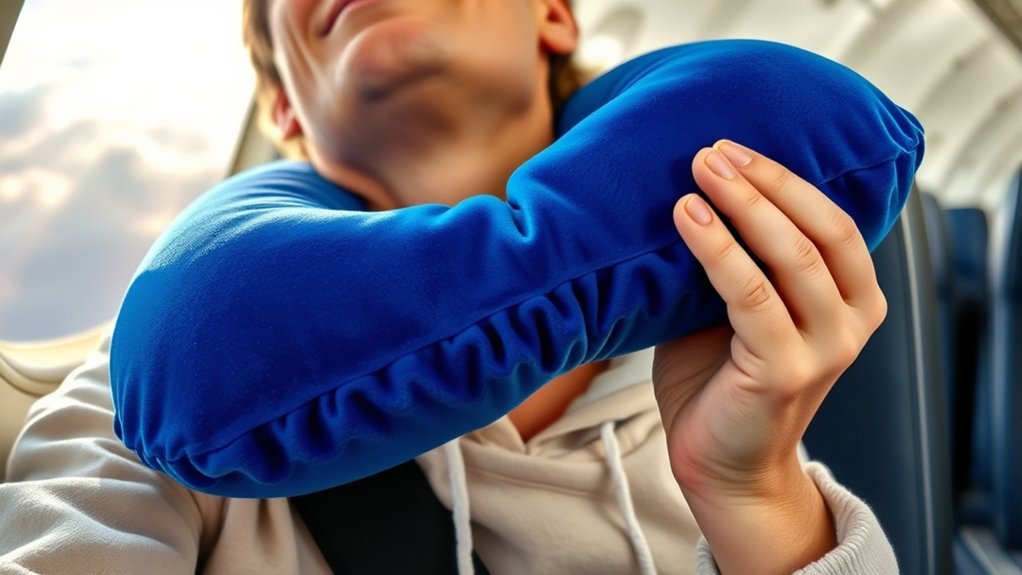
If your travel pillow keeps slipping off your neck, it’s likely due to smooth seat fabrics and body movements creating low friction. To stop this, try using a seatback anchor technique or dual-point strap redirection for better stability. Consider pillows made from high-friction materials like wool-blend fleece for a better grip. Adjusting your pillow’s position can also help maintain support. There’s more to explore about choosing the right pillow and techniques to enhance your travel comfort.
Understanding Why Your Travel Pillow Slips Off

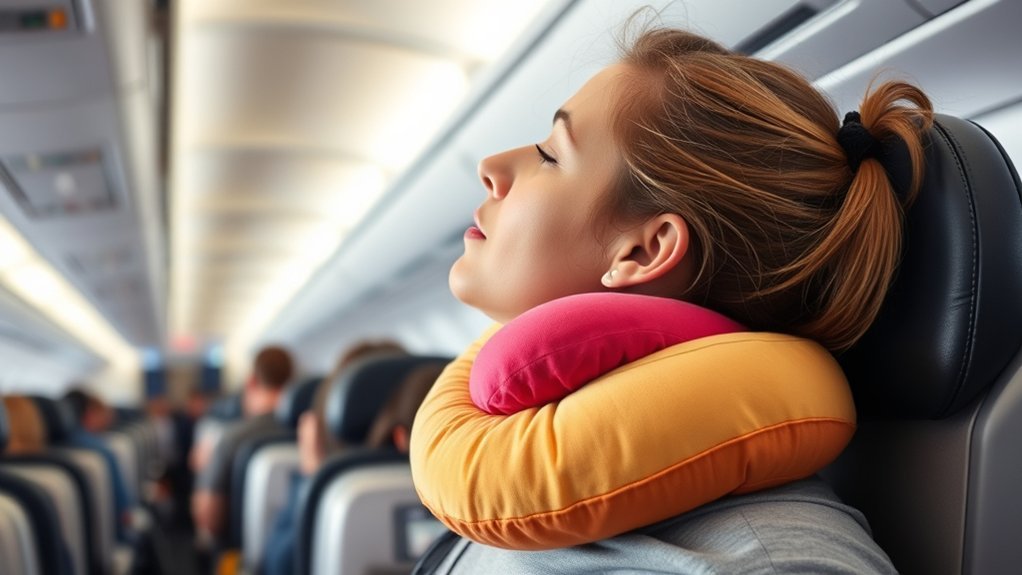
When you’re trying to catch some sleep during a flight, you might notice that your travel pillow tends to slip off. This often happens due to the smooth synthetic fabrics used in many pillow designs, which create low static friction against the airplane seat covers. As you lean or tilt your head, your body dynamics introduce rotational torque, causing the pillow to shift. Additionally, materials like memory foam soften from body heat, increasing internal pressure and worsening slippage. Newer aircraft with ultra-smooth seat fabrics can exacerbate this issue compared to the textured surfaces found in other modes of transport. Understanding these factors helps you choose ergonomic shapes that minimize movement, allowing for a more restful journey.
Main Reasons Your Travel Pillow Slips?
Your travel pillow might slip off due to a lack of friction with your seat fabric, making it easy for the pillow to slide around. Body movements, like leaning or tilting your head, can also cause it to shift unexpectedly. Finally, the materials used in the pillow can affect how well it stays in place, with smoother fabrics being more prone to slippage.
Frictional Mismatch Issues
While selecting a travel pillow, it’s essential to contemplate how frictional mismatch can affect its performance. This issue arises largely due to the materials used in both the pillow and airline seats. To enhance your travel comfort and minimize slippage, consider the following:
- Choose high-friction fabrics: Opt for pillows made from wool-blend fleece (0.41–0.47) instead of smooth synthetic materials.
- Check seat fabric: Be aware that ultra-smooth airline seat covers can create friction reduction, leading to slippage.
- Consider design features: Look for pillows with contours that fit snugly against your neck.
- Mind body heat effects: Remember, warm memory foam may soften and contribute to your pillow sliding off.
Addressing these frictional mismatch issues can greatly enhance your travel experience.
Body Dynamics Influence
Understanding how body dynamics influence the stability of your travel pillow can greatly enhance your comfort during journeys. Your body mechanics play an essential role; when you lean or tilt your head, it alters your center of mass and creates rotational torque, causing the pillow to slip. Additionally, body heat can soften memory foam, increasing internal pressure and gradually displacing the pillow. Smooth synthetic fabrics contribute to low static friction against seat covers, making slippage worse, especially during long flights. Postural torque, resulting from your head and neck’s natural inclination while sleeping, further destabilizes the pillow. By recognizing these dynamics, you can make intentional adjustments to maintain better head alignment and minimize slippage, ensuring a more restful travel experience.
Pillow Material Characteristics
The choice of material in your travel pillow plays an essential role in its performance and comfort during travel. Understanding how material durability and texture impact slippage can help you make a better choice. Here are four key factors to evaluate:
- Smooth Fabrics: Materials like polyester or satin have low friction coefficients, leading to increased slippage against seat covers.
- Fleece Blends: Wool-blend fleece offers higher friction, providing better grip and reducing slippage during use.
- Memory Foam: Gel-infused memory foam may be cozy but tends to slip due to its structural rigidity and heat sensitivity.
- Lightweight Materials: These can expand with heat, worsening slippage on smooth surfaces, especially on long flights.
Choosing wisely can greatly enhance your travel comfort!
Proven Techniques to Stop Your Travel Pillow From Slipping
To keep your travel pillow securely in place during your journey, it’s essential to employ effective techniques that prevent slippage. Start by using the Seatback Anchor Technique: slide the top 2–3 inches of your pillow’s rear edge into the recess between the headrest and seatback. This creates stability. You can also try the Dual-Point Strap Redirection method, which reduces slippage by 78% by threading one strap behind the headrest post to form a V-anchor. Compressing the pillow against the seatback for 15 seconds before takeoff enhances its grip. Experiment with different pillow sizes and orientations based on your travel habits to find what works best for you. Using friction-enhancing materials can further improve the pillow’s hold.
How to Position Your Travel Pillow for Maximum Support?
How can you position your travel pillow for maximum support? Follow these tips to guarantee proper neck alignment and pillow height:
- Face the Opening: Guarantee the pillow’s opening faces the back of your head. This optimizes neck support and prevents slippage.
- Thickest Part at the Back: Position the thickest part at the back of your neck, allowing your chin to rest comfortably on it.
- Adjust for a Snug Fit: Use any built-in straps or toggles to create a snug fit, keeping the pillow securely in place.
- Experiment with Orientation: Try different orientations, like reversing the pillow or positioning it sideways, to find what works best for you.
These adjustments will help you enjoy a restful journey.
What Materials Keep Your Pillow Steady?
Choosing the right materials for your travel pillow can greatly enhance its stability during your journey. Opt for fabric types like wool-blend fleece, which boasts higher friction coefficients, providing better grip textures that keep your pillow anchored and reduce slippage. Smooth synthetic fabrics, such as polyester and satin, tend to slide easily, so it’s best to avoid them. Ergonomic designs that conform to your seat’s curvature also help maintain stability by using gravitational forces effectively. Additionally, wearing cotton or wool turtlenecks can boost friction, further securing your pillow in place. By selecting the right materials, you can enjoy a more restful travel experience without the frustration of your pillow slipping off your neck.
User Experiences With Travel Pillows: Tips From Frequent Travelers
While traveling, finding the right travel pillow can make all the difference in ensuring a comfortable journey. Based on user feedback from frequent travelers, here are some practical tips to enhance your experience:
- Position the pillow with the opening facing the back of your head for ideal neck support.
- Experiment with different orientations; reversing the pillow can boost comfort and stability.
- Place the pillow on your shoulders instead of behind your head to prevent drooping.
- Consider using additional support, like fastening straps or flight blankets, to keep the pillow in place.
Accessories to Enhance Your Travel Pillow Experience
To make the most of your travel pillow experience, consider adding a few key accessories that can enhance comfort and support during your journey. A versatile scarf blanket not only keeps you warm but also stabilizes your neck, making it easier to drift off on a flight. Pairing your travel pillow with earplugs or noise-cancelling headphones can create a serene environment, promoting deeper sleep. A contouring eye mask blocks light, reducing the need to adjust your pillow frequently. Don’t forget compression socks to boost circulation, minimizing discomfort that might disrupt your rest. Finally, an inflatable wedge can offer extra support on your lap, helping you maintain a comfortable position throughout your trip. Enjoy your travels!
Frequently Asked Questions
Can Travel Pillows Be Washed Without Losing Shape?
Yes, you can machine wash travel pillows, but check the pillow materials first. Use a gentle cycle and cold water to maintain shape. Always air-dry to prevent damage, ensuring your pillow stays comfy and supportive.
Are Inflatable Travel Pillows More Likely to Slip?
Yes, inflatable travel pillows can slip more easily due to their lightweight design and less stable neck support. For better fit, adjust the inflation level or consider a pillow with additional straps for security.
What Size Travel Pillow Is Best for My Neck?
Finding the right travel pillow’s like choosing a key for a lock. For ideal neck support, select a pillow that fits snugly around your neck. Consider various travel pillow types, ensuring it aligns with your comfort needs.
How Long Should a Travel Pillow Last With Regular Use?
A travel pillow should last around 1-3 years with regular use. Durability factors like material quality and usage frequency play an essential role. Choose wisely to guarantee comfort and longevity on your journeys.
Can I Use a Travel Pillow on a Bus or Train?
Yes, you can use a travel pillow on a bus or train. It enhances train comfort and makes bus travel more enjoyable, helping you relax and catch some sleep during your journey.
Conclusion
In the journey of comfort, a steady travel pillow is your trusty companion. By understanding its quirks and adjusting your technique, you can transform restless nights into serene slumbers, like a gentle breeze cradling you to sleep. Experiment with different materials and positions, and soon, your travel pillow will hug your neck like a warm embrace, keeping you cozy as you traverse the skies. Embrace these tips, and let your travels be as restful as a soft cloud.