



If your travel pillow isn’t supporting your neck, first reposition it so the thicker part sits at the back. Adjust the firmness by inflating or adding/removing filling. Try it upside down if needed. Also, verify it’s compatible with your sleeping position and take breaks for neck stretches. If the pillow still fails, consider switching to a better option. You’ll discover more tips to enhance your travel comfort and prevent neck pain effectively.
Why Proper Neck Support Is Essential for Travel Comfort

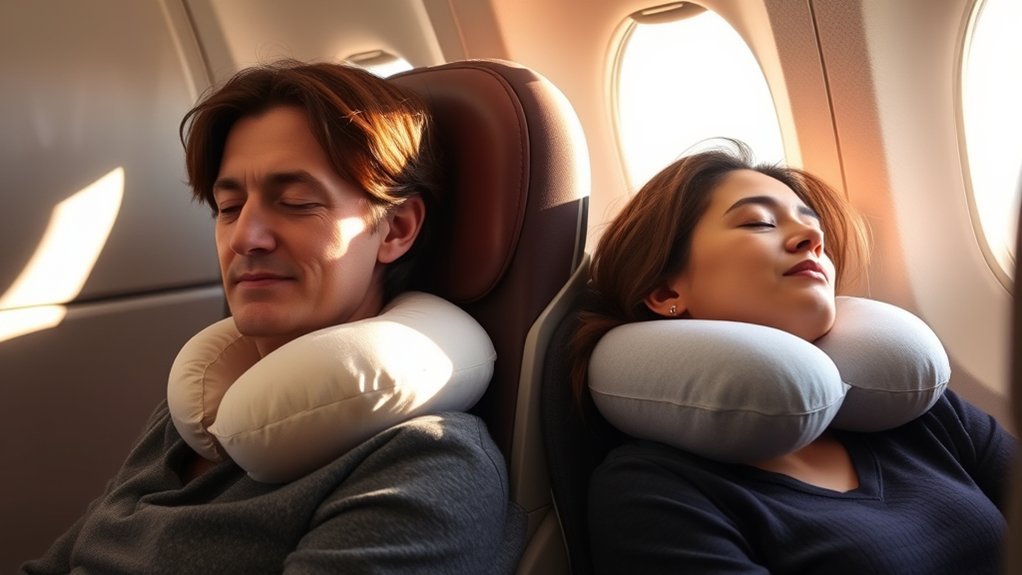
When you travel, proper neck support is essential for your overall comfort. Maintaining the natural alignment of your spine prevents stiffness and discomfort, especially during long journeys. Without adequate support, your head may tilt forward or sideways, straining your neck muscles and increasing the risk of pain. This is where ergonomic travel pillows come into play. They provide cushioning that conforms to your neck’s contours, alleviating muscle tension and reducing travel fatigue. A well-supported neck not only enhances your sleep quality but also promotes relaxation, allowing you to arrive at your destination feeling refreshed and ready. Prioritizing neck support is vital; it underscores the importance of alignment and helps you enjoy your travels to the fullest.
How to Adjust Your Travel Pillow for Better Neck Support
Adjusting your travel pillow correctly can make a significant difference in neck support and overall comfort during your journey. Follow these tips to optimize your travel experience:
| Step | Action | Purpose |
|---|---|---|
| Pillow Orientation | Position the thick part at the back | Maintains head and spine alignment |
| Firmness Adjustment | Inflate/deflate or modify filling | Customize comfort level |
| Reversing the Pillow | Try using it upside down | Enhance support and comfort |
| Regular Assessment | Adjust placement throughout your trip | Guarantees continuous comfort |
Top Reasons Your Travel Pillow Fails to Provide Neck Support
Even with the right adjustments, your travel pillow might still fall short in providing adequate neck support. Here are the top reasons why:
Even with adjustments, your travel pillow may lack proper neck support due to various common issues.
- Wrong Sleeping Position: Using a U-shaped pillow while leaning forward or side-sleeping can lead to discomfort.
- Inadequate Firmness: A pillow that’s too soft or not adjustable can cause your head to tilt, increasing neck strain.
- Poor Pillow Positioning: Placing the opening incorrectly can misalign your neck and diminish support.
- Unsuitable Pillow Material: Memory foam can retain heat, while under-inflated inflatable pillows lack structure, resulting in poor support.
To truly liberate your neck during travel, consider these factors when selecting a pillow that aligns with your sleeping position.
Best Travel Pillows to Consider for Comfort
Finding the right travel pillow can make all the difference in guaranteeing a comfortable journey, especially during long flights or road trips. Here are some options to take into account:
| Pillow Type | Key Features | Best For |
|---|---|---|
| Inflatable Pillows | Adjustable firmness, portable | Customizable neck support |
| Memory Foam | Conforms to neck shape, pressure relief | Long journeys |
| Wrap-Around | 360-degree support, adjustable tightness | Extended travel periods |
| Hypoallergenic | Microfiber materials, allergy-free | Comfortable sleep |
Choosing the right pillow type can elevate your travel experience. Inflatable pillows offer convenience, while memory foam provides unmatched support. Wrap-around pillows guarantee stability, allowing you to rest easy on your adventures.
How to Keep Neck Pain at Bay While Traveling
To keep neck pain at bay while traveling, it’s essential to use a travel pillow that supports the natural curve of your neck. Here are some practical tips to enhance your comfort:
Using a supportive travel pillow is key to preventing neck pain while traveling.
- Position the thicker part of your travel pillow at the back of your neck for adequate support.
- Take breaks every hour to perform neck exercises and stretch your shoulders, promoting circulation and relieving stiffness.
- Experiment with different travel accessories, like inflatable or memory foam pillows, to find your perfect fit.
- Maintain proper posture by aligning your head with your spine and keeping your shoulders relaxed.
Frequently Asked Questions
Can Travel Pillows Be Used for Other Purposes Besides Travel?
You can use travel pillows for alternative uses like enhancing home comfort while reading, watching TV, or even napping. They’re versatile and can add support wherever you need it, not just when traveling.
How Often Should I Replace My Travel Pillow?
Like a worn-out shoe, a travel pillow’s lifespan diminishes over time. Replace yours every 1-2 years or sooner if it loses support. Regularly check for signs of wear to guarantee your comfort and health.
Are There Travel Pillows Specifically Designed for Side Sleepers?
Yes, there are travel pillows specifically designed for side sleepers. Look for ergonomic designs that provide proper neck support and contour to your head, ensuring comfort and alignment during your journey. You’ll appreciate the difference!
What Materials Should I Avoid in Travel Pillows?
Avoid travel pillows made from low-quality memory foam and inflatable options that lack proper support. Instead, choose durable materials that conform to your neck’s shape, ensuring comfort and preventing strain during your travels.
Can I Wash My Travel Pillow, and How?
Imagine tossing your travel pillow like a frisbee—it’s time to wash it! Use gentle washing techniques, like cold water and mild detergent. Air dry it for ideal pillow care, keeping it fresh and comfy for your journeys.
Conclusion
To sum up, don’t let a poorly designed travel pillow ruin your journey. Remember, around 50% of travelers experience neck pain during long trips, often due to inadequate support. By adjusting your pillow correctly or considering a new option, you can greatly enhance your comfort. Prioritize neck support and follow the tips provided to keep discomfort at bay. Happy travels, and may your next adventure be pain-free!