


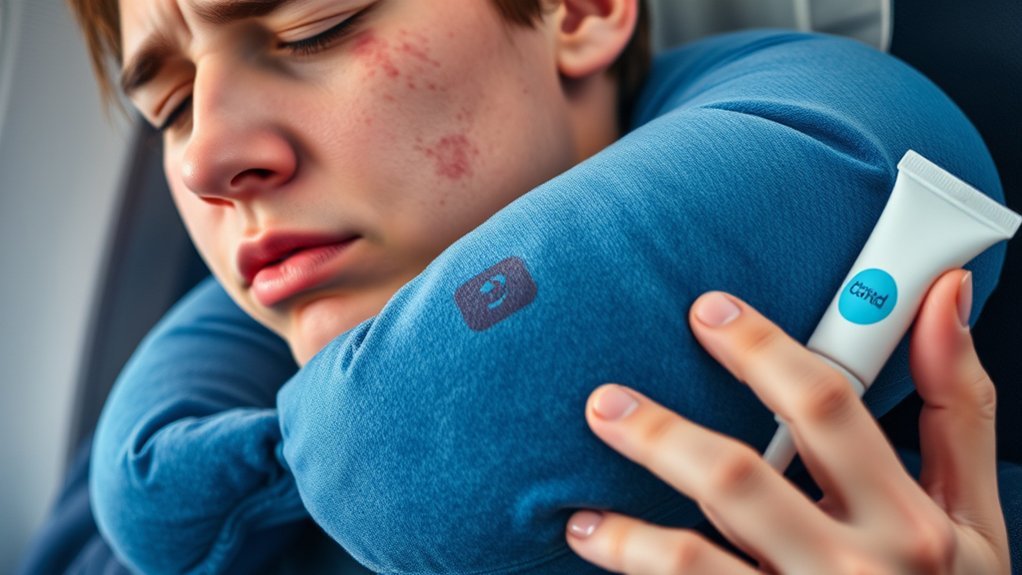
If your travel pillow’s causing itchy skin or allergies, it might be harboring dust mites or mold. Symptoms often include sneezing, runny nose, and skin irritation. To tackle this, choose a hypoallergenic pillow made from synthetic fibers or microfiber, and make sure to wash it regularly in hot water. Sealing pillows with protective covers can also help. Curious about more options and tips for a comfortable travel experience? Keep exploring!
Common Symptoms of Pillow-Related Allergies


If you’re experiencing discomfort while trying to sleep, it might be due to pillow-related allergies. Common symptoms include sneezing, a runny or stuffy nose, and itchy or watery eyes. If you’re allergic to dust mites, traditional pillow materials like down or untreated memory foam can exacerbate your condition. You may also notice skin reactions, such as redness or rashes, from materials or chemicals in some pillow fillings. These allergic reactions can lead to postnasal drip, coughing, and significant sleep disruption, impacting your overall well-being. To promote allergy prevention, it’s essential to choose hypoallergenic pillows and regularly clean your bedding. By making these adjustments, you can create a more comfortable sleep environment and reclaim restful nights.
How Travel Pillows Cause Allergies and What You Can Do About It
Travel pillows can be a hidden source of allergens, such as dust mites and mold, which may cause itchy skin or breathing difficulties. If you’re prone to allergies, it’s essential to know how these pillows can trigger reactions and what steps you can take to minimize exposure. By choosing hypoallergenic materials and maintaining proper cleaning habits, you can enjoy a more comfortable travel experience.
Common Allergens in Travel Pillows
While you might not think about it, the travel pillow you rely on for comfort during your journeys can be a hidden source of allergens. Common culprits like dust mites, mold, and pet dander can thrive in traditional pillows, triggering reactions in sensitive individuals. Many standard materials absorb allergens, making them unsuitable for those with allergies. To guarantee dust mite prevention and mold resistance, opt for hypoallergenic travel pillows made from synthetic fibers. These pillows resist allergen accumulation and are often machine-washable for easy cleaning. Regularly washing travel pillow covers and using allergen-resistant cases can greatly reduce your exposure. By choosing sealed covers and hypoallergenic materials, you can minimize the risk of allergic reactions and travel with peace of mind.
Symptoms of Allergic Reactions
Even the most comfortable travel pillow can become a source of discomfort if you’re allergic to common allergens lurking within. Symptoms of allergic reactions may include:
| Symptom | Description | Action Required |
|---|---|---|
| Skin Redness | Red patches appear on your skin | Check pillow hygiene |
| Hives | Itchy, raised welts | Switch to hypoallergenic options |
| Respiratory Issues | Coughing or wheezing | Avoid allergen sources |
| General Discomfort | Unease during use | Consider cleaning methods |
Travel pillows filled with down can harbor dust mites and mold. To minimize allergies, choose hypoallergenic materials, wash your pillow regularly, and maintain good pillow hygiene to enhance your travel experience.
Tips for Allergy Management
Allergic reactions can quickly turn a pleasant journey into an uncomfortable experience, especially when your travel pillow becomes a hidden source of allergens. To manage allergies effectively, consider travel pillow features that resist allergen accumulation. Opt for microfiber or hypoallergenic pillows, which are easier to clean and less prone to harboring dust mites and mold. Regularly wash your pillow covers in hot water (at least 130°F or 54°C) to eliminate potential triggers. Additionally, use hypoallergenic pillowcases that fully seal your pillow for extra protection. If you continue experiencing reactions, switch to synthetic or memory foam pillows, which are less likely to accumulate allergens. Taking these steps will help guarantee a more enjoyable and allergy-free travel experience.
Identifying Allergy Triggers in Your Travel Pillow
When selecting a travel pillow, it is crucial to identify potential allergy triggers that could disrupt your journey. Common allergen sources include traditional down pillows, which can harbor dust mites and mold, leading to sneezing and itchy skin. Instead, consider hypoallergenic microfiber pillows designed to resist allergens and are easier to clean.
| Pillow Material | Allergen Risk |
|---|---|
| Down | High (dust mites, mold) |
| Microfiber | Low (resists allergens) |
| Cotton | Moderate (mold) |
| Synthetic foam | Low (if sealed) |
| Polyester | Low (if cleaned often) |
Regularly washing pillow covers in hot water and checking for hypoallergenic certifications can also help minimize allergic reactions during your travels.
How to Choose a Hypoallergenic Travel Pillow
How can you guarantee a comfortable and allergy-free travel experience? Start by selecting the right travel pillow materials. Look for synthetic fibers or treated memory foam, as these resist allergen accumulation, minimizing dust mites and mold. Opt for pillows with removable, washable covers; regular washing in hot water keeps allergens at bay. Don’t forget to check for allergy pillow certifications, which confirm the pillow effectively reduces exposure to common allergens like pollen and pet dander. Additionally, consider pillows designed with sealed pillowcases for extra protection against allergens. Finally, evaluate the pillow’s maintenance requirements alongside your personal allergies to choose one that promotes a healthy, restful sleep while you travel. Your comfort and well-being deserve it!
Recommended Materials for Allergy-Friendly Travel Pillows
Choosing the right materials for your travel pillow can make all the difference in ensuring a comfortable and allergy-free journey. Opt for synthetic fibers, which resist allergen accumulation and are less likely to harbor dust mites compared to traditional materials like down. Microfiber pillows are an excellent choice, mimicking the softness of down while being hypoallergenic and easy to clean. If you prefer memory foam, look for pillows treated to be hypoallergenic, providing support without the risk of dust mite buildup. Additionally, select travel pillows with removable, washable covers made from cotton or other allergen-resistant materials. Certifications indicating allergen-resistant properties offer peace of mind, ensuring you enjoy safe and restful travel experiences.
How to Maintain a Clean Travel Pillow
To keep your travel pillow allergen-free, wash it regularly according to the manufacturer’s guidelines—every 1-2 weeks is ideal. Consider using hypoallergenic covers that are easy to clean and provide an extra barrier against dust mites and pet dander. Finally, store your pillow in a clean, dry place to prevent any buildup of allergens when you’re not using it.
Regular Washing Schedule
Regularly washing your travel pillow is essential for keeping allergens at bay and ensuring a comfortable sleep experience. Aim for a washing frequency of every 1-2 weeks to tackle dust mites, mold, and pet dander effectively. Here are some cleaning methods to follow:
- Use hot water (at least 130°F or 54°C) to kill dust mites and allergens.
- For removable covers, wash them frequently, considering hypoallergenic options.
- Add vinegar and baking soda to eliminate mold and odors during the wash.
- Regularly fluff and air out your pillow to reduce moisture and inhibit allergen growth.
Use Hypoallergenic Covers
When it comes to maintaining a clean travel pillow, using hypoallergenic covers is a smart choice that can greatly reduce your exposure to allergens. These covers offer significant hypoallergenic benefits by preventing the accumulation of dust mites, pet dander, and mold, all common triggers for allergic reactions and itchy skin. Opt for high-quality cover materials that can repel allergens and are easy to wash. Regularly washing these covers in hot water (at least 130°F or 54°C) is crucial for keeping your pillow clean. Additionally, choose travel pillows with sealed or zippered hypoallergenic covers to further minimize allergen exposure. Don’t forget to replace the covers periodically for ideal hygiene and to guarantee effective allergen protection during your travels.
Proper Storage Techniques
Keeping your travel pillow clean doesn’t stop at using hypoallergenic covers; proper storage techniques play an essential role too. Follow these tips to maintain your pillow’s freshness and prevent allergens:
- Store your pillow in a clean, dry place to promote moisture control and stop mold growth.
- Use breathable, protective cases to shield your pillow from dust and allergens when it’s not in use.
- Regularly clean your travel pillow according to the manufacturer’s instructions, ideally every 1-2 weeks.
- Make sure your pillow is completely dry after washing to inhibit mold development.
The Role of Protective Covers for Travel Pillows
Protective covers play an essential role in ensuring your travel pillow remains a safe haven from allergens like dust mites, pet dander, and mold. By using hypoallergenic pillow covers, you reap significant protective benefits, minimizing exposure and promoting allergy prevention. Regularly washing these covers in hot water helps eliminate accumulated allergens, creating a healthier sleep environment on the go. Opt for covers that fully seal your pillow; they not only protect against allergens but also enhance comfort by preventing moisture buildup. Choosing breathable, hypoallergenic materials further reduces the risk of skin irritation or allergic reactions. With these measures, you can travel freely, ensuring your pillow remains a sanctuary for restful sleep, no matter where your journey takes you.
What to Do for Allergic Reactions
Experiencing allergic reactions from your travel pillow can be frustrating, but knowing how to handle the situation can make all the difference. Here are some effective steps to take:
- Identify and avoid materials that trigger your allergies, like down or certain synthetic fibers.
- Wash your travel pillow and cover in hot water (at least 130°F or 54°C) to eliminate allergens.
- Switch to hypoallergenic travel pillows made from synthetic fibers or microfiber for better skin care.
- If symptoms persist, consult a healthcare provider for allergy testing and explore natural remedies or over-the-counter antihistamines.
Alternatives to Traditional Travel Pillows for Allergy Sufferers
If you struggle with allergies, finding the right travel pillow can greatly impact your comfort while on the go. Consider exploring alternative materials like microfiber, which offers a soft, hypoallergenic design that mimics down without the allergens. Inflatable travel pillows are another excellent choice; they allow you to adjust firmness while minimizing allergen accumulation, as they’re easy to clean and store. Memory foam pillows, treated for hypoallergenic properties, resist dust mites and provide solid support for various sleep positions. Additionally, using allergy-proof covers can further shield against allergens, ensuring you enjoy restful sleep during your travels. With these options, you can liberate yourself from discomfort and focus on your adventures.
When Should You See a Doctor About Pillow Allergies?
Travel pillows can enhance your comfort during trips, but they can also trigger allergic reactions in some individuals. If you notice persistent symptoms after using one, it’s time for a symptom assessment. Consider seeing a doctor if you experience:
- Sneezing, itchy eyes, or a runny nose
- Difficulty breathing, hives, or swelling
- Symptoms that don’t improve with over-the-counter medications
- Worsening asthma or eczema symptoms
Ignoring these signs can lead to complications, so don’t hesitate to explore treatment options. A healthcare provider can help identify the cause of your allergies and recommend appropriate management strategies. Taking action not only improves your well-being but also enhances your travel experience. Don’t let allergies hold you back from enjoying your journeys!
Frequently Asked Questions
Can I Use My Regular Pillow While Traveling?
You can use your regular pillow while traveling for comfort, but consider travel pillow alternatives for portability. A compact pillow might enhance your travel experience, ensuring you stay refreshed and liberated during your journey.
How Often Should I Replace My Travel Pillow?
You should replace your travel pillow every 1-2 years. Regular pillow maintenance and travel hygiene are essential for comfort and health. Inspect it often for wear, odors, or allergens that might disrupt your travels.
Are There Specific Brands Known for Hypoallergenic Travel Pillows?
When searching for hypoallergenic travel pillows, brands like Tempur-Pedic and Coop Home Goods shine. Their soft, breathable materials guarantee comfort, while travel pillow comparisons reveal the benefits of choosing quality for your skin’s freedom from irritation.
Do Travel Pillows Come With Allergen-Free Certifications?
Not all travel pillows come with allergen-free certifications, but you can find allergen-free options. Look for travel pillow materials like memory foam or hypoallergenic fabrics to guarantee a comfortable, irritation-free experience during your travels.
Can I Wash a Travel Pillow in a Machine?
You can wash a travel pillow in a machine, but check the washing instructions first. Different travel pillow materials require specific care. Always use a gentle cycle and cold water to maintain its shape and integrity.
Conclusion
In your quest for restful travel, it’s essential to keep pesky allergens at bay. By choosing hypoallergenic pillows, using protective covers, and identifying triggers, you can transform your travel experience from uncomfortable to blissful. If you ever feel a hint of irritation or discomfort, don’t hesitate to seek guidance from a healthcare professional. With the right approach, your adventures can be filled with sweet dreams rather than itchy nights. Safe travels and happy snoozing await you!