


When choosing between a travel backpack and a hiking backpack, consider their function and design. Travel backpacks offer a clamshell opening and multiple compartments for easy packing, making them ideal for urban trips. They usually feature lighter materials for hassle-free carry. In contrast, hiking backpacks focus on load support, feature robust materials, and often come with adjustable hip belts. Understanding these key differences helps you select the right pack for your adventure, and there’s more to uncover about each type.
Core Differences in Design and Functionality

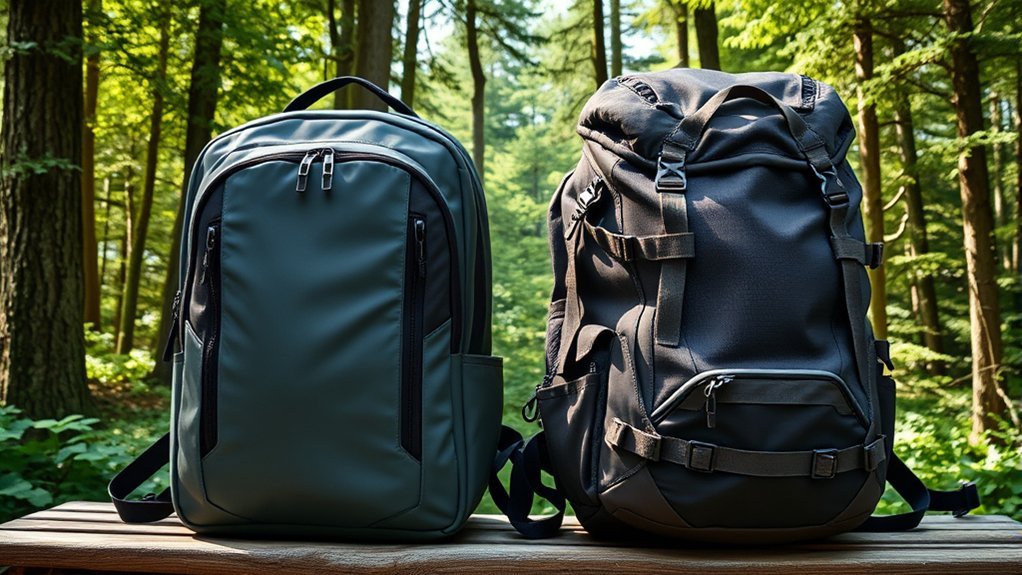
When choosing between a travel backpack and a hiking backpack, it’s essential to understand their core design and functionality differences. Travel backpacks are designed with a suitcase-first approach, featuring a clamshell opening that makes packing and accessing your belongings a breeze. Their rectangular shape suits urban environments and airport travel, while they usually offer minimal suspension systems for easy carrying.
On the other hand, hiking backpacks prioritize load support and dynamic movement. Built for rugged terrains, they include robust frames and padded hip belts to guarantee comfort during long hikes. These packs often come with specialized pockets for trekking gear, allowing you to stay organized outdoors. Additionally, hiking backpacks typically offer larger capacities of 50-65L+, compared to the 20-45L suggested for travel packs. Understanding these differences can help you choose the right pack for your adventures, making sure you’re well-prepared for any journey.
Features and Materials Comparison
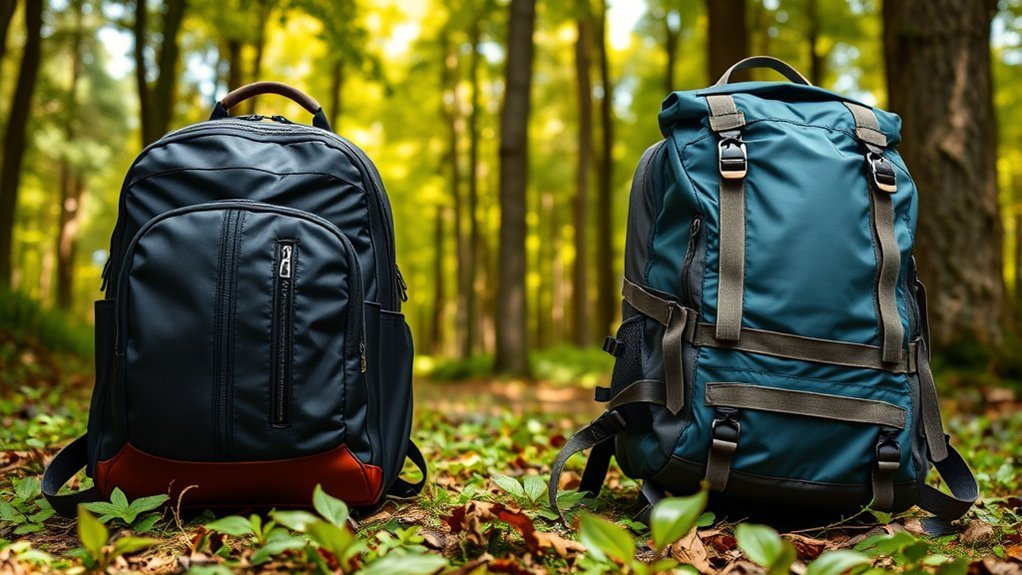
As you compare travel backpacks and hiking backpacks, it’s crucial to take into account the materials and features that define each type. Travel backpacks are often crafted from smoother nylon or polyester, with a clamshell opening for easy packing. In contrast, hiking backpacks use durable nylon ripstop fabrics that withstand rugged conditions.
Here’s a quick comparison:
| Feature | Travel Backpack | Hiking Backpack |
|---|---|---|
| Material | Nylon/Polyester | Nylon Ripstop |
| Design Focus | Accessibility | Load Support |
| Specialized Pockets | Laptop & Admin Pockets | Hydration & Gear Organization |
Travel packs typically emphasize convenience with minimal suspension systems, while hiking packs prioritize comfort with padded hip belts and frame systems. Waterproof capabilities in hiking bags often include seam taping, ensuring durability during challenging adventures.
Capacity Recommendations for Different Uses
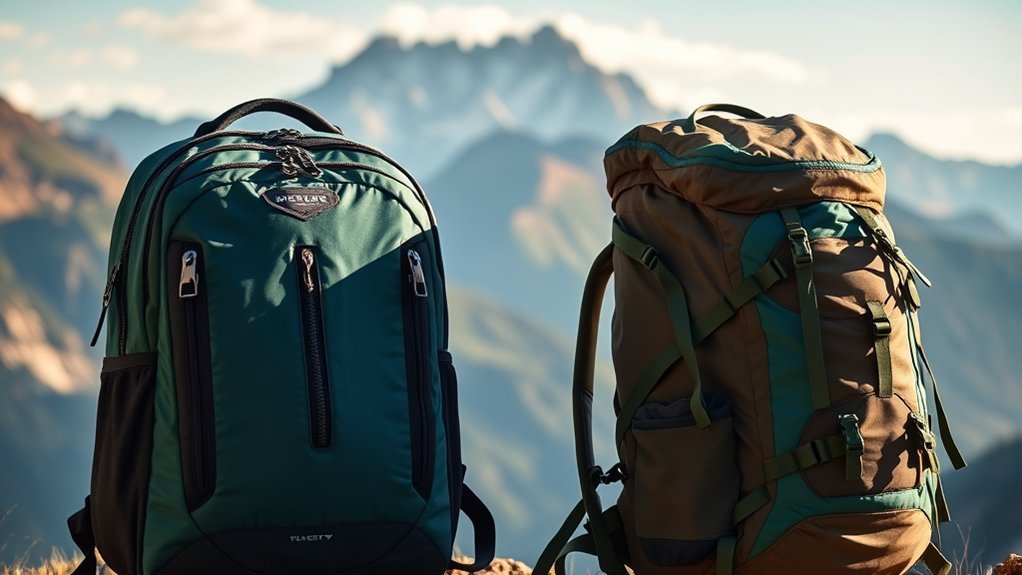
Choosing the right backpack capacity is vital for ensuring a comfortable and efficient travel or hiking experience. For city or weekend trips, aim for a travel backpack with a capacity of 20–30 liters. This size accommodates your essentials without feeling cumbersome. If you’re planning one-bag air travel, go for a backpack that holds 35–45 liters to comply with carry-on regulations.
On the other hand, if you’re gearing up for multi-day hiking adventures, look for a hiking backpack with a capacity of 50–65 liters or more. This allows you to carry extra gear and supplies comfortably. For short hikes, a daypack between 15 to 35 liters will suffice, providing enough space for your lightweight essentials.
Ultimately, selecting the right capacity based on your trip duration and activities is vital for maximum comfort and functionality. Make informed choices, and enjoy your adventures to the fullest!
Fit Considerations for Comfort
When choosing a backpack, measuring your torso length and hip circumference is essential for a comfortable fit. This guarantees the weight sits primarily on your hips, allowing for better weight distribution and reducing strain during your travels or hikes. By paying attention to these factors, you can enhance your overall comfort, making your adventures much more enjoyable.
Measuring Torso Length
Measuring your torso length is essential for ensuring a comfortable and supportive backpack fit. To do this, stand straight and use a flexible measuring tape to measure from the prominent bone at the base of your neck (C7 vertebra) to the top of your hip bones (iliac crest). This measurement is vital for selecting a backpack that distributes weight evenly across your hips and shoulders. Most brands offer sizing charts that correlate your torso length to specific pack sizes. A properly fitted backpack should have its hip belt resting on your hip bones, with shoulder straps adjusted for a snug yet unrestricted fit. Regularly check your torso length and make adjustments, especially during long hikes, to maintain comfort and freedom.
Weight Distribution Techniques
To guarantee a comfortable hiking experience, mastering weight distribution techniques is important. For long treks, you’ll want most of the load resting on your hips, not your shoulders. Hiking backpacks often come with internal or external frames that enhance load support, transferring weight effectively to your hips, which helps maintain balance on uneven terrain. In contrast, travel backpacks usually feature flatter panels that sacrifice this essential distribution. Look for adjustable hip belts and load lifters in hiking packs; they let you customize the fit, reducing strain. Remember, measuring your torso length and hip circumference is crucial to guarantee that the pack conforms to your body, maximizing comfort and efficiency on your adventures. Embrace the freedom of a well-fitted backpack!
Cost and Value Analysis
While both travel and hiking backpacks come with varying price points, understanding their cost and value can help you make an informed decision tailored to your needs. Travel backpacks generally start around $100 and can go up to $400, offering features like clamshell access and lockable zippers that enhance security and accessibility. In contrast, hiking backpacks range from about $75 for basic models to over $500 for those with advanced comfort features.
Here are three key factors to evaluate:
- Construction Quality: Travel packs often have complex designs and hardware.
- Comfort Features: Hiking packs focus on hip belts and suspension systems aimed at load support.
- Warranty and Repairability: Travel packs tend to offer robust warranties due to frequent use in challenging conditions.
Ultimately, assess how each type aligns with your adventures and budget—investing wisely can enhance your experiences.
Customization Options for Backpacks
When you consider the importance of a backpack tailored to your specific activities, customization options become a game changer. Brands like Szoneier offer OEM/ODM possibilities, allowing you to specify fabrics, coatings, and hardware that align with your needs. This means you can create a pack that not only looks great but also performs exceptionally.
With low minimum order quantities (MOQs), even smaller businesses or individuals can design personalized backpacks. You’ll find thorough testing guarantees compliance with standards like REACH and Prop-65, so you can feel confident about safety and environmental impact.
Customization can include unique pocket placements, innovative strap designs, and personalized branding, elevating both functionality and style. Whether you’re traveling, hiking, or engaging in other activities, the ability to tailor your backpack enhances comfort and usability, empowering you to begin your adventures with confidence and freedom.
Use Cases for Travel and Hiking Packs
Understanding the specific use cases for travel and hiking packs can greatly enhance your outdoor and urban experiences. Choosing the right pack tailored to your adventure makes all the difference. Here are three distinct scenarios to take into account:
- Urban Exploration: Travel backpacks shine in city settings, with their clamshell openings and organized compartments. Perfect for maneuvering through airports or bustling streets, they keep your essentials easily accessible.
- Short Hikes: If you’re heading out for a day hike, a travel pack’s lighter capacity (20-45L) is ideal. It allows for quick access to snacks and gear without weighing you down.
- Multi-Day Treks: For those who crave the wilderness, a hiking backpack’s robust design (50-65L+) supports heavy loads and includes features like hydration sleeves, ensuring you stay comfortable on the trails.
Hybrid Options for Versatile Needs
If you’re looking for a backpack that adapts to both urban adventures and outdoor excursions, hybrid options might just be your best bet. These versatile packs blend features from travel and hiking backpacks, offering clamshell openings for easy access and robust load-carrying capabilities. You’ll appreciate the padded hip belts and suspension systems, which enhance comfort during long city strolls or rugged hikes.
Many hybrid designs come with detachable daypacks, allowing you to switch seamlessly from day hikes to urban settings without the hassle of multiple bags. With capacities ranging from 35L to 65L+, they’re perfect for multi-day trips, accommodating all your travel needs. Plus, hybrid options often feature weather-resistant materials and specialized pockets for organized gear storage. This practicality guarantees you’re ready for whatever adventure awaits, whether it’s exploring a bustling city or tackling a challenging trail.
Personal Experiences and Recommendations
Many travelers swear by the versatility of backpacks that cater to both urban exploration and hiking adventures. A well-chosen pack can be your best companion. Here are three key recommendations based on personal experiences:
- Invest in Quality: Opt for reputable brands like Eagle Creek or North Face, known for their durable features and lifetime warranties.
- Test for Fit: Always try on hiking backpacks to guarantee proper load distribution on your hips. This greatly improves comfort during long treks.
- Choose the Right Type: Consider having a daypack for short outings and a larger hiking backpack for multi-day trips. This way, you cater to specific needs effectively.
Selecting the right backpack based on intended use can transform your travel experience. Travel packs shine in organization and accessibility, while hiking packs excel in durability and support for rugged terrains. Choose wisely, and set out on adventures with confidence!
Frequently Asked Questions
Can I Use a Travel Backpack for Hiking?
Yes, you can use a travel backpack for hiking, but it might not offer the support and features needed for longer treks. Consider comfort, weight distribution, and weather resistance for the best experience outdoors.
What Size Travel Backpack Is Considered Carry-On Friendly?
Think of your travel backpack as a key to freedom. A carry-on friendly size typically ranges from 40 to 45 liters, allowing you to soar through airports without the burden of checked luggage weighing you down.
Are Hiking Backpacks Suitable for Everyday Use?
Yes, hiking backpacks can be suitable for everyday use. They’re durable, spacious, and often feature multiple compartments, making them perfect for daily errands, gym sessions, or casual outings. You’ll appreciate their comfort and functionality.
How Do I Clean and Maintain My Backpack?
To clean and maintain your backpack, empty it, brush off dirt, and hand wash with mild soap. Rinse thoroughly, air dry, and periodically check straps and zippers for wear to guarantee it lasts longer.
What Are the Best Brands for Travel and Hiking Backpacks?
When you’re choosing a backpack, consider brands like Osprey, Deuter, and Patagonia for hiking, while North Face and Eagle Creek shine in travel. Each offers unique features that enhance your adventures and freedom on the road.
Conclusion
Choosing between a travel backpack and a hiking backpack is like deciding between a sports car and an all-terrain vehicle; it all comes down to your needs. If you prioritize organization and easy access for travel, go for a travel backpack. But if you’re hitting rugged trails, a hiking backpack with comfort and durability is key. Consider your adventures ahead, and pick the pack that suits your journey best. Happy exploring!