



For your tent guylines, aim for specific lengths to guarantee stability and performance. Use 4 feet for ground-level tie-outs, 5 feet for side panels, and 8 feet for apex points in a 48-inch peak shelter. For A-frame tarps, the head-side should be 8 feet, while the foot-side can range from 6 to 7 feet. Proper guidelines enhance stability and performance, especially in varying weather conditions. Keep exploring for more detailed tips on ideal setup.
Recommended Guyline Lengths for Various Shelters

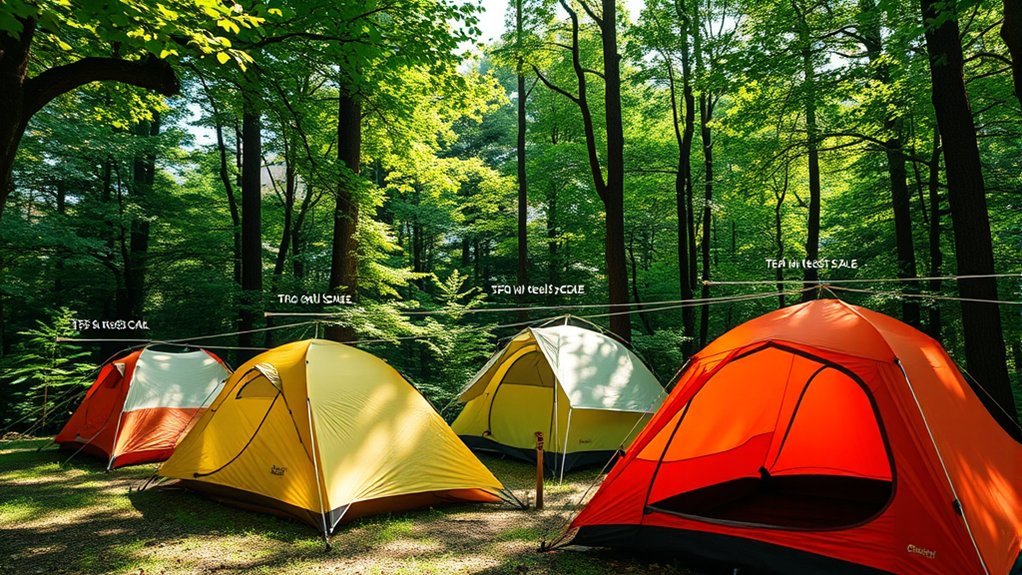
When setting up your shelter, understanding the recommended guyline lengths is essential for ideal stability and performance. For ground-level perimeter tie-outs, aim for 4 feet to guarantee effective tensioning. If you’re using side-panel tie-outs, 5 feet is generally recommended, though this can vary based on your specific shelter types. For shelters with a peak height of 48 inches, you’ll need apex tie-outs that are 8 feet long to maintain proper tension and shape.
When working with A-Frame tarps, the head-side ridgeline should be 8 feet, while the foot-side can be between 6 and 7 feet. Flat tarps are more versatile, benefiting from eight 8-foot lengths of cord. This allows for multiple tension adjustments, guaranteeing your setup remains secure and effective in various conditions. Prioritize these lengths to maximize your shelter’s performance and create a reliable outdoor refuge.
Understanding Cord Loss and Knot Considerations
Understanding the impact of cord loss and knot considerations is essential for effective shelter setup. When you tie knots, they consume cord length. For instance, using a trucker’s hitch to span a 1-foot distance actually requires about 2 feet of cord due to knot consumption. Different knot types also vary in how much length they take; a bowline knot reduces effective length by approximately 3 inches, while a slippery hitch can consume up to 6 inches. Additionally, factors like cord thickness, loop diameter, and tail length play a role in this loss. To maximize efficiency, always factor in the specific knot you’re using when calculating your required guideline length. Regularly check and maintain your knots, as wear and friction can lead to further cord loss and potential failure, ensuring your setup remains secure and reliable.
Guidelines for Tents and Mids
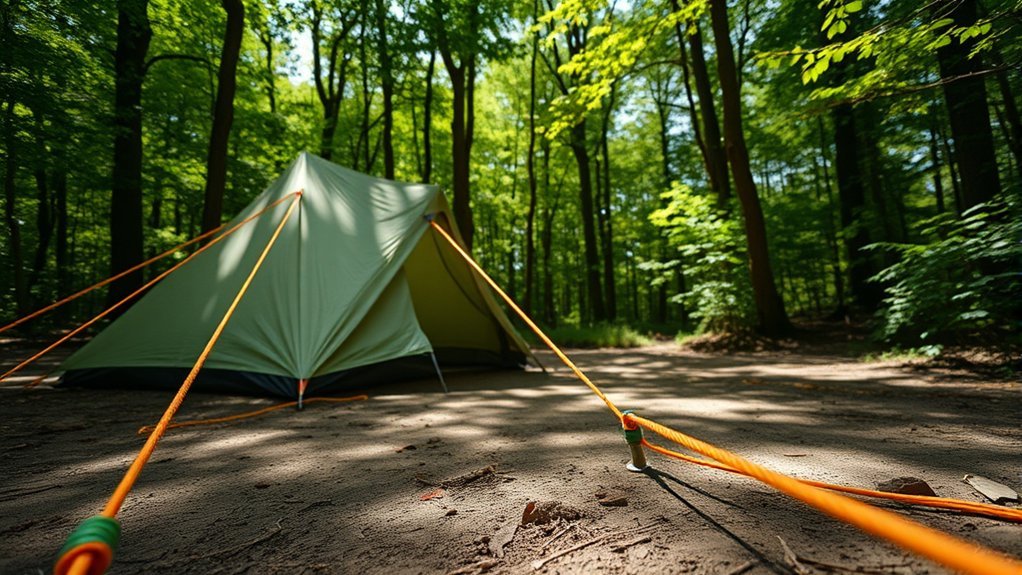
When setting up your tent or mid, it’s essential to use the right guideline lengths for ideal stability. Typically, ground-level perimeter tie-outs should measure about 4 feet, while apex tie-outs for tents with a peak height of 48 inches need to be around 8 feet. Positioning your guidelines at an angle between 15 and 45 degrees will enhance performance in various weather conditions.
Ideal Guideline Lengths
Selecting the right guideline lengths for your tent or shelter is essential for ensuring stability and performance in various weather conditions. For ground-level perimeter tie-outs, aim for about 4 feet, while side-panel tie-outs are typically around 5 feet, depending on your shelter’s design. If your tent peaks at 48 inches, use approximately 8-foot apex tie-outs to maintain proper tension. A-Frame tarps require 8 feet for the head-side ridgeline and 6 to 7 feet for the foot-side. For versatility, flat tarps benefit from eight 8-foot lengths of guideline materials, whereas a hammock tarp ridgeline should be around 10 feet, with side lengths close to 8 feet. Don’t forget to make necessary length adjustments based on conditions!
Angle and Attachment Points
Proper guideline angle and attachment points play a significant role in enhancing tent stability and performance. Aim for a guideline placement angle between 15 and 45 degrees from the ground. This range helps prevent stakes from pulling out in windy conditions. For attachment points, utilize the air vent flap to maximize airflow, while middle or upper rain fly connections reduce condensation and bolster tent structure. Lower rain fly attachments prove essential during severe weather, emphasizing the importance of effective angles in securing your setup. Adjust guidelines based on your tent’s height—taller tents require longer guidelines to maintain proper tension and stability. By carefully considering these factors, you’ll guarantee a more liberated and enjoyable camping experience.
A-Frame Tarp Setup and Guidelines
Setting up an A-Frame tarp requires attention to specific guideline lengths for ideal performance and stability. To guarantee your setup withstands the elements, follow these guidelines:
- Head-side ridgeline: Use approximately 8 feet for proper tension and stability.
- Foot-side ridgeline: Adjust between 6 to 7 feet based on your desired height and angle.
- Side guidelines: Aim for 5 feet to maintain effective tension and prevent sagging.
- Optimal tarp angles: Keep guidelines at 15 to 45 degrees from the ground for best performance.
Implementing tarp tensioning techniques helps you fine-tune these lengths, enhancing overall stability. By adhering to these recommendations, your A-Frame tarp will provide the protection and functionality you need, even in adverse weather conditions. Embrace the freedom of the outdoors, knowing your tarp setup is secure and efficient.
Flat Tarp Length Recommendations
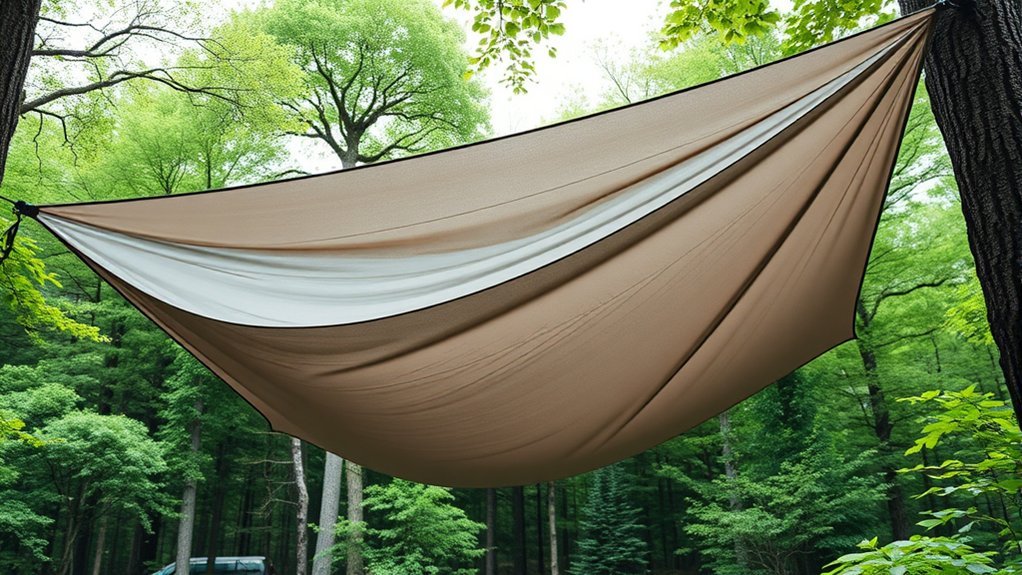
When you’re preparing to set up a flat tarp, ensuring you have the right lengths for your guylines is essential for achieving stability and versatility. For a solid tarp setup, you’ll want eight 8-foot lengths of guylines. This configuration provides maximum versatility, allowing you to adapt to various environments.
When positioning your guylines, aim for an angle between 15 and 45 degrees from the ground. This angle is vital for effective tensioning and stability, especially during adverse weather conditions. An ideal ridgeline length measures around 10 feet, ensuring proper coverage and tension.
Hammock Tarp Guidelines
When setting up your hammock tarp, aim for a ridgeline length of about 10 feet and side lengths of 8 feet for ideal coverage. You should maintain a guideline angle between 15 and 45 degrees to guarantee proper tension and stability. Don’t forget to take attachment points carefully into account, as they play an essential role in the overall effectiveness of your setup.
Ideal Lengths for Setup
To achieve an effective hammock tarp setup, you should consider specific guideline lengths that enhance stability and coverage. Proper guideline tension is essential for maintaining your tarp’s integrity against the elements. Here are ideal lengths to keep in mind:
1. Ridgeline Guideline: 10 feet for maximum coverage and tension.
2. Side Length Guidelines: 8 feet for stability and secure pitch.
3. A-Frame Tarp Configuration:
- Head-side ridgeline: 8 feet
- Foot-side ridgeline: 6 to 7 feet.
4. Ground-Level Tie-Outs: 4 feet to withstand wind effectively.
Tensioning Techniques Explained
Having established the ideal lengths for your hammock tarp setup, it’s now important to focus on how to effectively tension those guidelines. Utilizing tension adjustment methods like a continuous ridgeline setup allows for easy adjustments without changing the lines. Aim for a guideline angle between 15 and 45 degrees to maximize stability. Employ effective knot techniques, such as the trucker’s hitch, to maintain tension while accounting for cord loss. Regularly check your setup, as weather fluctuations can affect stability. Below is a summary of techniques to keep your tarp taut and your adventure free.
| Technique | Benefits | Recommended Use |
|---|---|---|
| Trucker’s Hitch | Maintains tension | Windy conditions |
| Continuous Ridgeline | Easy adjustments | Flexible setups |
| Regular Checks | Guarantees stability | Before each use |
Attachment Point Considerations
Understanding the attachment points for your hammock tarp is essential for achieving ideal tension and stability. Here are key considerations:
- Guideline Lengths: Use around 10 feet for ridgelines and 8 feet for side lengths to maintain optimal tension.
- Angle: Set guidelines at a 15-45 degree angle from the ground to enhance attachment stability and prevent stakes from pulling out.
- Height Considerations: Taller setups require longer guidelines to maintain the correct angle and stability.
- Attachment Points: Lower points provide more stability in severe weather, while higher points improve airflow and reduce condensation.
Personal Preferences in Guyline Lengths
Many campers find that personal preferences for guylines can greatly impact their overall camping experience. Your hammock preferences might lead you to choose longer guylines, allowing for versatile setups that accommodate various terrains. If you’re someone who values efficiency, you may prefer to leave guylines dangling, reducing setup and takedown time.
The ideal length often depends on your tent’s height and design, with some users favoring longer lines to guarantee proper tension and stability. Experimenting with different knot types can also help you achieve that perfect balance between tension and ease of adjustment. Ultimately, your comfort level with managing guylines will influence your choices. You might prioritize quick setups over best angles, reflecting your unique camping style. By understanding these aspects, you can tailor your guylines to enhance your outdoor adventures and enjoy a more liberating camping experience.
Practical Tips for Guideline Setup
When setting up your guylines, precise measurements and proper techniques can make a significant difference in your tent’s stability and performance. Follow these practical tips for effective guideline setup:
- Cut your guidelines to about 4 feet for ground-level tie-outs and 5 feet for side-panel tie-outs to guarantee proper tension and stability.
- Maintain a guideline angle of 15 to 45 degrees from the ground; this prevents stakes from pulling out during wind and enhances overall stability.
- Utilize tensioning methods like tensioners for guideline adjustments, especially for shorter lines under a foot long, guaranteeing a secure setup.
- Check attachment points: Use upper rain fly attachments to reduce condensation while securing lower points during severe weather.
Regularly inspect your cords for wear and friction, as maintaining cord integrity is crucial to your tent’s performance. These steps will guarantee your setup is both effective and reliable.
Share Your Guyline Length Experiences
Have you ever wondered how the length of your guylines impacts your tent’s performance? Your experiences can shape your setup strategy. For ground-level perimeter tie-outs, 4 feet is usually perfect, ensuring stability without excess slack. When using side-panel tie-outs, consider guidelines around 5 feet, adjusting based on your shelter design. If you’ve got a peak height of 48 inches, 8-foot apex guylines are essential for maintaining the right angle and support.
Don’t forget about your A-frame tarp! The head-side ridgeline should ideally be 8 feet, while the foot-side can range from 6 to 7 feet. Remember that knots consume length; a truckers hitch, for instance, requires at least 2 feet of cord for a 1-foot distance. By selecting the right guideline materials and making careful tension adjustments, you can enhance your tent’s performance and enjoy a more liberating outdoor experience.
Frequently Asked Questions
How Do Weather Conditions Affect Guyline Length Choices?
Weather conditions directly influence your guyline length choices. In strong winds, longer lines enhance wind resistance, while shorter lines provide stability. During rain, make certain your setup offers adequate rain protection, preventing water pooling or tent collapse.
Can I Use Different Materials for Guidelines?
Yes, you can use different materials for guidelines. Choosing high-quality options enhances guideline durability. Consider lightweight nylon for portability or stronger polyester for added strength, ensuring your setup withstands various weather conditions while maintaining functionality.
How Do I Adjust Guidelines for Uneven Terrain?
To adjust guidelines for uneven terrain, assess the landscape, then modify tension accordingly. Use shorter lengths on slopes and guarantee secure anchoring. This keeps your tent stable, allowing you to enjoy the great outdoors freely.
What Are the Risks of Using Overly Short Guidelines?
Using overly short guidelines compromises tent stability, risking collapse in high winds or shifting terrain. You’ll struggle with guideline tension, leaving your shelter vulnerable. Choose the right length to guarantee safety and peace of mind.
How Can I Prevent Guideline Tangling During Setup?
To prevent guideline tangling during setup, organize your guidelines by coiling them neatly. Use clips or ties for storage, and always check for knots before setting up. These setup tips guarantee a smoother, hassle-free experience.
Conclusion
To sum up, choosing the right guyline length can make or break your outdoor experience—it’s like the difference between camping in a palace or a puddle! By following the guidelines for various shelters and considering factors like cord loss, you’ll guarantee your setup is both stable and efficient. Remember, personal preferences play a role too, so feel free to experiment. With these tips in mind, you’ll be ready to conquer any weather and enjoy your adventures to the fullest!