


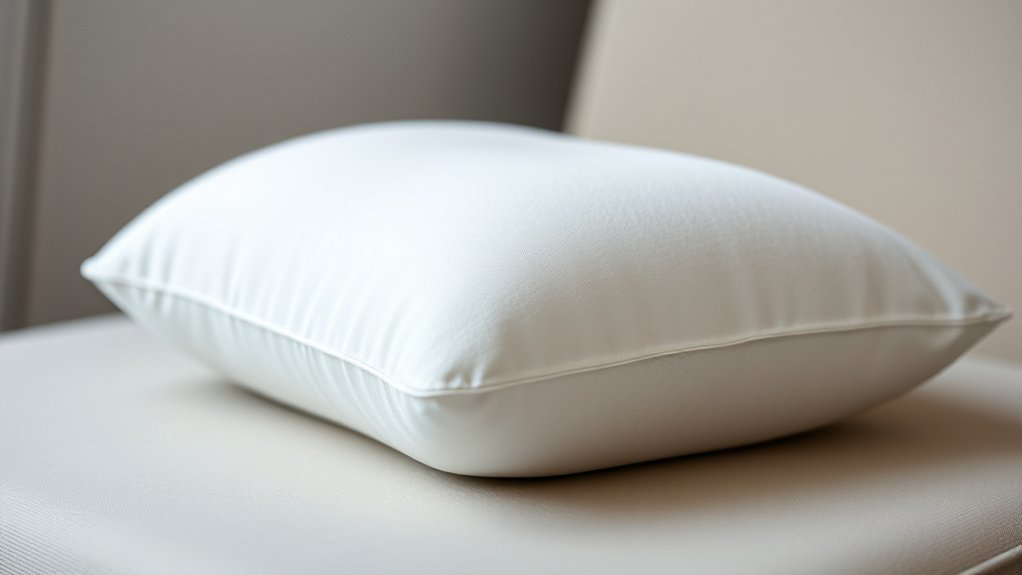
When choosing a memory foam travel pillow, understanding density and firmness is essential. A density of 3-5 pounds per cubic foot offers a balance of support and comfort. Firmness determines how well the pillow aligns with your neck. Side sleepers generally need a firmer pillow for alignment, while back sleepers prefer medium-firm options. High-density pillows provide better durability and ventilation, contributing to a more comfortable travel experience. Discover more insights to make an informed choice for your travels.
How to Choose the Right Density for Travel Pillows


When selecting a travel pillow, how do you guarantee you’re choosing the right density? Start by considering the travel pillow materials and shapes available. A density of 3-5 lbs per cubic foot strikes a balance of comfort and support, ensuring you get enough cushioning without feeling too soft. If you’re a side sleeper, opt for a firmer density to maintain neck alignment, while back and stomach sleepers might prefer a softer option. Higher density pillows provide enhanced durability and support, ideal for frequent travelers or longer journeys. To fine-tune your comfort, look for pillows with adjustable fill options. Don’t forget to test firmness by applying pressure with your hand to gauge how well it responds to your weight.
Understanding Memory Foam Density and Its Impact on Comfort
Memory foam density plays an essential role in determining the comfort of your travel pillow. Measured in pounds per cubic foot (PCF), higher densities, typically between 3.5 and 5.0 lbs, offer significant memory foam benefits, such as better durability and support. A higher density pillow conforms to your neck and head, providing enhanced travel comfort and effective pressure relief. In contrast, low-density options under 3.5 lbs may wear out quickly, leading to discomfort and neck strain. A medium density pillow strikes a balance, offering adequate firmness and longevity, making it ideal for long journeys. By understanding density, you can choose a travel pillow that supports your freedom to rest comfortably while on the move.
How Density and Firmness Work Together in Travel Pillows
Understanding how density and firmness work together in travel pillows is essential for achieving ideal comfort during your journeys. The interplay between these two factors guarantees you get the support you need while traveling. Here are three key points to evaluate:
- Density Benefits: A higher density foam (3-5 lbs) provides durability and resists sagging, maintaining shape longer.
- Firmness Effects: Firmness, measured by ILD, dictates how well the pillow supports your neck; a medium firmness (ILD 25-35) balances comfort and support.
- Optimal Balance: Combining medium density with medium firmness helps promote proper neck alignment, enhancing comfort on long trips.
Choosing Pillow Density for Your Sleep Position
When choosing a travel pillow, your sleep position greatly affects the density you should select. Side sleepers generally need firmer pillows to keep their neck aligned, while back sleepers benefit from medium-firm options for proper support. Understanding these differences can help you find a pillow that enhances your comfort and sleep quality on the go.
Side Sleepers’ Pillow Density
Choosing the right pillow density is essential for side sleepers, as it directly impacts neck and spine alignment during sleep. To guarantee peak support levels, consider these key factors:
- Pillow Loft: Aim for a loft of 3 to 5 inches to maintain proper alignment.
- Density: A density of 4 to 5 lbs per cubic foot is ideal for sufficient support, preventing shoulder and neck strain.
- Material: Higher density memory foam pillows contour to your head and neck, alleviating pressure points.
Selecting a medium to firm pillow prevents your head from sinking too deeply, reducing the risk of misalignment. If you have a larger body type, opt for denser options; smaller frames may enjoy softer, lower-density pillows for comfort.
Back Sleepers’ Pillow Density
For back sleepers, selecting the right pillow density is essential for achieving ideal alignment and comfort. You’ll want a medium-soft to medium-firm pillow, ideally with a density between 3 to 5 lbs per cubic foot. This range strikes a balance between support levels and pressure relief, ensuring proper head and neck alignment while minimizing spinal strain. Look for a loft of 4 to 6 inches, which accommodates the natural curvature of your neck. Memory foam pillows in the 4 to 5 lbs density range contour to your shape, providing personalized support. Avoid lower density options, as they may collapse too easily, leading to inadequate support and discomfort during sleep. Prioritize your pillow alignment for restful nights.
Benefits of High-Density vs. Low-Density Memory Foam Travel Pillows
While both high-density and low-density memory foam travel pillows serve the purpose of providing support, their differences greatly impact your travel experience. High-density pillows offer several advantages that make them more appealing for frequent travelers:
High-density memory foam travel pillows enhance support, durability, and breathability, significantly improving your travel comfort and experience.
- Superior Support: With a density of 4 to 5 PCF, they maintain better alignment for your neck and spine, reducing stiffness and pain.
- Durability: High-density options can last 9-10 years, making them a more cost-effective choice compared to low-density pillows, which may wear out in as little as 5 years.
- Breathability: High-density memory foam minimizes heat retention, unlike low-density pillows that can trap heat, leading to discomfort.
Common Materials Used in Memory Foam Travel Pillows
When seeking comfort during your travels, understanding the common materials used in memory foam travel pillows can make a significant difference. Most travel pillows are crafted from viscoelastic foam, conforming to your neck’s shape, providing essential support while minimizing pressure points. Common foam types include high-density options, typically ranging from 3 to 5 pounds per cubic foot, ensuring durability and comfort.
Many pillows also feature gel-infused options, which help regulate temperature and reduce heat retention, enhancing your travel experience. Additionally, some models incorporate shredded memory foam, allowing for adjustable firmness to cater to your personal preferences.
| Foam Type | Benefits |
|---|---|
| Viscoelastic Foam | Conforms to neck shape |
| Gel-Infused Foam | Regulates temperature |
| Shredded Foam | Adjustable firmness |
| High-Density Foam | Durable and supportive |
| CertiPUR-US® | Safety and environmental standards |
The Impact of Temperature on Memory Foam Firmness
Temperature plays an essential role in determining the firmness of memory foam, directly affecting your comfort during travel. Understanding the temperature effects on your pillow can enhance your experience. Here are key points to contemplate:
Temperature significantly influences memory foam firmness, impacting your travel comfort and overall pillow experience.
- Heat Retention: Memory foam absorbs body heat, softening by up to 20%, which can improve comfort but may also lead to excessive warmth.
- Cold Conditions: At lower temperatures, memory foam firms up, making it less conforming and potentially uncomfortable.
- Ventilation: Proper ventilation and cooling technologies can help maintain a consistent firmness, preventing drastic changes due to temperature fluctuations.
Tips for Maintaining Your Memory Foam Travel Pillow
To keep your memory foam travel pillow in top shape, establish a regular cleaning schedule and use proper storage techniques. Fluffing the pillow regularly and cleaning it with a mild detergent will help maintain its structure and freshness. Additionally, storing it in a cool, dry place will protect it from damage and guarantee a longer lifespan.
Regular Cleaning Schedule
Regular maintenance of your memory foam travel pillow is essential for ensuring its longevity and hygiene. Adopting a regular cleaning schedule maximizes comfort and minimizes allergens. Follow these steps to maintain your pillow effectively:
- Wipe Down: Clean the surface with a damp cloth and mild detergent to remove dirt and allergens.
- Deep Clean: If your pillow has a removable cover, wash it in cold water on a gentle cycle as per the manufacturer’s instructions.
- Dry Properly: Allow the pillow to air dry completely away from direct sunlight to prevent mold and odor.
Proper Storage Techniques
Properly storing your memory foam travel pillow can considerably extend its lifespan and maintain its supportive qualities. To achieve this, make sure you keep it in cool, dry storage conditions, away from direct sunlight. Avoid compressing your pillow for long periods, as this can cause permanent indentations. When storing, use protective covers like breathable pillowcases to guard against dust and moisture, while allowing air circulation to prevent mildew. If possible, keep your pillow in its original packaging or a designated storage bag to shield it from environmental factors that may impact its density and firmness. Regularly check and fluff your pillow, especially after extended storage, to make certain it’s always ready to provide the comfort and support you desire.
When to Replace Your Memory Foam Travel Pillow?
How can you tell when it’s time to replace your memory foam travel pillow? Recognizing pillow lifespan indicators can help maintain your comfort during travels. Here are three signs that signal it’s time for a replacement:
- Visible Sagging: If you notice permanent indentations or a lack of shape, your pillow isn’t providing the necessary support.
- Comfort Decline Signs: Increased neck pain or stiffness during use is a clear indication that the pillow’s density has diminished.
- Unpleasant Odors: If your pillow starts to emit odors or retains moisture, it’s likely deteriorating and should be replaced.
Regular maintenance can extend its lifespan, but ultimately, prioritize your comfort and support needs for a restful journey.
Frequently Asked Questions
Can Memory Foam Travel Pillows Help With Neck Pain?
Yes, memory foam travel pillows can provide neck support, helping reduce discomfort. Their contouring properties adapt to your neck, promoting proper alignment and offering pain relief during travel, ensuring a more comfortable journey.
Are Travel Pillows Machine Washable?
Yes, many travel pillows are machine washable, but it depends on the materials used. Always check care instructions for cleaning methods to guarantee you maintain the pillow’s shape and longevity while enjoying fresh comfort.
How Long Do Memory Foam Travel Pillows Last?
You’d think memory foam travel pillows last forever, but they typically last 2-3 years. Durability factors like usage and care affect lifespan expectations, so treat yours well for the best experience on your journeys.
Do Memory Foam Travel Pillows Retain Odors?
Yes, memory foam travel pillows can retain odors due to odor absorption. However, many pillows feature materials designed for odor elimination, helping you maintain a fresh and comfortable travel experience. Regular cleaning can also help minimize odors.
What Sizes Do Memory Foam Travel Pillows Come In?
Memory foam travel pillows come in various sizes, typically ranging from compact designs to larger options. These sizes cater to your travel comfort, ensuring you find the perfect fit for your journey and personal preference.
Conclusion
In the quest for the ultimate travel pillow, understanding density and firmness can feel like deciphering a complex puzzle. Yet, with the right choice, you could transform every journey into a blissful escape, where comfort reigns supreme and sleep becomes a luxury. Remember, the right density isn’t just a preference—it’s the difference between a restful trip and a sleepless nightmare! So, invest wisely, and let your travels be cradled in the embrace of memory foam magic.